
Why Rural Development Matters More Than Ever in America
Drive through rural America today and you’ll see two very different stories.
In one town, a new food processing plant has opened. High-speed internet has arrived. Young families are moving back. Local farms are supplying schools, hospitals, and grocery chains.
In another town, the grain elevator has closed. Jobs are scarce. Roads and water systems are aging. Young people are leaving because opportunity feels out of reach.
The difference between these two stories often comes down to access to rural development programs.
In the United States, rural areas are home to farmers, ranchers, agribusinesses, small manufacturers, energy producers, and nearly 60 million people. Yet rural communities face unique challenges—limited capital, smaller tax bases, infrastructure gaps, and fewer private investors.
That’s exactly why Rural Development Programs USA exist.
These programs are not charity. They are strategic investments designed to:
- Strengthen rural economies
- Support farmers and agribusiness
- Create jobs
- Build infrastructure
- Improve quality of life
If you are a farmer, rural entrepreneur, agribusiness owner, student, or investor, understanding rural development programs can unlock opportunities you may not even know exist.
This guide explains rural development programs in plain language—how they work, who they’re for, and how you can use them to build something lasting in rural America.
What Are Rural Development Programs in the USA?
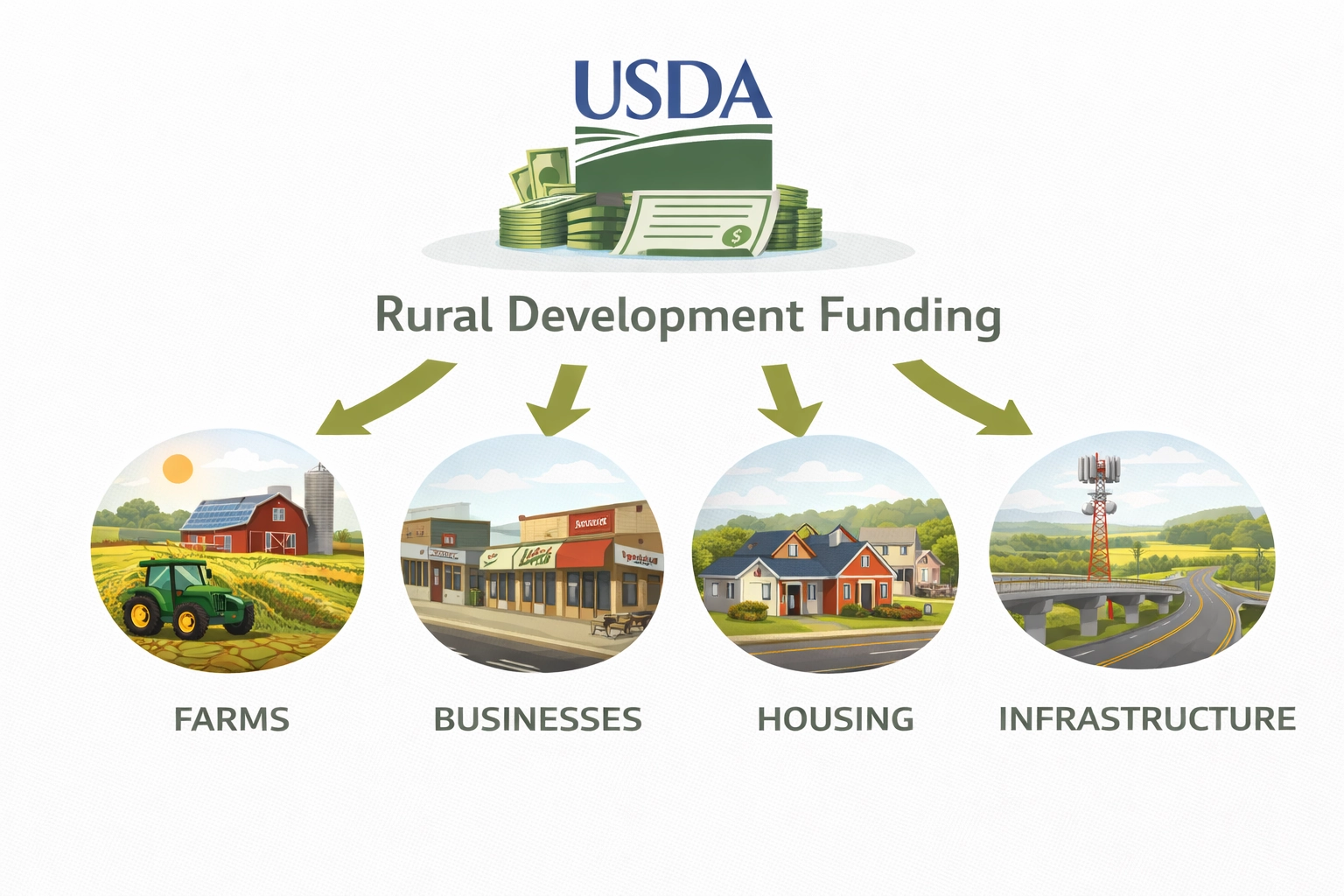
Rural development programs are federal initiatives designed to improve economic opportunity, infrastructure, housing, and business growth in rural areas of the United States.
Most of these programs are administered by USDA Rural Development, a division of the United States Department of Agriculture.
According to USDA, Rural Development programs support:
- Rural housing
- Rural business development
- Infrastructure (water, electricity, broadband)
- Renewable energy
- Community facilities
These programs are funded through the US federal budget and authorized by laws such as the Farm Bill.
As per Wikipedia, federal spending plays a major role in supporting rural economies where private investment alone may fall short.
What counts as “rural” in the USA?
USDA defines rural areas based on population size and location. In general:
- Towns with populations under 50,000
- Areas outside major metropolitan regions
Many communities that look “small town” still qualify, even if they’re near a city.
Why does the government invest in rural development?
Because rural America:
- Produces most of the nation’s food
- Supplies energy, timber, and raw materials
- Supports national security and food security
- Sustains millions of jobs
Without targeted investment, rural areas struggle to compete with urban regions for capital and talent.
traditional banks often hesitate to lend to farmers, especially beginners and family operations. That’s exactly why USDA farm loan programs exist.
How Rural Development Programs Work
Rural development programs work by combining loans, grants, loan guarantees, and technical assistance.
Instead of a one-size-fits-all approach, programs are designed around specific needs:
- Business financing
- Infrastructure upgrades
- Housing affordability
- Energy efficiency
- Community services
Core Types of Rural Development Support
| Program Type | What It Provides | Who Benefits |
|---|---|---|
| Loans | Low-interest financing | Businesses, farms |
| Grants | Non-repayable funding | Communities, startups |
| Loan Guarantees | Reduced lender risk | Banks, entrepreneurs |
| Technical Assistance | Planning & training | Rural organizations |
USDA Rural Development: The Main Agency
USDA Rural Development is the backbone of rural development programs in the USA.
Official website:
https://www.rd.usda.gov
It operates through state and local offices, meaning rural communities deal with real people—not just online portals.
Major Rural Development Programs USA Explained
This is where rural development turns into real opportunity.
1. Rural Business & Industry (B&I) Loan Guarantee Program
The problem it solves:
Rural businesses struggle to get affordable financing from banks.
What it offers:
USDA guarantees a large portion of loans made by commercial lenders.
Who it’s for:
- Agribusinesses
- Food processors
- Manufacturers
- Warehouses
- Logistics companies
Why it matters:
It unlocks private capital for rural businesses.
Real-world example:
A rural meat processing plant secures financing to expand capacity and hire local workers.
2. Rural Business Development Grants (RBDG)
The problem it solves:
Small rural businesses lack startup and expansion funding.
What it offers:
Grants for:
- Equipment
- Training
- Business planning
- Marketing
Who it’s for:
- Small businesses
- Cooperatives
- Nonprofits supporting rural business
Why it matters:
It supports entrepreneurship where private investment is scarce.
3. Value-Added Producer Grants (VAPG)
The problem it solves:
Farmers earn low margins selling raw commodities.
What it offers:
Grants to help farmers process, brand, and market products.
Who it’s for:
- Farmers
- Ranchers
- Producer groups
Examples:
- Cheese from dairy farms
- Specialty grains
- Local meat brands
Program details:
https://www.rd.usda.gov/programs-services/value-added-producer-grants
4. Rural Energy for America Program (REAP)
The problem it solves:
High energy costs hurt rural profitability.
What it offers:
Grants and loans for:
- Solar panels
- Wind turbines
- Biogas systems
- Energy efficiency upgrades
Who it’s for:
- Farms
- Rural businesses
Why it matters:
Energy independence improves long-term competitiveness.
Why do 80% of farm subsidies go to the top 10% of farms, not you?
5. Rural Broadband Programs
The problem it solves:
Limited internet access restricts education, healthcare, and business growth.
What it offers:
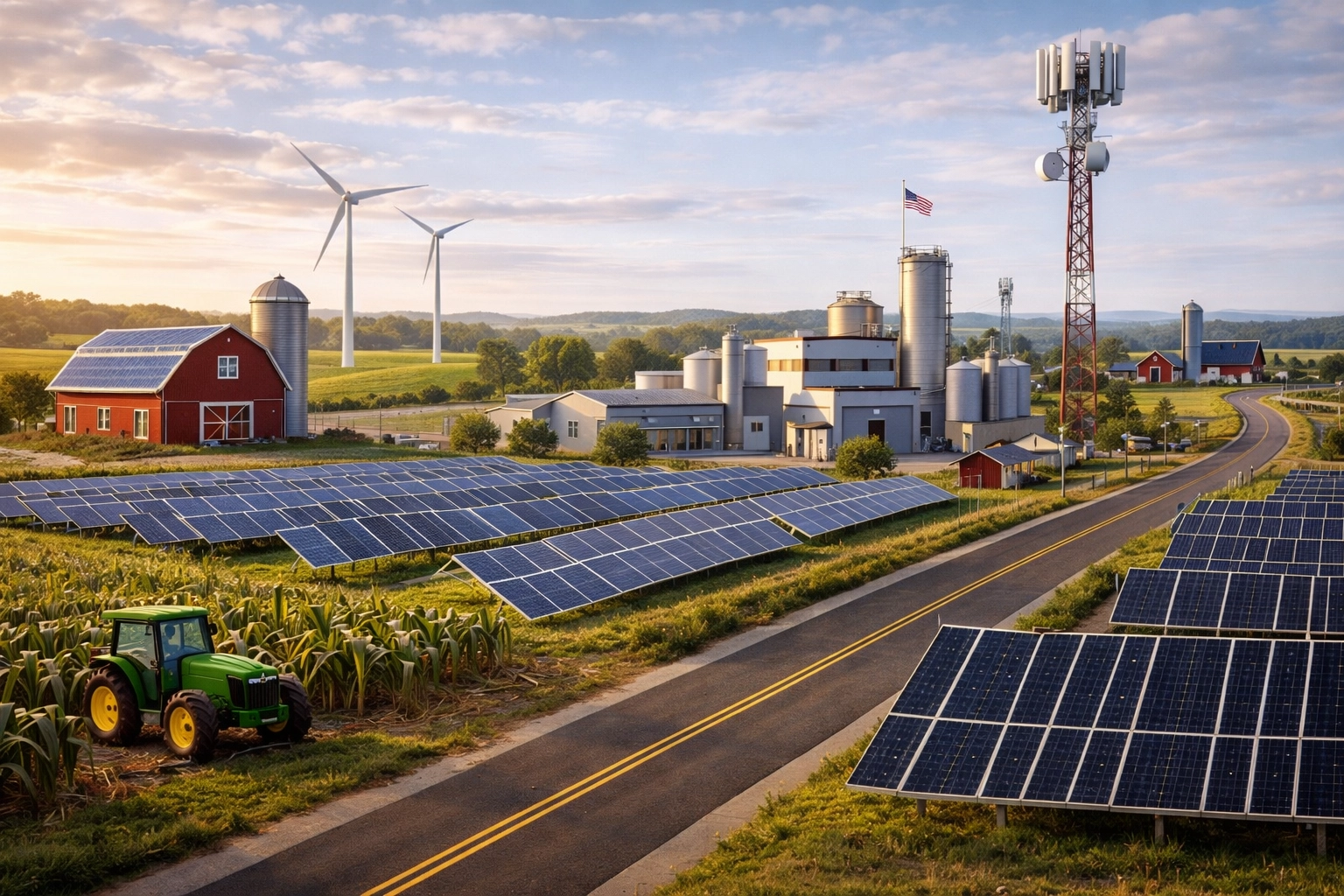
Funding to expand high-speed internet in rural areas.
Who benefits:
- Rural communities
- Schools
- Healthcare providers
- Businesses
Reliable broadband is now essential infrastructure.
6. Community Facilities Programs
The problem it solves:
Rural communities lack modern public facilities.
What it offers:
Loans and grants for:
- Hospitals
- Clinics
- Fire stations
- Schools
- Community centers
Why it matters:
Quality of life drives population stability and growth.
7. Rural Housing Programs
The problem it solves:
Affordable housing shortages in rural areas.
What it offers:
- Home loans
- Rental housing financing
- Housing repair grants
Who benefits:
- Low-income families
- Rural workers
- Seniors
Housing stability supports workforce development.
How Rural Development Programs Support Farmers & Agribusiness
Rural development is deeply connected to agriculture.
For Farmers
Benefits include:
- Value-added processing funding
- Energy cost reduction
- Market expansion
- Infrastructure access
Example:
A grain farmer uses VAPG funding to start milling flour locally instead of shipping grain out of state.
For Agribusiness Owners
Benefits include:
- Loan guarantees for expansion
- Cold storage funding
- Processing facility financing
Example:
A rural food startup builds a cold storage hub serving dozens of local farms.
For Rural Entrepreneurs
Benefits include:
- Startup grants
- Low-interest loans
- Business training
Example:
A rural logistics company expands to serve agricultural supply chains.
For Investors
Rural development programs reduce risk and improve project viability.
They:
- Improve cash flow
- Strengthen infrastructure
- De-risk private capital
How to Apply for Rural Development Programs (Step-by-Step)
Applying may seem complex, but it’s manageable with the right approach.
Step 1: Identify the Right Program
Start at:
https://www.rd.usda.gov/programs-services
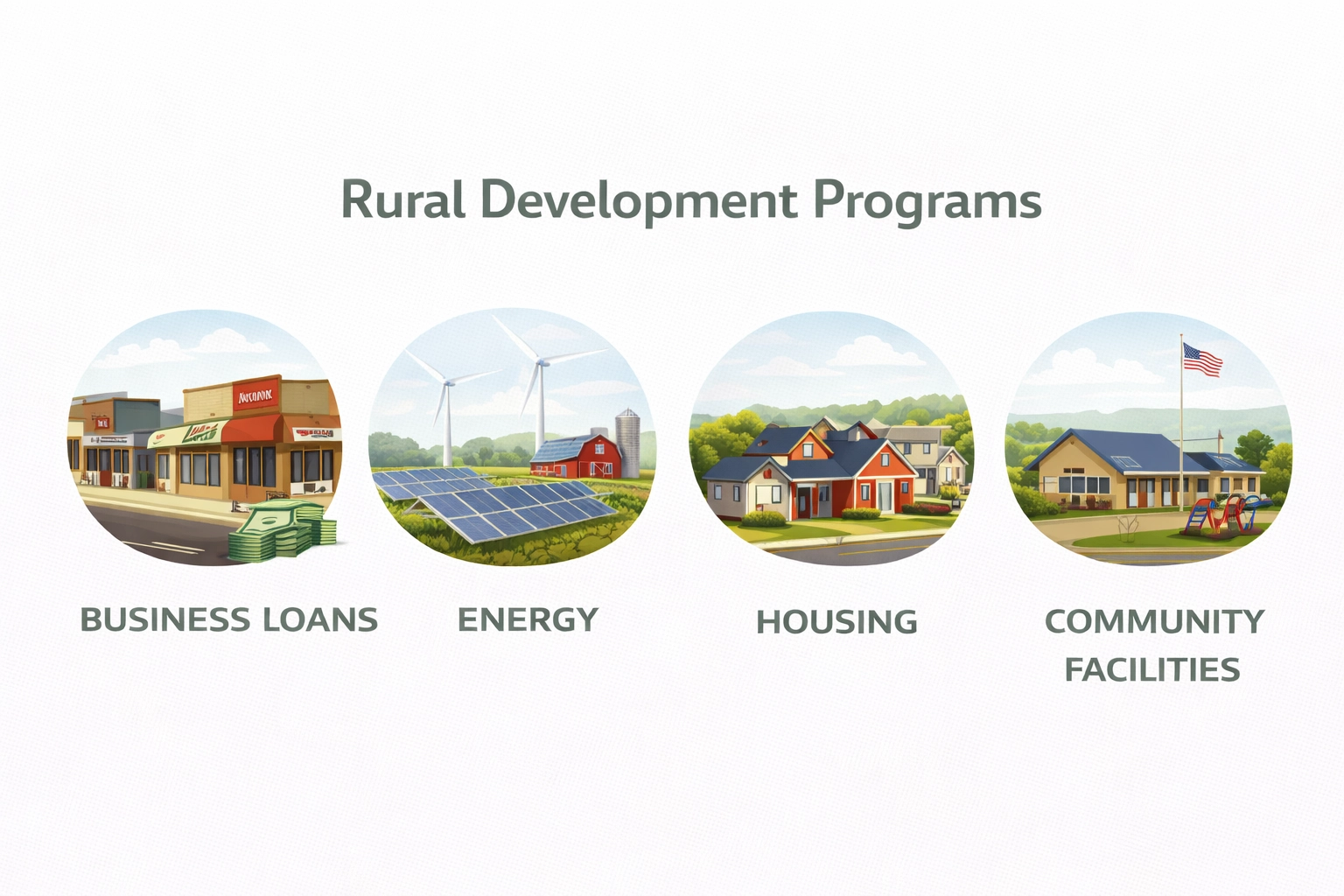
You can filter by:
- Business
- Energy
- Housing
- Community facilities
Step 2: Confirm Rural Eligibility
USDA provides eligibility maps to confirm if your location qualifies.
Step 3: Prepare Your Project Plan
Most applications require:
- Business plan
- Budget
- Community impact explanation
- Financial statements
Step 4: Work with Your Local USDA Office
Local offices guide applicants through requirements and deadlines.
Find your office:
https://www.rd.usda.gov/about-rd/state-offices
Step 5: Submit & Follow Up
Deadlines matter.
Respond quickly to questions.
Keep records organized.
Common Mistakes to Avoid
- Applying for the wrong program
- Weak financial projections
- Missing deadlines
- Ignoring community impact
- Not using USDA guidance
Many good projects fail due to poor preparation—not poor ideas.
In moments like these, most farmers ask one simple question: “What support is really available for us?” That’s where the US agriculture budget comes in.
Rural Development Programs & the Farm Bill
Most rural development programs are authorized by the Farm Bill.
Congress sets:
- Funding limits
- Program priorities
- Eligibility rules
Legislative details:
https://www.congress.gov
According to USDA, rural development is a core pillar of long-term agricultural and economic policy.
Expert Outlook: The Future of Rural Development in the USA
Rural development is entering a new phase.
Major trends shaping the future
- Renewable energy growth
- Climate-resilient infrastructure
- Regional food systems
- Rural manufacturing revival
- Digital connectivity
What rural leaders should prepare for
- Greater emphasis on sustainability
- Stronger data and reporting requirements
- Increased competition for grants
- More public-private partnerships
Strategic advice
The most successful rural projects:
- Solve real community problems
- Combine multiple funding sources
- Show long-term economic impact
- Align with national priorities
Rural development rewards planning, patience, and partnerships.
Frequently Asked Questions
Who can apply for rural development programs?
Eligible applicants include farmers, rural businesses, cooperatives, nonprofits, local governments, and community organizations located in USDA-defined rural areas.
Are rural development funds grants or loans?
Both. Some programs offer grants, others loans, and many use loan guarantees to reduce risk for lenders.
Do small towns qualify?
Yes. Many towns under 50,000 population qualify, even if they are near urban areas.
Can farmers apply directly?
Yes. Farmers can apply for programs like VAPG, REAP, and certain business loans.
How long does approval take?
Timelines vary. Some loans are approved in weeks, while grants may take several months.
Are rural development funds competitive?
Yes. Strong applications with clear community and economic impact perform best.
Conclusion: Building the Future of Rural America
Rural development programs in the USA are not just government initiatives.
They are tools for:
- Economic growth
- Community resilience
- Farm profitability
- Business expansion
- Long-term opportunity
For farmers, entrepreneurs, and rural leaders, these programs offer a chance to build—not just survive.
If you live or work in rural America, opportunity is not disappearing.
It’s being rebuilt—strategically, intentionally, and locally.
Learn the programs.
Plan your project.
Partner with USDA.
Because strong rural communities build a strong nation.

Written by Janardan Tharkar – an agriculture content researcher and blogging professional with practical experience in farming education, digital publishing, and SEO content optimization. Janardan focuses on modern U.S. agriculture trends, smart farming technologies, irrigation systems, crop development, organic farming practices, and farmer-support programs to create helpful, practical, and trustworthy content for American readers.