Before the first planter rolls, there is a moment—often unnoticed outside rural communities—when everything feels suspended. In central Illinois, sometime in late March 2026, that moment arrives under a pale sky and damp soil. The frost has retreated, but the ground hasn’t fully settled. A corn farmer stands at the edge of a 1,200-acre operation, boots pressing into the topsoil, feeling—not just measuring—what weeks of weather have left behind.
He scoops a handful of soil, rubs it between his fingers, and looks across the field. It’s quiet. No engines. No dust. Just a decision waiting to be made.
This is where the corn planting season 2026 begins—not with machinery, but with judgment shaped by risk.
Corn Planting Season 2026: Field Conditions Driving Early Decisions
Across the U.S. Corn Belt, the 2026 season is opening with uneven ground realities.
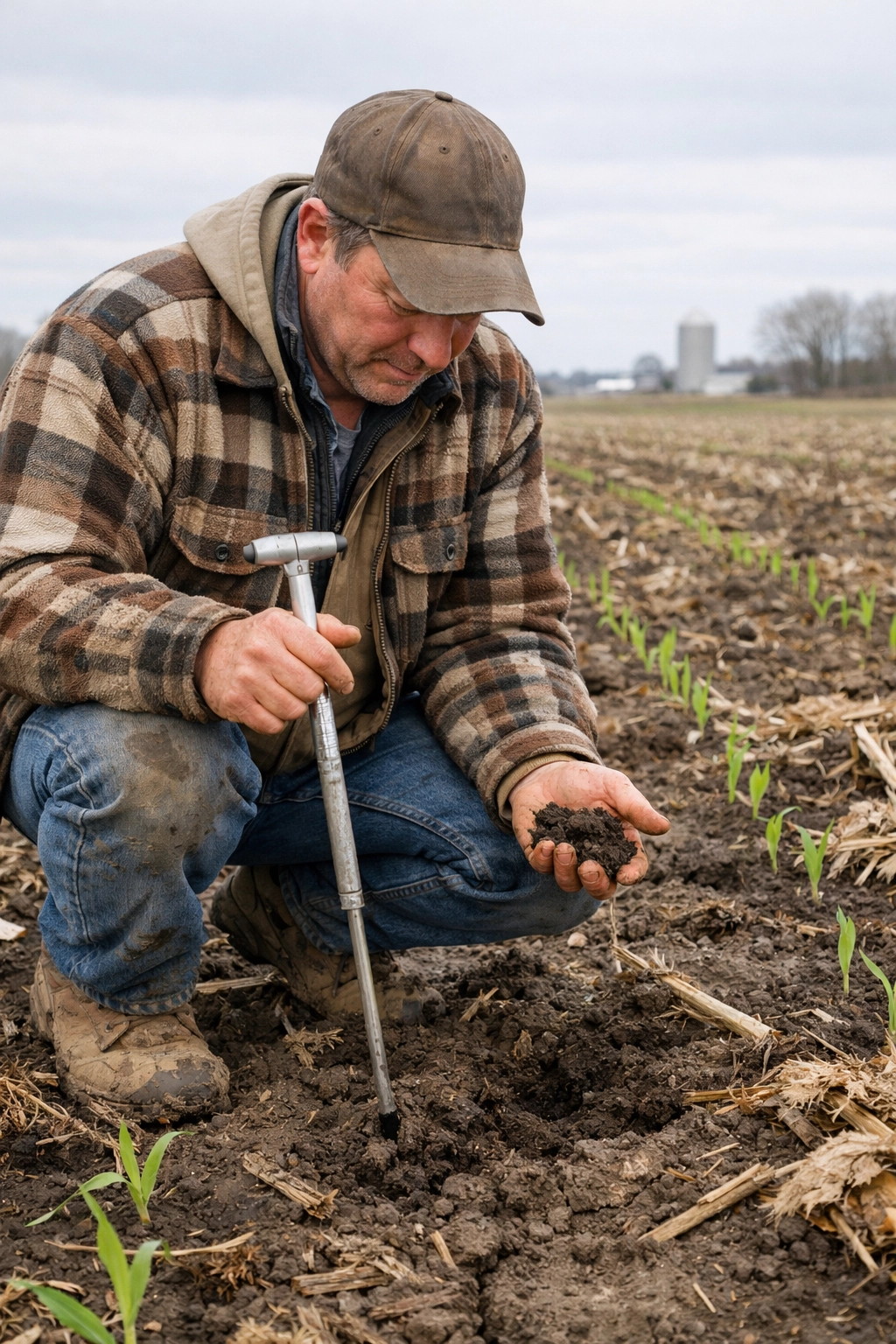
In parts of Illinois and eastern Iowa, winter precipitation has left soils holding 5–12% more moisture than average, improving subsoil reserves but slowing field readiness. Meanwhile, western Iowa, Nebraska, and Kansas show 8–15% moisture deficits, raising early concerns about uniform germination.
Soil temperature remains the first hard checkpoint. Corn requires at least 50°F (10°C) at planting depth for consistent emergence. As of late March:
- Southern Illinois: 48–52°F
- Central Iowa: 44–47°F
- Northern regions: 42–45°F
This variation creates staggered planting readiness across regions.
According to long-term planting data from the United States Department of Agriculture, the optimal planting window for maximizing yield typically falls between April 10 and May 5. But that window is not fixed—it shifts with every season.
And in 2026, farmers are already sensing that the margin for error is thinner.
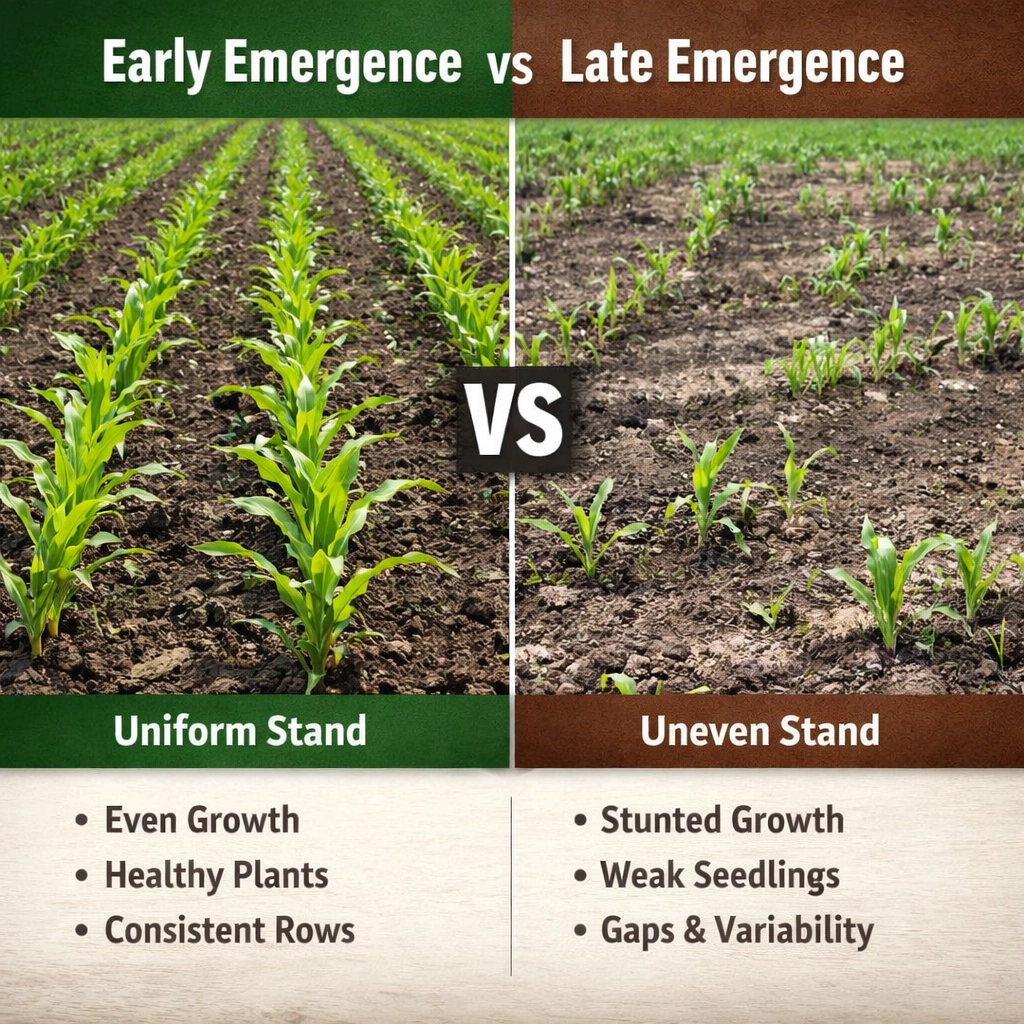
A field planted just five days too early into cold soil can result in uneven emergence, reducing yield potential by 5–10%. On the other hand, planting too late can shorten the growing season, costing 0.5–1% yield per day beyond optimal timing.
Every acre becomes a calculated gamble.
Across the U.S. Corn Belt, planting decisions are increasingly tied to market signals and policy expectations. As explored in our in-depth Corn Belt field analysis, these choices reflect a complex mix of agronomy, economics, and timing.
Input Costs 2026: The Financial Pressure Behind Corn Planting
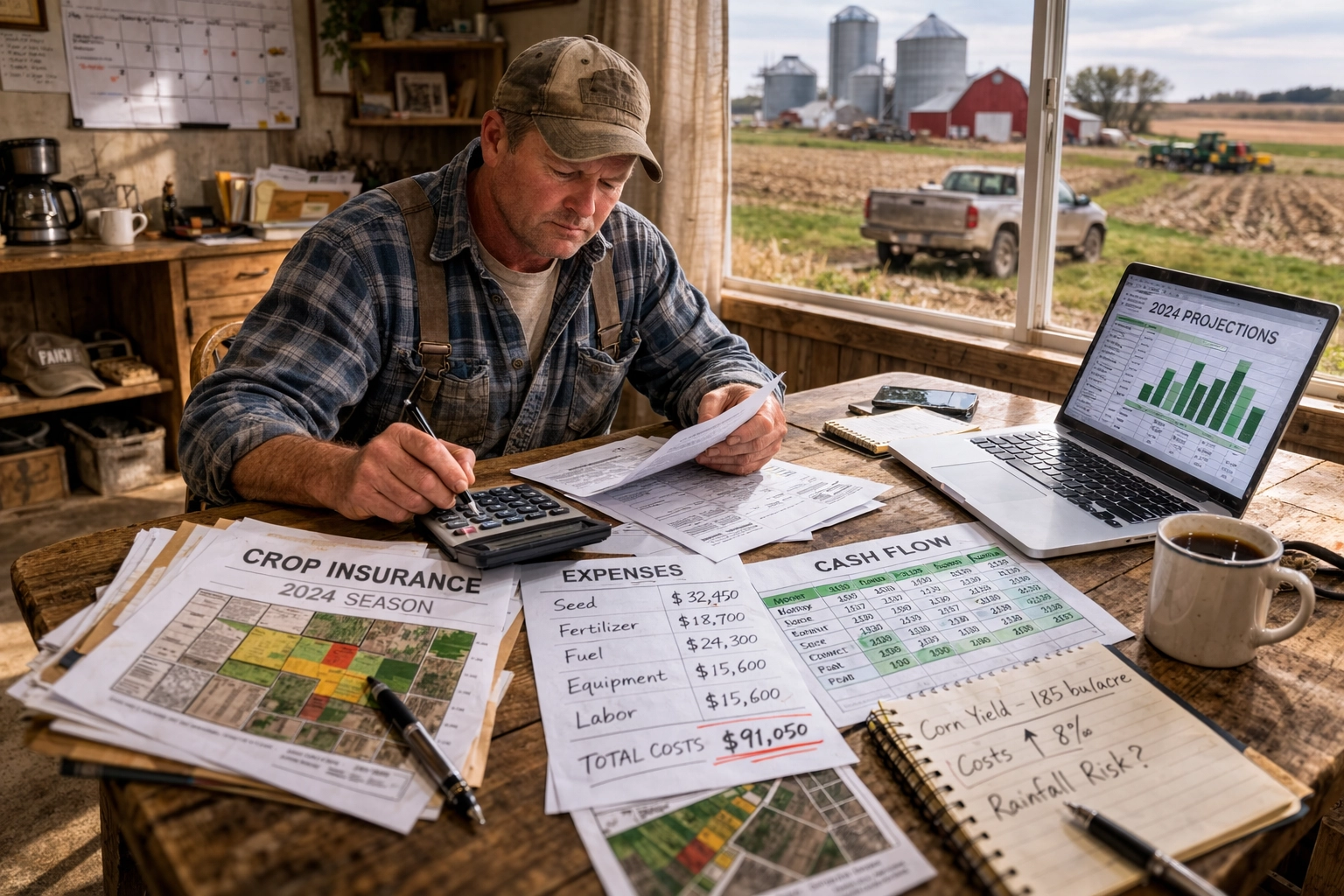
Before seeds go into the ground, money has already gone out.
Input costs remain elevated compared to historical averages:
- Nitrogen fertilizer: $780–$920 per ton
- Phosphorus (DAP): $630–$660 per ton
- Potash: $500–$520 per ton
- Seed corn: $320–$380 per bag
- Diesel: $3.60–$4.20 per gallon
For 2026, estimated total production cost:
- $820–$950 per acre for corn
According to projections from the USDA Economic Research Service, the average breakeven price for corn sits around $4.60–$5.10 per bushel.
Meanwhile, futures markets are fluctuating between $4.75 and $5.20.
That leaves very little room for error.
As a result, farmers are adjusting:
- Cutting early fertilizer applications by 10–20%
- Using split nitrogen strategies
- Choosing hybrids with consistent performance over maximum yield potential
This is not about maximizing profits—it’s about protecting margins.
For many operations, the question is no longer “How much can we grow?” but “How much risk can we afford?”
Precision Agriculture in Corn Planting 2026: Efficiency vs Investment
The modern corn field is increasingly managed by data.
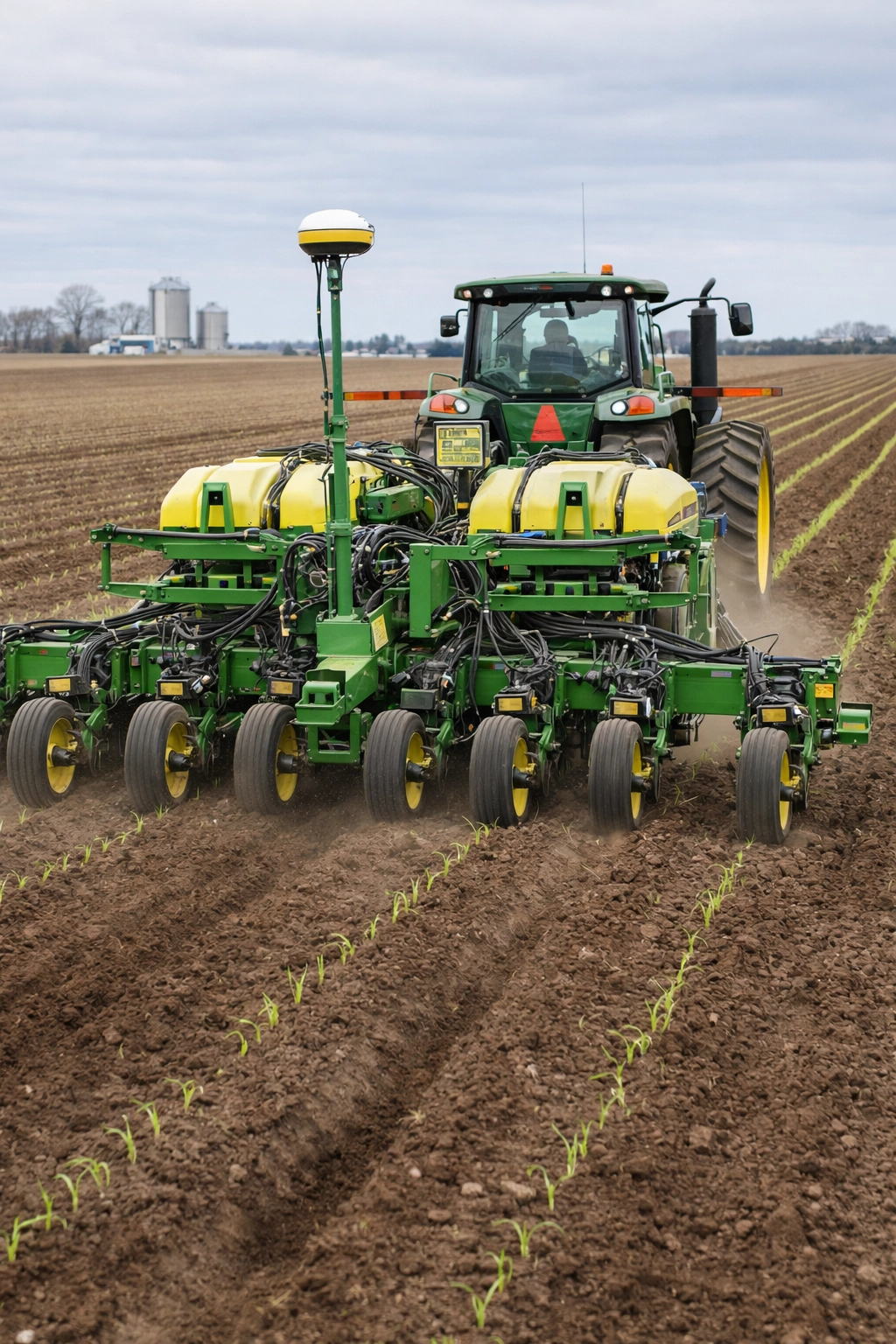
Precision agriculture tools—GPS-guided planters, variable rate seeding, and soil mapping—are now deeply embedded in planting strategies. According to adoption data from the USDA National Agricultural Statistics Service, over 60% of large-scale U.S. corn farms use precision planting technologies.
But the cost is substantial:
- Advanced planter systems: $350,000–$750,000
- Annual software/data costs: $5,000–$15,000
- Maintenance and upgrades: $20–$40 per acre
The benefits are real:
- Seed placement accuracy within ±1 inch
- Population optimization: 28,000–36,000 seeds per acre
- Input savings: 5–8%
Yet the system is unforgiving.
A calibration error can reduce yield by 3–7%, translating to $30–$70 per acre losses. In a year with tight margins, that’s the difference between profit and loss.
Technology reduces variability—but it does not eliminate risk.
Beyond market uncertainty, farmers are also dealing with rising input expenses. As detailed in our analysis of the real cost of planting corn per acre in the U.S., seed, fertilizer, and fuel costs are significantly impacting profitability.
U.S. Corn Acreage 2026: Expansion Under Economic Pressure
National planting intentions suggest a cautious increase in corn acreage.
- Projected 2026 corn acreage: 92–94 million acres
- Up from ~90.6 million acres in 2025
Regional trends:
- Iowa, Illinois: +2–4% increase
- Indiana, Ohio: stable
- Western Corn Belt: slight decline (1–2%)
Demand remains stable:
- Ethanol: ~5.2 billion bushels
- Livestock feed: ~5.5 billion bushels
- Exports: ~2.1–2.3 billion bushels
But global competition continues to reshape markets.
According to outlook data referenced in the World Agricultural Supply and Demand Estimates, Brazil has expanded corn exports by over 20% in recent years, challenging U.S. market share.
The result is a delicate balance:
- Strong demand
- Competitive global pricing
- Narrow domestic margins
Farmers are planting more—but earning less per acre.
Farm Policy, Crop Insurance & Interest Rates: Hidden Forces in 2026
While weather dominates headlines, policy shapes decisions quietly.
Crop insurance remains central:
- Coverage levels: 70–85% revenue protection
- Federal subsidy: ~60% of premiums
- Higher coverage cost: $8–$15 per acre
In 2026, more farmers are opting for higher coverage levels due to financial pressure.
grAt the same time, borrowing costs remain elevated due to monetary policy from the Federal Reserve System.
This affects:
- Operating loans
- Equipment financing
- Land rents
Interest rate increases of even 1–2% can add $10–$25 per acre in financial pressure for leveraged farms.
Meanwhile, conservation programs continue to expand:
- Cover crops: 18+ million acres
- Reduced tillage: 40%+ of cropland
These practices improve soil health but often delay spring soil warming, adding complexity to planting timing.
Policy, economics, and agronomy are now tightly intertwined.
Corn Planting Strategies 2026: Risk vs Reward in Timing Decisions
By early April, farmers commit to planting strategies.
| Strategy Element | Early Planting Approach | Delayed Planting Approach | Adaptive Strategy |
|---|---|---|---|
| Planting Window | Mar 25 – Apr 10 | Apr 20 – May 10 | Flexible |
| Yield Potential | 180–220 bu/acre | 160–195 bu/acre | 170–210 bu/acre |
| Risk Level | High (weather exposure) | Moderate | Balanced |
| Input Timing | Front-loaded | Staggered | Split applications |
| Complexity | Low | Moderate | High |
What This Comparison Reveals About 2026
There is no single “best” approach.
Early planting offers the highest yield ceiling—but carries risks of cold stress and uneven emergence. Delayed planting reduces early-season risk but compresses the growing window.
The adaptive approach reflects the future of agriculture—flexible, data-driven, and field-specific. But it also demands more labor, coordination, and decision-making under pressure.
In 2026, success is not about choosing the perfect strategy—it’s about managing trade-offs effectively.
Labor Shortage & Human Pressure in Corn Planting Season 2026
Even in a high-tech system, farming is still human work.
Labor challenges persist:
- Skilled operators are limited
- Wages up 12–18% since 2022
- Seasonal work increasingly difficult to staff
Planting windows are tight:
- 2,000-acre farm = 10–15 day planting window
- Workdays stretch to 12–16 hours
There is no pause button.
Families coordinate schedules. Equipment runs late into the night. Decisions are made quickly, often under pressure.
Behind every acre planted is a human system working at full capacity.
Before making planting decisions, it’s important to understand real-world field conditions. A detailed example can be seen in this Midwest corn farmer daily routine, where timing and soil moisture play a critical role.
Weather Volatility 2026: The Factor That Overrides Everything
Despite all planning, weather remains the ultimate variable.
Forecast patterns suggest:
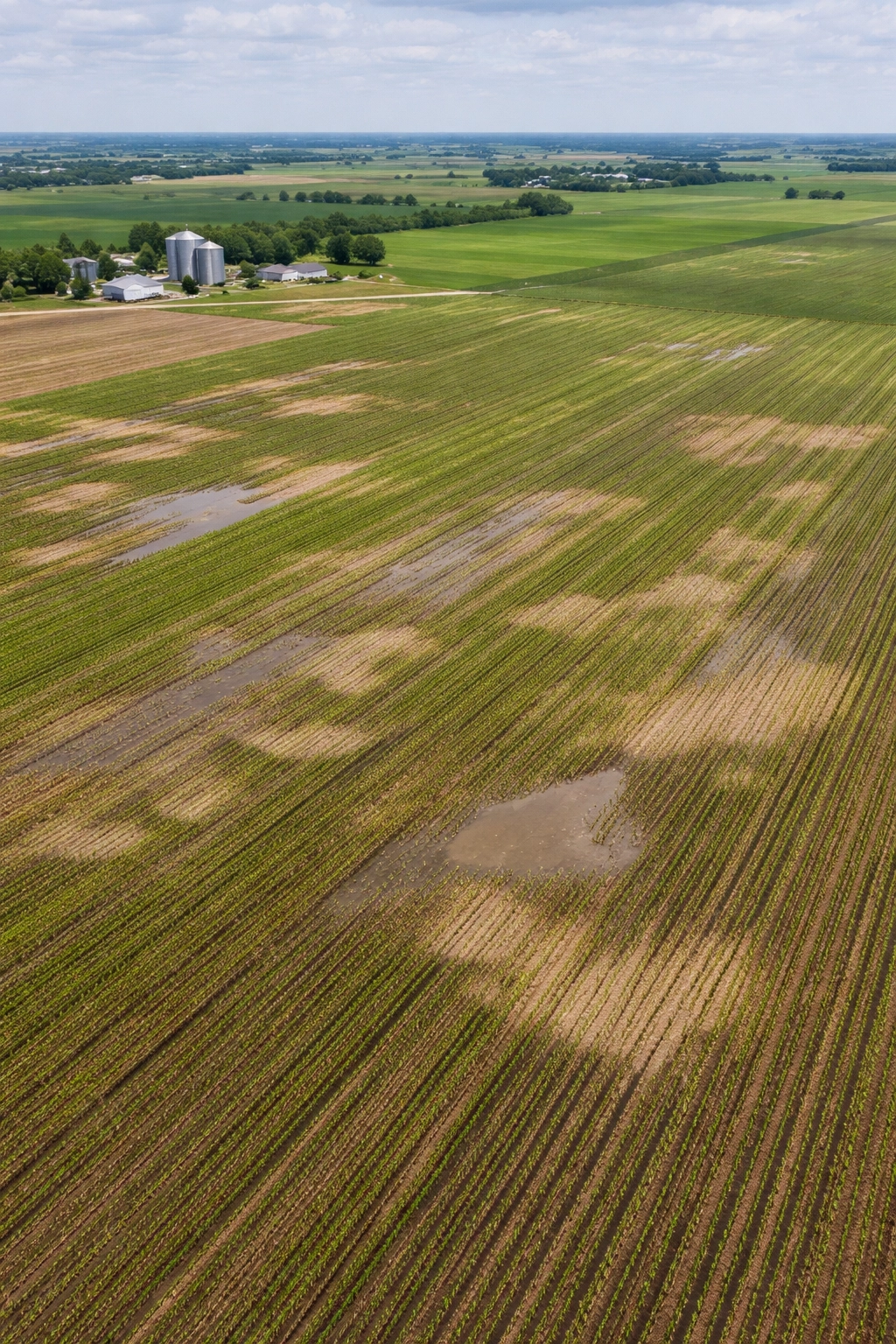
- Eastern Corn Belt: 10–20% above-normal rainfall
- Western regions: intermittent dryness
- Temperature swings: 10–15°F fluctuations
Impacts are immediate:
- Rain delays: 3–5 days lost planting time
- Frost risk: replanting cost $40–$80 per acre
- Sudden heat: rapid soil drying, forcing rushed operations
Preparation, therefore, is not about certainty—it is about readiness.
Farmers must be able to act quickly when conditions align.
What Corn Planting Season 2026 Signals for U.S. Agriculture
What happens during planting season shapes the entire agricultural system.
Corn influences:
- Feed costs
- Ethanol production
- Export competitiveness
- Food prices
In 2026, the planting season reflects a broader transformation.
Farmers are navigating:
- Higher costs
- Narrower margins
- Greater uncertainty
Yet they continue adapting—not by eliminating risk, but by managing it more precisely.
This is modern agriculture: complex, data-driven, and deeply human.
And it still begins the same way.
A farmer stands in a field, presses soil between his fingers, and decides whether today is the day to plant.

Written by Janardan Tharkar – an agriculture content researcher and blogging professional with practical experience in farming education, digital publishing, and SEO content optimization. Janardan focuses on modern U.S. agriculture trends, smart farming technologies, irrigation systems, crop development, organic farming practices, and farmer-support programs to create helpful, practical, and trustworthy content for American readers.