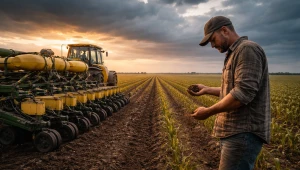
Corn planting begins long before the first seed hits the soil—it starts with one critical question: plant early or wait?
The sky over central Iowa is just beginning to lighten when Mark Jensen steps out of his pickup and presses his boot into the soil. It’s late April 2026, and the thermometer clipped to his jacket reads 48°F. He kneels, scoops a handful of dirt, and lets it fall through his fingers. Cold. Not frozen—but not ready.
Behind him, a 24-row planter sits loaded with treated seed corn—$320 per bag, enough for roughly 2.5 acres. Each acre he plants today represents nearly $900–$1,100 in upfront cost when you factor in seed, nitrogen, fuel, and machinery.
He glances at the weather app again. Rain in 36 hours.
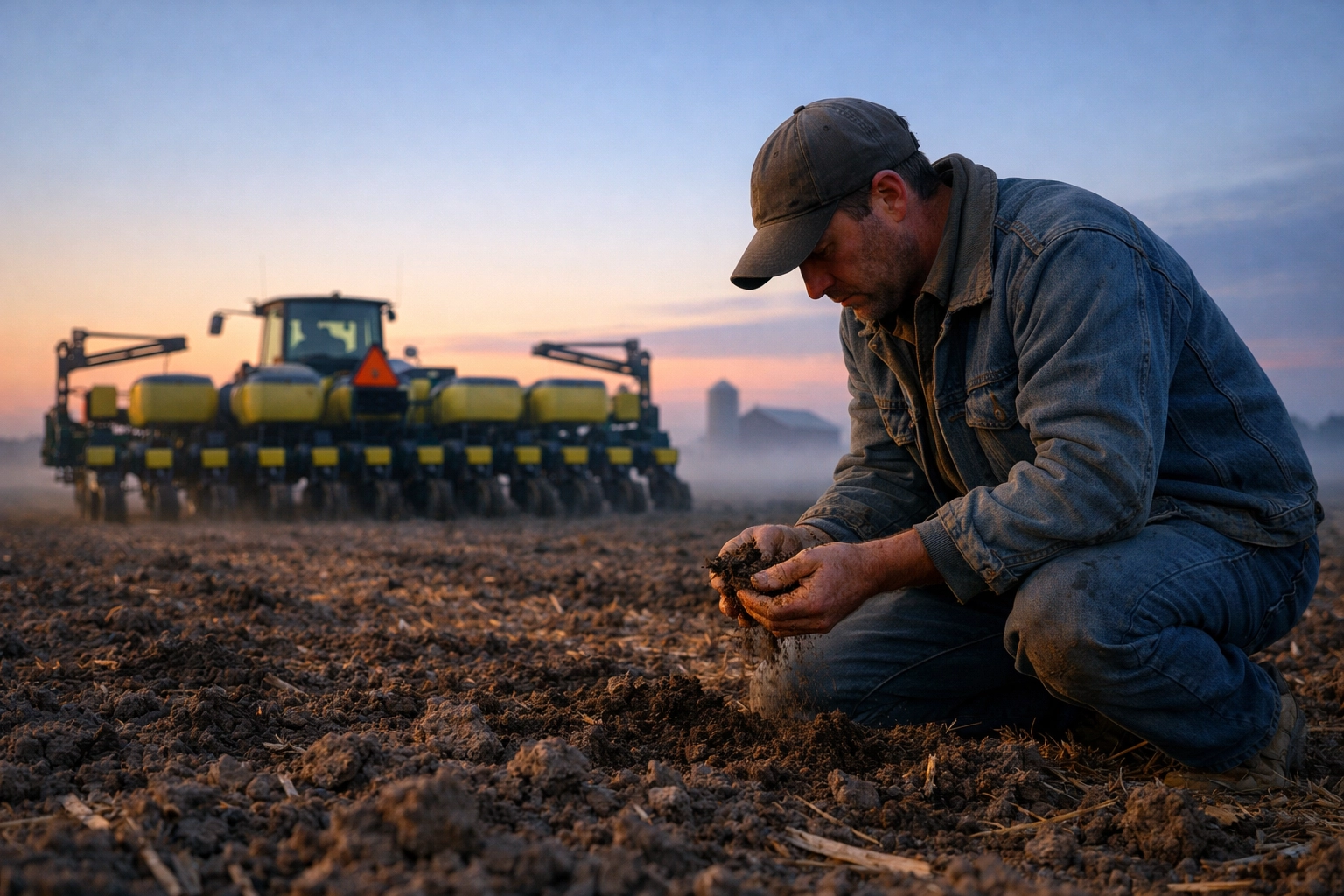
Last year, Jensen replanted 180 acres after a cold snap. It cost him nearly $70 per acre extra, and yields still came in 12 bushels below his farm average of 195 bu/acre. That loss didn’t just stay in the field—it followed him into winter loan renewals.
Now, standing in the same kind of uncertain spring, the decision is back.
Plant now at 48°F soil temperature, or wait for the safer 50–55°F range?
Midwest Corn Planting Decision 2026: Timing vs Risk
Across the Midwest, this exact decision is playing out on millions of acres.
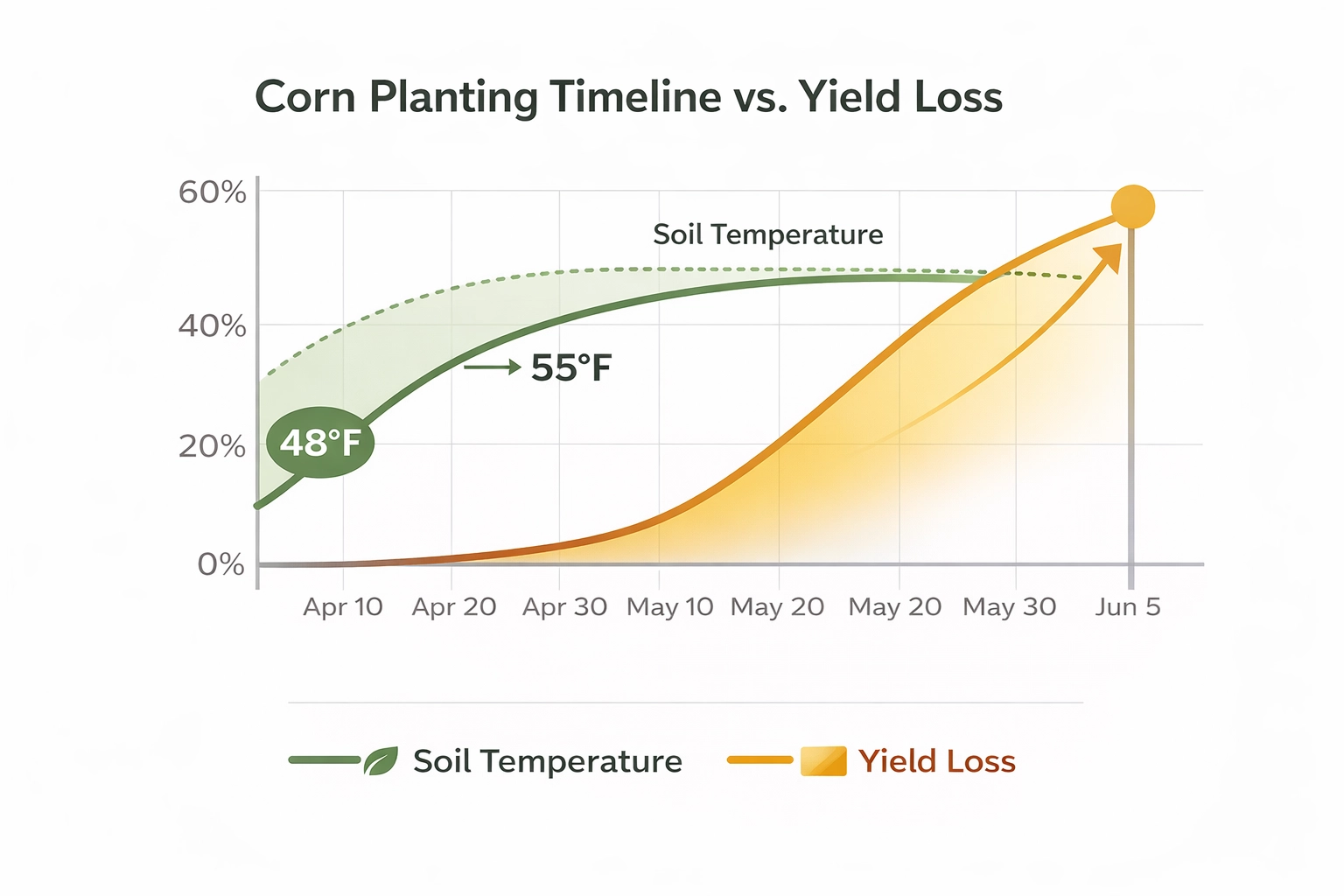
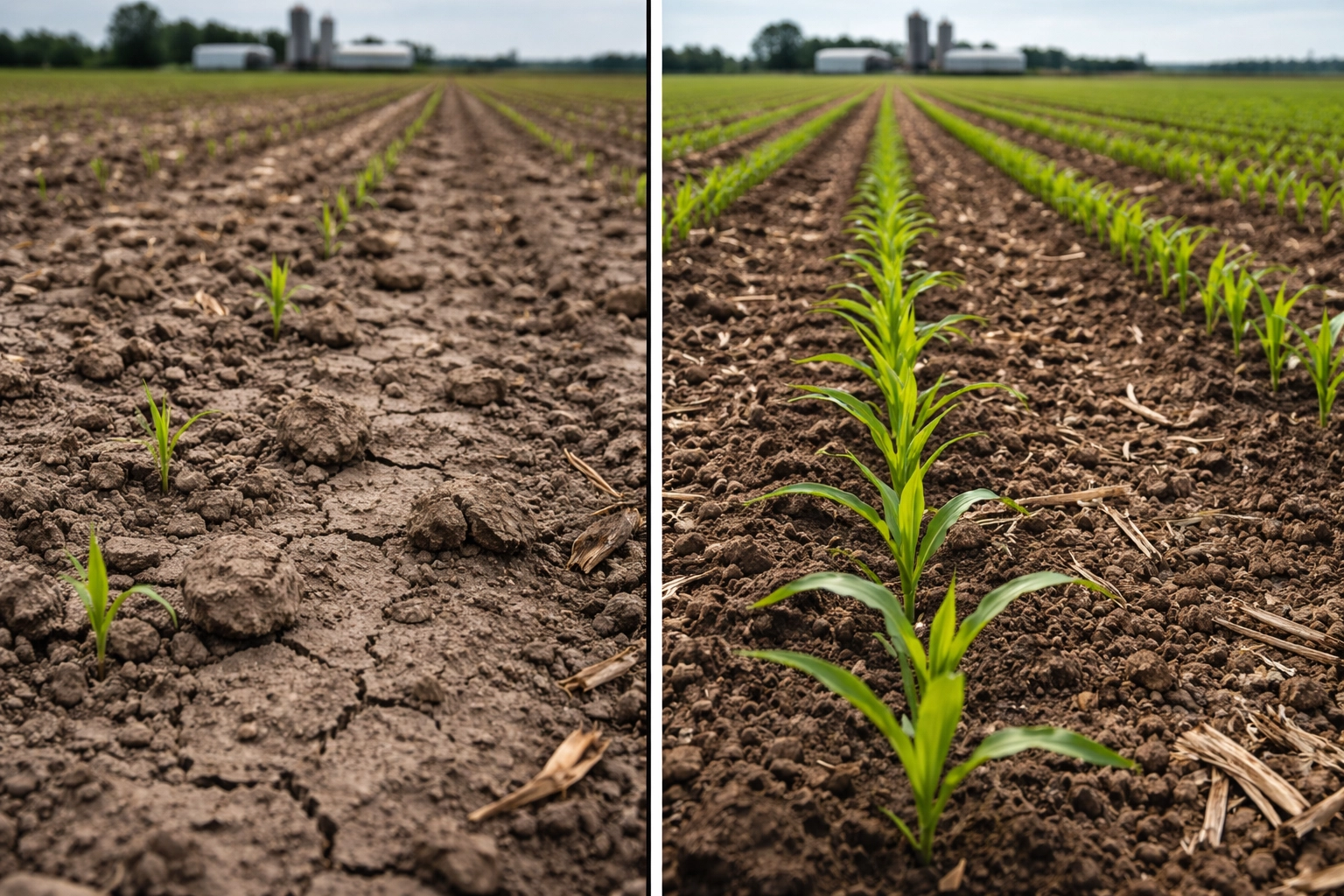
Corn planting ideally begins when soil temperatures consistently reach 50–55°F, allowing for uniform germination within 5–7 days. Below that threshold, emergence can stretch to 10–20 days, increasing exposure to disease, crusting, and uneven stands.
At the same time, delaying planting comes with a measurable cost.
Research from agronomy trials and summarized by USDA NASS shows that after the optimal planting window (typically late April to early May), corn yield can decline by:
- 0.5% to 1% per day delay
- Up to 15–20% total loss if planting is pushed into late May
For Jensen, that math is simple but brutal:
- Plant early → risk replant + uneven yield
- Plant late → guaranteed yield drag
And on 1,200 acres, even a 5% yield swing equals ~11,700 bushels, or roughly $52,000 at $4.50/bushel corn.
Across the U.S. Corn Belt, planting decisions are increasingly tied to market signals and policy expectations. As explored in our in-depth Corn Belt field analysis, these choices reflect a complex mix of agronomy, economics, and timing.
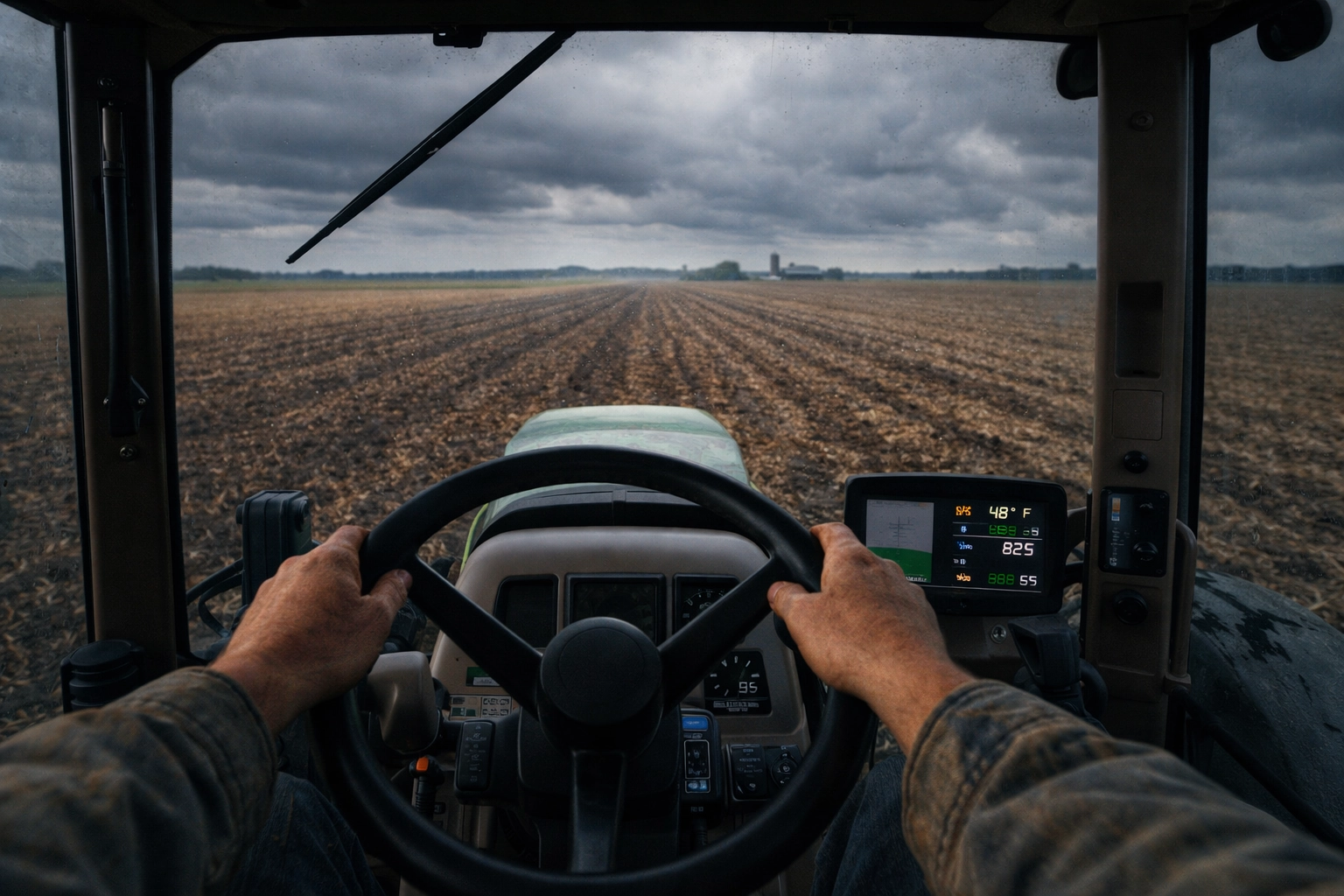
Why Corn Still Dominates Midwest Farming in 2026
Corn continues to lead Midwest acreage in 2026—not because it’s the most profitable crop every year, but because it fits the system farmers operate in.
U.S. farmers are expected to plant 90+ million acres of corn, according to USDA Economic Research Service . That scale reflects more than habit—it reflects alignment with infrastructure, input systems, and market access.
1. Reliable Revenue Framework
With prices hovering around $4.20–$4.80 per bushel, corn offers a workable revenue range:
- 180–200 bu/acre yield
- $750–$950 gross per acre
Margins remain tight, but outcomes are easier to model compared to alternative crops.
2. Input Control and Yield Response
Corn allows farmers to actively influence performance:
- Nitrogen application: $140–$220 per acre
- Direct impact on yield potential
This controllability matters in uncertain seasons—farmers can adjust inputs rather than rely entirely on conditions.
3. System Compatibility
The Midwest is structurally built around corn:
- Ethanol plants
- Feed demand
- Export channels
This ensures consistent movement at harvest—an advantage that reduces marketing risk.
Why This Matters
Farmers aren’t choosing corn out of preference—they’re choosing it because it integrates smoothly into a high-cost, high-risk system where decisions must be made quickly and repeatedly.
It’s not about dominance—it’s about fit.
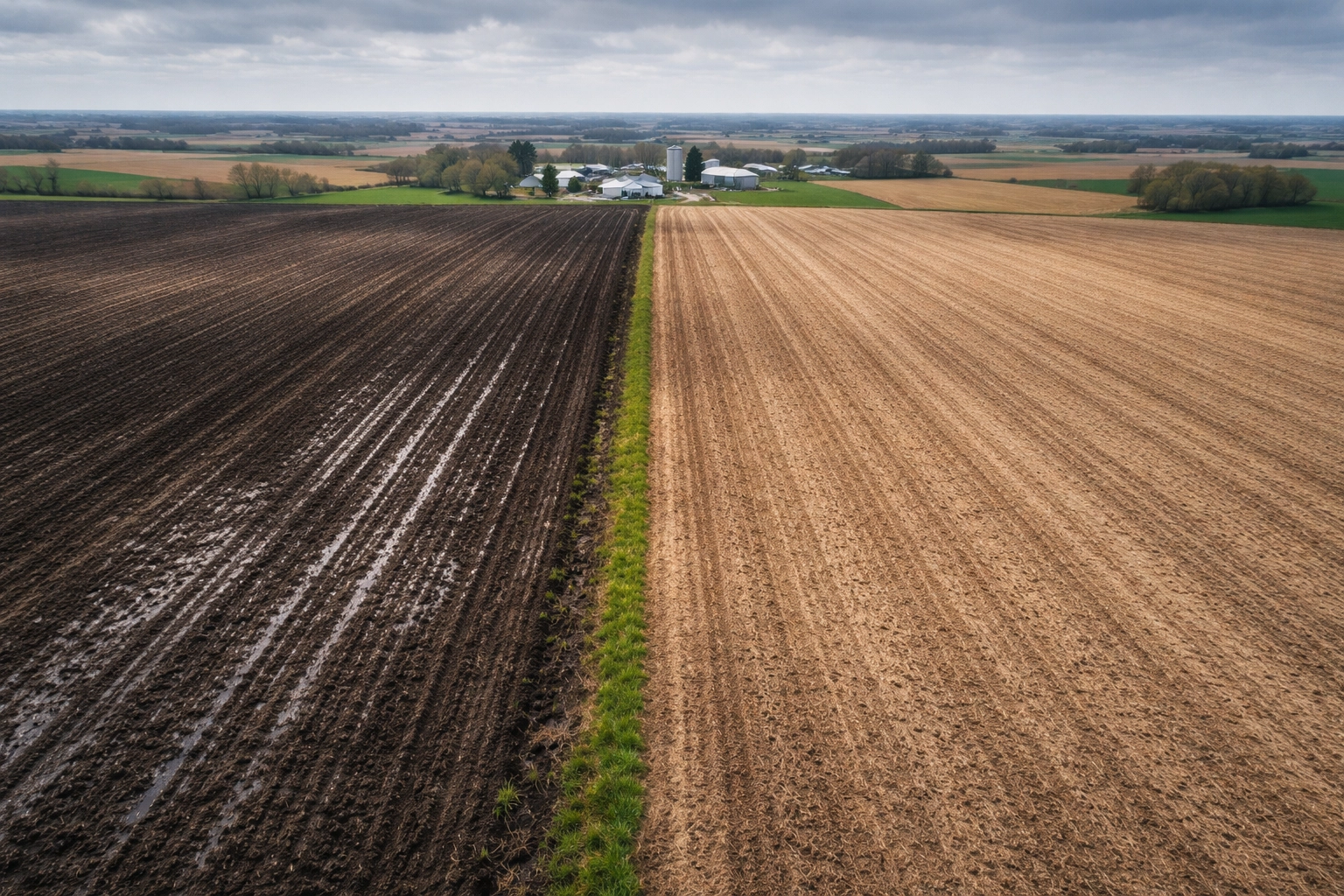
Field Conditions Across the Corn Belt (Spring 2026)
Conditions this year are uneven, adding another layer of complexity.
- Iowa & Illinois: Soil moisture adequate but surface temperatures lagging (45–52°F range)
- Nebraska: Improved subsoil moisture, but topsoil dryness emerging
- Minnesota & Dakotas: Delayed warming, planting window compressed by 7–10 days
This variability forces hyper-local decisions.
One farmer may plant aggressively, while another waits a week—both making rational choices based on different field realities.
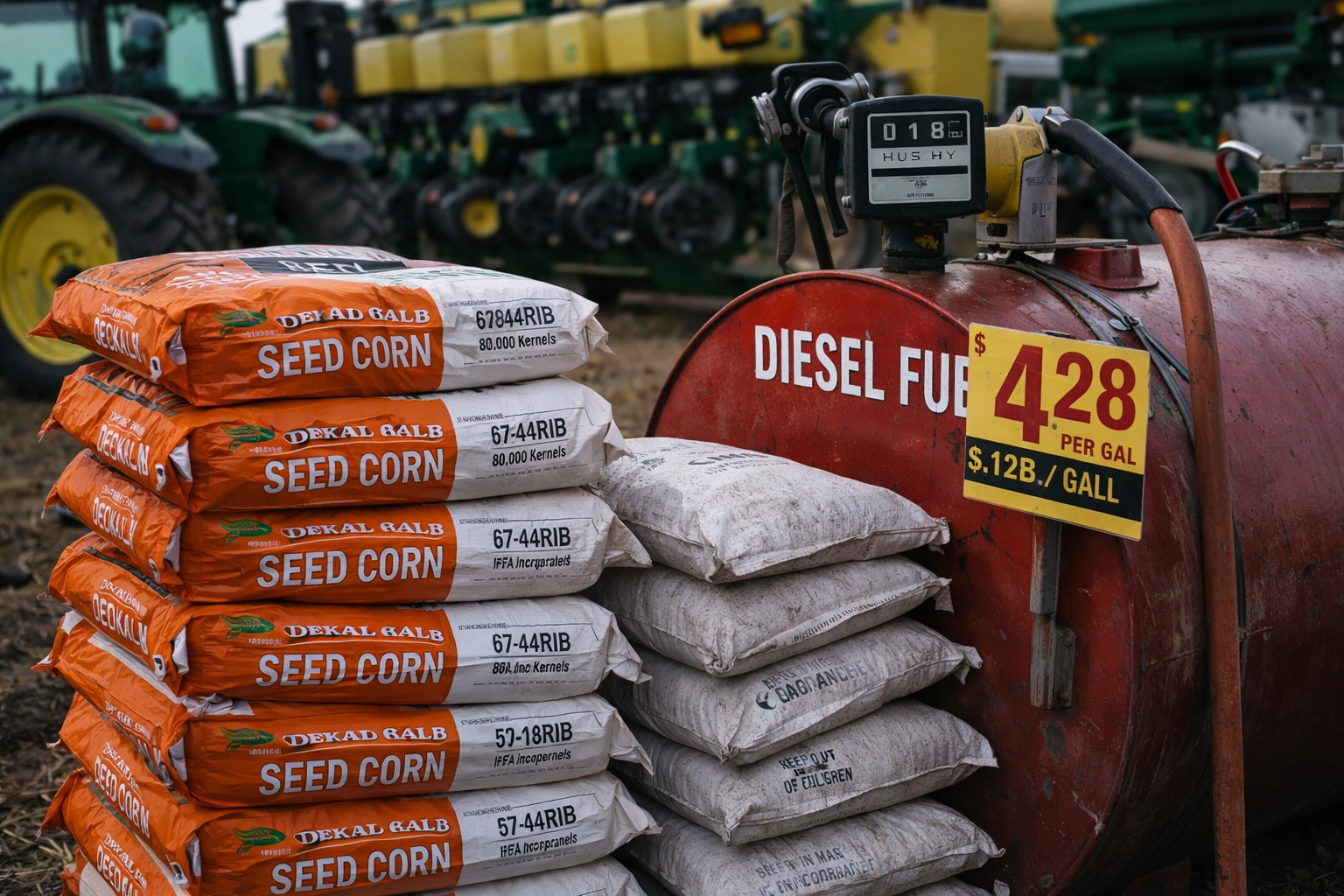
Corn Farming Cost Breakdown 2026 (Per Acre)
| Input Category | Estimated Cost (USD/acre) |
|---|---|
| Seed | $120 – $180 |
| Nitrogen Fertilizer | $140 – $220 |
| Fuel & Machinery | $80 – $120 |
| Chemicals | $60 – $100 |
| Total Cost | $700 – $900 |
These numbers highlight the pressure: farmers are committing nearly $1,000 per acre before knowing the outcome.
That’s why switching crops isn’t simple—it’s a financial gamble, not just an agronomic one.
While cost pressures and weather risks dominate planning, the real impact becomes visible at the field level. A closer look at a
day in the life of a Midwest corn farmer shows how these decisions translate into action during planting season.
Early vs Late Corn Planting: Decision Trade-Off Table
| Decision Factor | Early Planting (Below 50°F) | Delayed Planting (50–55°F+) |
|---|---|---|
| Germination Time | 10–20 days | 5–7 days |
| Yield Potential | Maximum if successful | Reduced (0.5–1% per day delay) |
| Replant Risk | High (cold + rain events) | Low |
| Soil Conditions | Marginal | Optimal |
| Financial Risk | High upfront uncertainty | Lower biological risk, but yield loss |
What This Reveals About Farmer Decision-Making
This comparison shows that farmers are not choosing between “good” and “bad” options—they are choosing between different types of risk.
Early planting is a bet on weather improvement. Delayed planting is a hedge against failure but guarantees some loss.
Corn fits this system because its response curve is well understood. Farmers know the risks. They’ve lived them.
Economic Pressure: Thin Margins, Big Exposure
The financial pressure in 2026 is intense.
According to the Federal Reserve Bank of Kansas City , farm loan volumes remain elevated, and repayment stress is rising in some regions.
For Jensen:
- Operating loan: $650,000
- Interest rate: ~7–8%
- Break-even corn price: ~$4.30/bushel
If yields drop just 10%, his profit disappears.
If prices fall below $4, losses begin.
This is why corn remains dominant—not because it guarantees profit, but because it offers predictable risk in an unpredictable system.
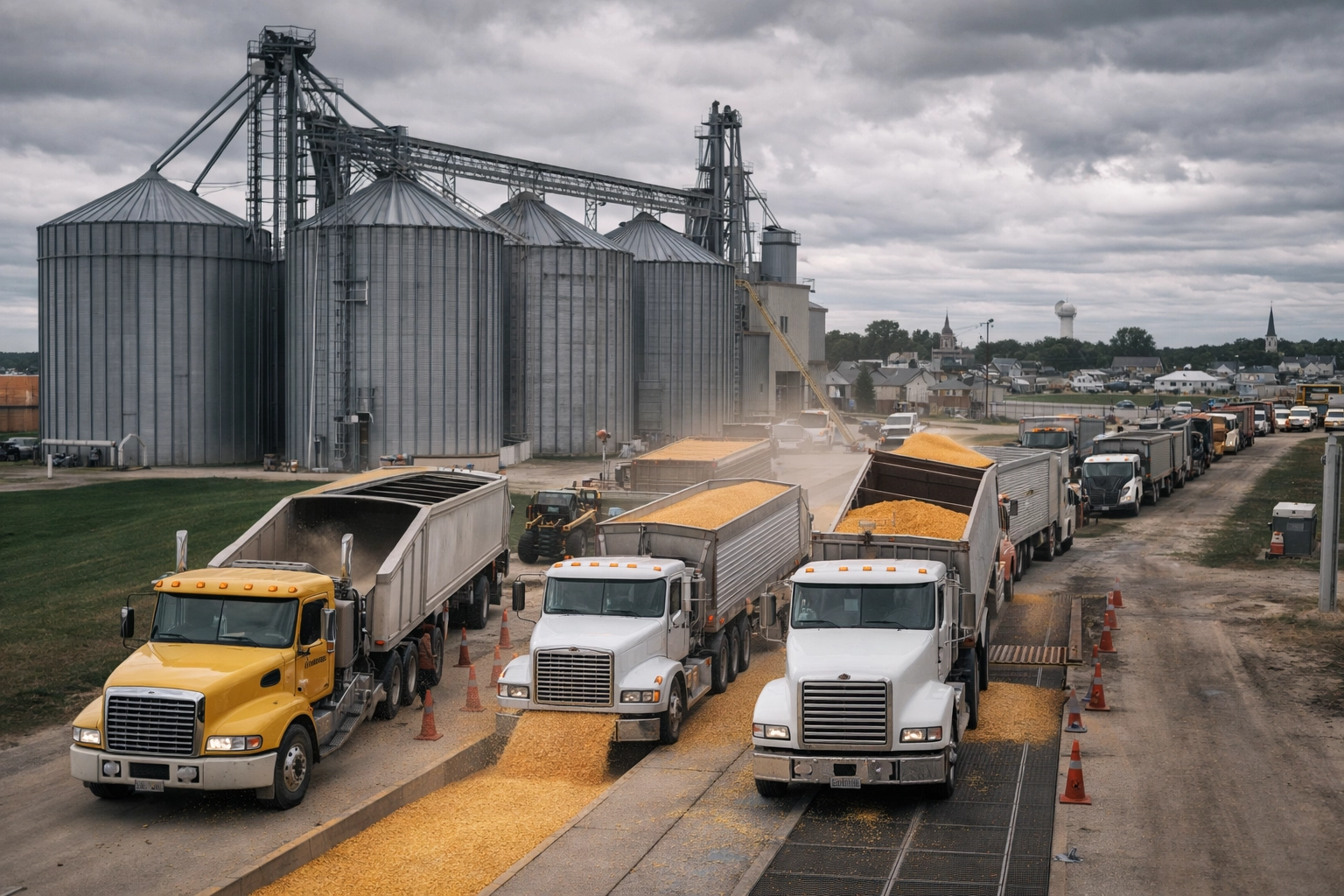
Policy Influence on Corn Planting Decisions
Government programs continue to reinforce corn’s position.
Crop insurance through USDA Risk Management Agency is heavily calibrated toward major commodity crops like corn.
- Revenue protection policies cover yield + price risk
- Indemnities are based on historical production
This creates a safety net—but only if farmers stay within established cropping systems.
Meanwhile, ethanol mandates and biofuel policies maintain baseline demand.
According to projections from the Congressional Budget Office , commodity-linked support programs will continue shaping planting decisions through the decade.
Global Market Reality: Why Corn Still Sells
Even in weaker markets, corn moves.
- U.S. exports remain strong, especially to Mexico, Japan, and Southeast Asia
- Brazil competition is rising, but logistics still favor U.S. supply chains
Local elevator bids may fluctuate, but unlike niche crops, corn rarely lacks a buyer.
For farmers, that liquidity matters as much as price.
Visual Insight: Planting Decision Framework
(Suggested infographic visualization)
- Soil Temperature vs Planting Timing Curve
- Yield Loss vs Delay Graph
- Cost vs Revenue Break-even Line
This kind of visualization reinforces a key truth: farming is not about maximizing yield—it’s about optimizing risk.
Before making planting decisions, it’s important to understand real-world field conditions. A detailed example can be seen in this Midwest corn farmer daily routine, where timing and soil moisture play a critical role.
Back to Jensen: The Human Side of the Decision
By 9:30 AM, Jensen is still standing at the edge of the field.
His father farmed this same land for 40 years. Back then, planting windows were wider. Costs were lower. Decisions felt simpler.
Now, every choice carries financial weight.
His daughter starts college next fall. Tuition bills are already scheduled.
He looks at the field again.
48°F.
Not ideal.
But workable.
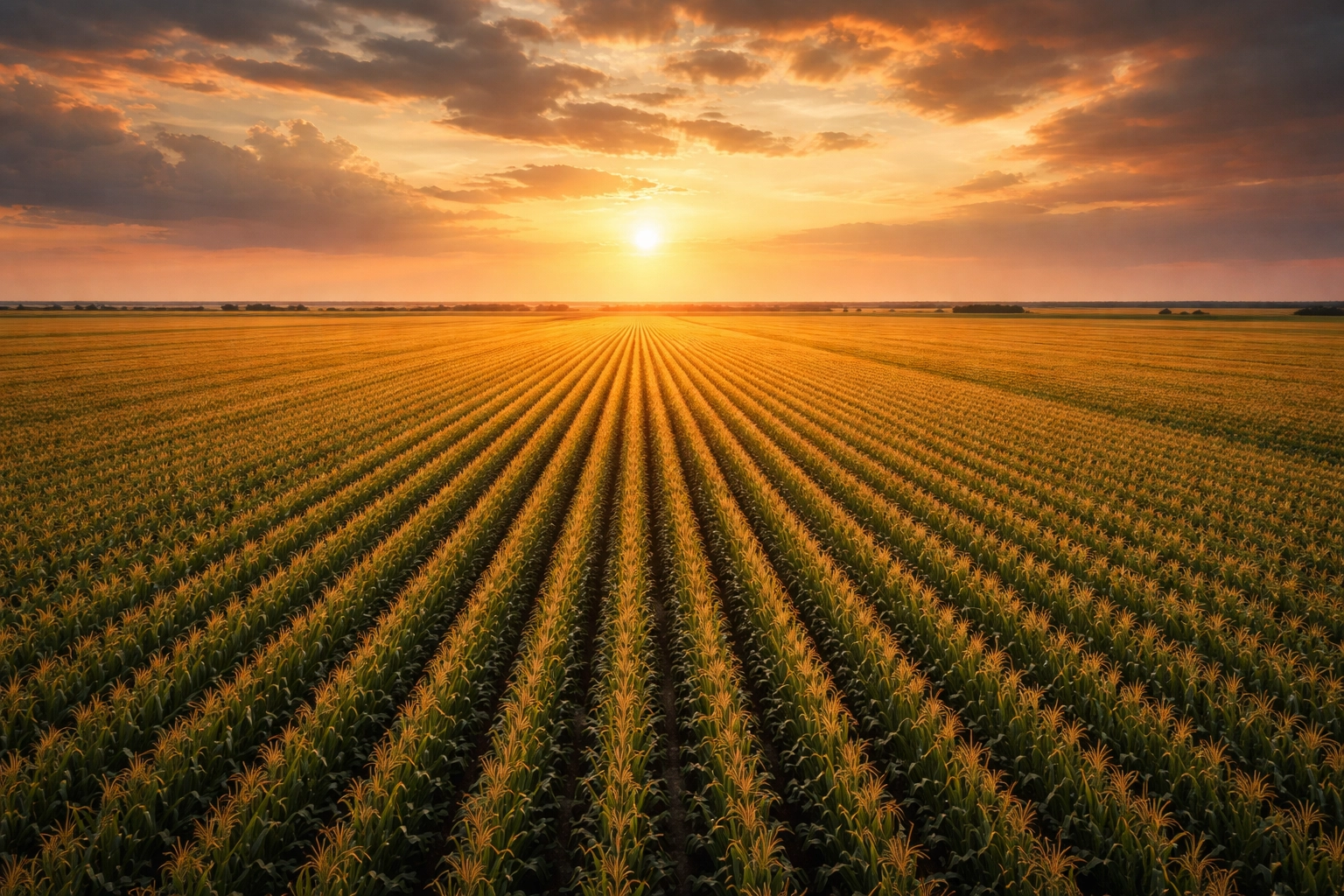
He climbs into the cab and starts planting.
Not because it’s the perfect decision—but because it’s the best one available.
The Future of Midwest Farming: Continuous Decisions Under Uncertainty
Corn’s dominance in 2026 is not about resistance to change. It’s about alignment with reality.
- Weather is more volatile
- Costs are higher
- Margins are tighter
- Decisions are more frequent
In this environment, farmers gravitate toward systems they understand.
Corn is not perfect—but it is predictable within uncertainty.
And that is its greatest advantage.
Across the Midwest, millions of similar decisions will unfold this spring. Some will pay off. Others won’t.
But together, they form the backbone of U.S. agriculture—not as a system of fixed outcomes, but as a chain of calculated risks.

Written by Janardan Tharkar – an agriculture content researcher and blogging professional with practical experience in farming education, digital publishing, and SEO content optimization. Janardan focuses on modern U.S. agriculture trends, smart farming technologies, irrigation systems, crop development, organic farming practices, and farmer-support programs to create helpful, practical, and trustworthy content for American readers.