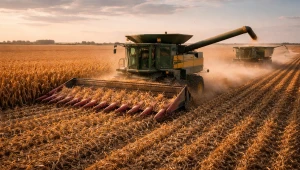
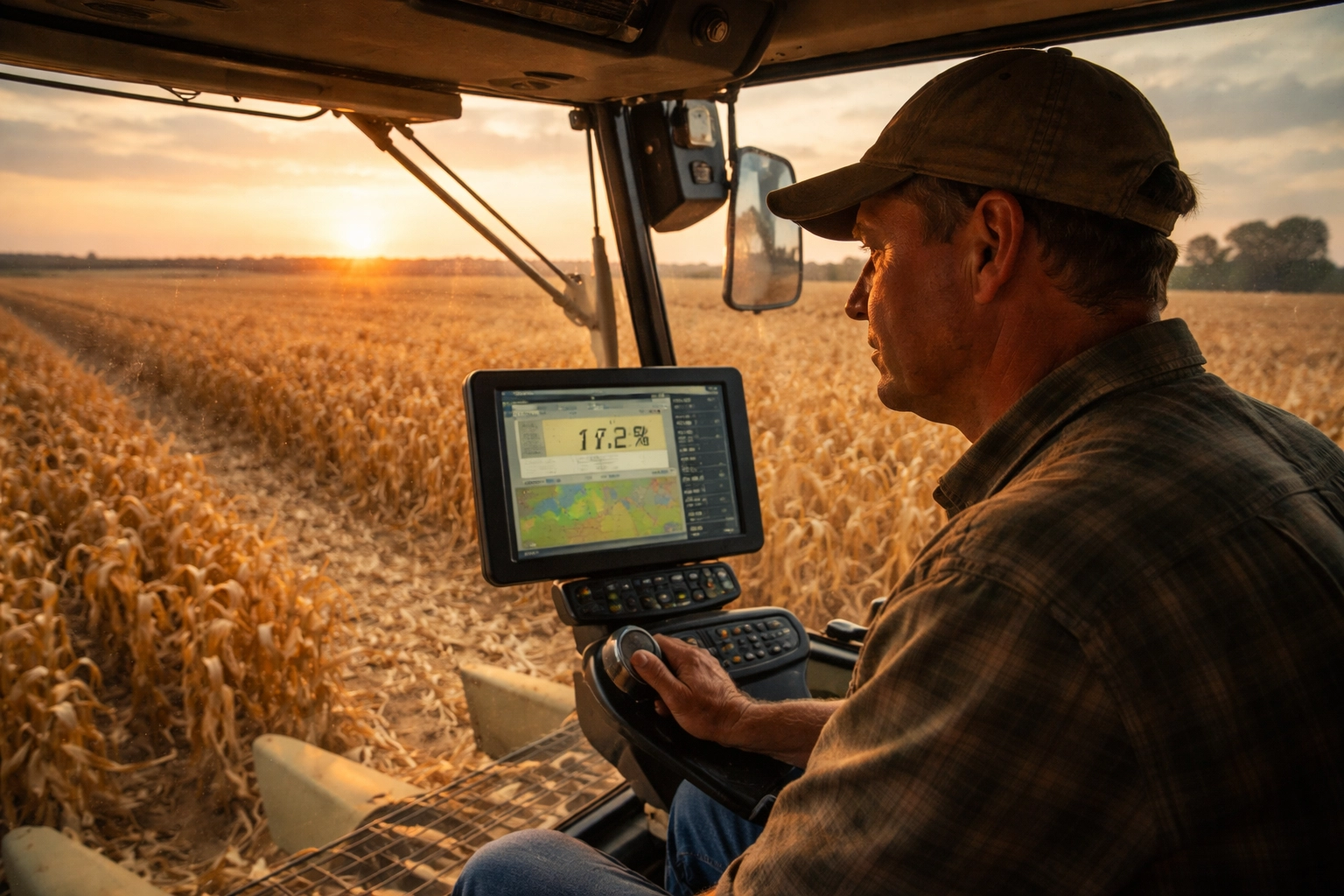
Before the sun had fully cleared the horizon, Tyler Beck was already in the cab of his combine outside Ames, Iowa, watching numbers instead of the sky.
Moisture: 19.8%
Ground speed: steady
Weather forecast: uncertain
The field looked ready. The crop had dried down enough to move. But not enough to feel comfortable.
He leaned back slightly, eyes moving between the monitor and the edge of the field.
“Another day might save me money,” he said. “Or it might cost me more.”
That quiet calculation—made before the first pass of the day—captures what corn farming in 2026 has become. Not a single big decision at harvest. But a series of small, continuous decisions. Each tied to cost. Each carrying risk.
And in a year where margins are tighter and variability is higher, those decisions matter more than ever.
What decisions do corn farmers make daily in 2026?
Corn farmers in 2026 make daily decisions about harvest timing, grain moisture, drying costs, storage vs selling, and equipment use. Each decision affects profitability due to tight margins, fluctuating prices, and higher input and financing costs.
Daily Corn Farming Decisions 2026 Begin with Harvest Timing and Moisture
The first decision most corn farmers face each day is whether to start harvesting—or wait.
Corn ideally comes off the field at 15–16% moisture. But in 2026, many fields across the Midwest are being harvested closer to 18–22%, depending on weather patterns and field conditions.
According to USDA National Agricultural Statistics Service, harvest progress this season is tracking close to historical averages. But that doesn’t reflect how difficult the timing decisions have become.
At higher moisture levels, farmers are balancing two competing risks:
- Harvest early → Pay drying costs, but reduce exposure to weather
- Wait longer → Save on drying, but risk lodging, storms, or delays
This decision used to be guided by experience. In 2026, it is guided by math.
Because every percentage point of moisture has a direct dollar value.
Across the U.S. Corn Belt, planting decisions are increasingly tied to market signals and policy expectations. As explored in our in-depth Corn Belt field analysis, these choices reflect a complex mix of agronomy, economics, and timing.
Corn Drying Cost per Bushel: How Moisture Impacts Profit in 2026
Drying corn is one of the most immediate and measurable costs tied to harvest timing.
In 2026, typical drying costs fall between:
- $0.04 to $0.06 per bushel per 1% moisture removed
So if a farmer harvests at 20% moisture instead of 15%, that extra 5% translates into:
- $0.20 to $0.30 per bushel in drying costs
For a field yielding 180 bushels per acre, that becomes:
- $36 to $54 per acre
Multiply that across hundreds or thousands of acres, and the decision becomes significant.
But waiting isn’t free either.
Standing corn exposed to late-season weather carries its own risks—wind damage, stalk lodging, ear drop, and delayed harvest windows.
“You’re choosing between paying now or gambling later,” Beck said. “That’s really what it comes down to.”
In 2026, there is no perfect timing—only acceptable risk.
Corn Yield Variability Across the Midwest in 2026
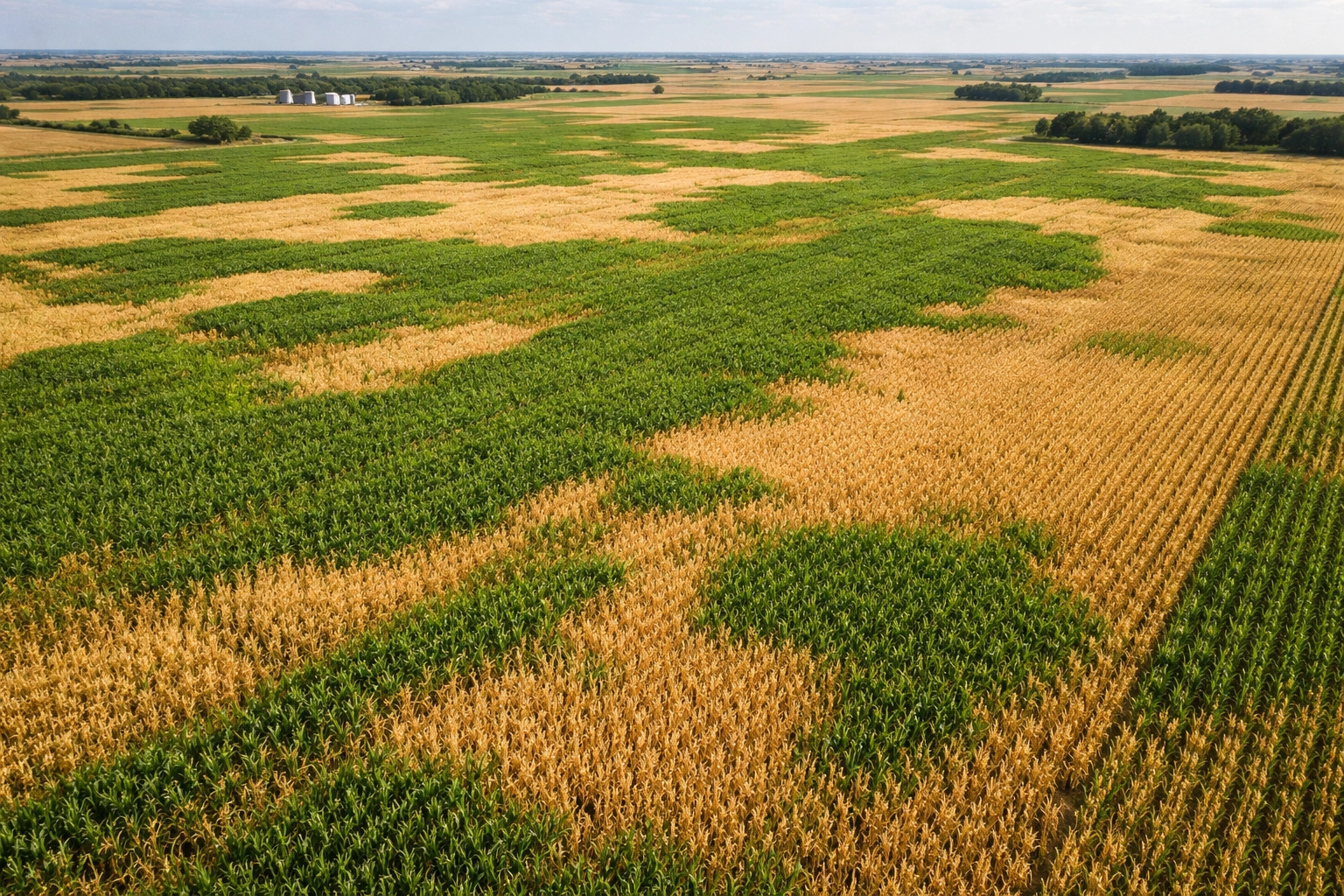
Moisture is only part of the equation. Yield variability has made decision-making more complex.
Across the Midwest:
- Strong fields in Iowa and Minnesota are reaching 190–210 bushels per acre
- Mixed regions in Illinois and Indiana range between 150–200 bushels
- Stress-affected areas in Nebraska drop closer to 140–165 bushels
The national average is expected to sit near 180 bushels per acre, according to early estimates from the USDA World Agricultural Outlook Board.
But averages don’t guide decisions—fields do.
A farmer harvesting a high-yield field might accept higher drying costs because the volume offsets the expense. A lower-yield field doesn’t offer that flexibility.
This means each field is treated differently. Each pass of the combine carries its own financial logic.
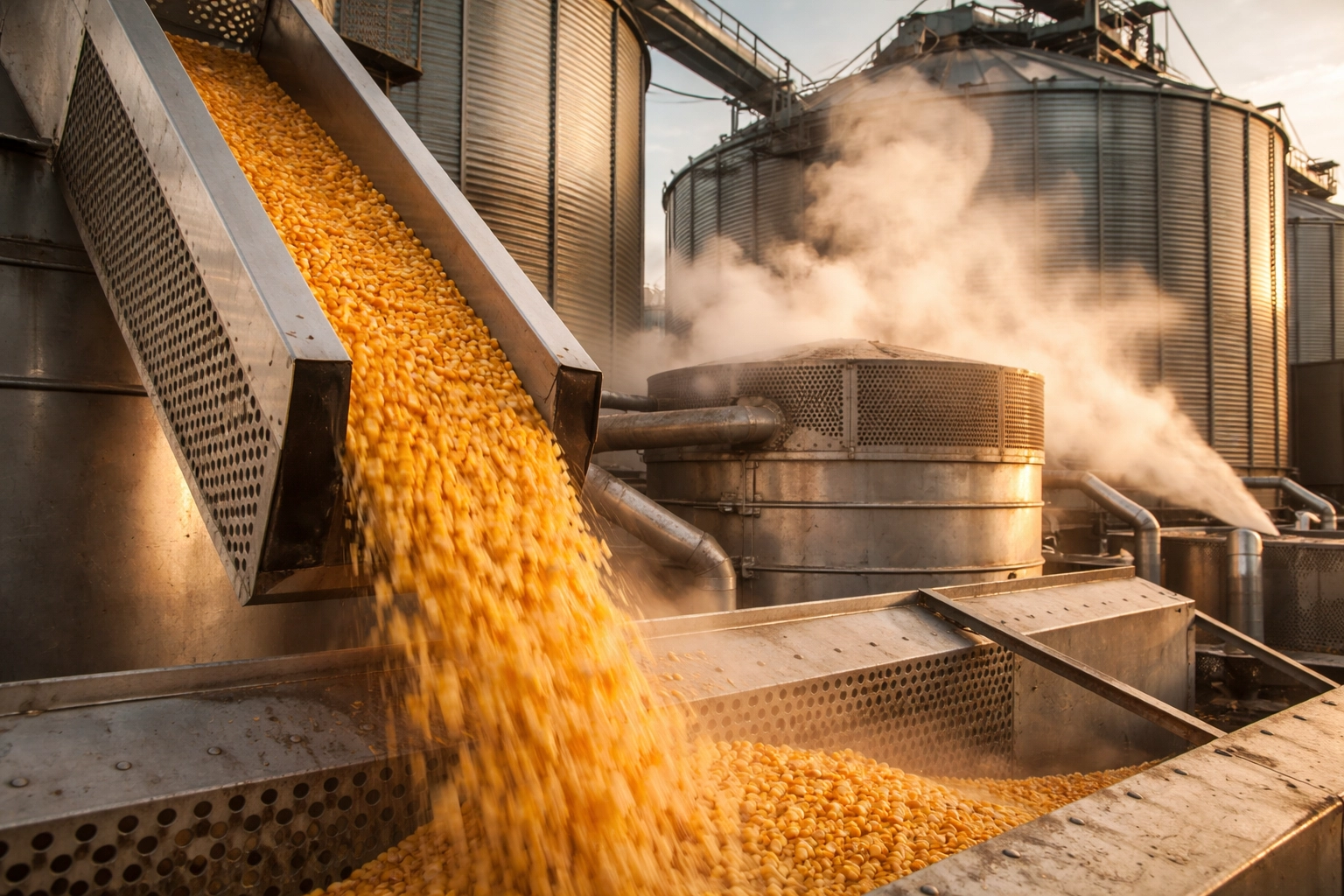
Corn Prices 2026: How Market Pressure Shapes Daily Selling Decisions
Once corn is harvested, the next decision begins almost immediately: sell or store.
During the 2026 harvest window, corn prices have generally ranged between:
- $4.20 and $4.60 per bushel
For many operations, breakeven costs are close to that range.
According to USDA Economic Research Service, production costs remain elevated due to:
- Fertilizer expenses still above historical averages
- Fuel and machinery costs remaining high
- Interest rates increasing financing costs
This creates a narrow margin.
Selling at harvest secures revenue—but may lock in limited profit.
Waiting for higher prices introduces uncertainty—and cost.
“Every load you haul out,” Beck said, “you’re making a marketing decision whether you want to or not.”
In 2026, grain marketing is no longer a seasonal strategy. It is a daily one.
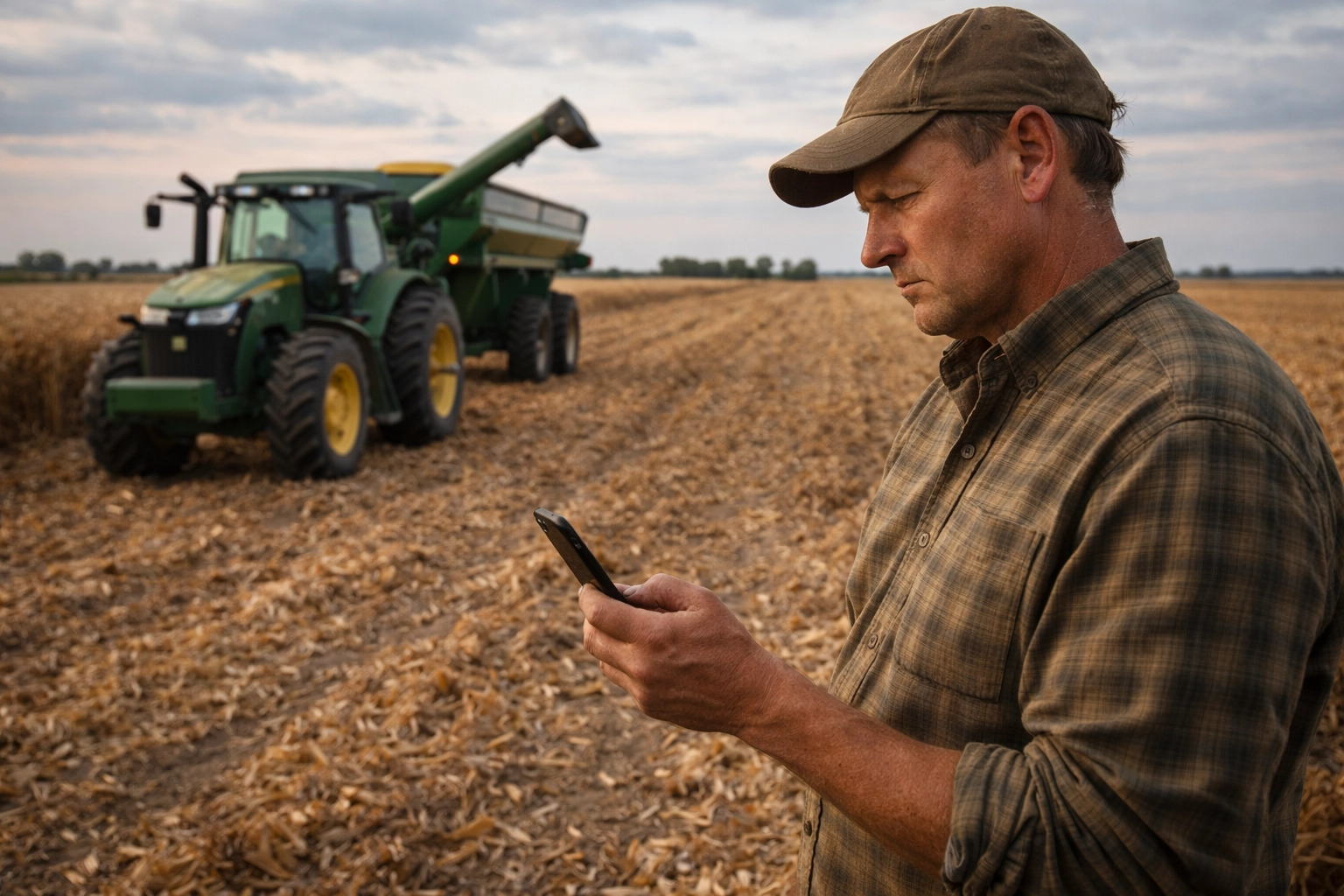
Corn Storage Cost per Bushel and Interest Rate Impact in 2026
Storage decisions have become more complex than in previous years.
Typical on-farm storage costs include:
- $0.03 to $0.05 per bushel (handling, aeration, maintenance)
But the larger cost comes from financing.
With interest rates around 7–9%, holding grain for 6–8 months adds:
- $0.25 to $0.35 per bushel in interest cost
Total holding cost:
- $0.30 to $0.40 per bushel
According to the Federal Reserve Bank of Kansas City, agricultural lending conditions in 2026 reflect increased borrowing costs and tighter repayment expectations.
This means storing corn only makes sense if prices rise enough to cover that cost.
Farmers are no longer asking, “Will prices go up?”
They are asking, “Will prices go up enough?”
That difference changes behavior.
Equipment, Labor, and Time Pressure in Corn Harvest Operations
Beyond crops and markets, daily decisions extend into operations.
Harvest is a race against time—and time has become more expensive.
Farmers must constantly decide:
- Push equipment harder → finish faster, risk breakdown
- Slow down → reduce stress, risk missing weather windows
Repair costs have risen. Labor shortages still exist in parts of the Midwest. Parts availability, while improved from previous years, can still delay operations.
A breakdown during peak harvest isn’t just inconvenient—it’s expensive.
Some farmers run longer hours to stay ahead of weather. Others pace themselves to protect machinery.
Neither approach is risk-free.
Before making planting decisions, it’s important to understand real-world field conditions. A detailed example can be seen in this Midwest corn farmer daily routine, where timing and soil moisture play a critical role.
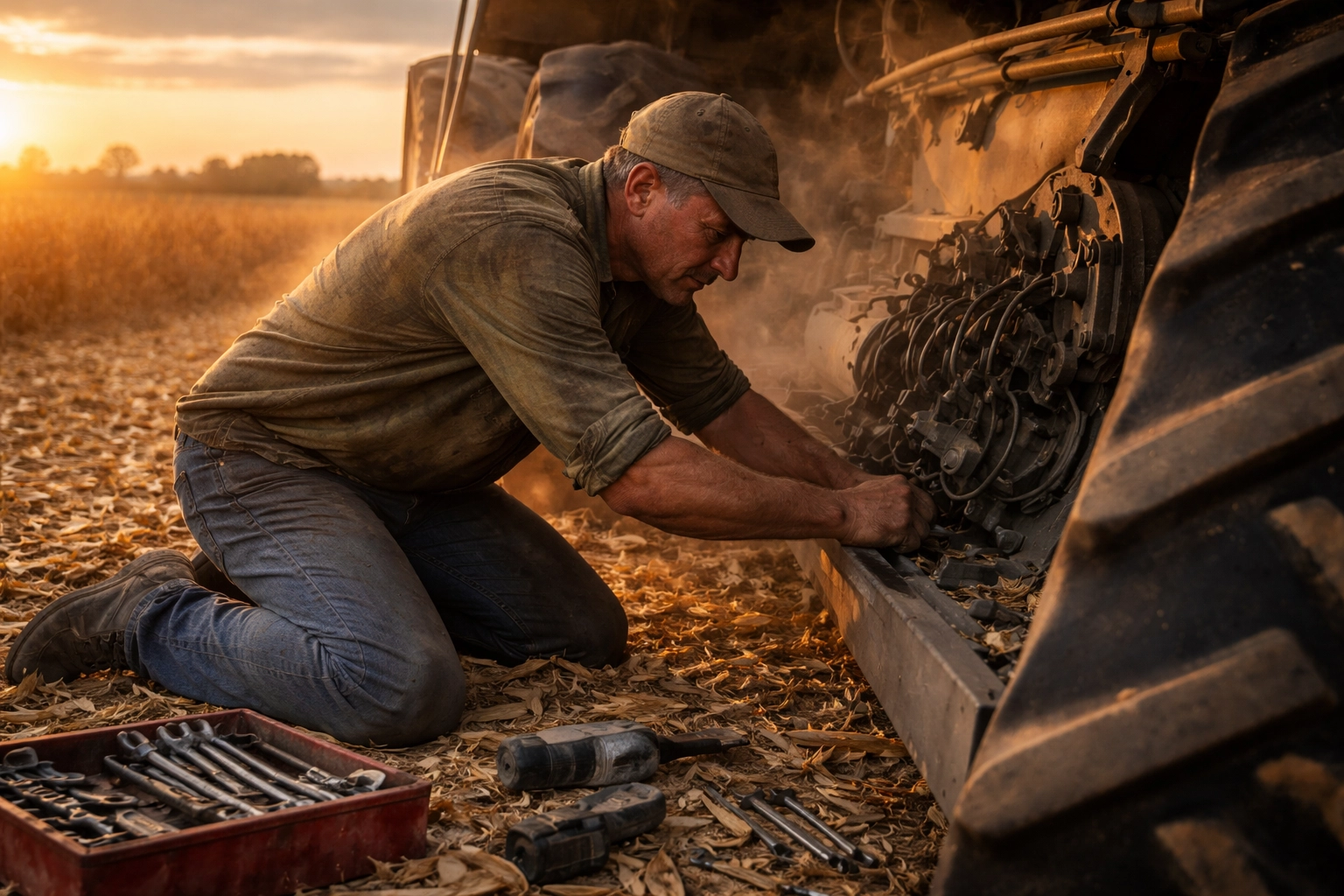
Corn Farming Decision Comparison 2026: Cost vs Risk Trade-offs
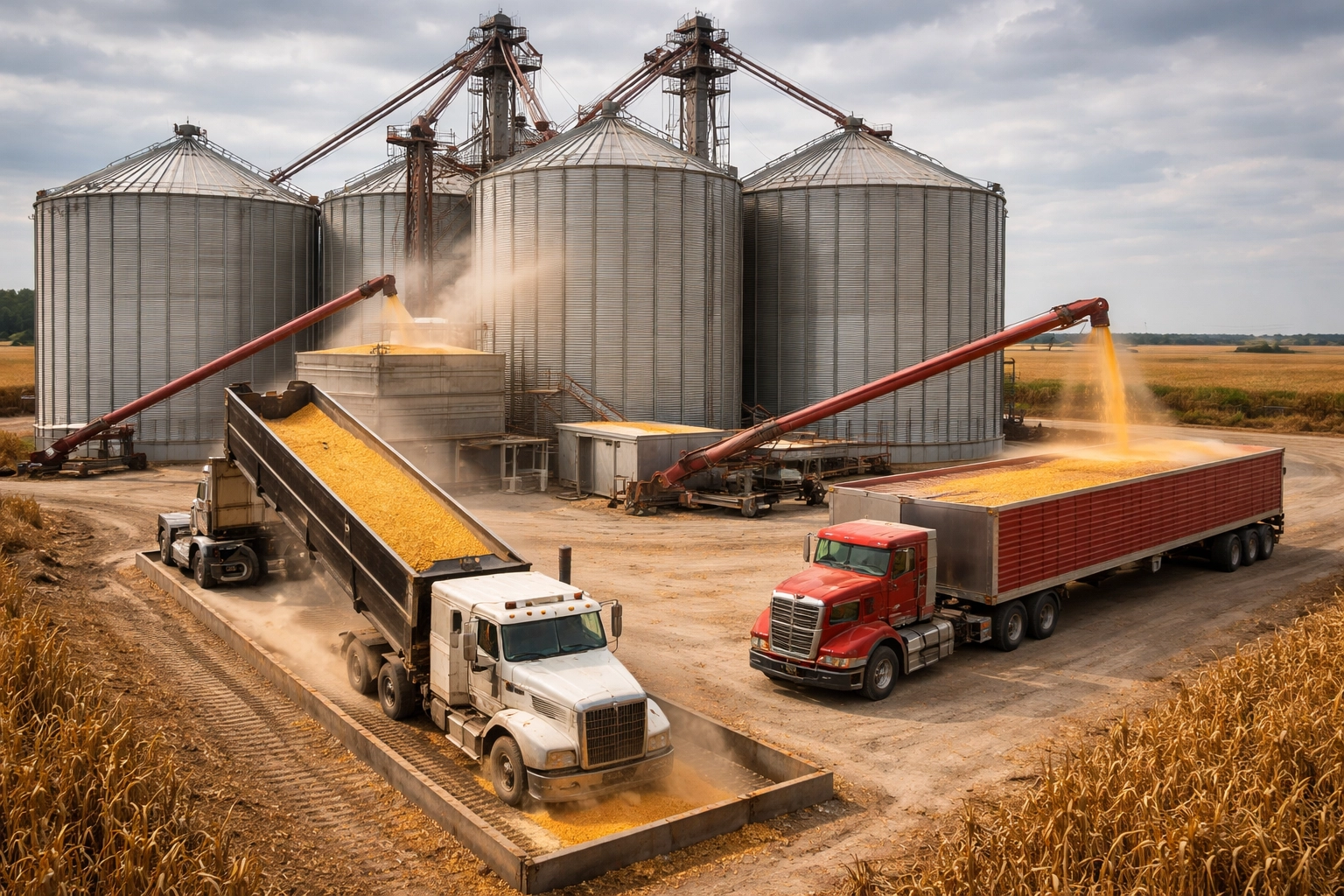
| Decision Area | Immediate Action (Known Cost) | Delayed Action (Potential Risk) |
|---|---|---|
| Harvest Timing | $0.20–$0.30/bu drying cost | Weather damage, yield loss |
| Grain Marketing | Sell at ~$4.30/bu | Uncertain future price movement |
| Storage | Avoid $0.30–$0.40/bu holding cost | Need price increase to break even |
| Equipment Strategy | Faster harvest, higher wear | Slower pace, weather exposure |
This comparison highlights the core reality of 2026:
Every decision now carries a visible cost—or an invisible risk.
There is no neutral option.
In earlier seasons, one path often felt safer. In 2026, each option has consequences. Farmers are not choosing between good and bad decisions. They are choosing between different types of exposure.
That shift has changed the rhythm of farming itself.
U.S. Farm Policy and Crop Insurance Impact on Corn Farming Decisions
Policy decisions made months earlier continue to shape daily operations.
Crop insurance remains one of the most important tools farmers rely on. It does not eliminate losses—but it stabilizes income.
According to the Congressional Budget Office, federal agricultural spending is expected to remain steady, though farm bill discussions continue.
In 2026:
- Farmers with stronger insurance coverage may take more marketing risk
- Others may prioritize immediate sales to secure cash flow
Policy doesn’t dictate daily decisions—but it defines the safety net beneath them.
Global Corn Market 2026: How Brazil and Exports Affect U.S. Farmers
Even the most local decisions are influenced by global supply.
Brazil’s expanding corn production continues to shape international markets. Increased global supply has limited upward price movement in the U.S.
According to USDA Foreign Agricultural Service:
- Global corn supply remains strong
- Export competition has increased
- Price sensitivity has intensified
For farmers, this means timing matters more than ever.
“You’re watching your own bins,” Beck said. “But you’re really watching the global market.”
Mental Pressure and Risk Management in Corn Farming 2026
What doesn’t show up in reports or data tables is the mental side of these decisions.
Farmers are making dozens of decisions each week:
- When to harvest
- When to sell
- When to store
- When to repair
- When to wait
Each carries financial weight.
In 2026, those decisions feel heavier—not because they are new, but because the margin for error is smaller.
“It’s not one decision that gets you,” a farmer in Illinois said. “It’s ten small ones that stack up.”
That accumulation defines the season.
Precision Agriculture and Technology in Corn Farming Decisions
Technology provides more information than ever before.
Farmers now have access to:
- Real-time moisture data
- Yield maps
- Satellite imagery
- Precision field analytics
A single field may show:
- Zones above 200 bushels per acre
- Areas around 170–180
- Pockets below 150
This level of detail helps—but it also complicates decisions.
Knowing variability doesn’t remove uncertainty. It reveals it.
Farmers must decide how to act on that information—economically, not just agronomically.
While cost pressures and weather risks dominate planning, the real impact becomes visible at the field level. A closer look at a
day in the life of a Midwest corn farmer shows how these decisions translate into action during planting season.
What Daily Corn Farming Decisions Mean for the U.S. Agriculture Economy
When multiplied across millions of acres, individual decisions shape the broader system.
Corn supports:
- Livestock feed supply
- Ethanol production
- Export markets
In 2026, daily farm decisions are influencing:
- Grain movement timing
- Storage levels
- Market supply flow
These changes are subtle—but they matter.
The system remains stable. But it is less predictable.
Corn Farming in 2026: A Season Defined by Daily Decisions
As the sun set over Beck’s farm, the combine finally rolled forward. Moisture had dropped just enough to justify the start.
Not perfect. Not ideal.
But acceptable.
That’s what defines farming in 2026.
Not a single outcome. Not one defining moment. But a sequence of decisions—each one measured, each one carrying weight.
Because in modern U.S. agriculture, success is no longer defined only by how much you grow.
It is defined by how well you manage what comes with it.
One decision at a time.

Written by Janardan Tharkar – an agriculture content researcher and blogging professional with practical experience in farming education, digital publishing, and SEO content optimization. Janardan focuses on modern U.S. agriculture trends, smart farming technologies, irrigation systems, crop development, organic farming practices, and farmer-support programs to create helpful, practical, and trustworthy content for American readers.