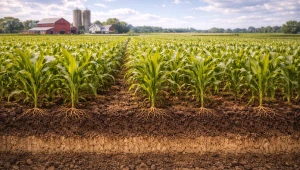
Soil is the foundation of every successful American farm and backyard garden. We often talk about fertilizers, irrigation, seeds, and weather — but one factor quietly controls all of it:
Soil pH.
If you are farming, gardening, or managing land anywhere in the USA, understanding soil pH can save money, increase yields, reduce crop failure, and improve soil health long-term.
In this guide, I’ll break everything down in a simple, experience-based, beginner + intermediate friendly way so you can confidently evaluate and manage soil pH for real results in the field.
What Is Soil pH? (And Why It Matters in the USA)
Soil pH tells us how acidic or alkaline the soil is.
It is measured on a scale from 0 to 14:
- Below 7 = Acidic soil
- 7 = Neutral soil
- Above 7 = Alkaline soil
In simple terms:
Soil pH decides how well your crops eat.
Even if you add the world’s best fertilizer, your plants cannot absorb nutrients if soil pH is wrong. That’s why many American farmers over-apply fertilizers and still see poor results.

How Soil pH Affects Crop Growth
Soil pH affects:
- Nutrient availability
- Microorganism activity
- Root development
- Fertilizer efficiency
- Disease resistance
- Yield quality
🧪 Nutrient Availability Depends on pH
Essential nutrients like nitrogen, phosphorus, potassium, calcium, magnesium, and micronutrients only remain available within certain pH levels.
If pH is wrong:
- Nutrients get locked
- Fertilizer gets wasted
- Plants become weak
- Growth becomes slow
Ideal Soil pH Range for Most USA Crops
| Crop Type | Ideal pH Range |
|---|---|
| Most Field Crops | 6.0 – 7.0 |
| Vegetables | 6.0 – 6.8 |
| Fruits | 5.5 – 7.0 |
| Alfalfa | 6.5 – 7.5 |
| Corn | 5.8 – 7.0 |
| Wheat | 6.0 – 7.5 |
| Potatoes | 4.8 – 6.5 |
| Blueberries | 4.5 – 5.5 |
Tip: Always check crop-specific requirements. Some crops love acidic soil; others don’t.
Common Soil Types in the USA and Their pH Behavior
Different US regions naturally lean toward different soil pH levels:
- Midwest (Corn Belt): Slightly acidic to neutral
- Southeast USA: More acidic due to rainfall and soil type
- Western USA: Often alkaline due to dry climate and mineral content
- Northern USA: Typically slightly acidic
- Coastal areas: Vary widely depending on sand & salt exposure
This is why USA-focused soil management matters — what works in Iowa may not work in Arizona.
Farming success in America isn’t only about tractors, seeds, irrigation, or technology. It starts with the soil underneath our boots.

Signs Your Soil pH Is Wrong
Sometimes crops tell you, even before you test your soil.
❌ Signs of Acidic Soil (Low pH)
- Yellowing leaves
- Stunted growth
- Poor root development
- Weak stands
- Aluminum toxicity risk
- Low nitrogen efficiency
❌ Signs of Alkaline Soil (High pH)
- Pale or yellow leaves
- Iron deficiency symptoms
- Poor fruiting
- Salt crust on soil
- Hard, compact soil
If you recognize these issues — pH testing is your next step.
How to Test Soil pH in the USA
There are three reliable methods.
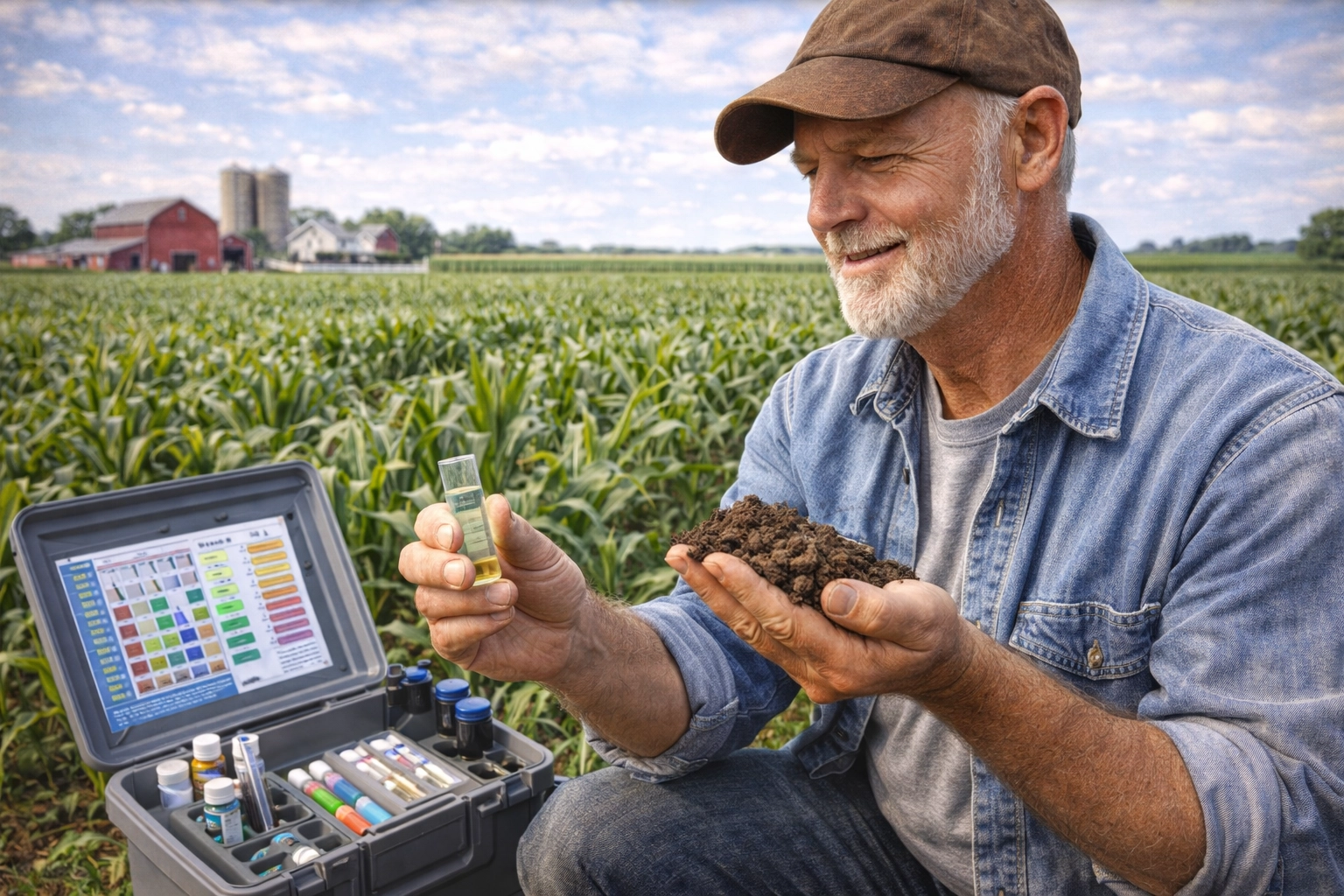
🧪 1. Laboratory Soil Testing (Most Accurate)
Recommended for:
- Farmers
- Commercial growers
- Home gardeners who want accuracy
You can send samples to:
- USDA-approved labs
- State agricultural universities
- Cooperative Extension Services
🏡 2. Home Test Kits
Available at garden stores or online.
They use color indicators to estimate pH.
Good for:
- Backyard gardeners
- Small growers
⚙️ 3. Digital Soil pH Meters
Fast, reusable, and simple.
However:
- Accuracy varies
- Needs calibration sometimes
Recommended Soil pH Levels for Popular USA Crops
🌽 Corn
- Ideal pH: 6.0 – 6.8
- Too acidic reduces nitrogen effectiveness.
🥔 Potatoes
- Prefer slightly acidic soil
- Ideal: 4.8 – 6.0
🫐 Blueberries
- Love acidic soil
- Ideal: 4.5 – 5.5
🥬 Vegetables (Tomato, Cabbage, Peppers)
- 6.0 – 6.8
Many farmers—especially beginners and small landowners—are asking a very real question as we move toward the next season:
“Which cash crops will actually make money in the USA in 2026?”
How to Fix Soil pH
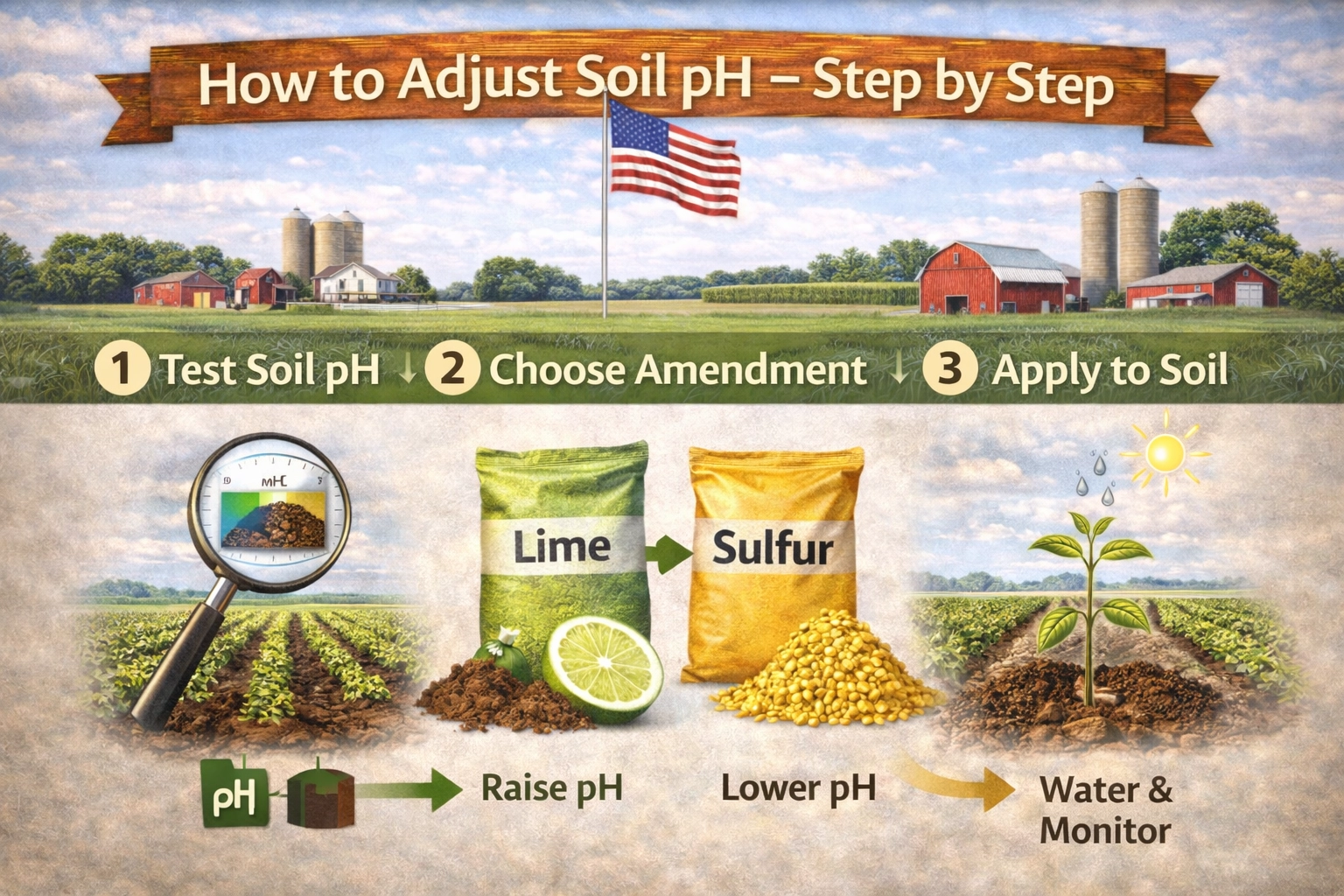
Once you know your soil pH, here’s how to correct it.
If Soil pH Is Too Low (Acidic Soil)
✅ Apply Lime
Lime helps neutralize acidity.
Types:
- Agricultural lime
- Dolomitic lime (adds magnesium)
- Pelletized lime (easy to apply)
Apply Based On:
- Soil test recommendation
- Soil type
- Crop needs
Never apply blindly.
Trusted Source – University Extension Guide
If Soil pH Is Too High (Alkaline Soil)
✅ Apply Elemental Sulfur
Helps acidify soil slowly.
Other Options:
- Organic compost
- Gypsum (for sodium problems)
- Acidifying fertilizers (like ammonium sulfate)
Again:
Always follow professional testing guidance.
FoxFarm soil has become a household name among gardeners and growers in the United States—and for good reason. Many beginners and even intermediate growers face the same frustrating problem: plants that look healthy at first but quickly stall, turn yellow, or fail to produce strong roots.
How Long Does It Take to Change Soil pH?
Be realistic:
- Lime may take 3–6 months
- Sulfur can take 2–6 months
- Sandy soils change faster
- Clay soils take longer
- Water, temperature, biology influence speed
Soil health improvement is not instant — it’s a process.
Soil pH and USA Climate Considerations
Rainfall, irrigation type, and weather affect soil chemistry.
- Heavy rainfall regions → More acidic soils
- Dry climate → More alkaline soils
- Over-irrigation → Causes salt buildup
- Flooding → Alters soil chemistry
Managing pH is part of smart American farming practice.
Soil pH and Fertilizer Efficiency
If your soil pH is wrong:
- Fertilizer costs increase
- Yields decrease
- Nutrients are wasted
- Environmental pollution risk increases
Correct pH means:
- Less fertilizer needed
- Better crop growth
- Stronger plant immunity
- More profit
Many USA farmers have doubled yield simply after correcting pH — even without increasing fertilizer.
Trusted Reading: Wikipedia – Soil pH scientific explanation)
Real Experience Tip
Farmers who test soil every 1–2 years consistently experience better productivity than those who don’t.
Backyard gardeners also benefit greatly — healthy lawns, greener plants, and better vegetables
Frequently Asked Questions (USA Focused)
1️⃣ How often should I test soil pH in the USA?
Ideally:
- Farms: Every 1–2 years
- Gardens: Every 2–3 years
- Problem soils: Yearly
Many states offer affordable soil testing through Cooperative Extension programs.
2️⃣ Can wrong soil pH kill crops?
Yes.
If extremely acidic or alkaline, plants cannot absorb nutrients. Growth weakens, leaves yellow, yields reduce, and plants may eventually fail.
3️⃣ What is the best soil pH for lawns in the USA?
Most American lawns prefer:
6.0 – 7.0
This keeps grass greener, reduces disease, and supports strong roots.
4️⃣ Can organic farming manage soil pH?
Absolutely.
Organic solutions include:
- Compost
- Manure (balanced usage)
- Biochar
- Crop rotation
- Cover crops
But severe pH issues still require lime or sulfur.
5️⃣ Is soil pH the same everywhere on my farm?
No.
Even one field can have different pH zones. Precision agriculture and zone testing are highly beneficial.
Conclusion: Healthy Soil = Healthy Crops
Understanding soil pH isn’t “extra knowledge” — it’s essential American farming wisdom.
When you manage pH correctly:
✔ Crops grow stronger
✔ Fertilizer works better
✔ Soil life improves
✔ Yields increase
✔ Profit grows
If you’re serious about crop success in the USA — start with soil pH. Test it, understand it, and manage it. Your soil will reward you for years.

Written by Janardan Tharkar – an agriculture content researcher and blogging professional with practical experience in farming education, digital publishing, and SEO content optimization. Janardan focuses on modern U.S. agriculture trends, smart farming technologies, irrigation systems, crop development, organic farming practices, and farmer-support programs to create helpful, practical, and trustworthy content for American readers.