
American agriculture entered 2026 carrying a contradiction that many farmers feel every day but few outside the sector fully understand. Commodity prices are not historically low, yet farm profitability feels tighter than expected. Soybean farmers across the United States are operating in an environment where revenue appears respectable on paper, but real profit per acre is increasingly fragile.
Across the Midwest—from Iowa and Illinois to Indiana, Minnesota, and Nebraska—producers are navigating a complicated mix of rising input costs, volatile export demand, high land rents, and elevated borrowing costs. These pressures are subtle but powerful. They rarely appear in simple commodity price charts, yet they shape almost every financial decision farmers make.
Understanding soybean farming profit per acre in 2026 requires looking beyond yield averages or Chicago futures prices. The deeper story lies in the interaction between macroeconomic forces, global supply chains, and the cost structure of modern agriculture. Soybean profitability today is less about growing beans efficiently and more about surviving within a complex economic system that has gradually become more capital intensive.

Why Soybean Farming Profits Are Tight in 2026
The financial environment surrounding American agriculture changed significantly after the inflation surge of the early 2020s. Interest rates increased across the economy, and agriculture—an industry heavily dependent on credit—felt the impact quickly.
Farmers rely on operating loans to purchase seed, fertilizer, fuel, and crop protection products months before harvest income arrives. When interest rates rise, those operating costs climb as well.
Regional farm credit surveys published by the Federal Reserve Bank of Kansas City show that agricultural loan interest rates reached their highest levels in more than a decade, significantly increasing the cost of financing seasonal production expenses.
(Reference: https://www.kansascityfed.org/agriculture/agfinance/)
At the same time, the cost of machinery financing and land purchases has also increased. Equipment loans, land mortgages, and operating credit now carry noticeably higher interest burdens than they did just a few years ago.
For soybean farmers, whose margins are typically narrower than specialty crop producers, these financing costs matter enormously. Even a small increase in interest rates can reduce profit per acre when operating margins are already thin.
Meanwhile, export markets remain unpredictable. China, the world’s largest soybean importer, continues to play a decisive role in global demand. Trade tensions, currency fluctuations, and competition from South America make soybean markets highly sensitive to geopolitical shifts.
The result is a farm economy where profitability depends not just on crop performance but on global macroeconomic conditions.
Read Also :

Why Soybean Export Trends Matter for Farmers
Global demand, trade policies, and export competition are reshaping soybean markets. Discover why these trends are important for farmers and agricultural planning.
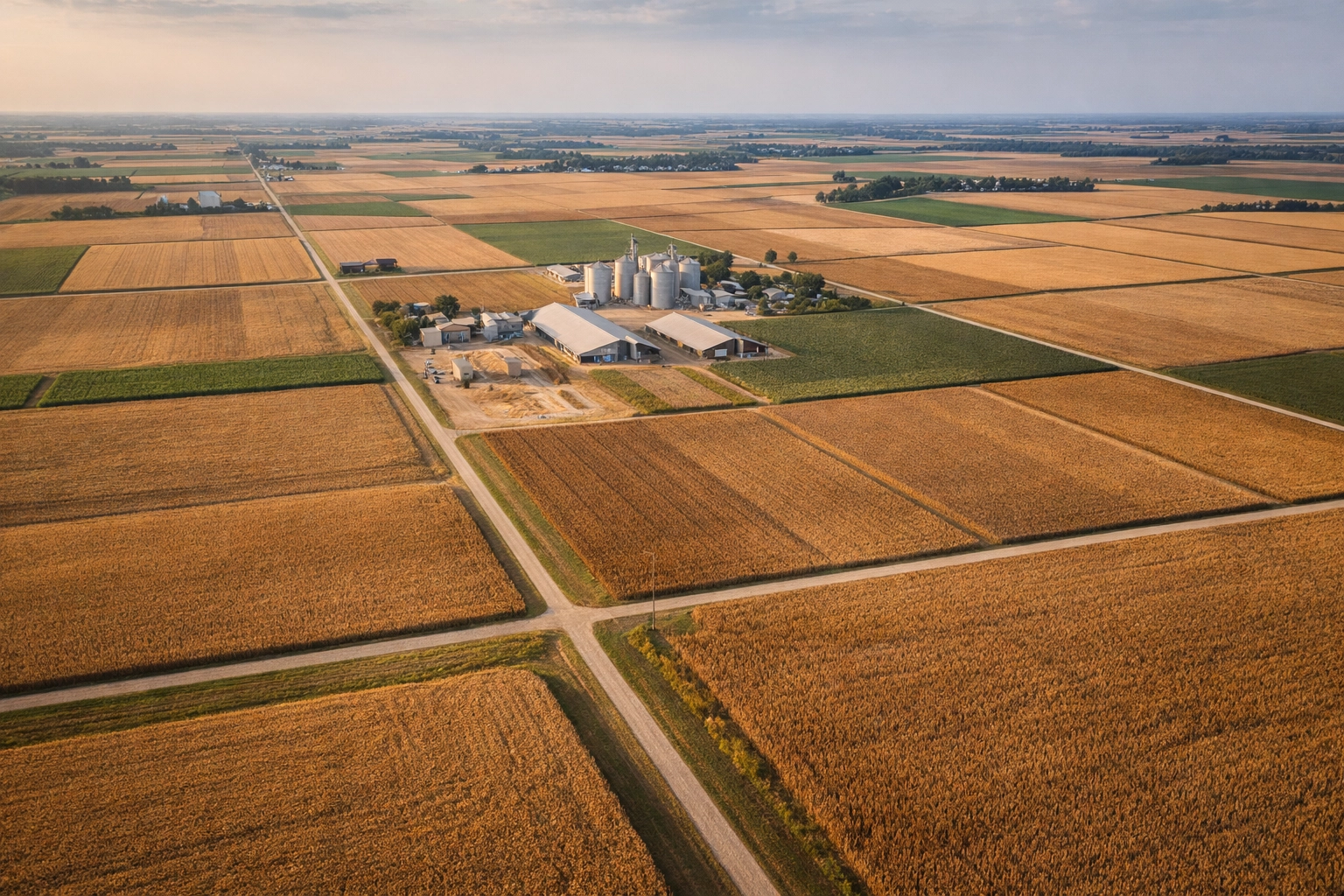
U.S. Soybean Supply and Demand Outlook in 2026
Soybeans are among the most globally traded agricultural commodities. Prices reflect worldwide production levels, feed demand for livestock, vegetable oil consumption, and biofuel policies.
The United States remains one of the world’s largest soybean producers, but its dominance has gradually declined as South American production has expanded.
According to recent crop outlooks from the United States Department of Agriculture, global soybean production has grown steadily over the past decade, driven largely by expansion in Brazil and Argentina.
(Reference: https://www.usda.gov/oce/commodity/wasde)
As supply expands globally, price spikes become less frequent. Even when weather reduces U.S. production, global inventories may cushion price increases.
Demand, however, continues to grow. Soybeans are critical for livestock feed and vegetable oil production, making them central to the global food system.
Analysis from the USDA Economic Research Service indicates that soybean meal remains one of the most widely used protein sources in livestock feed worldwide.
(Reference: https://www.ers.usda.gov/topics/crops/soybeans-oil-crops/)
Despite strong demand, global supply growth often keeps markets balanced. That balance prevents extreme price increases but also limits profitability for producers when costs rise.
Weather adds another layer of uncertainty. National average soybean yields typically range between 50 and 52 bushels per acre, but farm-level outcomes vary widely depending on soil conditions, rainfall patterns, and management practices.
A farm producing 60 bushels per acre may generate strong margins, while a neighboring farm facing drought conditions could struggle to break even.
Average Soybean Revenue per Acre in the United States
To understand soybean profitability, analysts begin with three core variables:
- Yield per acre
- Market price per bushel
- Total production cost
A typical Midwest scenario in 2026 might look like this:
- Average yield: 52 bushels per acre
- Soybean price: $12.50 per bushel
- Gross revenue: roughly $650 per acre
At first glance, this appears profitable. But revenue alone does not determine profitability.
Production costs include:
- seed
- fertilizer
- herbicides and pesticides
- fuel
- machinery maintenance
- crop insurance
- labor
- land rent
Across much of the Midwest, total soybean production costs often range between $500 and $650 per acre, depending heavily on land rent and machinery costs.
That means profitability can swing dramatically based on relatively small changes in yield or market price.
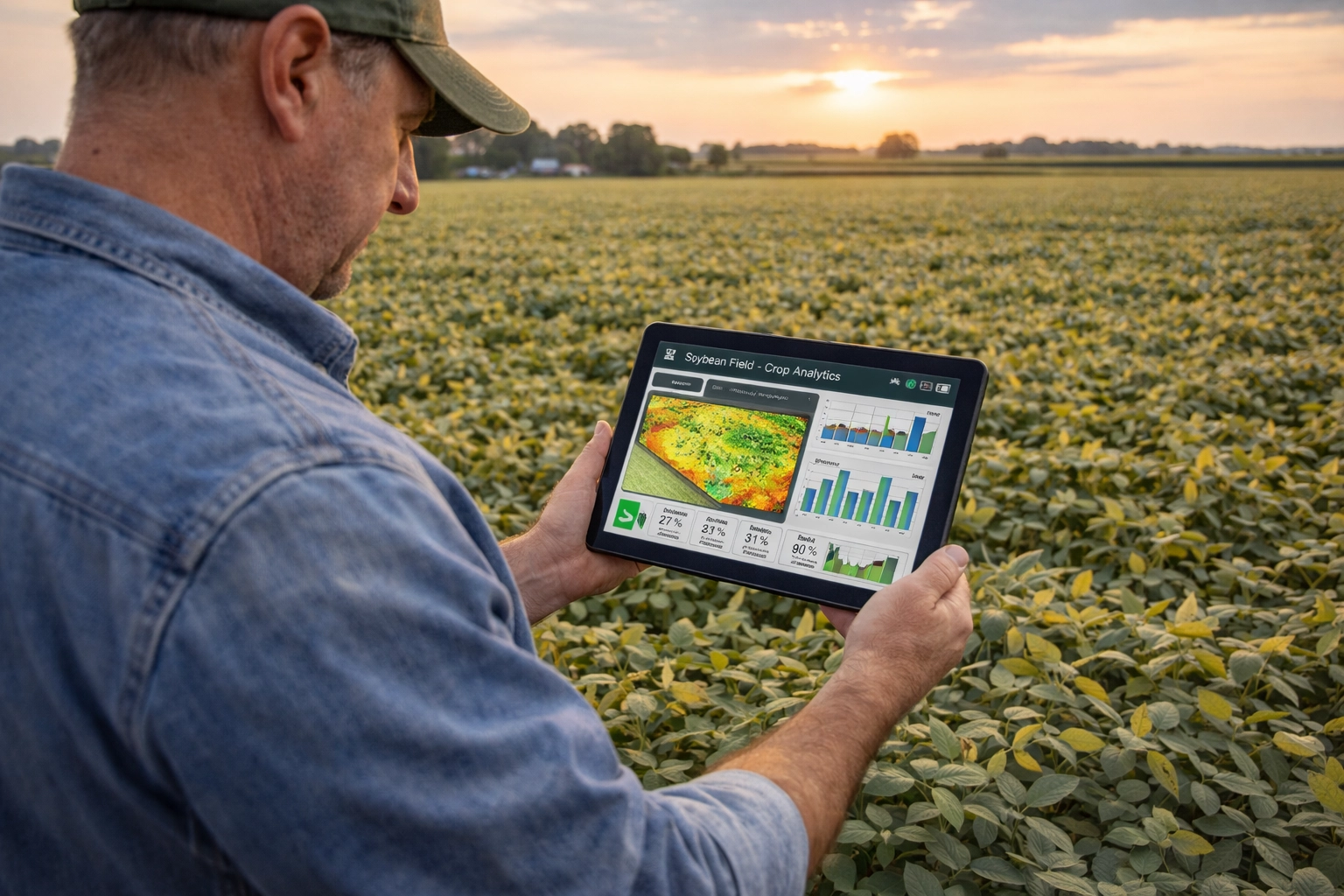
Rising Input Costs Are Reshaping Soybean Profit Margins
One of the most significant structural challenges facing soybean farmers is the imbalance between input costs and commodity prices.
Farmers purchase inputs from concentrated global industries—fertilizer companies, chemical manufacturers, seed technology providers, and machinery manufacturers. But when they sell soybeans, they enter a global commodity market where prices are largely determined by international supply and demand.
This imbalance means production costs often rise faster than crop prices.
Fertilizer prices surged dramatically during the early 2020s due to global energy disruptions and supply chain instability. Although prices have stabilized somewhat, they remain well above historical averages.
Machinery costs have also increased sharply. Modern agricultural equipment now incorporates advanced GPS guidance systems, yield monitoring technology, automated steering, and data-driven planting systems.
These innovations improve productivity but dramatically increase capital costs.
A modern combine harvester can cost $700,000 to $1 million, while large tractors frequently exceed $400,000. Even if these machines are used across multiple crops, their cost must still be absorbed within farm budgets.
Over time, rising capital costs place steady pressure on profitability per acre.
Soybean Profit Per Acre Comparison in Different Market Conditions
The table below illustrates how soybean profitability can shift depending on yield performance and market prices.
| Scenario | Yield (bushels/acre) | Price ($/bushel) | Revenue ($/acre) | Estimated Cost ($/acre) | Profit ($/acre) |
|---|---|---|---|---|---|
| High Yield Season | 58 | $13.00 | $754 | $600 | $154 |
| Typical Midwest Year | 52 | $12.50 | $650 | $590 | $60 |
| Weak Market Prices | 50 | $11.50 | $575 | $580 | -$5 |
| Strong Prices but High Costs | 52 | $13.50 | $702 | $650 | $52 |
This comparison highlights the delicate balance between market prices and production costs.
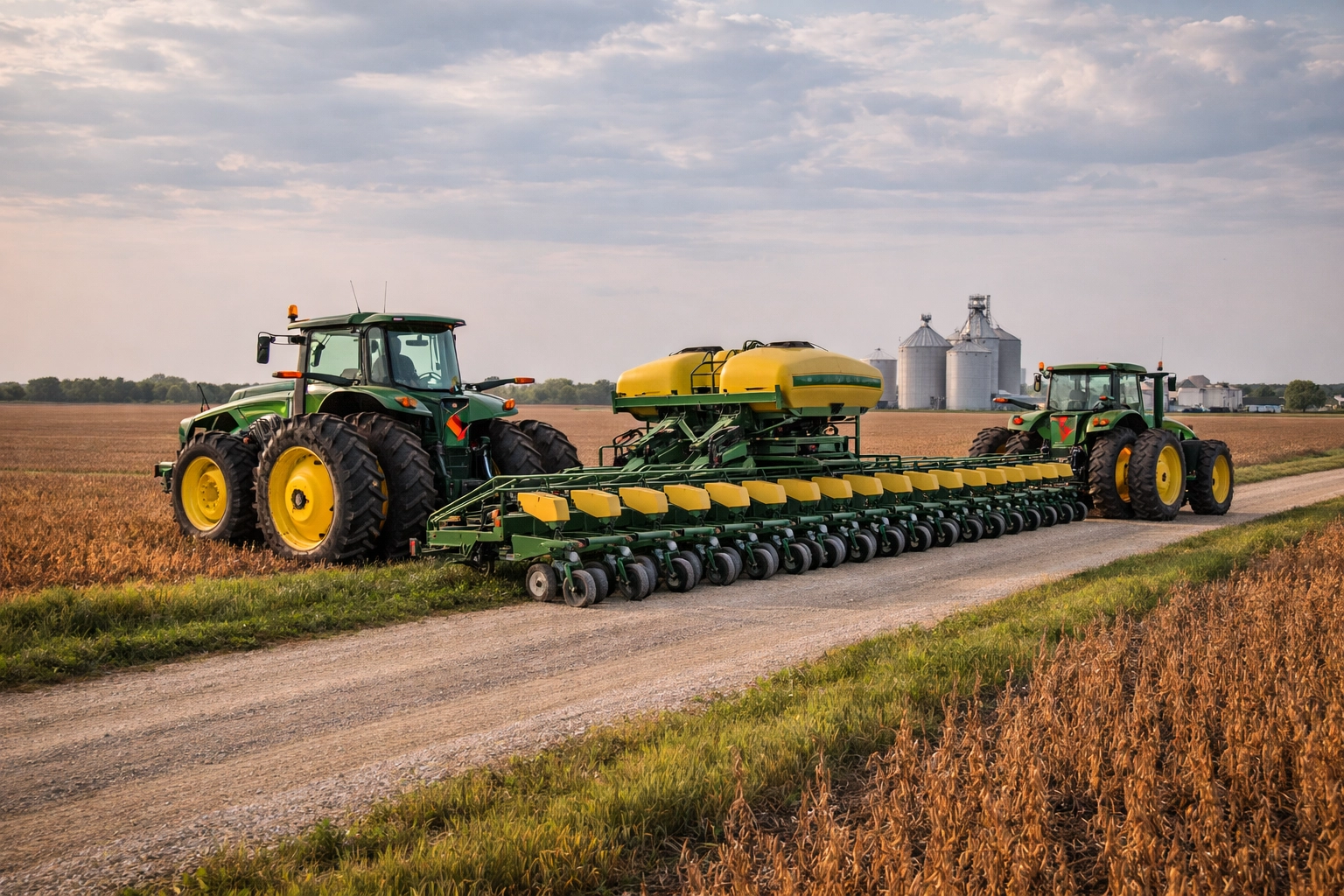
Even relatively small changes—such as a $1 decline in soybean price or a modest increase in land rent—can erase profitability. In weaker market conditions, farms may break even or experience slight losses despite producing a solid crop.
That sensitivity explains why farmers often describe soybean margins as “thin but manageable.” Profitability depends on many variables aligning in the same season.
Read Also:

Global Wheat Trade Is Shifting: U.S. Export Outlook for 2026
From Black Sea competition to shifting global demand, see how wheat trade dynamics are influencing U.S. export opportunities and grain markets.
Why Land Rent Is One of the Biggest Costs in Soybean Farming
Land costs are often the single largest expense in soybean production.
In many Midwest counties, cash rent ranges from $250 to more than $350 per acre, depending on soil quality and local demand for farmland.
Farmland values remain strong partly because agricultural land is widely viewed as a stable long-term investment. Rising land values, however, can translate into higher rents for tenant farmers.
Agricultural land market surveys published by the Federal Reserve Bank of Chicago show that farmland values have remained resilient even during periods of weaker farm income.
(Reference: https://www.chicagofed.org/research/data/agricultural-land-values)
This creates a lag effect in farm profitability. Landowners often base rent expectations on previous years’ strong crop prices, but farmers must pay those rents regardless of future market conditions.
As a result, soybean profitability can decline quickly when commodity prices fall.
Farm Debt and Interest Rates Are Increasing Financial Pressure
Another structural factor shaping soybean profitability is farm debt.
Many American farms expanded acreage or invested heavily in new equipment during the commodity boom earlier in the decade. Those investments made sense at the time, when grain prices were strong and interest rates were low.
But today the financial environment has shifted.
Higher borrowing costs mean that operating loans, equipment financing, and land mortgages require larger payments.
Data on agricultural credit conditions compiled by the Congressional Budget Office highlights how rising interest rates can reduce farm income and increase financial vulnerability during weaker commodity cycles.
(Reference: https://www.cbo.gov/topics/agriculture)
For soybean producers, this translates into tighter cash flow management. Farms must carefully balance operating expenses with expected revenue, often delaying machinery purchases or renegotiating land leases.
Even financially healthy farms feel this pressure when multiple cost categories increase simultaneously.
Precision Agriculture Is Changing Soybean Production Economics
Technology is transforming soybean farming across the United States.
Precision agriculture tools allow farmers to manage fields with extraordinary detail. Satellite imagery, soil sensors, yield mapping, and automated machinery guidance help optimize fertilizer application and planting density.
These technologies improve efficiency and can increase yield potential. They also reduce waste by applying inputs only where they are needed.
However, adopting precision agriculture requires significant investment in software systems, data platforms, and specialized equipment.
Over time, this technological evolution has created what economists sometimes call a technology treadmill. Farmers adopt new innovations to remain competitive, but once those technologies become widespread, productivity increases and market prices adjust downward.
The benefits of innovation ultimately spread across the entire food system rather than remaining exclusively with producers.
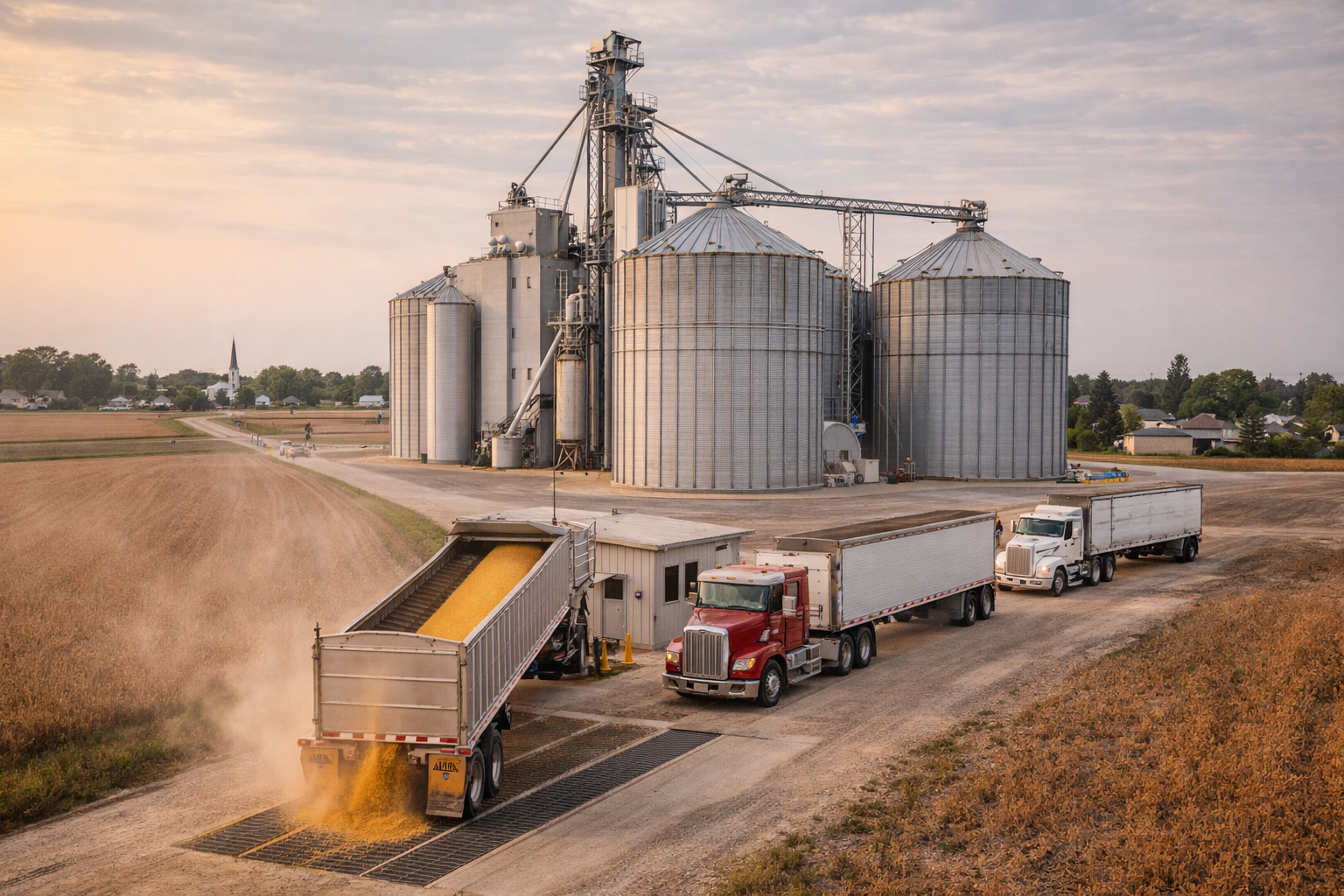
Brazil’s Expansion Is Reshaping the Global Soybean Market
Global competition is another key factor influencing soybean profitability.
Brazil has emerged as the dominant force in global soybean production. Large-scale farms in regions such as Mato Grosso have expanded rapidly, supported by favorable climate conditions and lower land costs.
As Brazilian production increases, global soybean supply becomes more flexible. When prices rise, acreage expands quickly in South America.
This dynamic reduces the likelihood of prolonged price spikes that historically supported U.S. farm income.
The global soybean market is therefore more stable but also more competitive than it was twenty years ago.
How Soybean Economics Affect Real Farm Decisions
Behind every profitability calculation is a farm family making decisions under uncertainty.
Soybeans rarely exist as a standalone crop. Most farmers grow them as part of a rotation with corn or wheat. The soybean crop plays an important agronomic role by improving soil nitrogen balance and breaking pest cycles.
Even when margins are modest, soybeans remain essential within broader farm systems.
Still, economic pressure shapes day-to-day decisions:
- delaying equipment upgrades
- adjusting fertilizer application rates
- renegotiating land rent agreements
- diversifying crop rotations
These choices reflect the adaptive nature of modern farming. Producers continually adjust strategies to maintain financial stability in a volatile market environment.
Read Also :

Climate Change and U.S. Farming: What 2026 Crop Data Shows
New crop data shows how climate change is impacting U.S. farming, influencing yields, production patterns, and long-term agricultural planning.
Long-Term Structural Changes Shaping the Future of Soybean Farming
Looking ahead, several structural trends will influence soybean profitability over the next decade.
First, farm consolidation will likely continue. Larger farms benefit from economies of scale that spread machinery and management costs across more acres.
Second, precision agriculture and artificial intelligence will deepen data-driven farming. Advanced analytics will help optimize planting decisions, fertilizer use, and irrigation management.
Third, climate variability will introduce new risks. Extreme weather events—droughts, floods, and heat waves—may increase yield volatility across major producing regions.
Fourth, biofuel policies could increase soybean oil demand. Renewable diesel production is already expanding vegetable oil markets, potentially supporting soybean prices in the long run.
These structural forces will shape the economics of soybean farming far beyond the 2026 season.

The Quiet Economic Pressure Behind Soybean Farming
Soybean farming profit per acre in America in 2026 reflects a deeper transformation underway in agriculture.
Farm profitability today depends on a delicate balance between global markets, rising input costs, land values, technology investments, and financial conditions.
Even when soybean prices remain relatively strong, these structural pressures can narrow margins quickly.
Yet American farmers have repeatedly demonstrated their ability to adapt. Through technological innovation, careful financial management, and strategic crop rotations, soybean producers continue to navigate an increasingly complex agricultural economy.
The numbers behind soybean profitability may appear simple at first glance. But behind those numbers lies a sophisticated system—and millions of acres of farmland where economic decisions are made every planting season.

Written by Janardan Tharkar – an agriculture content researcher and blogging professional with practical experience in farming education, digital publishing, and SEO content optimization. Janardan focuses on modern U.S. agriculture trends, smart farming technologies, irrigation systems, crop development, organic farming practices, and farmer-support programs to create helpful, practical, and trustworthy content for American readers.