
DHS vs Congress: Farmers pay the real price.
For decades, U.S. agricultural funding followed a familiar rhythm. Congress debated, appropriated, and reauthorized. The U.S. Department of Agriculture administered. Farmers adjusted. That balance, while imperfect, created a predictable policy environment underpinning everything from crop insurance to rural credit. Over the last several budget cycles, however, a quieter tension has emerged—one that is less visible than farm bill negotiations but increasingly consequential.
The expanding role of the Department of Homeland Security in disaster response, infrastructure protection, and emergency funding has begun to overlap with traditional congressional authority over agricultural spending. As climate volatility intensifies and disasters blur the line between national security and farm economics, this institutional overlap is no longer theoretical. It is shaping how, when, and under what conditions federal dollars reach U.S. producers.
Industry observers note that the question is no longer whether agriculture funding is sufficient, but who effectively controls its flow during periods of crisis.
The institutional backdrop: appropriations versus emergency authority
Under the U.S. Constitution, the power of the purse rests squarely with the United States Congress. Annual appropriations bills and multi-year authorizations like the Farm Bill determine baseline funding for commodity programs, conservation, nutrition, and rural development. Yet layered on top of this framework is a growing architecture of emergency spending, much of it routed through homeland security mechanisms.
Since the early 2000s, DHS has steadily expanded its mandate around disaster preparedness, response, and recovery. While agriculture is not its core mission, the sector increasingly intersects with DHS priorities: food system resilience, critical infrastructure protection, biosecurity, and climate-driven emergencies. When hurricanes, wildfires, floods, or supply-chain disruptions occur, DHS-linked agencies often move faster than Congress can legislate.
This divergence has introduced a structural tension. Congressional funding is deliberate and programmatic. DHS emergency funding is reactive and discretionary. For farmers operating on tight margins, the difference between the two is not academic—it determines whether losses are bridged in weeks or in years.
Industry observers note that this disconnect between farm-level pressure and federal response is becoming increasingly visible in producer balance sheets. What is emerging is not a sudden crisis, but a slow exposure of risk. In that context, “farm aid missing” has become less a slogan and more a description of the moment confronting US agriculture in 2026.
A changing map of federal dollars
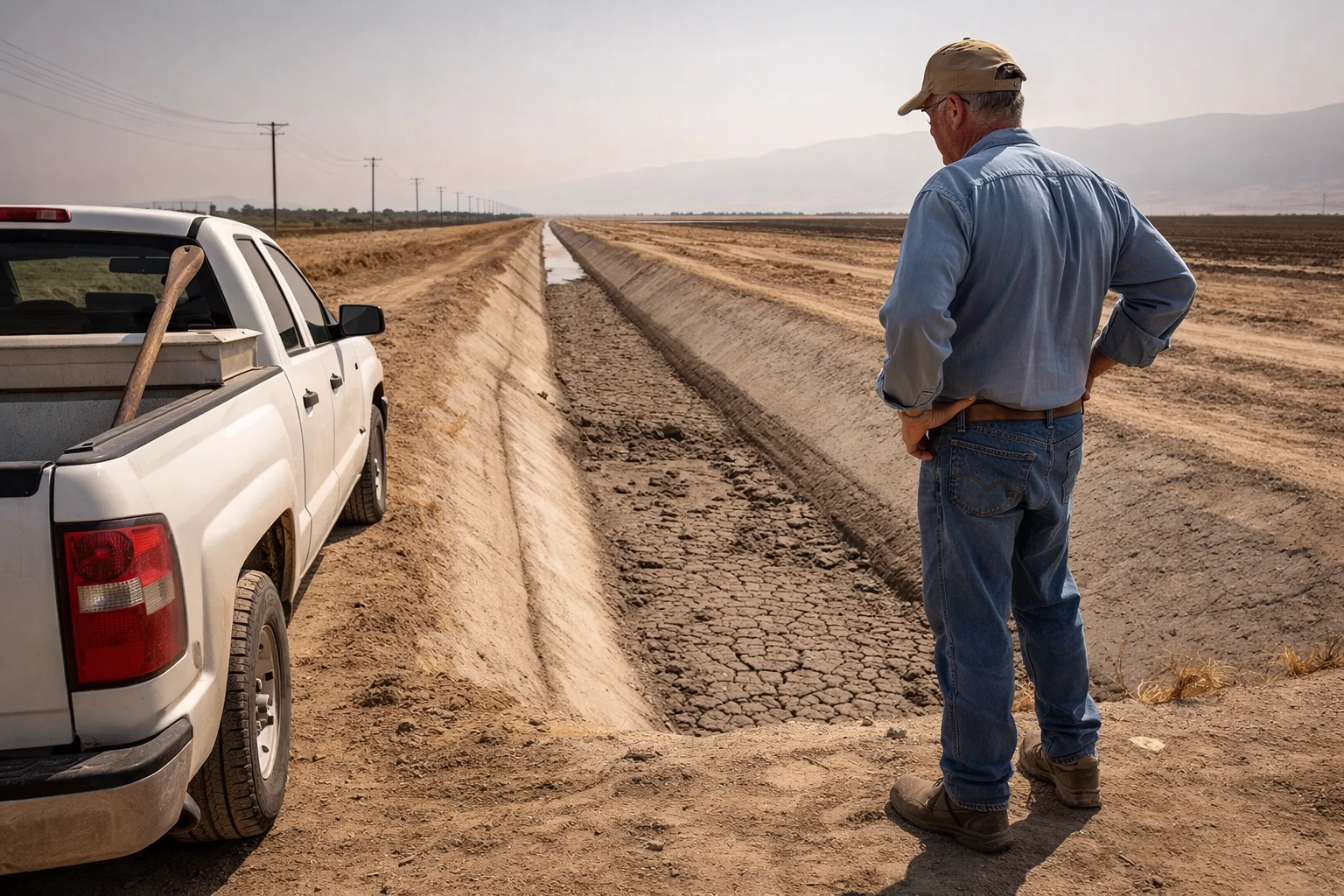
Recent budget data underscore how this shift has accelerated. According to the Congressional Budget Office, disaster-related agricultural assistance outside the traditional Farm Bill framework has grown significantly since 2017, particularly after major climate events. Much of that spending has been authorized through supplemental appropriations tied to emergency declarations, rather than standing agricultural programs.
At the same time, DHS-coordinated disaster relief has expanded its footprint across rural America. While funds may ultimately support agricultural recovery, they often flow through channels designed for infrastructure repair or emergency response, not long-term farm viability. Market participants indicate that this distinction matters: emergency dollars stabilize, but they do not necessarily strengthen.
When disaster policy meets production agriculture
In California’s Central Valley, multi-year droughts and wildfire seasons have repeatedly triggered federal emergency responses. While growers have accessed relief through USDA disaster programs, significant infrastructure-related assistance—canal repairs, power restoration, water system stabilization—has been coordinated through DHS-linked emergency frameworks. The result has been a bifurcated funding experience: immediate stabilization without clarity on future operating capital.
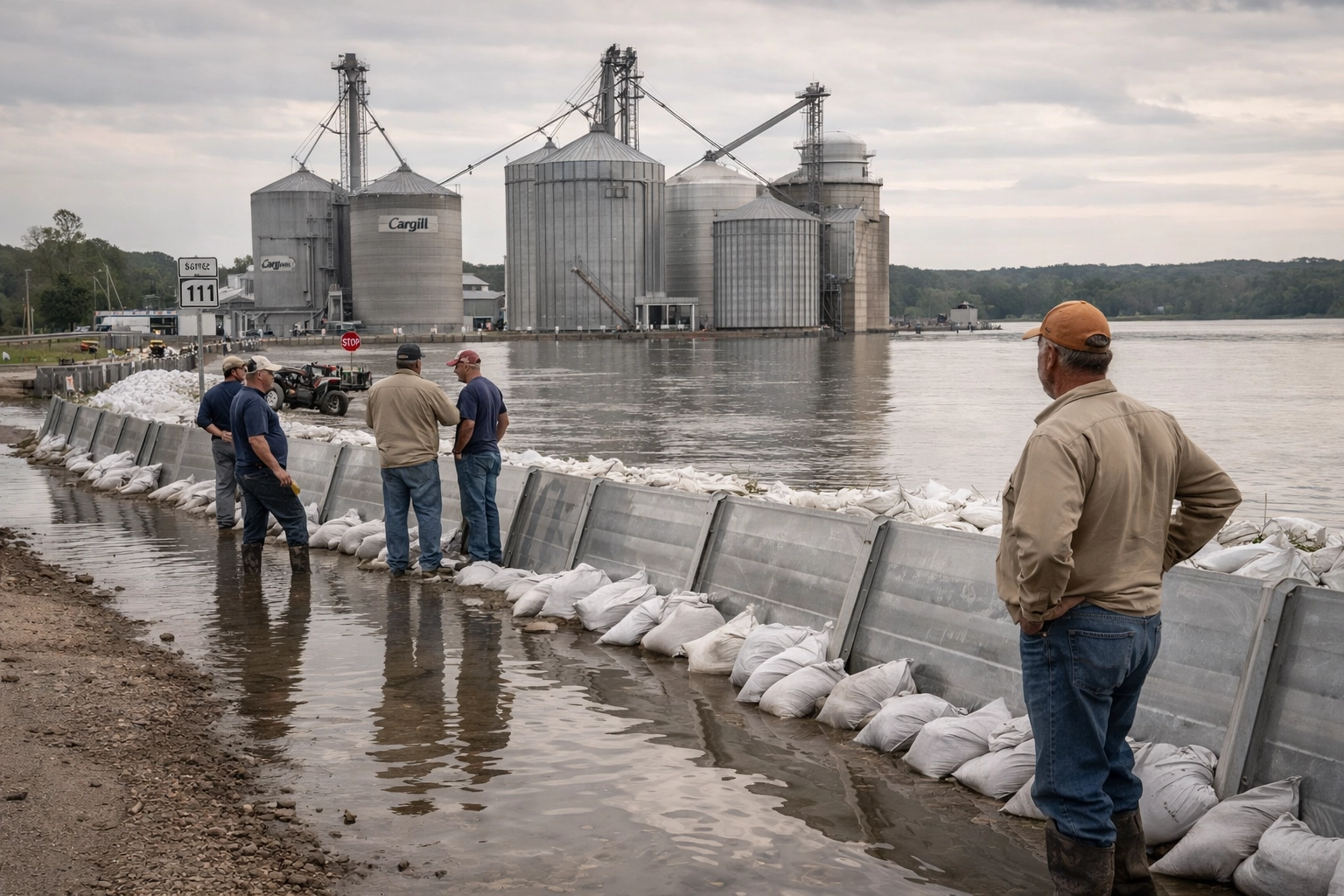
In Iowa and eastern Nebraska, where flooding events along the Missouri River disrupted grain production and storage, producers faced a different challenge. Emergency funds arrived quickly to address levee breaches and transport corridors, but crop-specific losses remained subject to slower congressional processes. Recent reports suggest that this timing gap has influenced planting decisions, insurance uptake, and even land leasing arrangements.
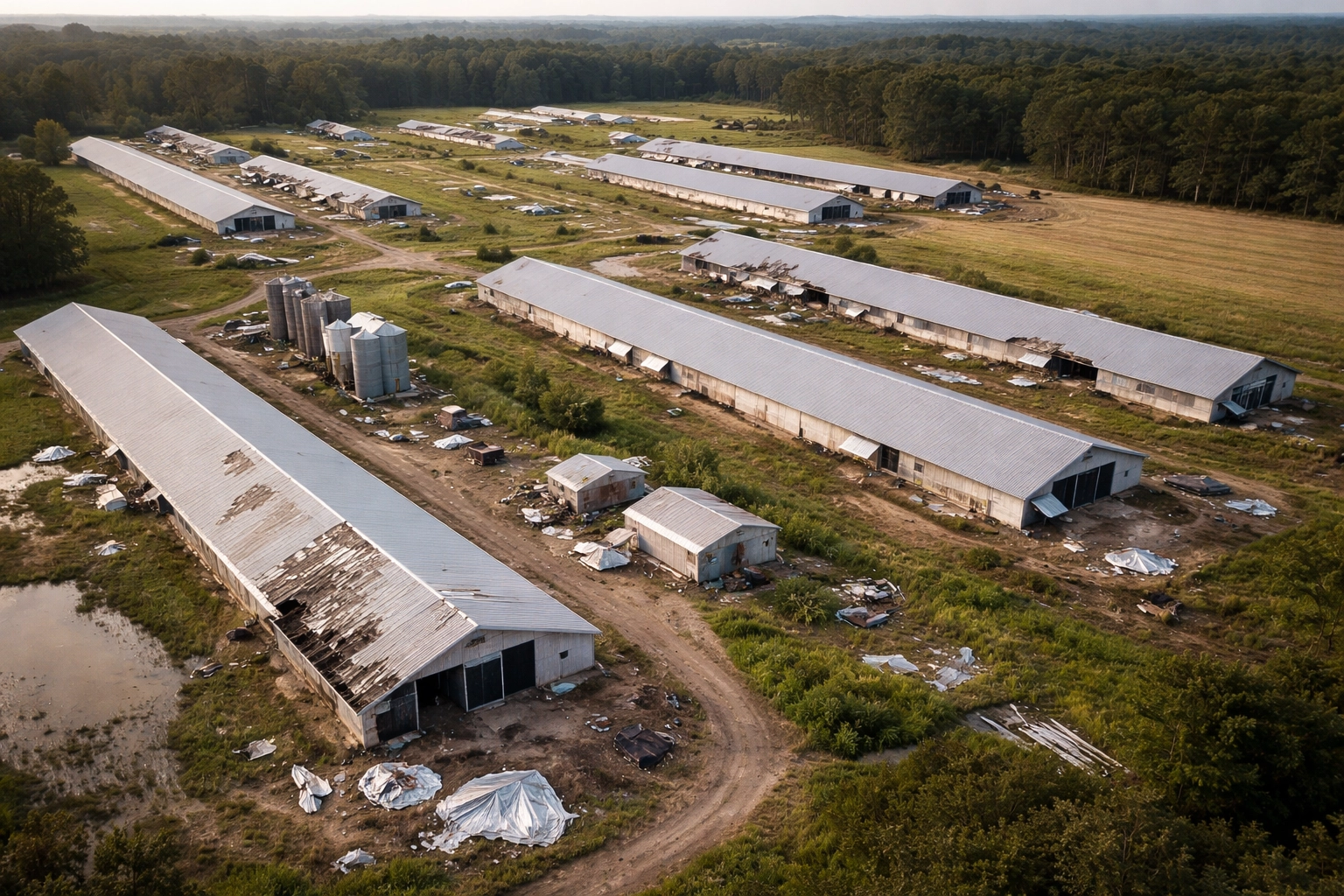
Meanwhile, in the Southeast, poultry and specialty crop producers dealing with hurricane damage have encountered overlapping authorities. DHS-backed relief prioritized rapid facility access and power restoration, while longer-term compensation depended on congressional appropriations and USDA program eligibility. Analysts tracking the region note that larger integrators navigated this dual system more effectively than independent producers.
This is not the first time US agriculture has turned to federal support during a downturn. But the current moment feels different. The post-pandemic surge in farm income has faded.
The role of USDA caught in the middle
The United States Department of Agriculture remains the primary interface for farmers seeking federal support. Its loan programs, conservation incentives, and risk-management tools form the backbone of U.S. farm policy. Yet USDA does not control the broader emergency funding environment.
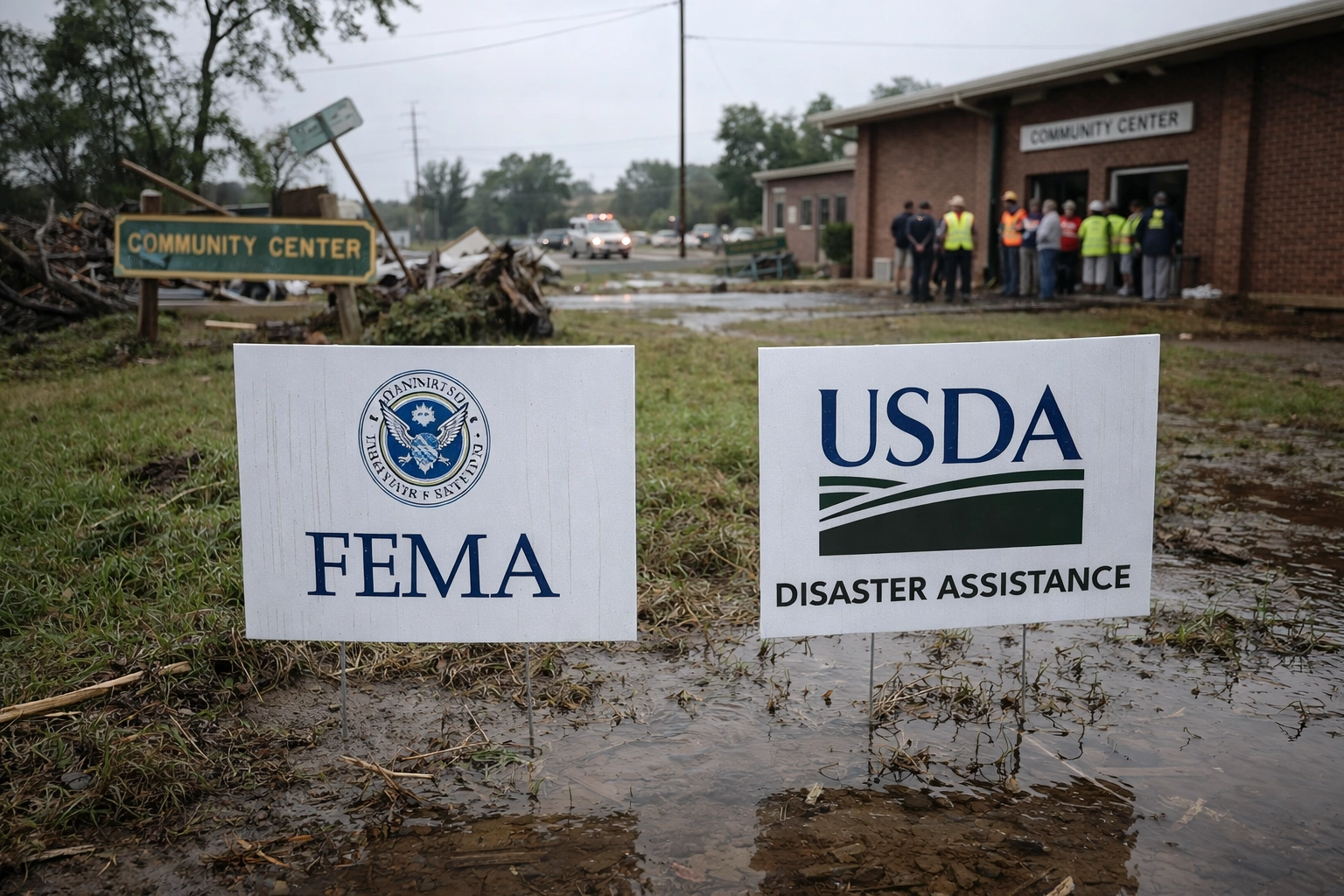
When disasters escalate to national emergencies, USDA programs often operate alongside—or subordinate to—DHS-coordinated responses. This creates operational complexity. USDA may assess crop losses, while emergency agencies prioritize housing, transportation, and public safety. Funding decisions follow different timelines, accountability standards, and political dynamics.
According to a recent Government Accountability Office review, overlapping disaster authorities have increased administrative burden at the state level, where agencies must coordinate across multiple federal funding streams.
For producers, the result is uncertainty. Access to capital depends not only on eligibility, but on which institution is driving the response.
A mini snapshot of funding pathways
| Funding Channel | Primary Authority | Typical Speed | Long-Term Farm Impact |
|---|---|---|---|
| Farm Bill programs | Congress / USDA | Slow-moderate | Structural support |
| Supplemental ag aid | Congress | Moderate | Partial stabilization |
| Emergency relief | DHS-linked agencies | Fast | Short-term recovery |
This divergence helps explain why aggregate funding figures can look robust while on-farm financial stress persists.
Capital markets are paying attention
Lenders and insurers have begun to price this institutional ambiguity into their decisions. Agricultural banks in the Midwest report greater scrutiny of disaster exposure in underwriting, particularly where emergency funding has substituted for predictable program support. Crop insurers, meanwhile, are reassessing loss assumptions in regions with repeated emergency declarations.
Early indicators show that reliance on ad-hoc disaster funding can distort risk signals. When emergency relief fills gaps left by insurance or savings, it may inadvertently encourage higher exposure in vulnerable regions. Conversely, delays in congressional action can amplify liquidity stress, increasing default risk before aid arrives.
A Federal Reserve Bank of Kansas City analysis highlights this tension, noting that uncertainty around federal response timing has become a non-trivial factor in farm credit conditions.
Climate pressure reframes agriculture as security
One reason DHS has gained relevance in agriculture is the reframing of climate risk as a national security issue. Food supply disruptions, rural infrastructure failures, and biosecurity threats increasingly fall within DHS analytical frameworks. This shift brings new resources—but also new priorities.
From DHS’s perspective, agriculture is part of critical infrastructure. From Congress’s perspective, it is an economic and social sector. These lenses are not incompatible, but they lead to different funding outcomes. Security-oriented spending tends to favor resilience of systems—transport, power, logistics—while congressional agriculture spending targets producer income, conservation, and rural development.
Industry observers note that as climate volatility intensifies, the balance between these approaches will shape the future of U.S. farm policy more than headline budget totals.
The latest federal funding package marks a clear departure. Farm aid—anticipated by many producers and closely watched by lenders—was excluded.
Political dynamics inside Congress
Congress itself is not monolithic. Appropriations committees, agriculture committees, and leadership all influence funding outcomes differently. In recent cycles, partisan gridlock has delayed appropriations, increasing reliance on continuing resolutions and supplemental bills. This environment inadvertently strengthens executive-branch discretion, including DHS-linked emergency authority.
Lawmakers from agricultural states have raised concerns about this drift. In hearings and public statements, some have argued that bypassing regular order undermines accountability and long-term planning. Others counter that emergency flexibility is essential in an era of cascading climate shocks.
The tension is unlikely to resolve quickly. With fiscal constraints tightening and disaster costs rising, Congress faces pressure to choose between expanding baseline agricultural programs or continuing to rely on episodic emergency funding.
Implications for different types of producers
For large, diversified operations, the DHS-Congress dynamic is often manageable. These producers have access to private capital, insurance, and political representation. Emergency funds complement existing risk-management strategies.
For mid-sized family farms, particularly in specialty crops or livestock, the picture is less stable. These operations depend heavily on predictable federal programs to smooth income volatility. When support shifts toward emergency mechanisms, timing mismatches can threaten solvency.
Small and beginning farmers are the most exposed. Lacking scale and reserves, they are least able to absorb delays or navigate complex funding landscapes. Analysts tracking farm exits suggest that policy uncertainty, rather than absolute funding levels, is becoming a key driver of consolidation.
Disaster relief versus development funding
One of the less discussed consequences of the DHS-Congress divide is its impact on development-oriented spending. Emergency funds are, by design, backward-looking—they respond to losses already incurred. Congressional agriculture funding, at its best, supports forward-looking investments: soil health, water efficiency, climate-smart practices.
When emergency spending dominates headlines and budgets, development programs risk stagnation. Conservation initiatives, research funding, and rural infrastructure upgrades can be crowded out, even as disaster frequency rises. This dynamic creates a feedback loop: underinvestment in resilience increases future emergency costs.
The USDA’s climate-smart agriculture initiatives were designed to break this cycle, but their funding depends heavily on congressional commitment.
Signals from the insurance and reinsurance markets
Beyond Washington, global reinsurance firms are closely watching U.S. policy signals. Disaster frequency in key agricultural regions affects not only farm insurance premiums but also federal liability. If emergency funding continues to substitute for actuarially priced insurance, private markets may retreat or reprice sharply.
Recent reports from international reinsurers suggest that clarity in federal roles—who pays, when, and under what conditions—is critical to maintaining affordable coverage.
This external pressure adds another layer to the DHS-Congress debate, tying domestic policy choices to global capital flows.
As policymakers look ahead to the next budget cycles and potential Farm Bill revisions, the institutional balance between DHS and Congress will remain a defining issue. Several trajectories are possible.
One scenario involves Congress reasserting control by expanding standing disaster programs within USDA, reducing reliance on ad-hoc emergency funding. This would increase predictability but require difficult fiscal trade-offs.
Another path deepens the current hybrid model, with DHS retaining a significant role in agricultural emergencies while Congress focuses on baseline support. This approach prioritizes speed but risks long-term fragmentation.
A third, less discussed possibility is formal integration: clearer statutory frameworks that align homeland security objectives with agricultural policy goals. Such integration could redefine how resilience, security, and farm economics intersect.
Market participants indicate that the direction chosen will influence investment decisions well before laws are passed. Technology adoption, land values, and consolidation trends are already responding to perceived policy signals.
The quiet contest with visible consequences
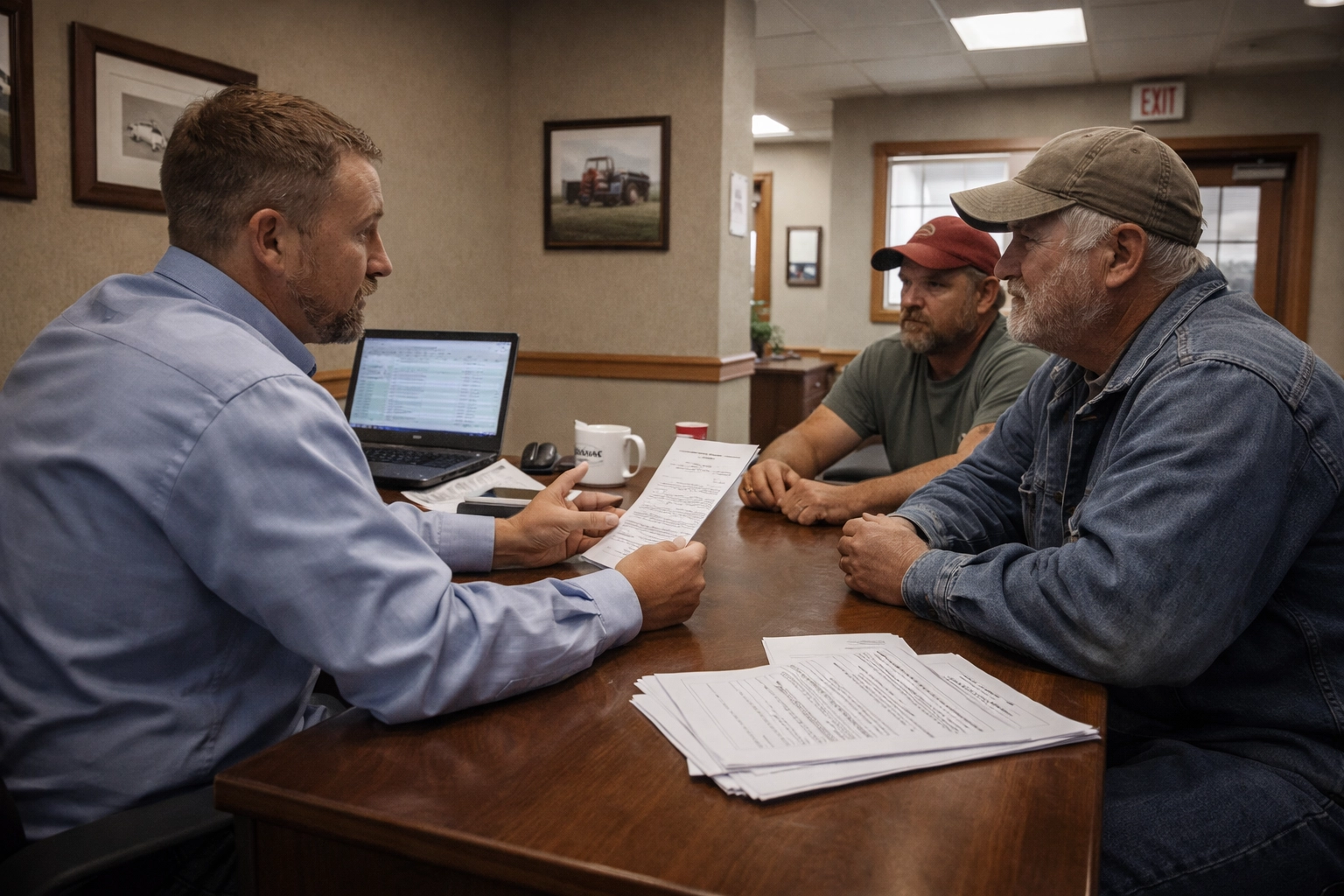
The debate between DHS authority and congressional control is not a headline-grabbing confrontation. It unfolds in budget tables, emergency declarations, and interagency coordination memos. Yet its consequences are visible in fields, barns, and balance sheets across the United States.
For U.S. agriculture, the issue is not simply who writes the checks, but what kind of system those checks sustain. Stability versus speed. Development versus recovery. Accountability versus flexibility.
As climate pressure mounts and fiscal space tightens, the outcome of this quiet contest will shape the structure of American farming well into the next decade

Written by Janardan Tharkar – an agriculture content researcher and blogging professional with practical experience in farming education, digital publishing, and SEO content optimization. Janardan focuses on modern U.S. agriculture trends, smart farming technologies, irrigation systems, crop development, organic farming practices, and farmer-support programs to create helpful, practical, and trustworthy content for American readers.