Mapping the Current Situation
Across major agricultural regions in the United States, the conversation about crop yields in 2026 increasingly revolves around data rather than simply weather or seed genetics. Farmers still talk about rainfall patterns and fertilizer prices, but the deeper shift in the past decade has been toward Precision agriculture management—using GPS positioning and analytics to understand what is happening inside each acre of land.
What began as basic GPS guidance systems for tractors has evolved into a much broader ecosystem. Modern farms now collect information through yield monitors, soil sensors, satellite imagery, and equipment telemetry. GPS technology gives these data points spatial accuracy, allowing farmers to map field variability down to a few meters. Analytics platforms then turn that information into operational decisions.
The adoption trend is clear. According to the USDA Economic Research Service, about 70% of U.S. corn acres and 60% of soybean acres are now planted using some form of GPS guidance technology. Yield monitors are used on roughly 45–50% of major crop acreage, particularly among larger operations.
https://www.ers.usda.gov/topics/farm-practices-management/precision-agriculture/
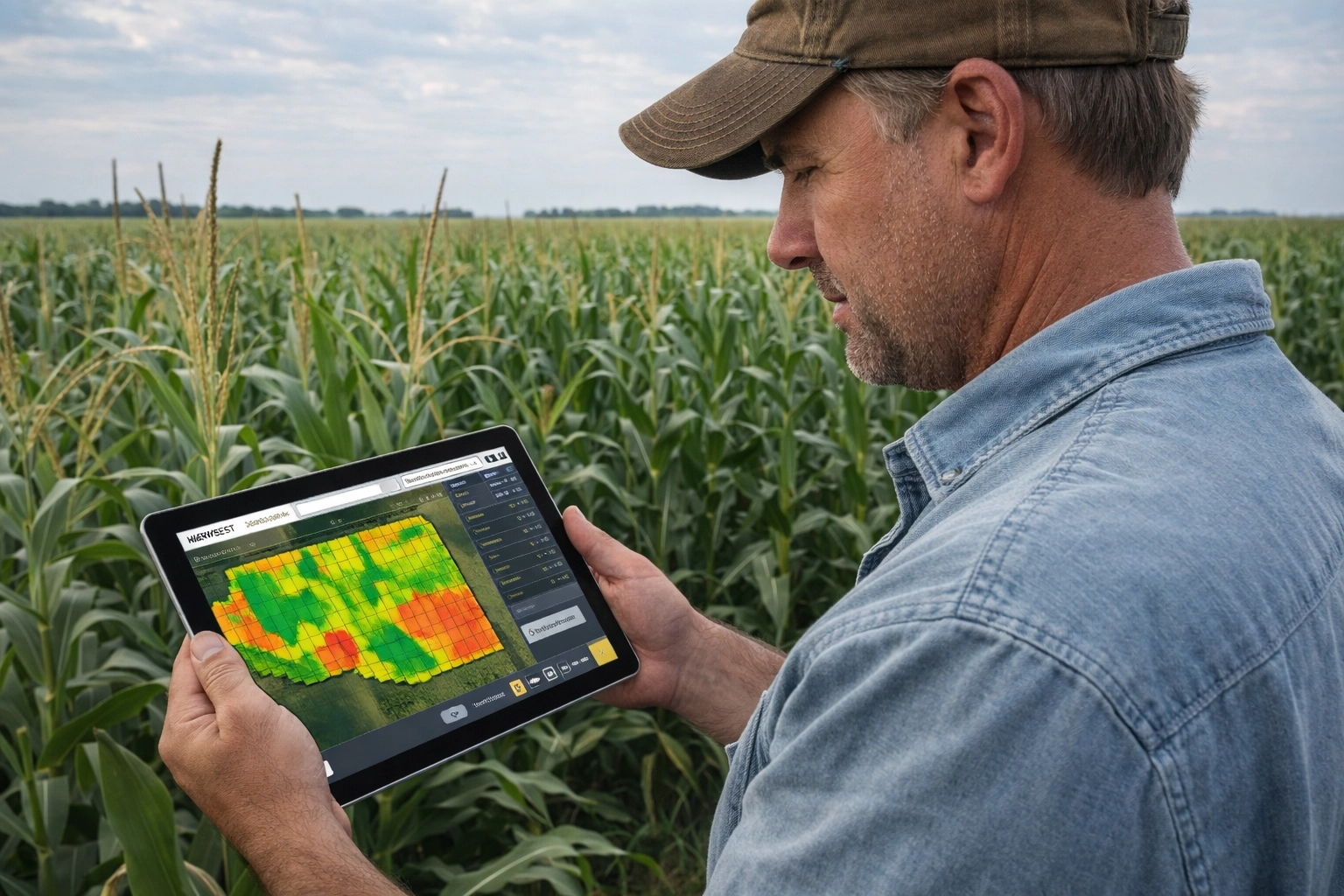
These technologies are not merely conveniences. They allow farmers to see that a single 200-acre field may contain yield differences of 40–70 bushels per acre depending on soil type, drainage patterns, and nutrient availability.
Without GPS-linked data, those differences remain invisible.
With it, farmers begin managing fields in zones rather than treating them as uniform blocks.
But adoption alone does not tell the full story. In practice, farms are integrating these tools at very different speeds. Some operations now manage nearly every decision through data analytics, while others still use GPS only to reduce overlap when planting or spraying.
The result is a widening operational gap between farms that treat data as infrastructure and those that treat it as optional technology.
Where GPS and Analytics Actually Change Farm Outcomes
The real impact of GPS and analytics becomes visible when looking at how farms make decisions inside a growing season.
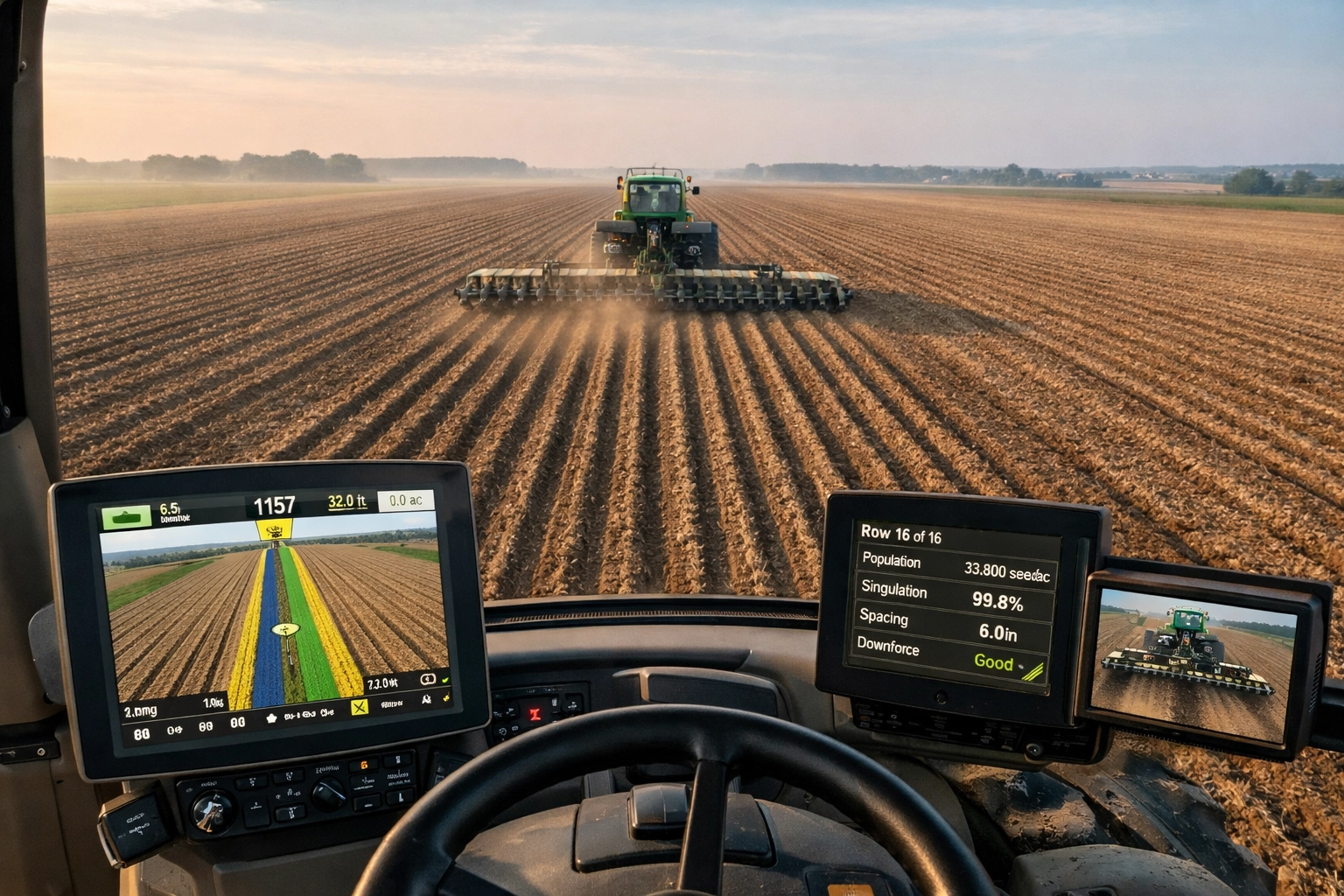
Traditional farm management relied on uniform treatment across the entire field. A 150-acre corn field might receive the same 34,000 seeds per acre, the same fertilizer rate, and the same crop protection schedule regardless of soil variation.
Precision systems challenge that approach.
Yield monitors record exactly how each portion of the field performs. GPS coordinates attach location to every data point. Over multiple seasons, patterns begin to appear.
Analytics platforms then convert those patterns into recommendations.
Examples include:
- Increasing seeding density in high-yield zones
- Reducing fertilizer in low-response areas
- Targeting irrigation to moisture-deficient zones
- Adjusting pesticide applications based on localized pressure
The measurable impact often appears in input efficiency.
A study referenced by the USDA National Agricultural Statistics Service found that farms using variable-rate fertilizer technology can reduce nitrogen use by 10–20% while maintaining similar yields, particularly in corn systems.
https://www.nass.usda.gov/Publications/AgCensus/
Yield improvements can also occur, though they are typically modest. Many farms report 3–7% yield increases over several seasons after implementing full precision management.
However, the more significant benefit tends to be cost control rather than dramatic yield jumps.
Precision agriculture helps farmers avoid wasting inputs on areas of the field that cannot respond economically.
Also Read :
March 2026 WASDE Report Analysis: Key Changes in Global Corn, Soybeans, and Wheat Supply
The March 2026 WASDE report reveals important changes in global corn, soybean, and wheat supply. Explore how these updates could influence crop prices, farm planning, and global agricultural markets.
A Real Farmer Example: Precision Agriculture in Practice
To understand how this plays out in the real world, consider a case frequently discussed in Midwest precision agriculture research.
Iowa corn farmer Mark Johnson, who manages roughly 2,200 acres of corn and soybeans, began integrating GPS-based precision technology in stages beginning around 2017.
Initially, he installed a guidance system to eliminate overlap during planting and spraying. The immediate benefit was operational efficiency.
Johnson estimated that reducing overlap saved roughly:
- 3–4% in fertilizer costs
- 2–3% in seed expenses
- several hundred gallons of diesel fuel per season
On a farm of that size, those reductions translated into roughly $18–22 per acre in input savings.
The bigger change came when yield monitoring and field mapping were introduced.
After three seasons of data collection, Johnson discovered that some areas of his corn fields consistently produced 230–240 bushels per acre, while poorly drained sections averaged 160–170 bushels.
Previously, both areas received the same fertilizer and seeding rate.
Using GPS-linked variable-rate planting, he increased seeding density to 36,000 seeds per acre in the high-performing zones while reducing it to 30,000 seeds in lower productivity areas.
The result over several seasons was not a dramatic yield spike but a steady improvement in efficiency. Average corn yields rose from 198 bushels per acre to about 208 bushels, while nitrogen application fell by roughly 12% across the farm.
Johnson often describes the change not as technological revolution but as improved visibility.
“Before precision maps, we knew some spots were better than others,” he explained in an extension interview. “But we didn’t realize how much the difference really mattered.”
Strategic Risks in the Data-Driven Farm Model
Despite the advantages, the shift toward data-driven farming introduces several strategic risks that farmers must manage carefully.
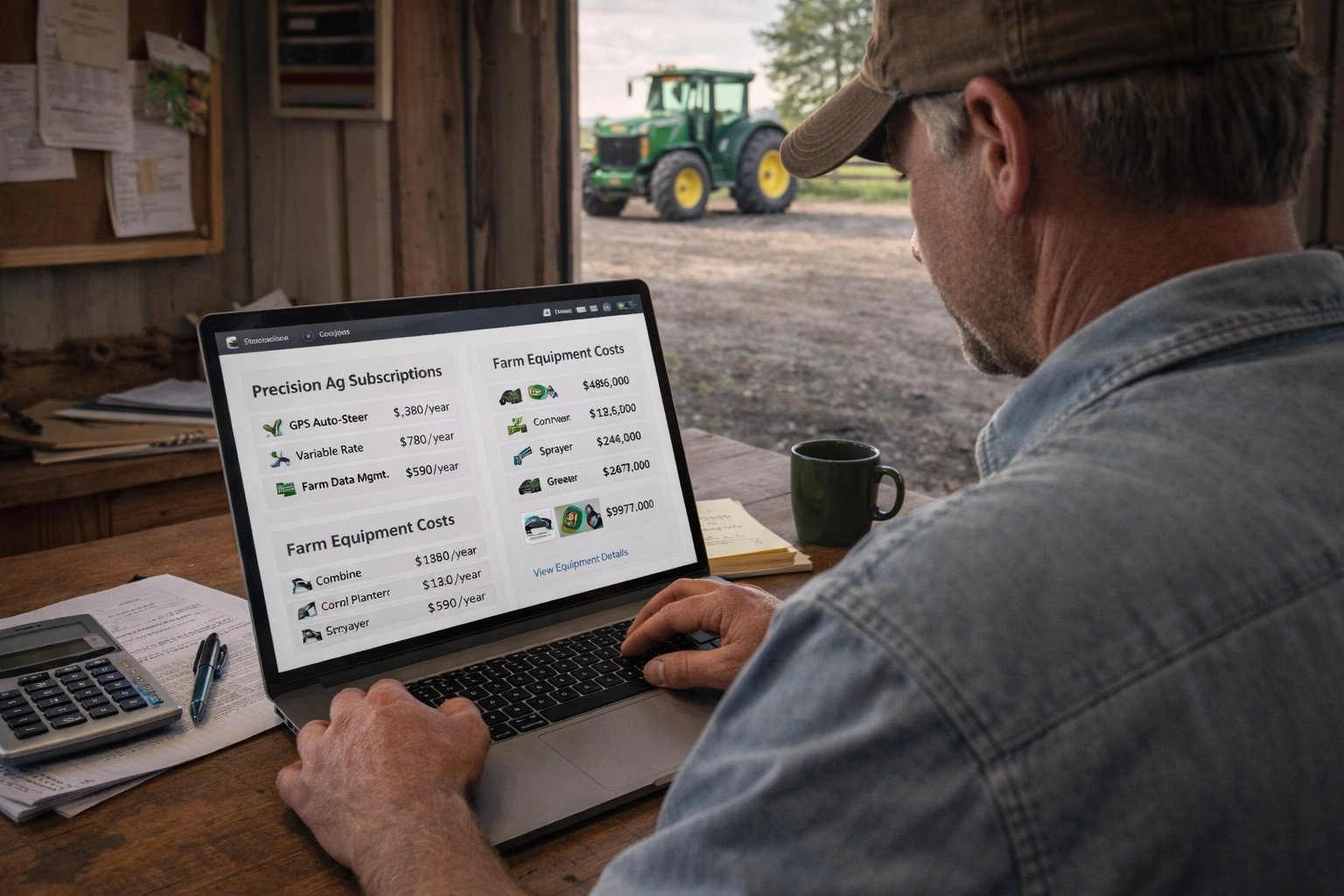
Technology Cost Structures
Precision agriculture involves layered investment.
Typical equipment costs may include:
- GPS guidance system: $8,000–$15,000
- Yield monitoring equipment: $4,000–$7,000
- Variable-rate controllers: $6,000–$12,000
- Annual analytics software subscriptions: $1,500–$3,000
For a mid-sized farm, these costs can represent a significant capital commitment.
Large farms often justify the investment because savings scale with acreage. Smaller farms must evaluate whether the efficiency gains offset the equipment expense.
Data Fragmentation
Modern farms often operate equipment from multiple manufacturers. Tractors, combines, planters, drones, and satellite services may each produce separate datasets.
Unfortunately, these systems do not always integrate easily.
The result is fragmented data—large volumes of information stored across different platforms without a unified analysis framework.
Connectivity Limitations
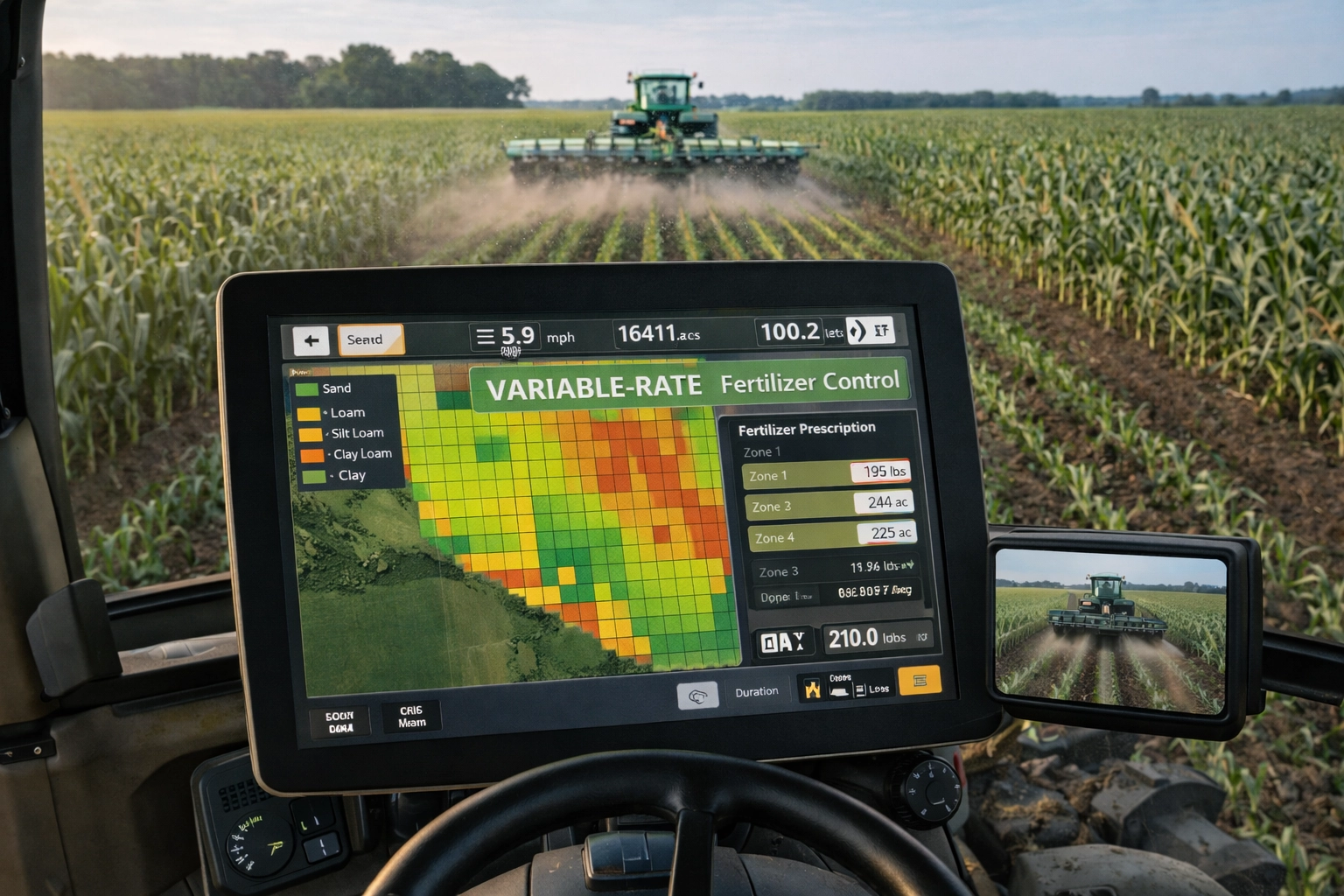
Precision agriculture increasingly depends on cloud-based platforms that analyze field data in real time.
However, broadband coverage in rural regions remains uneven.
Policy analysis from the Congressional Budget Office has noted that expanding rural broadband access is essential for supporting modern digital agriculture technologies.
https://www.cbo.gov/publication/58429
Without reliable connectivity, the value of advanced analytics tools is reduced.
Data Ownership Concerns
Farmers also increasingly question who ultimately controls the operational data collected by equipment and software platforms.
Agricultural data holds economic value beyond individual farms. It can inform commodity forecasting models, seed development, and input marketing strategies.
The governance of farm data remains an evolving issue within the agricultural technology industry.
Also Read :
How Rising Fertilizer Prices Affect Farm Profitability in 2026
As fertilizer costs continue to rise, farmers face difficult budgeting decisions. Explore how input price inflation is shaping farm profitability and crop planning in 2026.
Strategic Options for Farmers
Farm operations generally approach GPS and analytics adoption through three strategic pathways.
Full Precision Integration
Some farms fully integrate precision systems across every stage of production.
This approach includes:
- GPS-guided tractors
- yield monitoring
- satellite crop monitoring
- variable-rate planting and fertilization
- integrated farm management software
These farms treat data as a central management tool.
The advantage is comprehensive optimization across the farm.
The trade-off is complexity. Managing multiple data streams requires time and technical familiarity.
Selective Adoption
Many farms take a gradual approach.
They begin with GPS guidance and yield monitoring, then introduce analytics platforms once enough data exists to justify deeper analysis.
This reduces financial risk but slows the pace of productivity improvements.
Selective adoption is common among mid-sized farms.
Minimal Technology Strategy
Some operations intentionally limit technology use and focus on agronomic fundamentals.
This approach avoids high capital investment but may limit long-term competitiveness if precision tools become standard across the industry.
Comparing Technology Strategies
| Strategy | Capital Investment | Data Complexity | Average Yield Impact | Operational Risk |
|---|---|---|---|---|
| Full Precision Integration | High ($40k–$100k+) | High | 5–8% yield improvement | Technology dependence |
| Selective Adoption | Moderate ($10k–$40k) | Moderate | 2–5% improvement | Slower optimization |
| Minimal Technology | Low (<$10k) | Low | Minimal change | Competitive disadvantage |
The comparison highlights a practical reality in modern farming.
Precision agriculture delivers measurable benefits, but those benefits depend heavily on how deeply farms integrate the technology into daily management.
Large farms often gain the most from full integration because technology costs are distributed across thousands of acres.
Smaller farms frequently achieve better returns through selective adoption—choosing a few targeted technologies rather than attempting full digital transformation.
The most successful operations tend to match technology adoption with their management capacity.
Implications for Different Farm Sizes
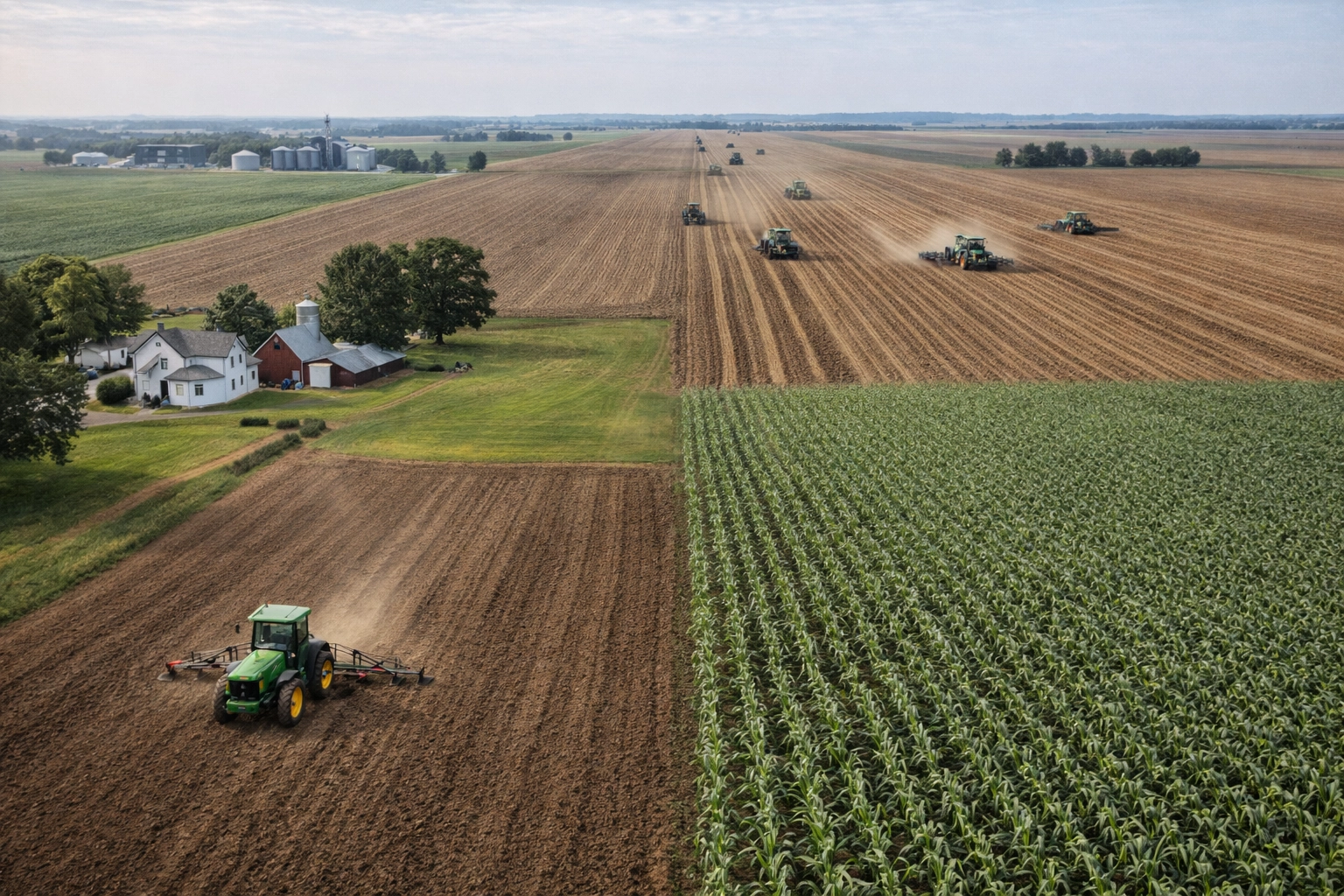
Small Farms
Smaller farms face the highest cost barrier for precision technology adoption.
However, targeted tools can still provide value.
GPS guidance alone can reduce overlap during planting and spraying by 5–7%, lowering seed and chemical costs. For a 500-acre farm, that may represent $6,000–$10,000 in annual savings depending on input prices.
Satellite-based crop monitoring services also provide affordable insights into crop stress without requiring major equipment upgrades.
Mid-Sized Farms
Mid-sized farms often experience the greatest strategic pressure during technology transitions.
They operate enough acreage to benefit from precision tools but lack the financial scale of very large operations.
These farms frequently adopt precision systems incrementally over several seasons.
Over time, the accumulated data improves management decisions, and yield stability gradually improves.
Large Farms
Large commercial farms often treat precision agriculture as essential infrastructure.
Managing 5,000–10,000 acres without GPS guidance would introduce significant inefficiencies.
These operations benefit from scale economies in data management. Once the digital infrastructure is established, the cost of applying analytics across additional acreage becomes relatively small.
Also Read :
Climate Change and U.S. Farming: What 2026 Crop Data Shows
Explore how climate change is affecting U.S. crop production in 2026, with new data revealing shifts in yields, planting decisions, and long-term farming strategies.
The Economic Context Behind Precision Agriculture
The broader agricultural economy reinforces the value of precision technologies.
Input prices—particularly fertilizer—have experienced large fluctuations in recent years. Nitrogen fertilizer prices in some regions increased by 70–90% during the 2021–2023 commodity cycle.
When input costs rise sharply, efficiency improvements become financially critical.
Economic analysis from the Federal Reserve Bank of Kansas City has highlighted how volatile input markets push farms toward technologies that improve resource efficiency and reduce waste.
https://www.kansascityfed.org/agriculture/
Precision agriculture helps farmers apply inputs only where they generate economic returns.
In volatile commodity markets, that efficiency can significantly affect profitability.
The Next Phase of Data-Driven Agriculture
The next stage of agricultural technology is already emerging.
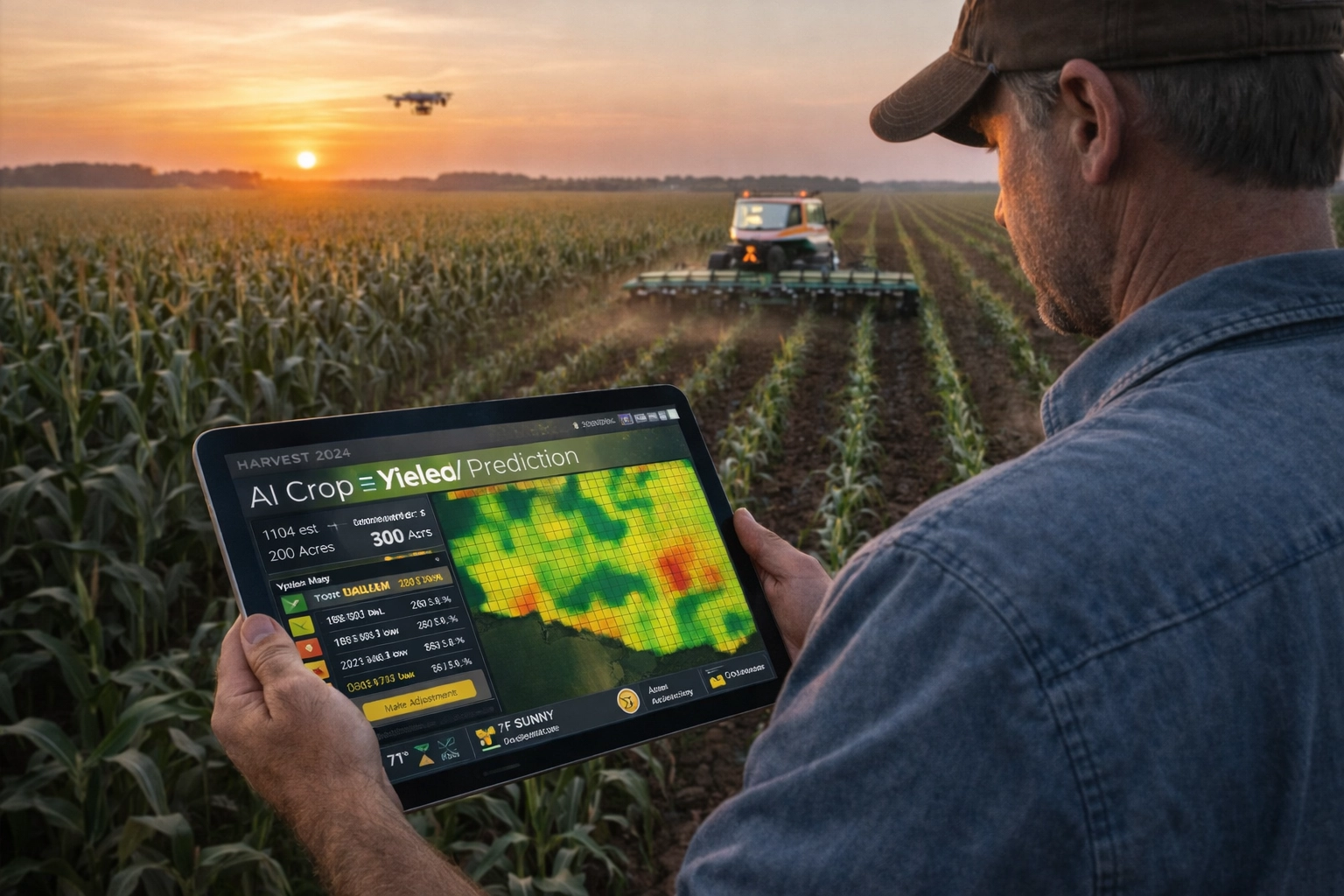
Artificial intelligence tools are beginning to analyze satellite imagery, weather forecasts, and soil data to predict crop performance weeks in advance.
Autonomous equipment is also slowly entering commercial farming.
Driverless tractors and automated spraying systems are being tested on large farms, particularly in North America and Australia.
These developments point toward a broader shift in agricultural management—from reactive farming to predictive farming.
Farmers increasingly make decisions before problems become visible in the field.
Yet one lesson from the past decade remains consistent.
Technology does not replace farming experience.
The farms benefiting most from GPS and data analytics are not those with the most software dashboards. They are the operations that combine digital insights with practical field knowledge.
In 2026, the real competitive advantage lies in that balance.

Written by Janardan Tharkar – an agriculture content researcher and blogging professional with practical experience in farming education, digital publishing, and SEO content optimization. Janardan focuses on modern U.S. agriculture trends, smart farming technologies, irrigation systems, crop development, organic farming practices, and farmer-support programs to create helpful, practical, and trustworthy content for American readers.