
Macroeconomic Pressure and Rising Fertilizer Prices in Global Agriculture
Agriculture rarely moves independently from the broader global economy. Farmers may spend their days monitoring soil moisture, weather forecasts, and crop growth, but the economics of farming are increasingly tied to global energy markets, financial conditions, and geopolitical tensions.
In 2026, one of the most important forces shaping agricultural profitability is rising fertilizer prices.
Fertilizer costs surged dramatically between 2021 and 2023 as global supply chains tightened and energy prices spiked. While prices moderated somewhat afterward, fertilizer remains significantly more expensive than historical averages.
According to data from the USDA Economic Research Service, fertilizer prices increased sharply during the global commodity inflation cycle and remain a major component of farm operating costs.
https://www.ers.usda.gov
For many farms, fertilizer represents one of the single largest input expenses.
When fertilizer prices rise, farmers cannot simply eliminate the input. Crops like corn and wheat require nutrients to achieve competitive yields. Instead, farmers must adjust application strategies, crop rotations, and financial planning.
The result is a complex economic tension:
the global food system requires strong yields, but the costs required to produce those yields continue to rise.

Fertilizer Price Trends: Chart of Global Fertilizer Prices
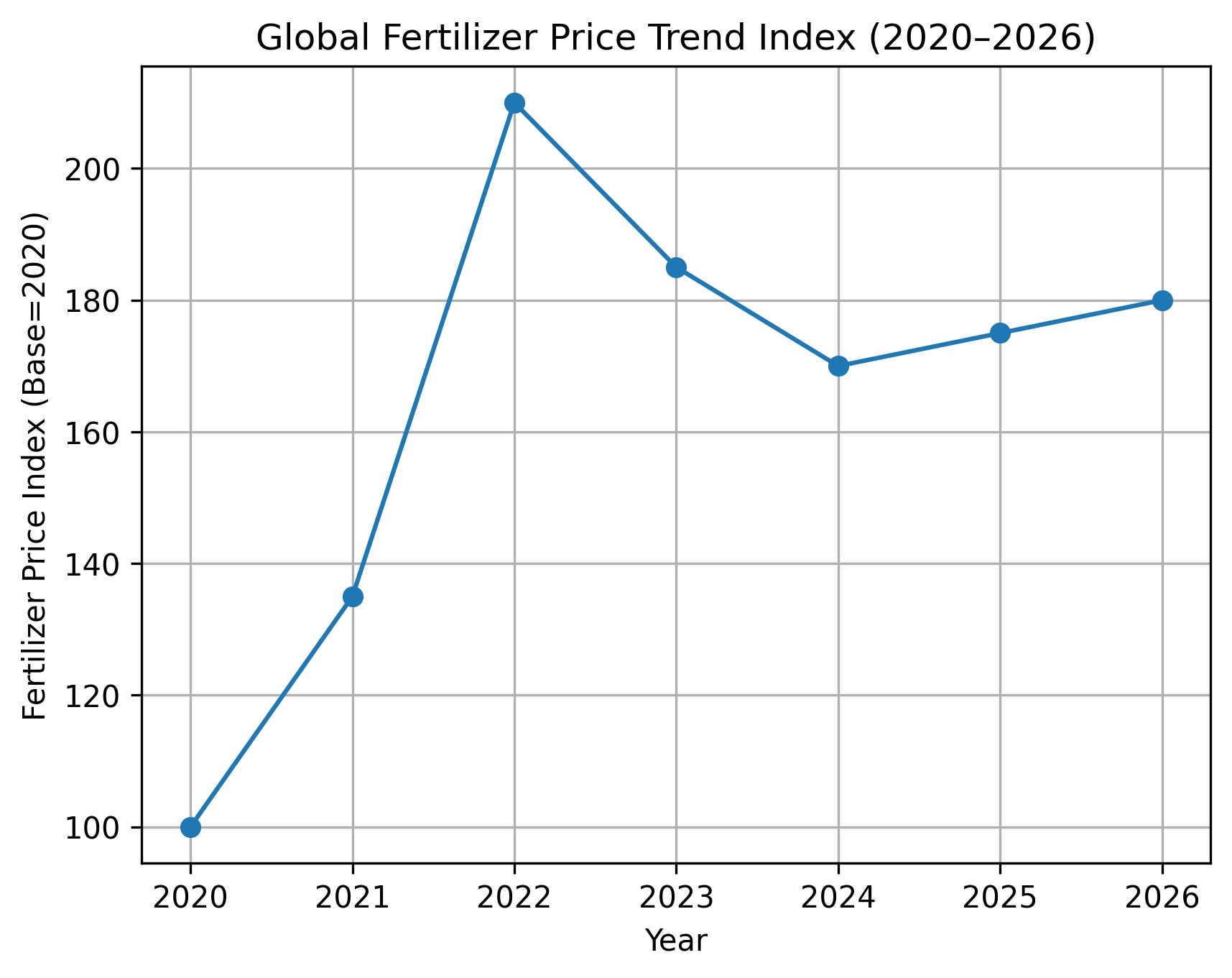
The fertilizer price chart illustrates how dramatically agricultural input costs changed after 2020. Prices surged during the global commodity inflation cycle driven by supply chain disruptions, high natural gas prices, and geopolitical tensions affecting fertilizer exports.
Although prices moderated slightly after the peak, fertilizer costs remain structurally higher than historical averages. For farmers planning the 2026 planting season, this means fertilizer continues to represent one of the largest operating expenses in crop production.
Read Also
March 2026 WASDE Report Analysis: Key Changes in Global Corn, Soybeans, and Wheat Supply
The March 2026 WASDE report reveals important changes in global corn, soybean, and wheat supply. Explore how these updates could influence crop prices, farm planning, and global agricultural markets.
Global Fertilizer Supply and Demand Mechanics
Understanding the impact of rising fertilizer prices requires examining the structure of fertilizer supply and demand.
Unlike many agricultural commodities, fertilizer production is concentrated within a limited number of regions and industries.
Three major nutrients dominate global fertilizer markets:
- Nitrogen (produced from natural gas)
- Phosphate (mined minerals)
- Potash (potassium-based minerals)
Production is geographically concentrated.
Canada dominates global potash exports.
Morocco controls large phosphate reserves.
Nitrogen fertilizer production depends heavily on natural gas, making fertilizer markets closely tied to energy prices.
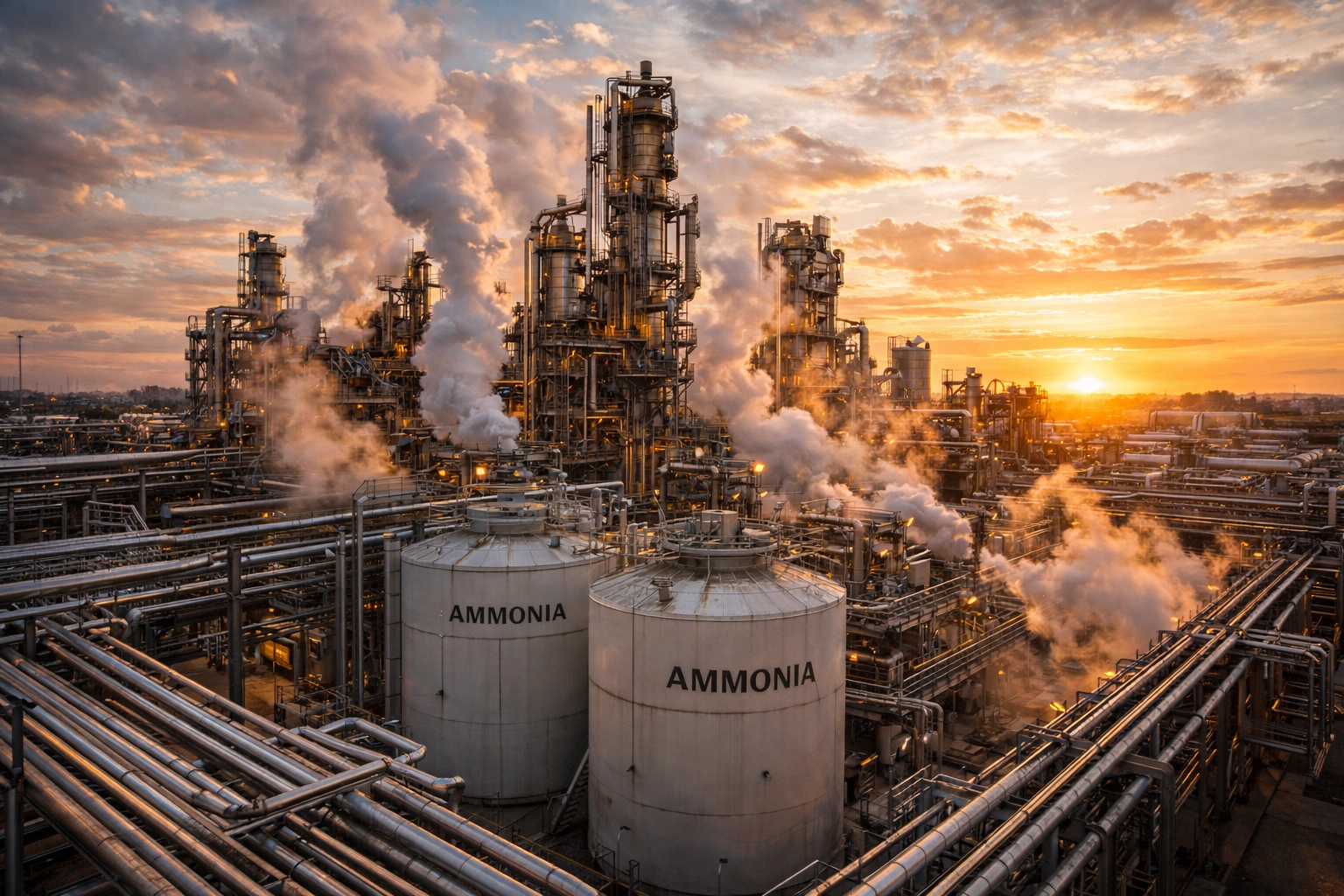
When natural gas prices increase, nitrogen fertilizer production becomes more expensive.
This relationship effectively connects agriculture to global energy markets.
According to USDA agricultural input cost research, fertilizer often accounts for 15–35% of operating costs for major grain crops.
https://www.ers.usda.gov/data-products
That means fertilizer price fluctuations quickly translate into farm profitability pressure.
Farmers cannot easily eliminate fertilizer use, so demand remains relatively stable even during periods of high prices.
This creates a market dynamic where supply disruptions cause large price swings.
Structural Imbalances in the Global Fertilizer Market
Beyond short-term volatility, fertilizer markets face deeper structural challenges.
One of the most significant is geographic concentration of production.
A handful of countries dominate fertilizer exports. When trade restrictions, sanctions, or energy price spikes occur, fertilizer supply can tighten quickly.
Recent geopolitical tensions have already affected global potash trade flows. In addition, export restrictions by major producing countries occasionally tighten fertilizer supply to protect domestic markets.
This concentration creates vulnerability within the global food system.
Another structural factor is the energy–fertilizer connection.
Nitrogen fertilizer production depends on ammonia synthesis, which requires large amounts of natural gas.
During periods of energy price volatility, fertilizer plants sometimes reduce production because manufacturing becomes uneconomical.
That means energy markets can indirectly influence global crop production by altering fertilizer supply.
Farmers often feel this connection long before consumers notice it in food prices.
Read Also

Climate Change and U.S. Farming: What 2026 Crop Data Shows
Explore how climate change is affecting U.S. crop production in 2026, with new data revealing shifts in yields, planting decisions, and long-term farming strategies.

Fertilizer Cost Impact on Farm Profitability
For farmers, fertilizer prices are not simply abstract economic indicators.
They directly affect planting decisions, yield expectations, and financial planning.
Consider a real-world scenario.
An Iowa farmer planning his 2026 planting season faces a difficult calculation.
Corn yields in the Midwest depend heavily on nitrogen fertilizer. Applying the recommended rate helps ensure maximum yield potential, especially in years with favorable weather.
But nitrogen prices remain significantly higher than they were a decade ago.
The farmer must decide whether to apply full fertilizer rates and absorb higher costs, or reduce applications to protect short-term profitability.
Reducing fertilizer use lowers input costs.
But it also risks lower yields.
If corn prices remain strong, under-fertilization could reduce revenue more than the fertilizer savings.
If corn prices fall, high fertilizer spending could reduce profitability.
This is the kind of operational dilemma farmers face every planting season.
Comparison of Fertilizer Cost Sensitivity Across Major Crops

| Crop | Fertilizer Requirement | Profitability Sensitivity |
|---|---|---|
| Corn | Very high nitrogen demand | High |
| Wheat | Moderate fertilizer demand | Medium |
| Soybeans | Lower nitrogen requirement | Low |
This comparison highlights a key economic dynamic within agriculture.
Corn production requires significantly more nitrogen fertilizer than most other crops. As a result, corn profitability is particularly sensitive to fertilizer prices.
Wheat production also depends on fertilizer, though typically at lower rates than corn.
Soybeans, however, fix nitrogen biologically through root nodules, meaning they require far less nitrogen fertilizer.
When fertilizer prices rise sharply, farmers sometimes shift acreage toward soybeans because input costs are lower.
However, these adjustments are rarely simple.
Crop rotations, soil conditions, equipment availability, and market prices all influence planting decisions. Farmers cannot instantly switch crops without affecting long-term soil health and farm operations.
Rising Fertilizer Prices and Farm Debt Pressure
Fertilizer costs interact with broader financial pressures across agriculture.
Modern farming requires substantial capital investment.
Farmers finance machinery purchases, land acquisitions, and seasonal operating costs through credit.
Higher interest rates therefore amplify the impact of rising fertilizer prices.
According to agricultural finance surveys from the Federal Reserve, borrowing costs for farmers have increased as interest rates rose across the economy.
https://www.federalreserve.gov
This creates a double pressure:
- Higher input costs
- Higher financing costs
For farms carrying large debt loads, these combined pressures can significantly reduce profitability.
Some farmers respond by reducing fertilizer applications or delaying equipment purchases.
Others attempt to hedge fertilizer purchases through forward contracts.
But none of these strategies fully eliminate the financial risk associated with volatile input prices.
Agricultural Policy and Fertilizer Cost Stability
Government policies play an important role in stabilizing agricultural markets during periods of economic stress.
In the United States, crop insurance and farm income support programs help farmers manage yield risk and price volatility.
According to projections from the Congressional Budget Office, federal farm programs will continue to provide significant support for agricultural income stability.
https://www.cbo.gov
However, most agricultural policy tools were designed to address crop price fluctuations or weather disasters.
Rising input costs represent a different type of economic risk.
Fertilizer price spikes can reduce profitability even when crop yields remain strong.
This policy gap may become more important in the coming decade as fertilizer markets remain closely tied to energy prices and geopolitical developments.
Read Also
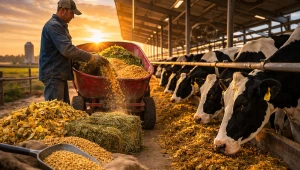
What Dairy Cows Need Daily: Nutrition Inside Modern U.S. Farms
Discover the daily nutrient requirements of modern dairy cows and how balanced feed, minerals, and energy-rich rations help maintain milk production and herd health on U.S. dairy farms.
Long-Term Structural Shifts in Agricultural Input Markets
Looking ahead, fertilizer markets are likely to remain one of the most influential factors shaping farm profitability.
Several structural trends are already emerging.
First, fertilizer markets are becoming increasingly tied to global energy markets. As natural gas prices fluctuate, nitrogen fertilizer costs will likely remain volatile.
Second, supply concentration means geopolitical events can quickly disrupt fertilizer availability.
Third, technological innovation may help farmers reduce fertilizer use through precision agriculture.
Precision nutrient application systems allow farmers to apply fertilizer only where it is needed. This reduces waste and improves efficiency.
While these technologies require investment, they may become essential tools for maintaining profitability in a high-input-cost environment.

The Quiet Economic Pressure Beneath Modern Agriculture
From a distance, global agriculture appears stable.
Crop production continues expanding, and food supplies remain broadly adequate despite periodic disruptions.
Yet beneath that stability lies a complex network of economic pressures.
Fertilizer prices represent one of the most important of those pressures.
They influence planting decisions, crop rotations, farm profitability, and even global food prices.
For farmers preparing for the 2026 growing season, fertilizer costs are not simply another line item in the budget.
They are part of a larger structural shift within agriculture.
A shift in which energy markets, geopolitics, and financial conditions increasingly shape the economics of food production.
How farmers adapt to those pressures will play a critical role in determining the resilience of global agriculture in the years ahead.

Written by Janardan Tharkar – an agriculture content researcher and blogging professional with practical experience in farming education, digital publishing, and SEO content optimization. Janardan focuses on modern U.S. agriculture trends, smart farming technologies, irrigation systems, crop development, organic farming practices, and farmer-support programs to create helpful, practical, and trustworthy content for American readers.