Introduction: Farming in the Age of Data
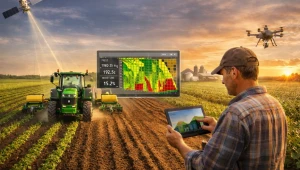
Precision agriculture has moved from experimental technology to operational reality across many major farming regions. What once began as simple GPS guidance systems has evolved into a complex network of sensors, satellite data, drones, and machine-learning analytics that influence everyday farm decisions.
By 2026, precision agriculture is no longer just about improving yields. It is about managing risk, controlling costs, and responding to increasingly variable environmental conditions. Farmers today operate in a landscape shaped by volatile input prices, unpredictable weather patterns, and tight margins. Technology has emerged as one of the few tools capable of navigating this complexity.
But precision agriculture is not a uniform solution. Adoption varies significantly across farm sizes, regions, and crop systems. Some operations have built fully integrated digital systems linking machinery, agronomy data, and financial planning. Others have adopted only a handful of tools such as yield monitors or satellite crop imagery.
Understanding precision agriculture therefore requires more than describing new technologies. It requires examining how those technologies interact with farm structure, management decisions, and economic constraints.
The Current Landscape of Precision Agriculture
Modern precision agriculture rests on the idea that fields are not uniform environments. Soil fertility, moisture levels, pest pressure, and crop performance vary across relatively small distances.
Traditional farming methods treated fields as single units. Precision agriculture breaks fields into data-driven management zones.
Key technologies shaping this transition include:
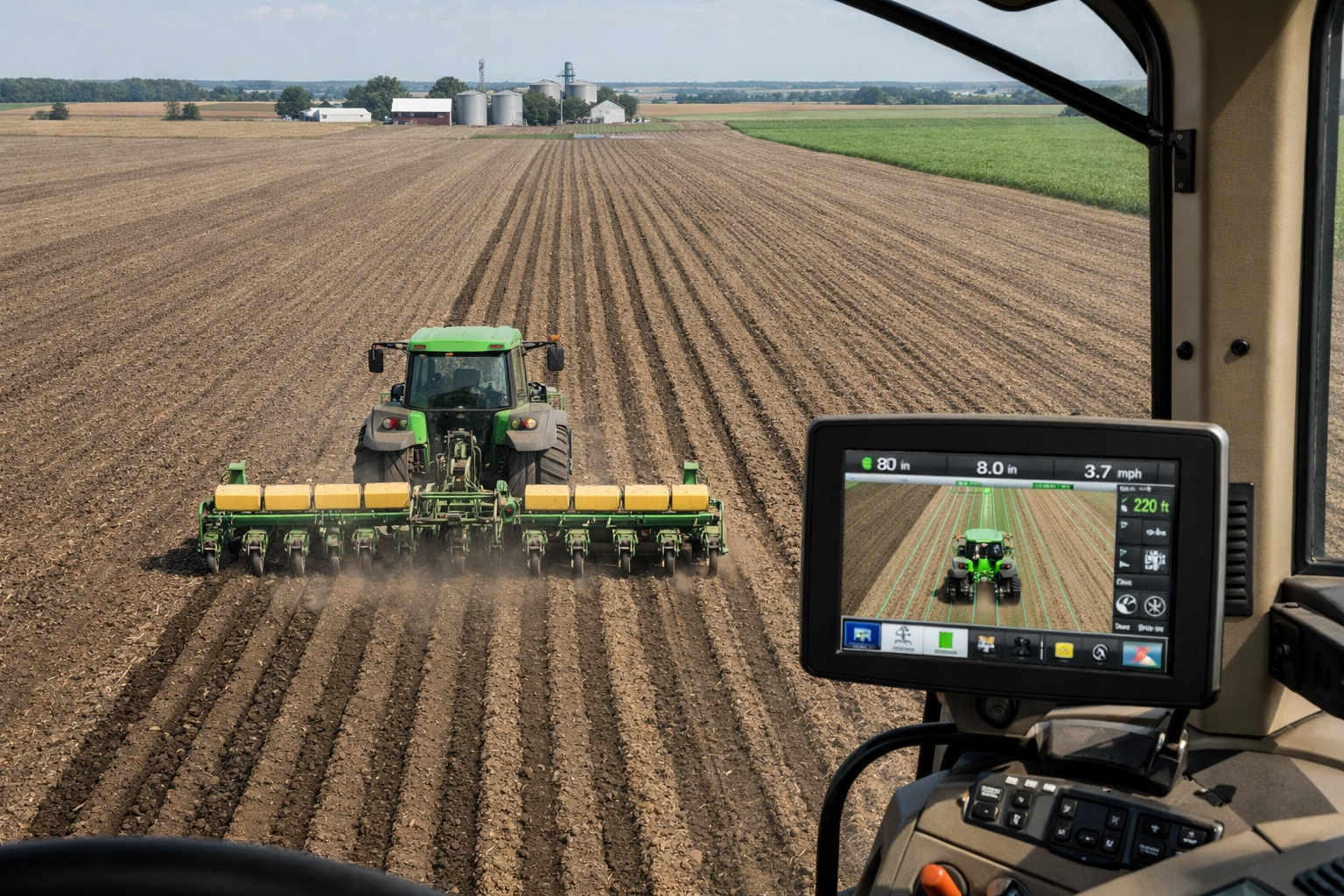
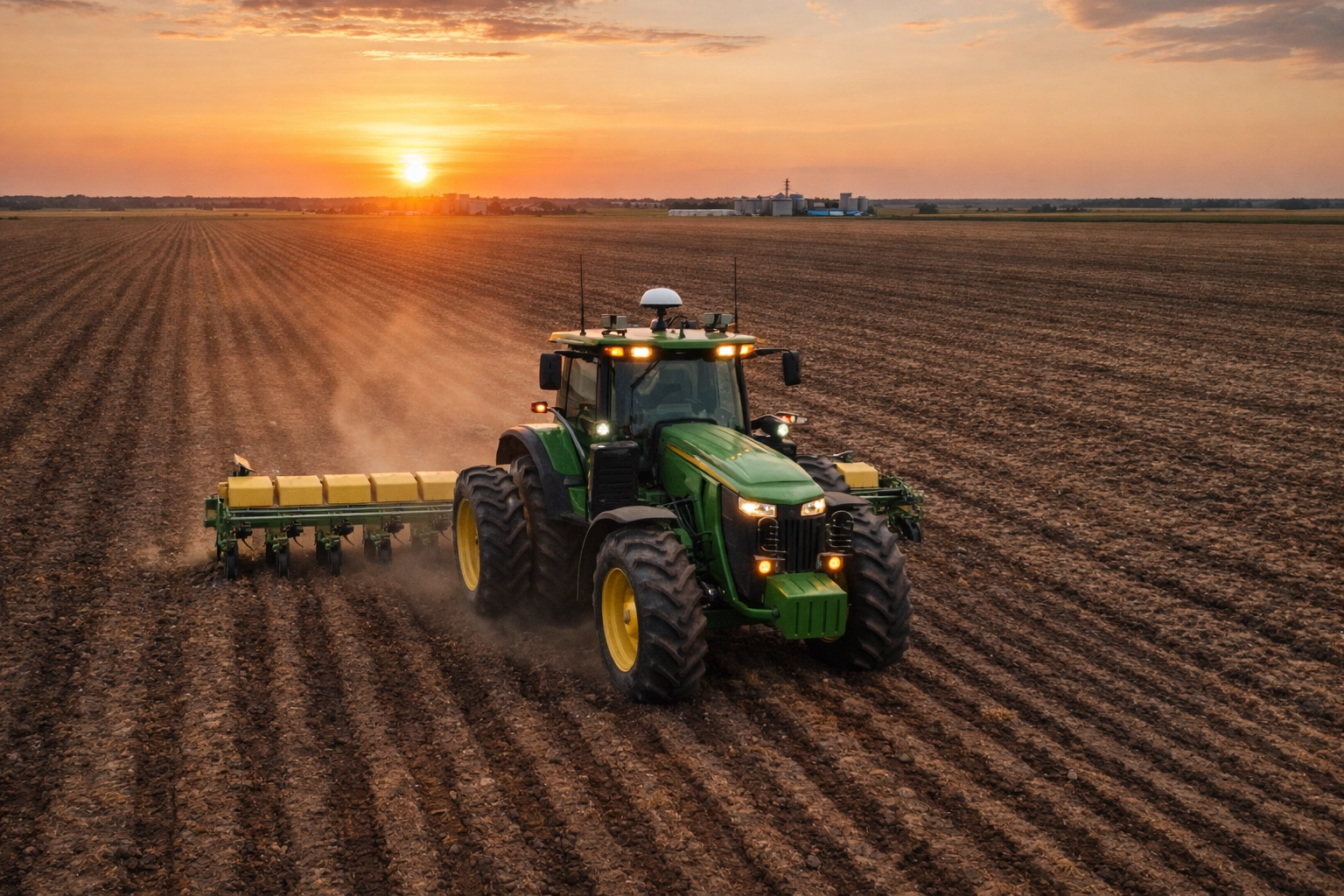
- GPS-guided tractors and planters
- Yield monitoring systems
- Soil and moisture sensors
- Satellite crop monitoring
- Drone-based field imaging
- Variable-rate fertilizer and pesticide application
These technologies generate a continuous stream of field data. The goal is to convert that data into operational decisions.
According to adoption research published by the U.S. Department of Agriculture Economic Research Service, technologies like GPS auto-steer and yield monitoring have become widespread across U.S. grain farms, particularly in corn and soybean production.
(Source: https://www.ers.usda.gov/amber-waves/2023/precision-agriculture-technologies)
The significance of this transition is not purely technological. It reflects a deeper structural shift in agriculture toward information-driven management.
Farm decisions increasingly rely on data layers that were not available even a decade ago.
Read Also:
Inside the Precision agriculture Boom Improving Crop Yields
From smart tractors to real-time field data, precision agriculture tools are helping farmers increase crop yields and optimize farm management.
The Technology Stack Behind Precision Farming
Precision agriculture systems operate through several interconnected layers.
1. Data Collection
Information is gathered through a combination of equipment sensors, satellite imagery, drones, and soil testing.
Satellite monitoring platforms can track crop vigor across entire regions, often identifying plant stress before it becomes visible to the human eye.
NASA’s Earth observation satellites have increasingly contributed to agricultural monitoring, demonstrating how remote sensing technologies support crop management.
(Source: https://earthobservatory.nasa.gov/features/PrecisionAgriculture)
2. Data Processing
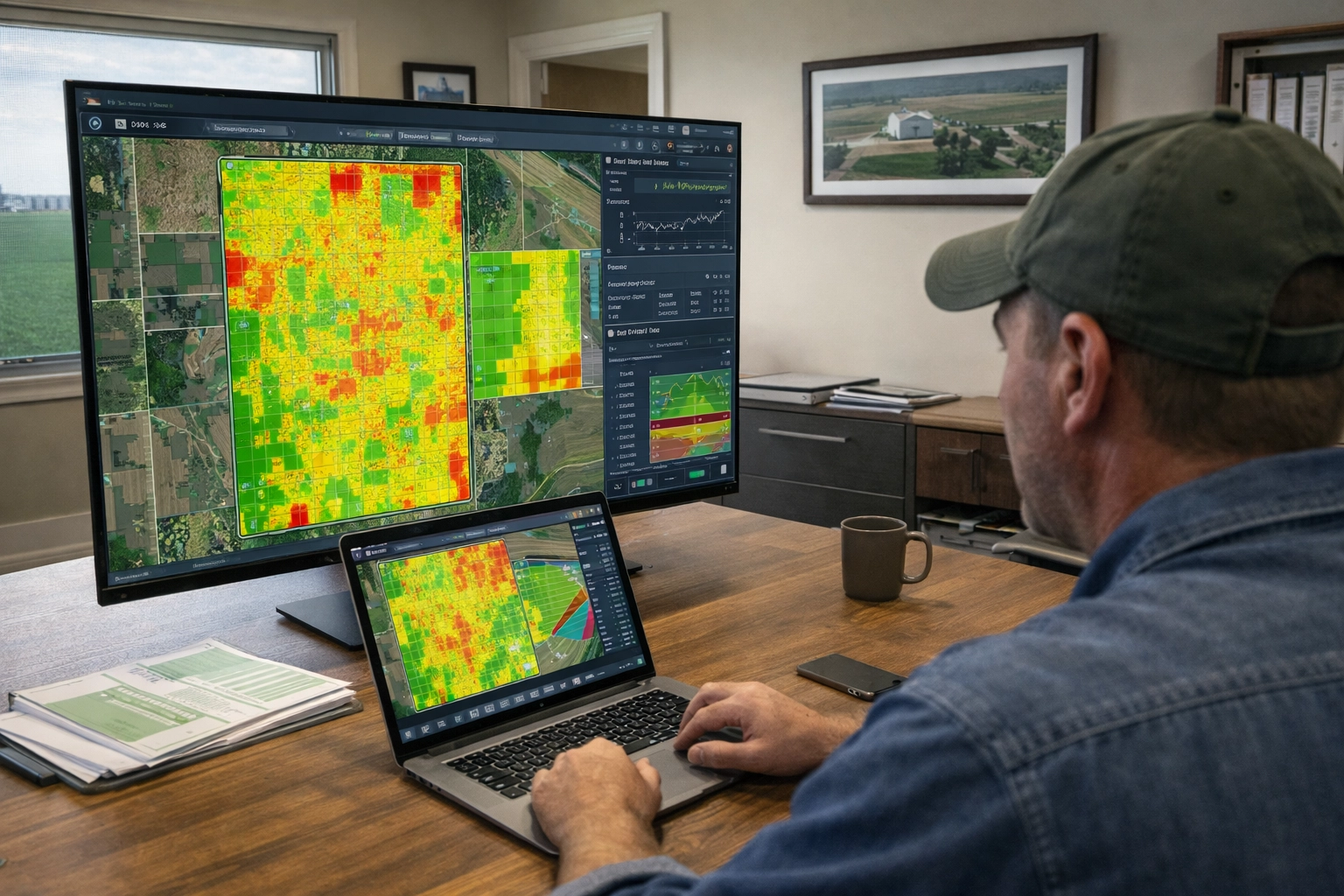
Once data is collected, it must be analyzed. Farm management platforms aggregate field data into visual maps and operational dashboards.
These systems often use machine-learning models to predict crop performance or identify areas requiring additional inputs.
3. Variable Application
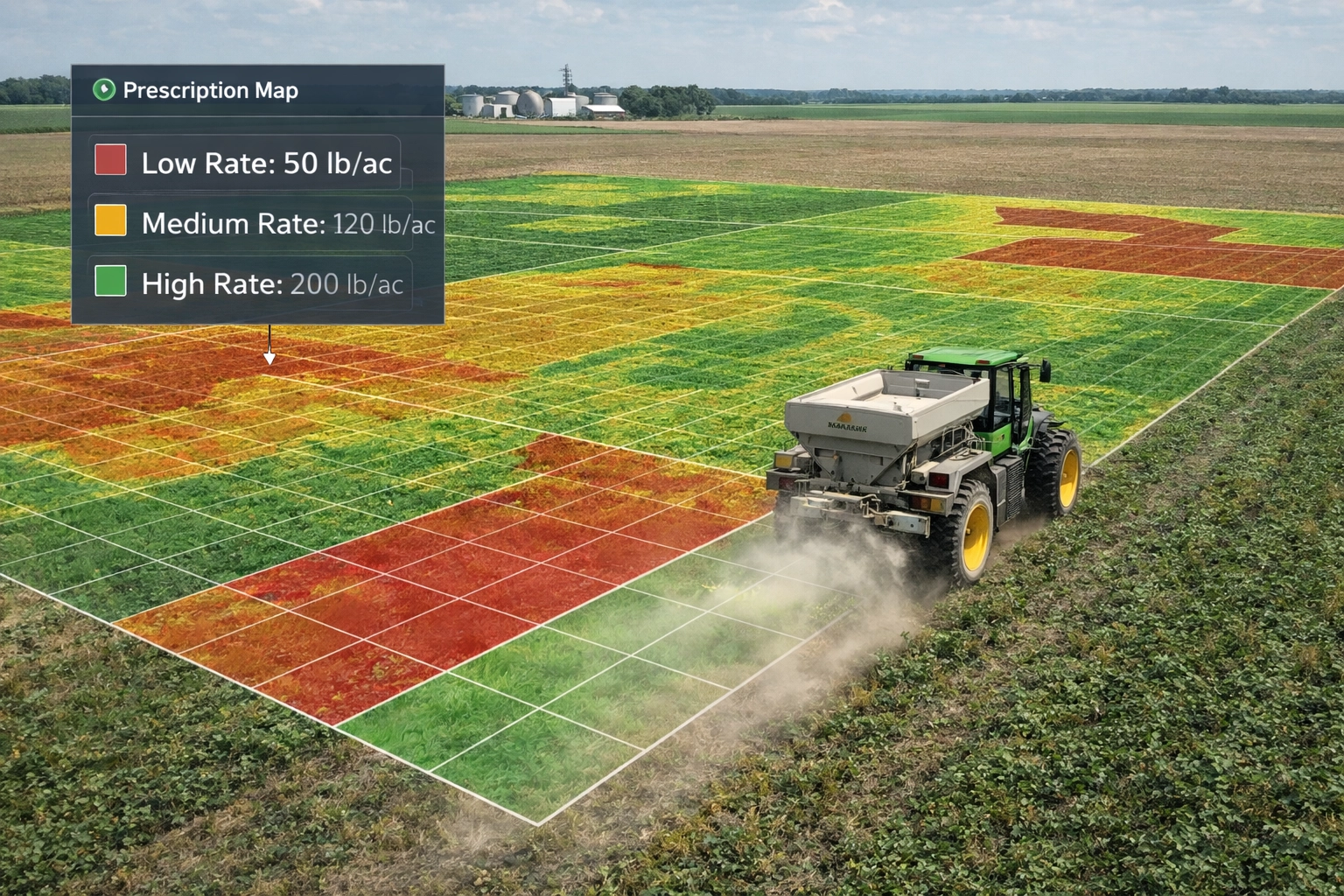
Precision equipment can apply fertilizer, pesticides, and seed at different rates across a field. Instead of uniform application, machinery adjusts input levels based on field data.
Variable-rate technology has become one of the most visible tools in precision agriculture.
4. Decision Integration
Ultimately, the value of precision agriculture lies in decision-making. Data must translate into practical actions: adjusting nitrogen rates, modifying planting density, or identifying irrigation needs.
Technology alone does not improve outcomes. Its effectiveness depends on how farmers interpret and apply the information.
Statistics Snapshot: Precision Agriculture Adoption
Precision Agriculture Adoption – United States
• GPS Auto-Steer Adoption: 70%+ of large crop farms
• Yield Monitoring Systems: over 60% adoption in corn production
• Variable Rate Fertilizer Technology: 30–40% adoption depending on region
• Satellite crop monitoring use increasing rapidly
Source: USDA Economic Research Service precision agriculture surveys.
These numbers reveal a key pattern: basic guidance technologies have reached maturity, while advanced variable-rate systems are still expanding.
This uneven adoption reflects differences in cost, complexity, and management requirements.
Key Risks in the Precision Agriculture Transition
Despite its promise, precision agriculture introduces several strategic challenges.
Capital Investment Pressure
Advanced digital farming systems require substantial investment.
Precision planters, sensor networks, and farm data platforms can significantly increase capital costs.
According to research from the Federal Reserve Bank of Kansas City, rising farm technology costs have become a major factor in agricultural capital spending trends.
(Source: https://www.kansascityfed.org/agriculture/ag-finance)
For smaller farms, the return on investment can be uncertain.
Data Ownership Concerns
Agricultural data increasingly flows through private software platforms operated by technology companies and machinery manufacturers.
Farmers must consider who controls this data and how it may be used in the future.
The U.S. Government Accountability Office has noted growing policy discussions around agricultural data ownership and digital platform transparency.
(Source: https://www.gao.gov/products/gao-23-105093)
Infrastructure Limitations
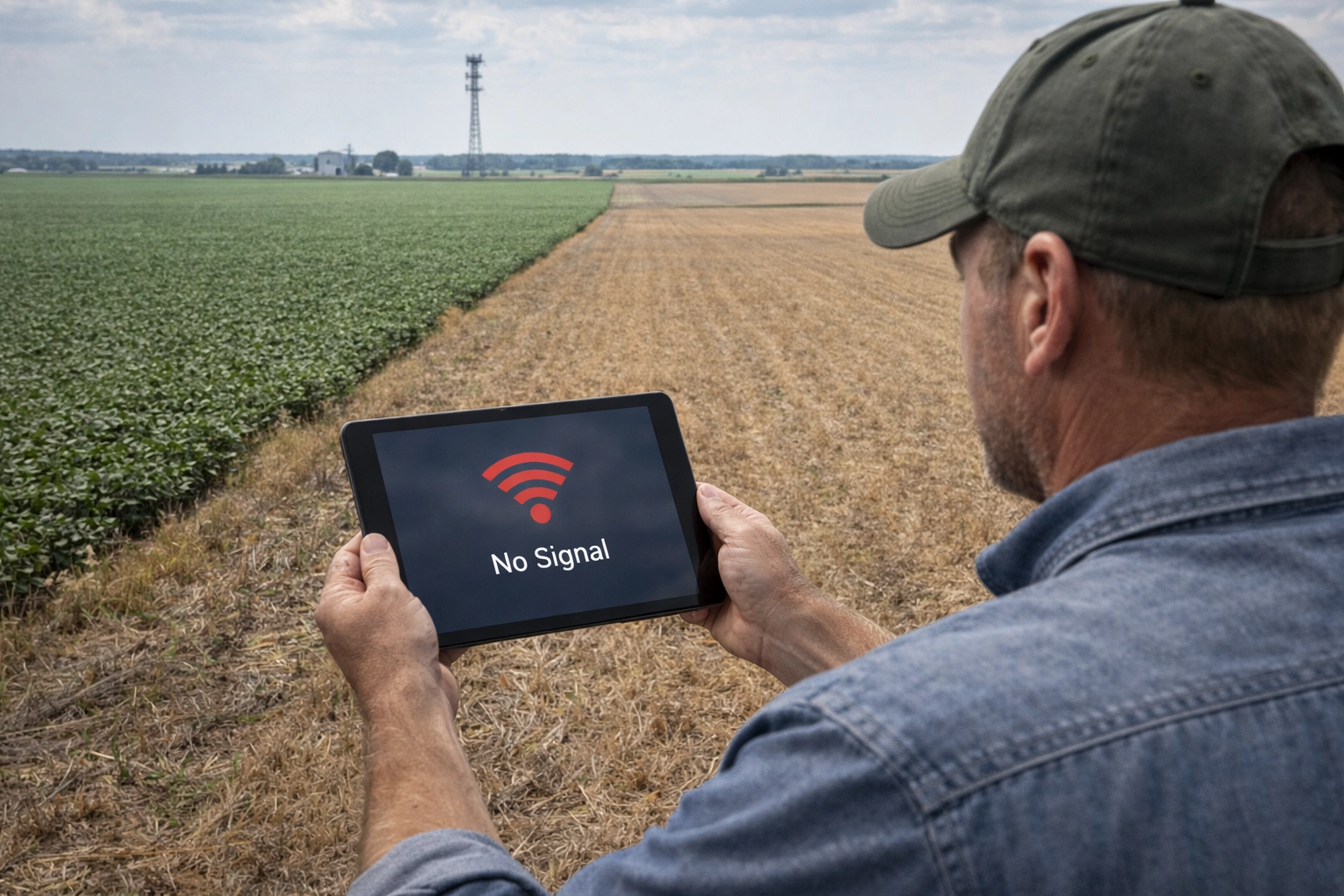
Precision agriculture relies heavily on internet connectivity.
Yet many rural regions still face limited broadband access.
According to the Federal Communications Commission’s rural broadband reports, millions of rural Americans lack reliable high-speed internet access, directly affecting digital agriculture adoption.
(Source: https://www.fcc.gov/reports-research/reports/broadband-progress-reports)
Without reliable connectivity, real-time data analysis and cloud-based farm management systems become difficult to operate.
Also Read:

Why Soybean Export Trends Matter for Farmers
Soybean export trends play a major role in determining crop prices and farm income. Explore how global demand, trade competition, and export markets influence soybean farmers.
Farmer Case Study: Variable-Rate Nitrogen in Iowa
To understand how precision agriculture functions in practice, consider the experience of Mark Jensen, a corn and soybean farmer in Iowa managing roughly 1,200 acres.
Several years ago, Jensen adopted yield mapping and soil zone analysis across his fields. The results showed large variations in productivity between different sections of the same field.
Instead of applying nitrogen fertilizer at a uniform rate, Jensen began using variable-rate nitrogen application guided by field maps.
The outcome was not dramatic yield increases. Instead, the benefit appeared in input efficiency.
Higher-productivity zones received slightly higher fertilizer rates, while lower-yielding areas received less. Over time, fertilizer costs declined while average yields remained stable.
The more important impact was managerial awareness.
Precision data revealed patterns Jensen had suspected but never measured: certain field areas consistently underperformed due to drainage issues.
Rather than continuing to apply extra fertilizer, Jensen redirected resources toward improving field drainage.
In his words, the technology did not “solve farming.” It simply made invisible patterns visible.
Strategic Options for Precision Agriculture Adoption
Farmers typically approach precision agriculture through several strategic pathways.
Incremental Technology Adoption
Many farms start with simpler tools such as yield monitors or GPS guidance.
These technologies provide immediate operational benefits without requiring complex data analysis.
Integrated Digital Systems
Larger farms increasingly adopt integrated platforms combining satellite imagery, machinery data, and agronomic planning.
These systems allow centralized management of multiple fields and equipment fleets.
Service-Based Precision Farming
Agronomy consultants and data service providers are emerging as intermediaries in precision agriculture.
Farmers may outsource data analysis while maintaining control over operational decisions.
Cooperative Technology Sharing
In some regions, farmer cooperatives share precision equipment such as drones or soil mapping services.
This reduces technology costs for smaller operations.
Each strategy reflects different financial capacities and management priorities.
Comparing Precision Agriculture Strategies
| Strategy | Investment Level | Management Complexity | Best Fit Farm Type |
|---|---|---|---|
| Basic GPS Guidance | Low | Low | Small farms |
| Partial Precision Systems | Medium | Moderate | Mid-size farms |
| Full Digital Integration | High | High | Large commercial farms |
| Service-Based Precision | Medium | Low–Moderate | Farms lacking technical staff |
The comparison highlights an important reality: precision agriculture is not a single technology package.
Instead, it represents a continuum of tools with different costs and operational requirements.
Small farms often benefit most from low-cost technologies that reduce fuel use and improve machinery efficiency.
Large farms, by contrast, capture greater value from full data integration because field variability becomes economically significant across thousands of acres.
Implications for Different Farm Sizes
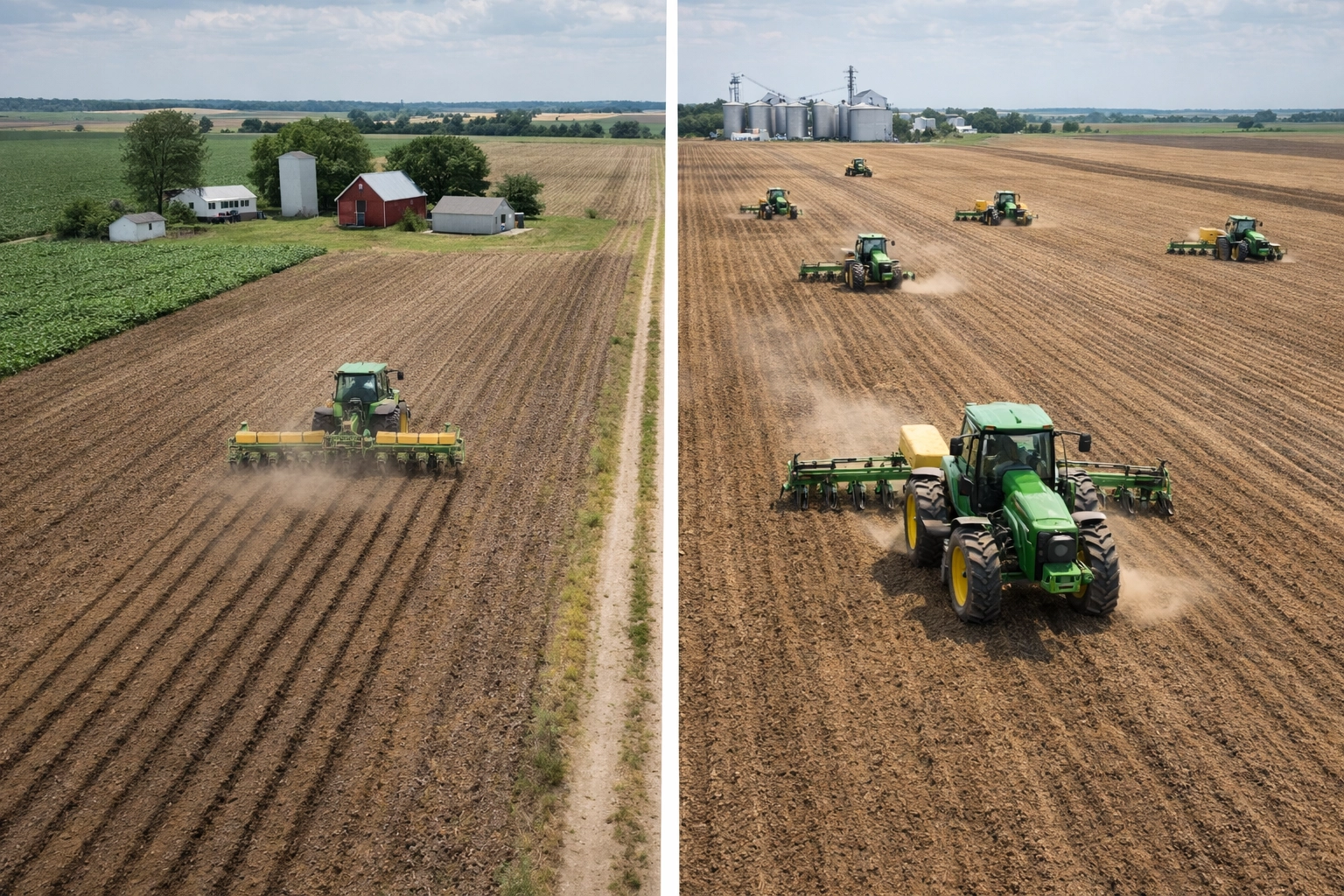
Farm structure strongly influences how precision technologies are adopted.
Small Farms
Smaller farms face the highest cost barriers.
Advanced systems may be difficult to justify unless they significantly reduce input costs.
However, targeted tools such as soil mapping or irrigation sensors can still provide measurable benefits.
Mid-Sized Farms
Mid-sized farms often operate at the threshold where precision technologies become economically viable.
These farms frequently combine owned equipment with external data services.
Hybrid strategies allow them to capture some benefits of digital agriculture without full capital investment.
Large Farms
Large commercial farms benefit most from precision agriculture because scale amplifies the value of input optimization.
When fields extend across thousands of acres, even small efficiency improvements translate into significant financial gains.
Economic analysis from the Congressional Budget Office suggests technological adoption may increasingly favor larger agricultural operations capable of absorbing high investment costs.
(Source: https://www.cbo.gov/publication/58850)
This dynamic could influence the long-term structure of agricultural production.
Visualizing the Precision Agriculture Workflow
To understand how precision farming works operationally, it is useful to visualize the workflow:
Field Sensors → Satellite Monitoring → Data Platform Analysis → Prescription Maps → Variable-Rate Equipment → Yield Monitoring Feedback
This cycle repeats each season.
Over time, farms accumulate historical datasets that improve decision-making accuracy.
The system resembles a feedback loop, where each growing season refines the next.
Read Also:
Global Wheat Trade Is Shifting: U.S. Export Outlook for 2026
Global wheat trade patterns are changing as production shifts and export competition grows. Explore the U.S. wheat export outlook for 2026 and what it means for farmers, grain markets, and global supply chains.
Looking Ahead: The Next Phase of Precision Farming
The future of precision agriculture may involve several emerging developments.
Autonomous Farm Machinery
Driverless tractors and robotic planting systems are already being tested by major agricultural equipment manufacturers.
Autonomous machinery could reduce labor requirements while increasing operational precision.
Artificial Intelligence Agronomy
AI-driven crop monitoring platforms are becoming capable of detecting pest outbreaks and nutrient deficiencies from satellite imagery.
These systems could significantly expand the analytical capacity available to farmers.
Integrated Supply Chain Data
Precision agriculture may eventually connect field-level production data with commodity supply chains.
This integration could influence crop marketing strategies and risk management.
However, widespread adoption will depend on infrastructure improvements and the economic viability of advanced systems.
Strategic Conclusion
Precision agriculture in 2026 represents an important shift in how farms manage uncertainty.
It offers tools for measuring variability, optimizing inputs, and improving operational efficiency.
Yet the technology does not transform agriculture overnight.
Its value depends heavily on farm size, management capacity, and infrastructure access.
For many farmers, the most effective strategy is not full technological adoption but selective integration of tools that align with their operational structure.
Precision agriculture works best when it complements the experience and judgment farmers have developed over years in the field.
Technology may refine decisions, but the foundation of farming remains the same: understanding land, weather, and crops.

Written by Janardan Tharkar – an agriculture content researcher and blogging professional with practical experience in farming education, digital publishing, and SEO content optimization. Janardan focuses on modern U.S. agriculture trends, smart farming technologies, irrigation systems, crop development, organic farming practices, and farmer-support programs to create helpful, practical, and trustworthy content for American readers.