In 2026, many U.S. corn farmers are making a risky decision — cutting nitrogen use.
At first, it seems like a smart way to reduce costs.
But nitrogen is not just another input.
It directly affects crop yield.
So the real question is:
Are farmers saving money — or risking bigger losses?
Why Farmers Are Reducing Nitrogen Use
The decision is driven by rising input costs.
- Nitrogen fertilizer prices have increased sharply
- Corn production requires high nitrogen levels
- Profit margins are already under pressure
To manage costs, farmers are either:
- Reducing nitrogen application
- Or shifting to less fertilizer-intensive crops
This is a direct response to rising input costs.
Why Nitrogen Is Difficult to Reduce
Unlike other inputs, nitrogen has a direct impact on plant growth.
Even a small reduction can affect yield.
This makes it one of the riskiest costs to cut in farming.
Farmers can reduce other inputs more easily —
but nitrogen requires careful management.
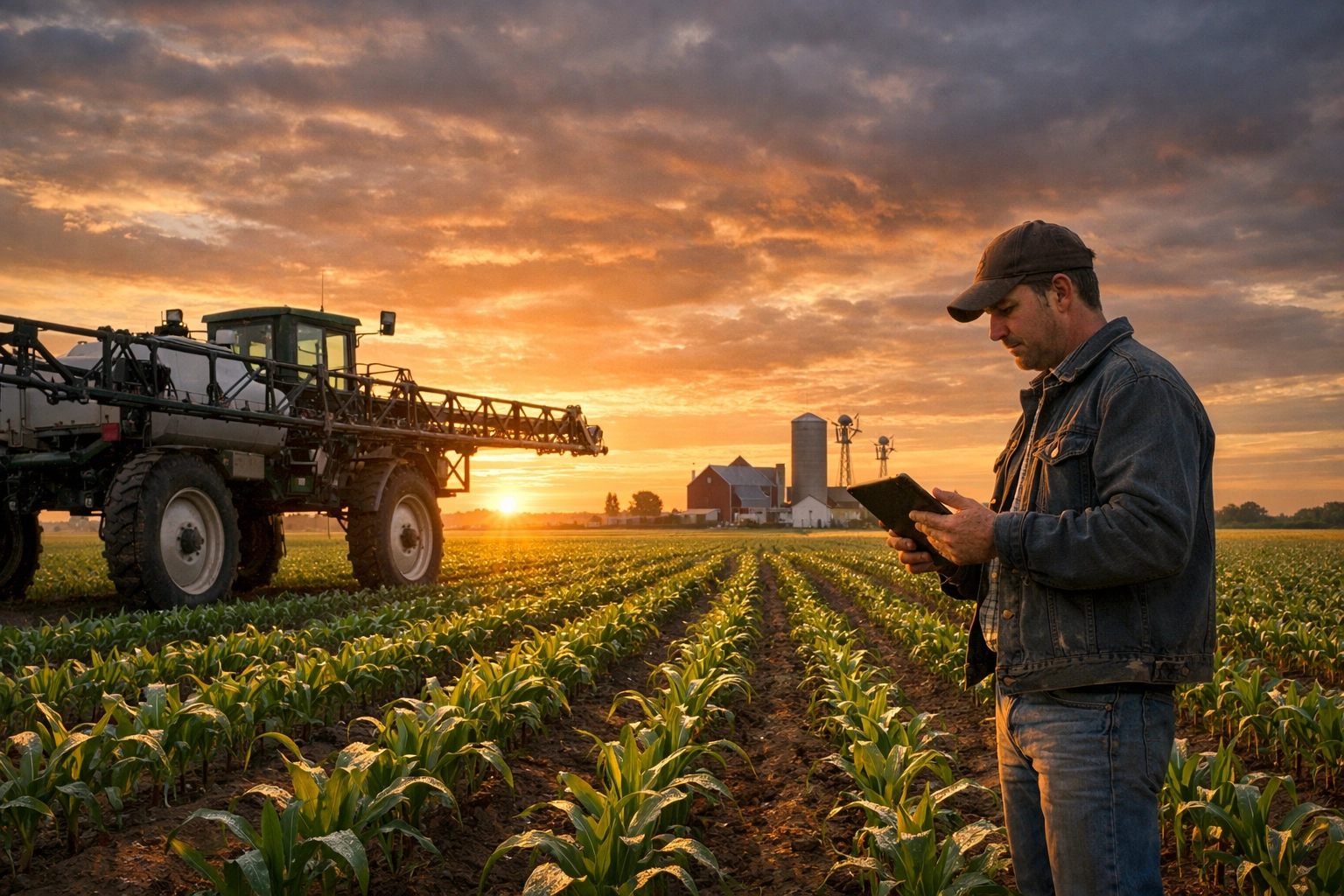
The decision now starts with one number: cost per acre
A few years ago, growers talked about nitrogen in terms of price per ton or per pound. In 2026, that conversation has shifted to something more grounded:
Cost per acre.
Because that’s where the decision becomes real.
On many Midwest farms, nitrogen costs now range between $100–$140 per acre, depending on application rates and product form. At 180 lbs/acre and $0.70 per pound, growers are investing roughly $126 per acre in nitrogen alone.
That number doesn’t sit abstractly on a spreadsheet. It sits in the back of a farmer’s mind while loading the applicator.
And it immediately raises a harder question:
What does that $126 actually buy?
While global supply estimates and market projections provide a broader outlook, the real impact of these shifts is felt at the field level. In regions like the U.S. Midwest, farmers are already facing difficult planting decisions due to excess soil moisture and narrow timing windows. This real-world challenge is explored in detail in
too wet to plant, too late to wait: the real decisions behind Midwest corn planting in 2026, where macro trends translate into high-stakes on-farm choices.

The uncomfortable math behind every extra pound
To justify that nitrogen investment, it has to convert into yield.
At $5.00 corn, every bushel is worth $5.
So if nitrogen costs $126 per acre, the crop needs to generate at least:
- 25 bushels per acre just to cover nitrogen cost alone
- More when factoring in seed, fuel, machinery, land, and overhead
But here’s where it gets complicated.
Research from Iowa State University Extension and Outreach shows that yield response to nitrogen is not linear. Their widely used MRTN framework demonstrates that beyond a certain level, additional nitrogen produces diminishing returns.
👉 You can explore the MRTN tool here:
https://cnrc.agron.iastate.edu/
In practical terms:
- The first 120–150 lbs of nitrogen often delivers strong yield response
- The next 20–30 lbs adds moderate gains
- Beyond that, returns become inconsistent and highly weather-dependent
That means the last 20–40 lbs of nitrogen—often costing $15–$30 per acre—may only generate 5–10 bushels, or sometimes none at all.
That’s where growers are starting to pull back.
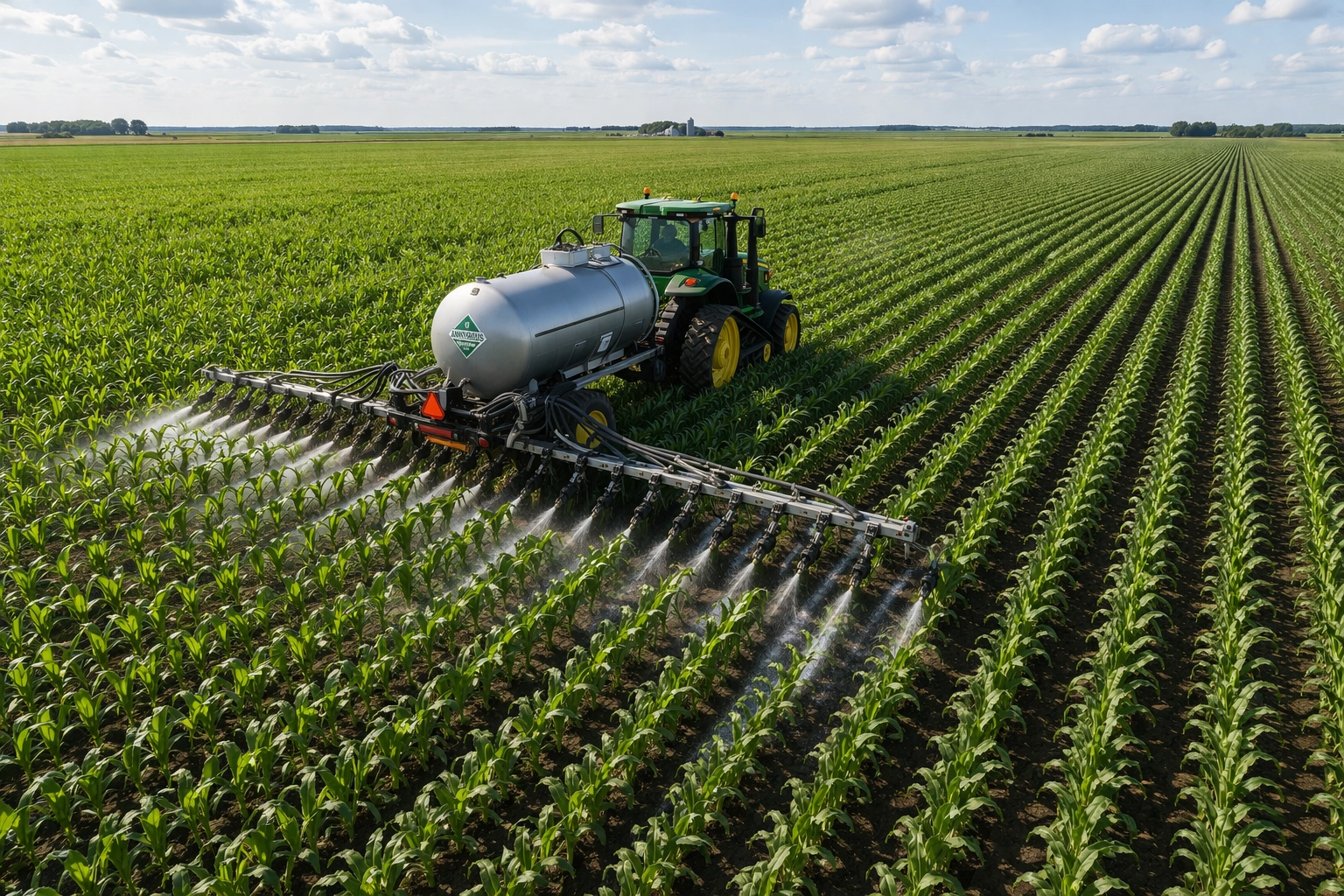
Retail counters aren’t driving panic anymore—they’re driving precision
Earlier in the decade, fertilizer discussions were driven by fear—shortages, price spikes, global disruptions.
In 2026, the tone is different.
Supply is relatively stable. According to the USDA Economic Research Service, fertilizer availability has improved compared to peak disruption years, but costs remain historically elevated.
👉 USDA fertilizer cost data:
https://www.ers.usda.gov/data-products/fertilizer-use-and-price/
So growers aren’t reacting emotionally.
They’re optimizing.
Instead of asking, “How much do I need?”
They’re asking, “Where does it stop paying?”
Across the U.S. Corn Belt, planting decisions are increasingly tied to market signals and policy expectations. As explored in our in-depth Corn Belt field analysis, these choices reflect a complex mix of agronomy, economics, and timing.
Weather is turning nitrogen into a risk decision, not just an input
Nitrogen has always been sensitive to weather—but in tighter-margin years, that sensitivity matters more.
Heavy spring rainfall can lead to:
- Leaching losses (nitrate moving below root zone)
- Denitrification (nitrogen lost to atmosphere)
Dry conditions create a different problem:
- Limited nitrogen uptake
- Reduced yield response
This uncertainty is pushing growers toward split application strategies.
Guidance from Purdue University Extension increasingly supports applying a base rate early, then adjusting in-season.
👉 Purdue nitrogen timing guide:
https://www.agry.purdue.edu/ext/corn/news/timeless/NitrogenManagement.pdf
A typical shift looks like this:
- Pre-plant: 100–130 lbs
- Sidedress: 40–60 lbs based on crop condition
This reduces upfront risk and keeps flexibility in the system.
Because in 2026, nitrogen timing matters almost as much as nitrogen rate.
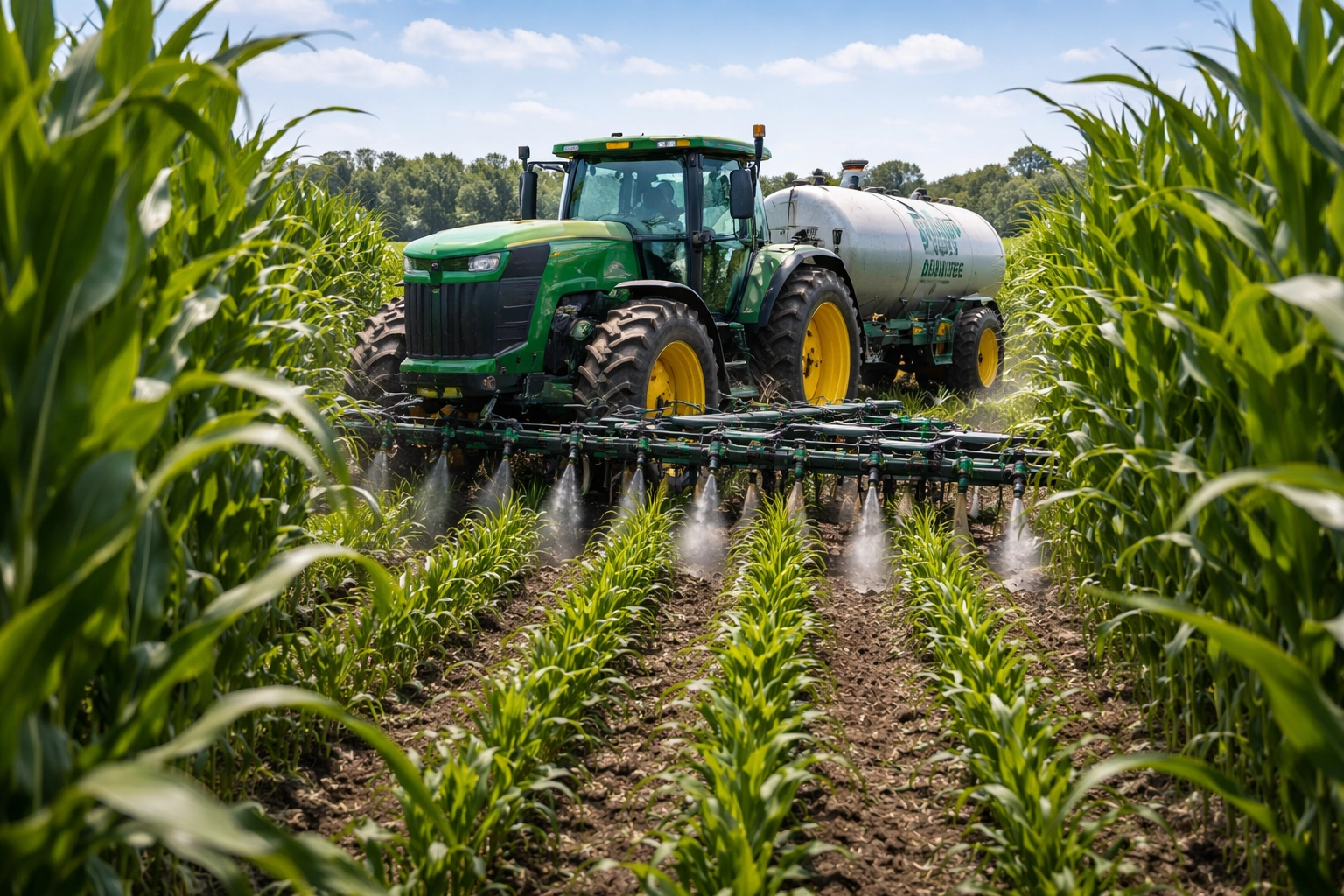
The Trade-Off: Cost Saving vs Yield Loss
Reducing nitrogen can lower costs.
But it also creates a serious risk:
- Lower nitrogen → lower crop yield
- Lower yield → lower revenue
This creates a critical trade-off:
Saving $20–$30 per acre on fertilizer
may result in losing much more in yield.
This is why nitrogen decisions are not simple cost decisions —
they are profit decisions.
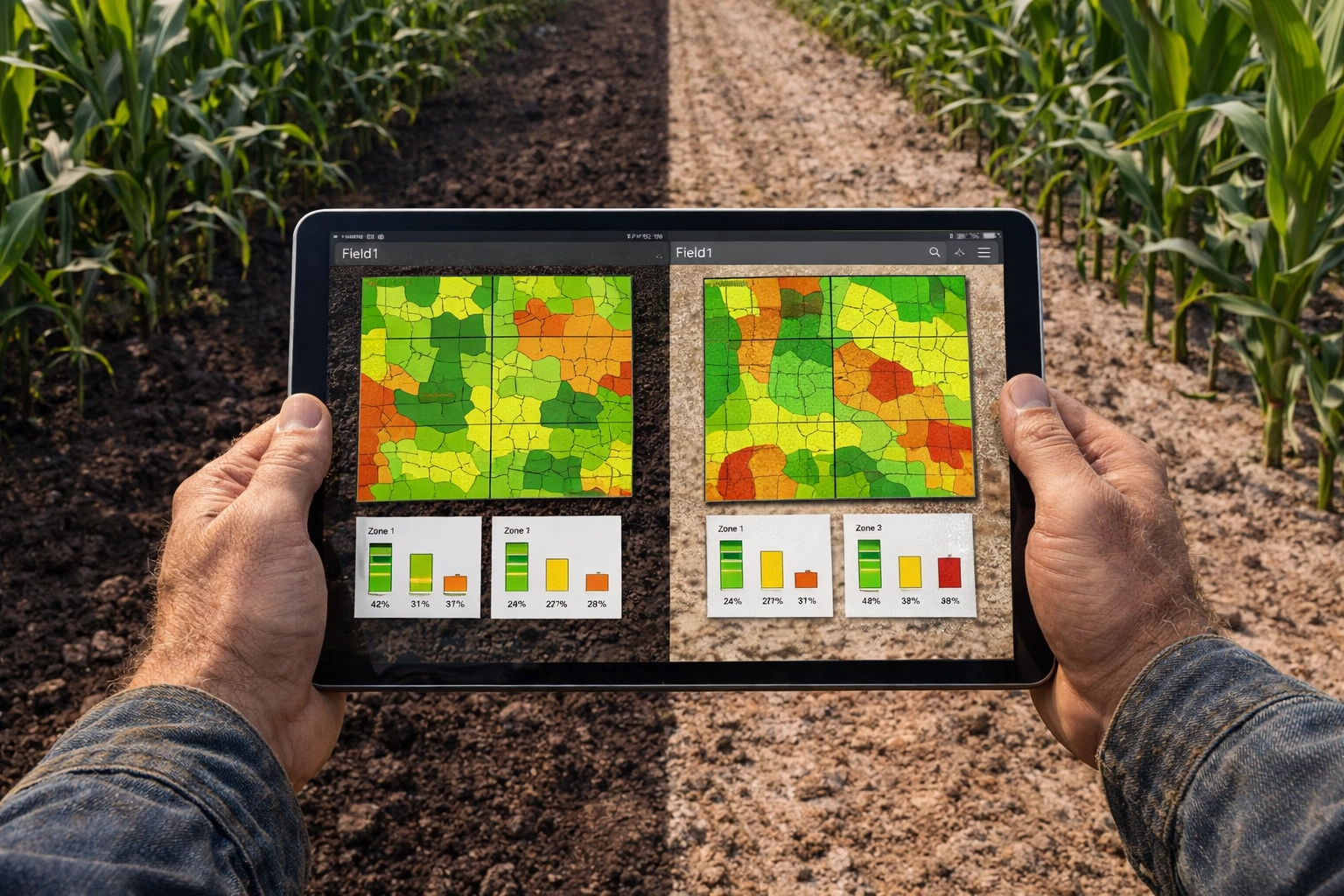
Soil is quietly replacing habit
Another major shift isn’t about cutting nitrogen—it’s about placing it more intelligently.
Fields are no longer treated uniformly.
- High organic matter soils → reduced nitrogen need
- Soybean rotation → 30–50 lbs N credit
- Low-yield zones → often not responsive to higher rates
This means two neighboring acres in the same field might now receive very different nitrogen rates.
And in some cases, farmers are accepting a hard truth:
Not every acre deserves maximum input.
The break-even line is getting sharper
Let’s bring the numbers together in a real-world scenario:
- Nitrogen rate: 180 lbs/acre
- Cost: $0.70/lb
- Total nitrogen cost: $126/acre
Now assume:
- Corn price: $5.00/bushel
To justify just the nitrogen:
👉 Required yield gain = ~25 bushels/acre
But based on MRTN research, the last 30–40 lbs of nitrogen may only generate:
👉 5–10 bushels (or less in poor conditions)
Which means:
👉 That portion may not break even
This is the exact zone where growers are cutting back.
Not across the whole program.
But at the margin.
Technology is no longer optional—it’s economic
Precision tools are becoming less about innovation and more about survival.
Growers are using:
- Variable rate application maps
- Satellite imagery (NDVI)
- In-season crop sensing
- Yield history overlays
To answer one question:
Where is nitrogen actually working?
Instead of applying 180 lbs everywhere, they might apply:
- 200 lbs on high-response zones
- 140 lbs on stable zones
- 100 lbs or less on weak areas
That alone can reduce total nitrogen cost by $15–$40 per acre across a farm.
And in a tight margin year—that matters.
The emotional shift is real—and rare
There’s a moment, sitting in the cab, when the rate dial is turned slightly lower than usual.
And it doesn’t feel comfortable.
Because for decades, nitrogen has been insurance.
More nitrogen meant:
- Less risk
- Better color
- Stronger yield confidence
Cutting back feels like removing a safety net.
And yet, more growers are doing it.
Not because they’re confident.
But because the numbers are forcing the decision.

Global forces still set the baseline
Even if local supply is stable, nitrogen prices are still shaped globally.
According to the International Fertilizer Association, nitrogen markets remain tightly linked to natural gas prices and global energy dynamics.
👉 Global fertilizer outlook:
https://www.fertilizer.org/
That means:
Farmers don’t control price.
They control usage.
And in 2026, that’s where adaptation is happening.
Environmental benefits are real—but secondary
Programs from the USDA Natural Resources Conservation Service promote:
- Reduced nitrogen loss
- Improved water quality
- Efficient nutrient use
👉 NRCS nutrient management overview:
https://www.nrcs.usda.gov/conservation-basics/conservation-by-state
But on most farms, the driver is still economic.
Interestingly, both goals now align.
Using less nitrogen where it doesn’t pay also reduces environmental loss.
Corn-on-corn acres remain the hardest decision
Not all acres allow easy cuts.
Corn-on-corn fields typically require:
- Higher nitrogen rates
- Better timing
- More management
Yet even here, growers are adjusting strategy:
- Delaying part of nitrogen
- Using stabilizers
- Monitoring crop response before final application
The goal isn’t reduction.
It’s precision under pressure.
Small changes, big cumulative impact
Across the Corn Belt, the shift doesn’t look dramatic:
- 10–20 lbs less nitrogen here
- A delayed application there
- A variable rate adjustment across zones
Individually, these are small moves.
But across millions of acres, they matter.
Even a 10 lb/acre reduction nationally represents a massive shift in input use—and potentially in yield outcomes.
The season will judge every decision
If 2026 delivers ideal weather:
- Lower nitrogen rates may limit top-end yields
If conditions turn difficult:
- Reduced nitrogen may protect margins
That’s the trade-off.
And no model can fully predict which outcome will dominate.
Government policies influence everything from crop choices to risk management strategies, but farmers ultimately face real-time decisions in the field. For example, ongoing wet conditions in the Midwest are forcing tough planting calls, as explained in
real Midwest corn planting decisions under wet conditions.
By mid-season, nothing will look different
The corn will still be green.
Rows will still be uniform.
From the road, no one will see the difference.
But beneath the surface, every field carries a slightly different nitrogen story than it did a few years ago.
Less excess.
More calculation.
More hesitation.
How Farmers Should Manage Nitrogen in 2026
Instead of cutting nitrogen blindly, farmers should focus on efficiency.
Smart strategies:
- Use soil testing to apply the right amount
- Optimize timing of nitrogen application
- Use precision farming tools
- Avoid overuse — but also avoid underuse
The goal is not to reduce nitrogen —
but to maximize return per unit.
And that quiet shift may not stay quiet for long
What’s happening in 2026 isn’t a reaction—it’s a recalibration.
Farmers are no longer asking how to maximize yield at any cost.
They’re asking how to optimize return per acre.
And nitrogen sits at the center of that shift.
This change may not show up immediately in crop ratings or USDA reports.
But over time, it could quietly redefine how U.S. corn yields are built—
one pound of nitrogen at a time.
Conclusion
Cutting nitrogen may reduce costs in the short term.
But it can also reduce yield and income.
In 2026, the real challenge is not reducing input use —
but managing inputs efficiently.
Farmers who understand this balance will stay profitable.

Written by Janardan Tharkar – an agriculture content researcher and blogging professional with practical experience in farming education, digital publishing, and SEO content optimization. Janardan focuses on modern U.S. agriculture trends, smart farming technologies, irrigation systems, crop development, organic farming practices, and farmer-support programs to create helpful, practical, and trustworthy content for American readers.