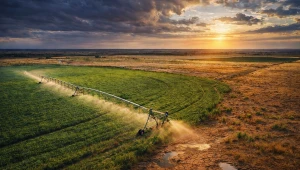
A Growing Constraint Beneath American Agriculture
Across much of the United States, agriculture is entering a period where water availability is becoming a central planning concern. Farmers have always dealt with weather uncertainty, but in recent years the combination of climate variability, aquifer depletion, and competing water demands has begun to reshape how farms operate.
Water scarcity is not a sudden crisis for most agricultural regions. Instead, it develops gradually through subtle shifts—groundwater levels declining each year, irrigation allocations tightening during drought periods, and rainfall patterns becoming less predictable.
Two numbers illustrate how central water is to the U.S. agricultural system.
According to the United States Geological Survey, irrigation accounts for roughly 42% of total freshwater withdrawals in the United States, making agriculture the single largest user of freshwater resources in many farming regions.
At the same time, key groundwater sources are under pressure. Studies monitoring the High Plains region show that parts of the Ogallala Aquifer have experienced declines exceeding 150 feet since large-scale irrigation began in the mid-20th century, with water levels continuing to drop gradually in several states.
These numbers reveal a structural challenge. Agriculture depends heavily on reliable water supplies, yet the natural systems supporting that supply are becoming increasingly stressed.
For farmers, these changes influence far more than day-to-day operations. They shape long-term investments, crop selection, land values, and the economic outlook of entire agricultural regions.
Water remains the backbone of American crop production. Data from the United States Geological Survey highlights how irrigation supports large portions of crop output across the western and southern United States.
https://www.usgs.gov/
This places agriculture directly at the center of national water discussions. Farmers rely on dependable water access, while policymakers and environmental groups are increasingly concerned about sustainability.
By 2026, the tension between agricultural production, environmental conservation, and urban water demand has become one of the defining challenges for U.S. agriculture.

Farmers Confront a Changing Water Reality
On the ground, climate pressure appears in subtle but persistent ways. Farmers notice irrigation wells running slightly deeper each year. Reservoir allocations fluctuate more widely. Weather patterns shift planting windows and soil moisture conditions.
Producers across the High Plains region closely monitor the health of the Ogallala Aquifer. In California’s Central Valley, farmers watch snowpack levels in the Sierra Nevada because those winter snow totals determine irrigation allocations months later.
The practical result is uncertainty.
Farmers must decide whether long-term investments—such as irrigation infrastructure, orchards, or specialty crops—will remain viable if water availability continues to tighten.
A wheat and corn producer in western Kansas offers a useful example.
Mark Jensen, who manages roughly 2,500 acres near Garden City, has relied on groundwater irrigation from the Ogallala Aquifer for decades. Over the past ten years, he has noticed wells requiring deeper pumping and higher electricity costs.
Jensen has gradually shifted part of his acreage away from heavily irrigated corn toward more drought-tolerant crops such as sorghum. At the same time, he has invested in improved center-pivot irrigation systems that allow more precise water application.
His situation reflects a broader pattern across the High Plains. Farmers are rarely abandoning irrigation entirely, but they are adjusting their strategies as water availability becomes less predictable.
Data from the United States Department of Agriculture shows that irrigated farms produce a disproportionately large share of the total value of U.S. crop production.
https://www.usda.gov/
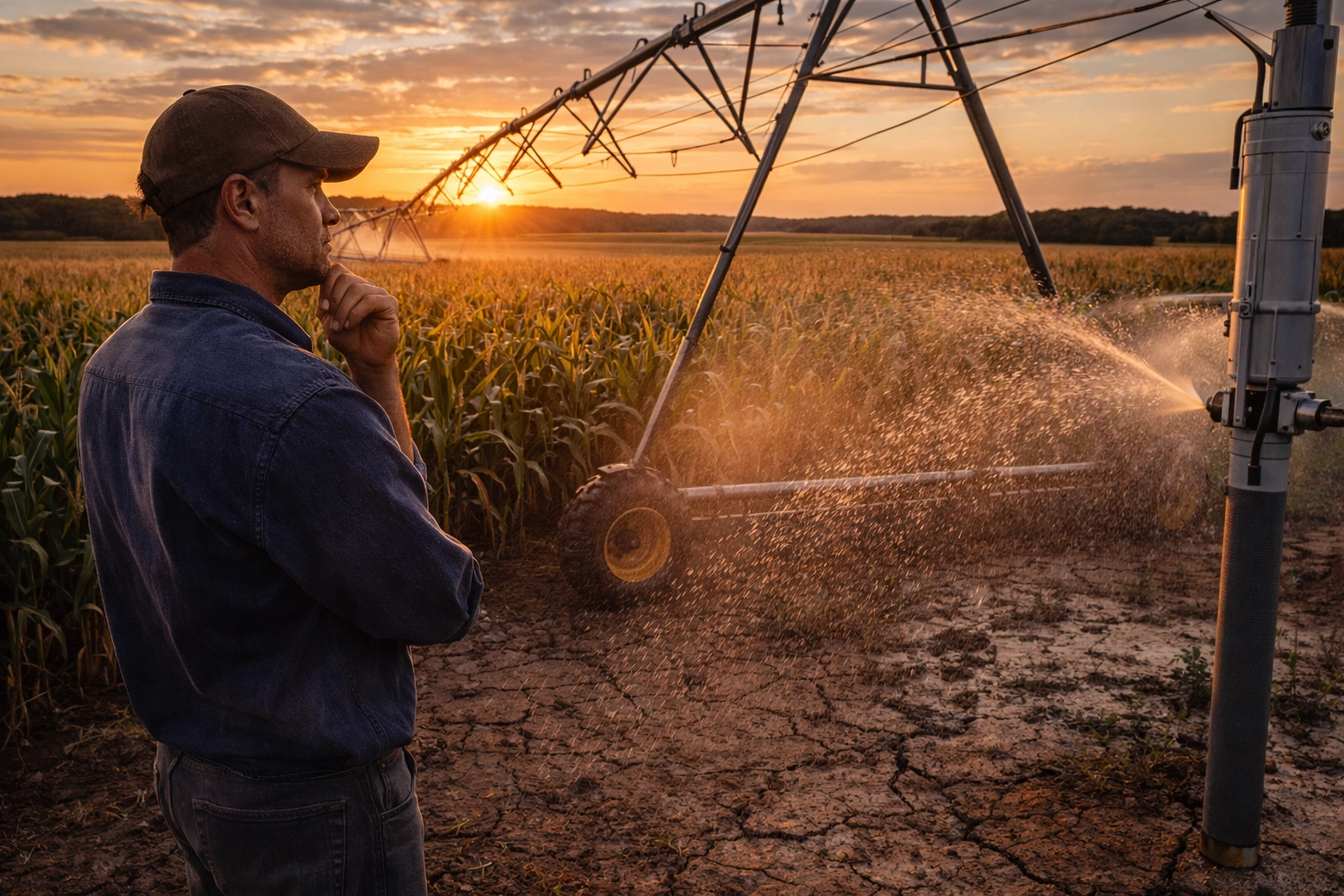
Many high-value crops—including fruits, vegetables, and nuts—depend heavily on irrigation. If water availability becomes more limited, the economic effects could ripple through entire supply chains.
For now, most farmers are adapting rather than retreating. They experiment with drought-tolerant crop varieties, adopt more efficient irrigation technologies, and monitor water use more carefully.
These adjustments signal a deeper shift in expectations.
Water, once assumed to be reliably available in many regions, is increasingly treated as a scarce and uncertain resource.
Must Read

AI and Automation Are Reshaping U.S. Agriculture in 2026
Artificial intelligence and automation are rapidly transforming American agriculture. From precision spraying to autonomous machinery and data-driven crop management, new technologies are helping farmers improve efficiency while facing rising labor shortages and production costs.
Competing Interests Around a Shared Resource
Water management in agriculture involves multiple stakeholders with legitimate—but sometimes conflicting—priorities.
Farmers and Agricultural Producers
For farmers, water represents a fundamental production input. Reliable irrigation stabilizes crop yields and protects farms from drought-related losses.
Agricultural producers frequently argue that water policies must recognize the economic importance of food production and the role farms play in rural economies.
Restrictions on irrigation, they warn, could reduce crop output, increase food prices, and undermine farm viability.
Environmental and Conservation Groups
Environmental organizations focus on the ecological consequences of excessive water extraction. Rivers, wetlands, and wildlife habitats often depend on maintaining natural water flows.
Conservation advocates often support stronger groundwater regulation and ecosystem protections.
Their position is based on long-term sustainability concerns. Over-pumping aquifers today could leave future generations with far fewer water resources.
Urban Water Users
Cities represent another major stakeholder in water debates.
As urban populations expand across the West and Southwest, municipal water demand continues to grow. Municipal authorities must ensure stable drinking water supplies while also supporting economic development.
In several regions, cities have already purchased agricultural water rights to secure future water supplies.
Government Institutions
State and federal agencies must balance these competing interests. Governments regulate groundwater pumping, manage reservoir systems, and enforce environmental protections.
This places policymakers in the difficult position of mediating conflicts among stakeholders who depend on the same limited resource.
Read Also
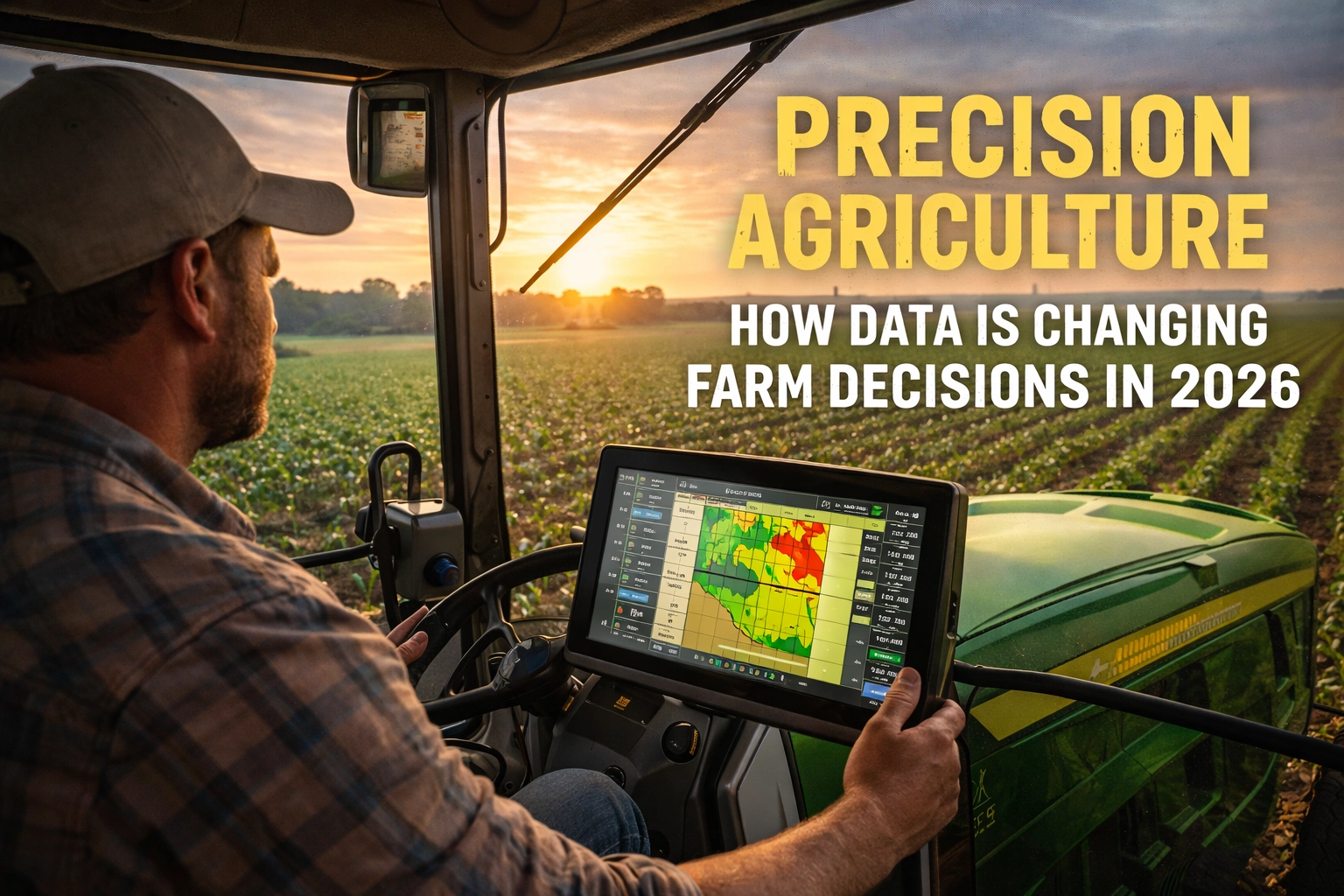
How Precision Agriculture Data Is Changing Farm Decisions in 2026
Precision agriculture tools are giving farmers deeper insights into soil conditions, crop health, and input efficiency. In 2026, data-driven farming is helping producers make smarter planting, fertilization, and irrigation decisions across U.S. agriculture.
Institutional Friction in Water Governance
The conflict surrounding water management often stems from institutional frameworks created long before today’s climate pressures emerged.
Many western water rights systems date back to the 19th century. These systems typically allocate water based on historical usage through the principle of “first in time, first in right.”
While these frameworks provided stability for decades, they now face growing pressure as water scarcity intensifies.
Efforts to reform water governance often trigger conflict between stakeholders who fear losing access to a resource essential to their livelihoods.
California’s Sustainable Groundwater Management Act (SGMA) provides a clear example. The law requires local groundwater agencies to develop plans that ensure aquifers remain sustainable over the long term.
Economic analysis by the USDA Economic Research Service notes that groundwater regulations are already influencing land-use patterns and crop decisions in parts of California.
https://www.ers.usda.gov/
Some farmers worry that future pumping restrictions could reduce irrigated acreage.
Others view the policy as necessary to prevent long-term aquifer depletion.
These debates illustrate the institutional friction that arises when historical water systems confront modern environmental realities.
Economic Consequences of Water Constraints
Water availability shapes agricultural economics in several ways.
First, irrigation infrastructure represents a major capital investment. Wells, pumps, pipelines, and irrigation systems can cost hundreds of thousands of dollars for large farms.
If water supplies decline or pumping restrictions increase, these investments may lose value.
Second, water access strongly influences farmland prices. Irrigated farmland typically sells for significantly higher prices than non-irrigated land because it supports more reliable crop production.
Third, crop selection depends heavily on water availability.
Farmers growing high-value crops such as almonds, lettuce, or tomatoes rely on irrigation to maintain consistent yields. Water restrictions could push some farms toward less water-intensive crops.
Research from the Congressional Budget Office highlights how environmental regulations and resource constraints can reshape agricultural productivity and land-use patterns over time.
https://www.cbo.gov/
In regions where water scarcity intensifies, economic adjustments may occur gradually through changing crop patterns, shifts in land values, and evolving investment strategies.
Comparing Irrigation Strategies in a Water-Constrained Environment
Farmers are also responding to water challenges by adopting more efficient irrigation technologies.
Irrigation Methods Used by U.S. Farms
| Irrigation Method | Water Efficiency | Typical Use |
|---|---|---|
| Flood Irrigation | Low | Traditional irrigation in water-abundant regions |
| Center Pivot Systems | Moderate | Grain and forage crops |
| Drip Irrigation | High | Vegetables, orchards, vineyards |
| Subsurface Drip | Very High | Permanent crops in water-limited regions |

At first glance, these technologies appear to offer a straightforward solution to water scarcity.
Drip and subsurface irrigation systems can reduce water loss from evaporation and runoff by delivering water directly to plant roots.
However, these systems also require substantial upfront investment. Installing drip irrigation across large fields can cost tens of thousands of dollars per acre in some cases.
For farms producing lower-margin crops, these investments may not always be financially feasible.
Additionally, improved irrigation efficiency can sometimes encourage farmers to expand irrigated acreage rather than reduce total water use—a phenomenon known as the rebound effect.
This illustrates an important point: technology alone cannot solve water scarcity. Effective water management must also address policy frameworks and economic incentives.
Read Also
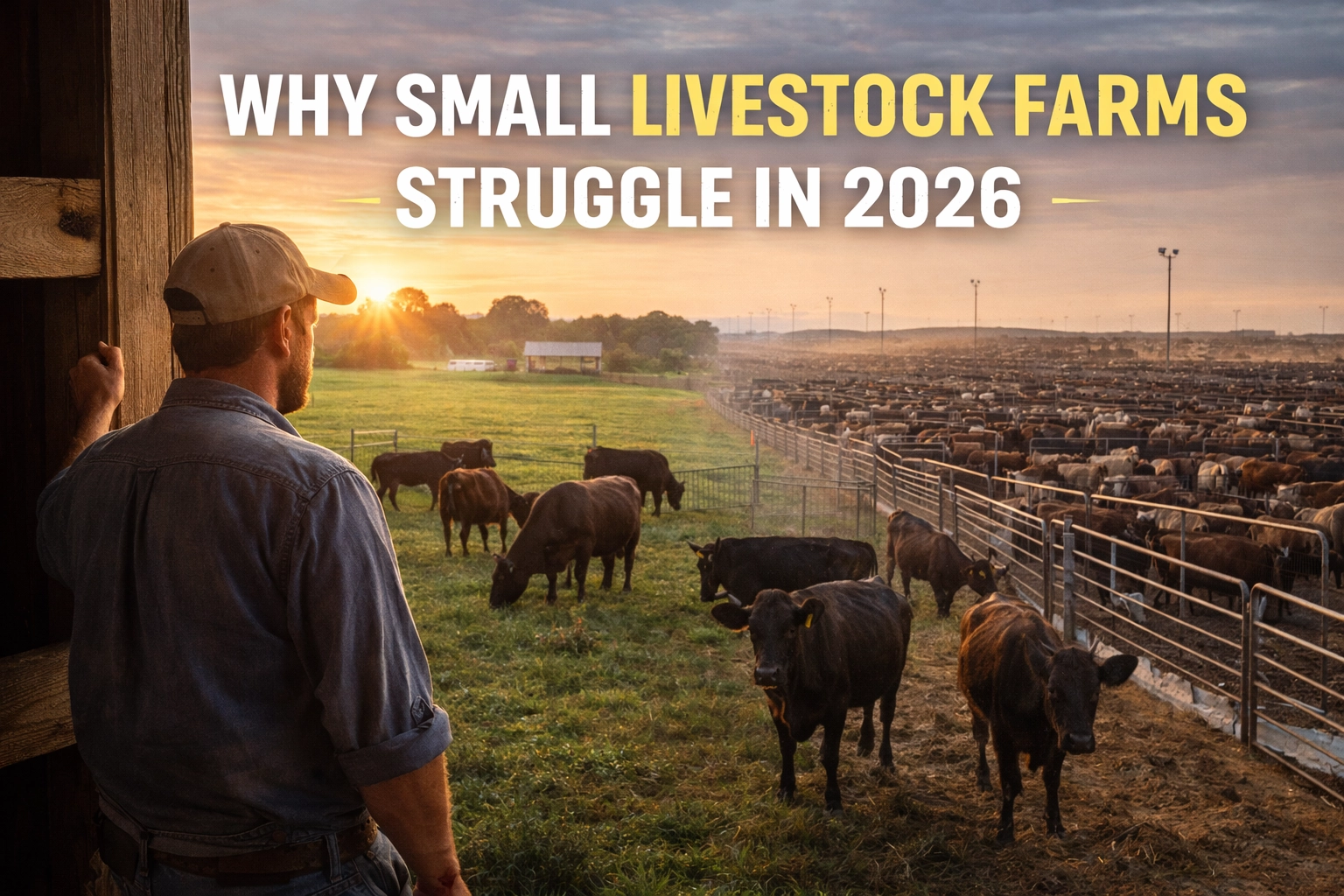
Why Small Livestock Farms Are Struggling to Compete in U.S. Agriculture (2026)
Small livestock farms across the United States are facing rising feed costs, tighter margins, and increasing competition from large-scale operations. These economic pressures are making it harder for independent producers to remain competitive in 2026.
Operational Impact on Farm Planning
As climate pressure intensifies, farmers are adjusting their planning strategies.
Crop rotations are becoming more flexible. Soil management practices designed to improve water retention—such as cover cropping and reduced tillage—are gaining wider adoption.
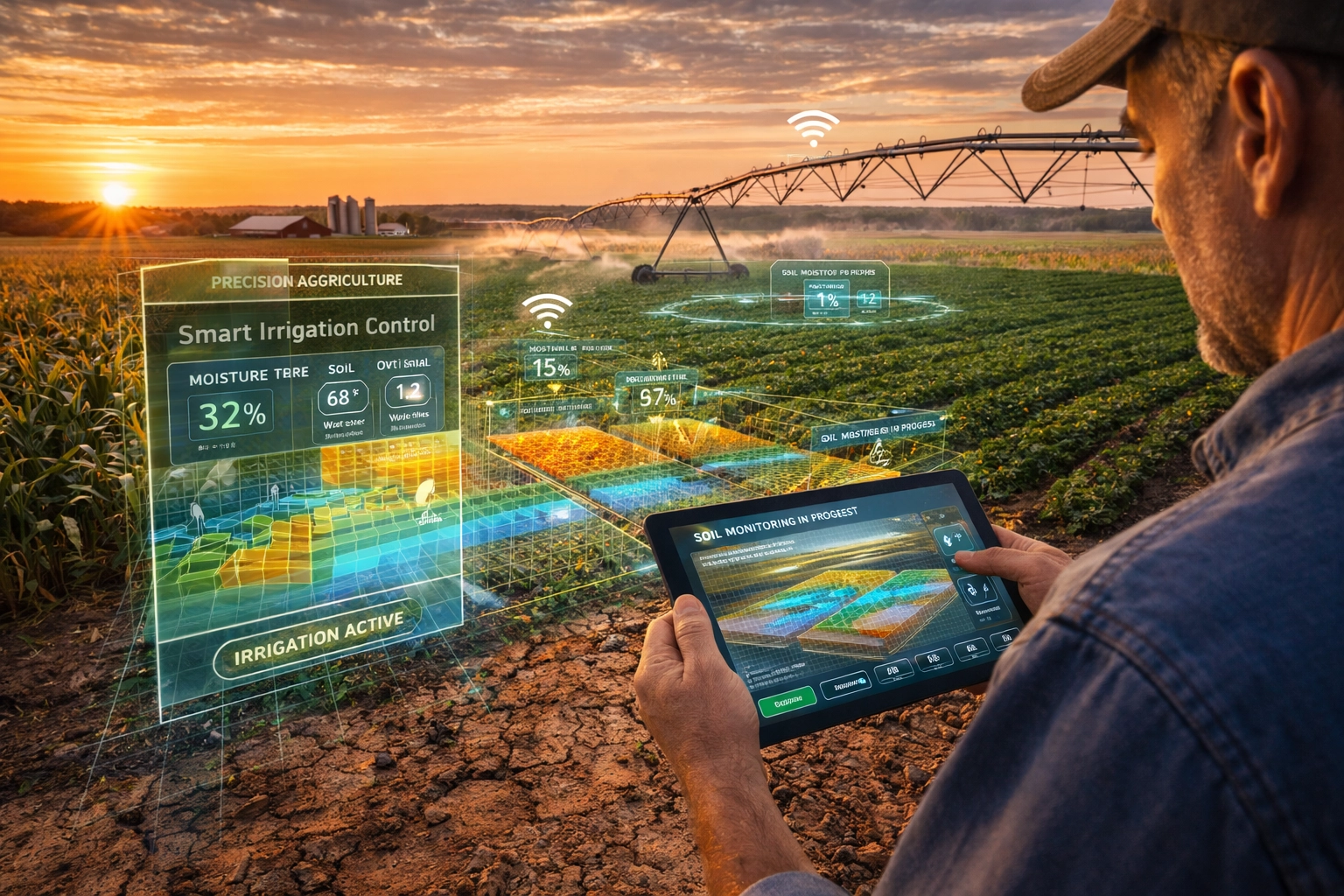
Some farmers are also investing in digital technologies that monitor soil moisture and irrigation efficiency in real time.
These tools help farmers apply water more precisely while reducing waste.
Financial planning is evolving as well.
Farmers considering long-term investments—such as orchards that produce crops for decades—must now evaluate water availability more carefully than previous generations did.
Water access is increasingly treated as a risk factor alongside weather volatility, commodity prices, and rising input costs.
Possible Escalation Paths
If water scarcity intensifies in certain regions, several types of conflict could emerge.
Legal disputes over water rights may become more common as governments attempt to adjust allocation systems. Interstate conflicts could arise where rivers cross state boundaries.
Competition between agricultural and urban water users may also intensify, particularly in rapidly growing regions of the Southwest.
Cities may continue purchasing agricultural water rights to secure future supplies.
Over time, such trends could gradually reshape regional agricultural landscapes.
Paths Toward Resolution
Despite these challenges, several strategies may help reduce conflict and support sustainable water use.
Improving irrigation efficiency remains a key step. Advances in precision agriculture allow farmers to monitor soil moisture and adjust irrigation schedules in real time.
Infrastructure investment also plays an important role. Reservoir upgrades, canal improvements, and groundwater recharge projects can increase water storage capacity.
Market-based water trading systems represent another potential solution. These systems allow water rights holders to lease or sell water during drought periods, helping allocate resources more efficiently.
Finally, collaborative governance models involving farmers, environmental groups, and urban stakeholders may produce more balanced solutions.
No single approach can eliminate water scarcity, but combining multiple strategies may reduce tension and support long-term agricultural resilience.

Water Management Will Define the Next Phase of U.S. Agriculture
Water has always shaped agricultural success. What is changing today is the level of uncertainty surrounding its availability.
Climate variability, growing population demand, and evolving environmental regulations are creating a more complex water landscape for American farms.
Farmers must increasingly consider long-term water availability when making investment decisions.
Policymakers face the challenge of balancing agricultural productivity with environmental sustainability and urban water needs.
The tension surrounding water management is unlikely to disappear.
But how institutions respond—and how farmers adapt—will ultimately shape the future structure of U.S. agriculture in the decades ahead.

Written by Janardan Tharkar – an agriculture content researcher and blogging professional with practical experience in farming education, digital publishing, and SEO content optimization. Janardan focuses on modern U.S. agriculture trends, smart farming technologies, irrigation systems, crop development, organic farming practices, and farmer-support programs to create helpful, practical, and trustworthy content for American readers.