
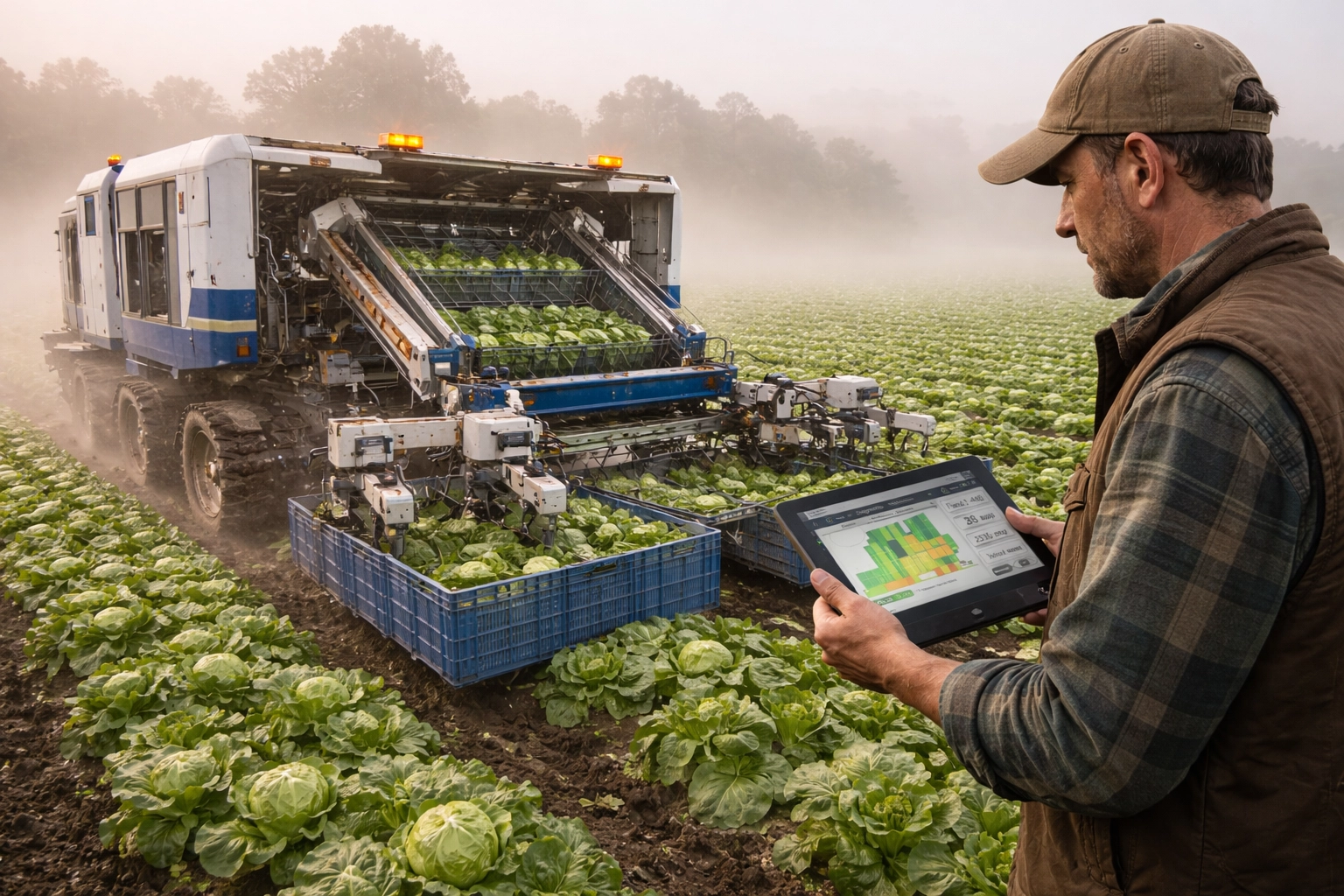
Early one morning in California’s Salinas Valley, the lettuce fields look much like they always have—cool fog hanging over the rows, irrigation lines glistening in the soft light. But the sound moving through the field is different.
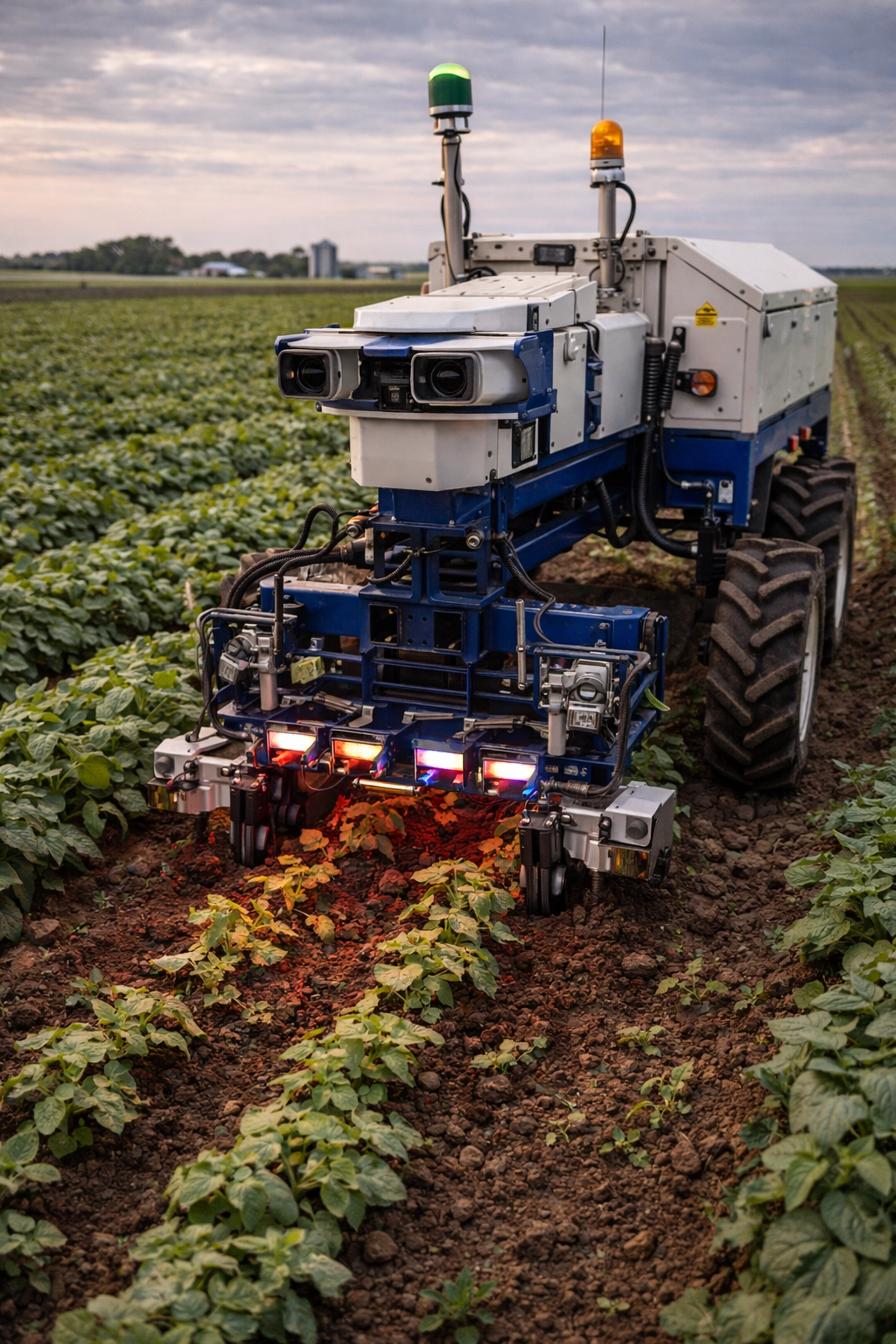
Instead of a long harvest crew working shoulder to shoulder, a low electric hum drifts across the rows. A robotic harvester rolls slowly forward, guided by cameras and artificial intelligence software trained to recognize mature lettuce heads. A single worker stands nearby, watching the machine’s progress on a tablet.
For farm manager Elena Morales, the shift is impossible to ignore.
“Ten years ago, this would’ve sounded like science fiction,” she says. “Now it’s becoming part of how farms survive.”
Across the United States, a similar quiet transformation is underway. Artificial intelligence and automation are moving from experimental projects into everyday farm operations. Driver-assist tractors, AI weed detection systems, robotic harvesters, and predictive crop models are increasingly appearing in fields from California to Iowa.
But the rise of automation in agriculture is not simply a technology story.
It is the result of deep economic tension inside the American farm economy—where rising costs, labor shortages, and capital pressure are forcing farmers to rethink how food is produced.
Macroeconomic Pressure Building Across Agriculture
For decades, U.S. agriculture has operated on a delicate balance. Farmers must produce large quantities of food while navigating thin margins, volatile commodity markets, and unpredictable weather.
In recent years, that balance has become more fragile.
Production costs have risen sharply across several categories, including fuel, fertilizer, labor, and machinery. At the same time, borrowing costs have increased as interest rates climbed throughout the broader economy.
According to the USDA Economic Research Service, total farm production expenses in the United States have increased significantly over the past decade, reflecting rising input prices and growing operational complexity.
Farm financial outlook reports published by ERS show that expenses related to fuel, fertilizer, labor, and machinery repairs remain among the largest cost pressures facing producers today.
For example, the agency’s farm sector outlook highlights how production costs continue to influence profitability across crop and livestock operations (see the ERS farm sector income forecasts: https://www.ers.usda.gov/topics/farm-economy/farm-sector-income-finances/farm-sector-income-forecast/).
At the farm level, those macroeconomic shifts translate into daily operational stress.
When diesel prices rise, irrigation becomes more expensive. When fertilizer costs spike, crop margins tighten. When borrowing costs increase, equipment purchases become harder to justify.
Automation, in this environment, begins to look less like innovation and more like adaptation.
Also Read
Combine Harvester Maintenance Before Harvest 2026
Before the 2026 harvest season begins, proper combine harvester maintenance can prevent costly breakdowns in the field. Farmers across the U.S. are increasingly focusing on preseason inspections to protect yields and reduce downtime.
The Supply–Demand Mechanics of Farm Labor
Perhaps the most immediate pressure pushing agriculture toward automation is labor.
American agriculture has long relied on seasonal labor to plant, cultivate, and harvest crops. Fruit, vegetable, and specialty crop farms in particular depend on large workforces during short harvest windows.
But the supply of farm labor has been steadily tightening.
Demographic changes, declining rural populations, and immigration policy uncertainty have all contributed to a shrinking labor pool. As a result, growers often struggle to secure enough workers during critical harvest periods.
Data compiled by the U.S. Bureau of Labor Statistics show that farm labor costs have risen steadily over the past decade as competition for workers intensifies.
Agricultural wage trends tracked by the Bureau of Labor Statistics indicate that farm employers increasingly face higher labor costs and recruitment challenges across several regions (see: https://www.bls.gov/oes/current/oes452093.htm).
For growers harvesting crops like strawberries, lettuce, or apples, the implications are immediate.
If labor supply declines while production demand remains constant, wages increase. Higher wages push production costs upward. When margins shrink, farmers search for ways to maintain productivity with fewer workers.
Automation offers one potential path forward.
Machines that can harvest crops, apply herbicides precisely, or identify weeds using computer vision reduce the need for large seasonal labor crews.
But automation introduces a new challenge.
Machines require capital.
AI Is Reshaping How Farms Operate
When people imagine artificial intelligence in agriculture, they often picture fully autonomous tractors or robots picking fruit.
Those technologies are emerging, but AI’s influence is already broader.
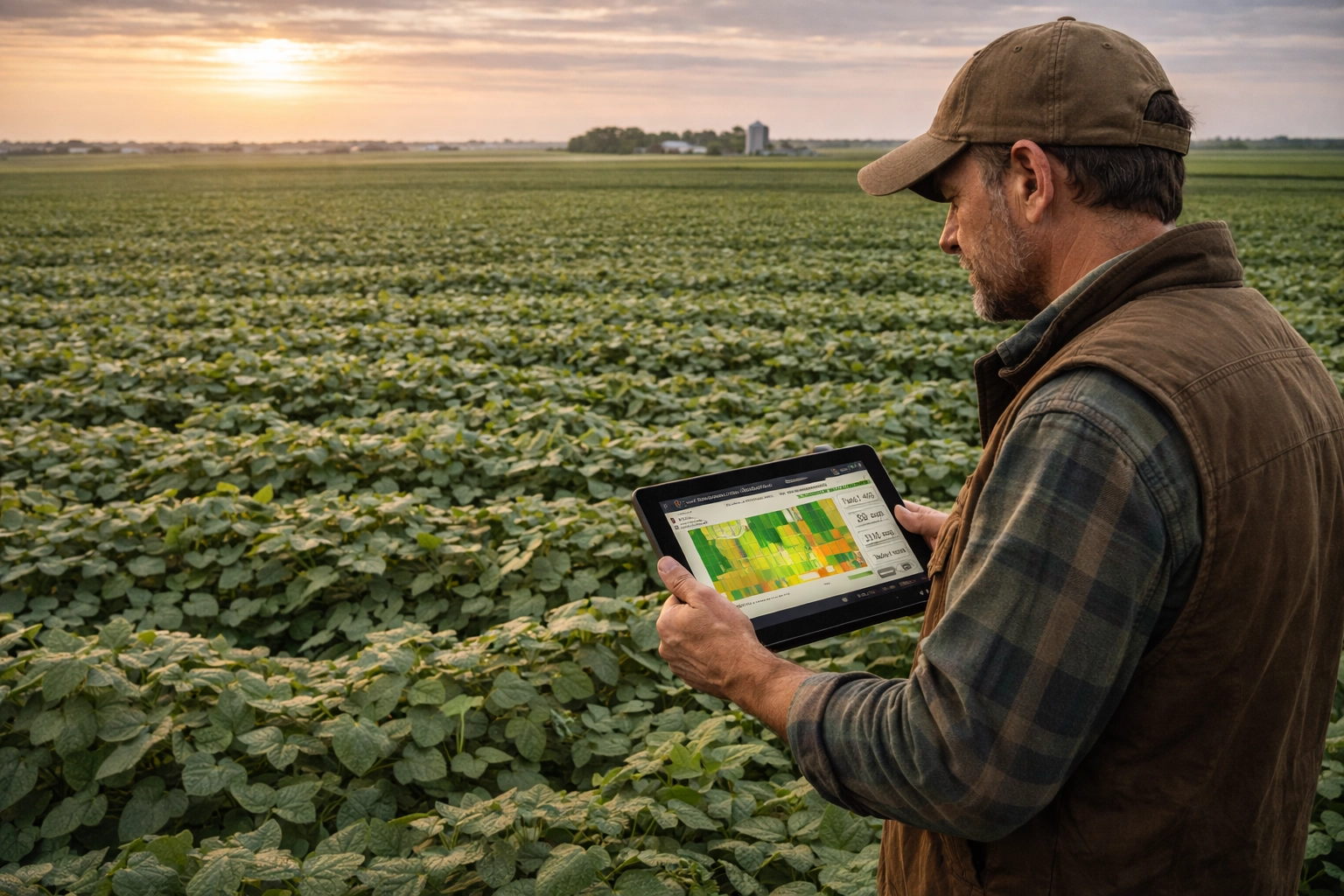
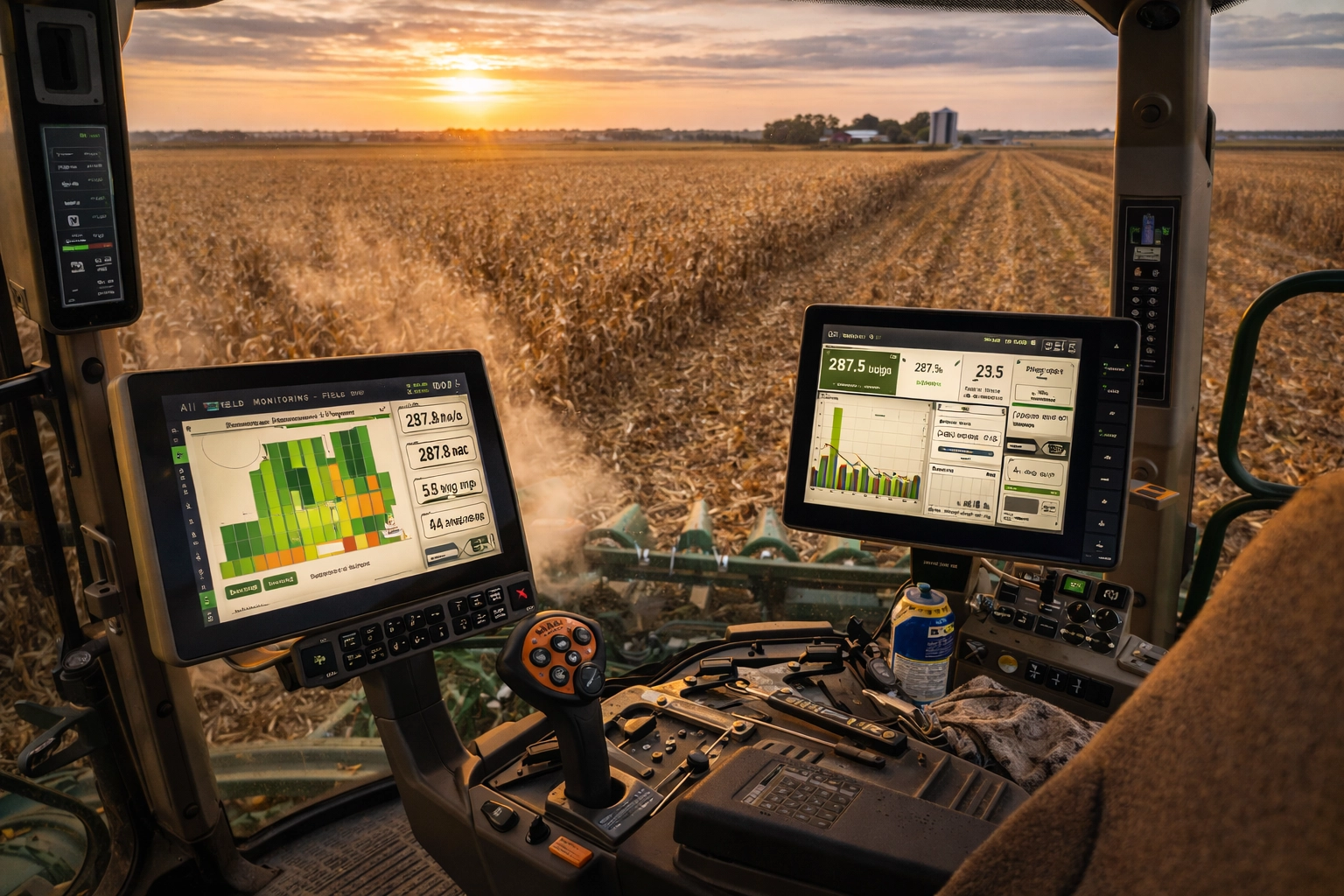
Across the country, machine-learning systems are analyzing satellite imagery to guide irrigation decisions. Computer vision software identifies weeds and directs sprayers to apply herbicide only where necessary. Sensors embedded in combines generate yield maps that farmers use to adjust fertilizer applications in future seasons.
These tools change how farmers manage risk and productivity.
For example, AI-guided sprayers can reduce herbicide usage dramatically by applying chemicals only to weeds detected by cameras. Precision irrigation systems can adjust water use based on real-time soil moisture data.
Government agencies and research programs increasingly support these technologies because they promise both economic and environmental benefits.
Research initiatives funded through the U.S. Department of Agriculture are exploring how artificial intelligence can reduce chemical inputs, improve water efficiency, and increase crop resilience.
Many of these initiatives are coordinated through USDA innovation programs that promote digital agriculture and advanced farm technologies (see: https://www.usda.gov/topics/research-and-science).
Yet technology adoption in agriculture rarely follows a simple path.
Read Also

Right to Repair: Farmers vs Equipment Software
Modern farm machinery increasingly relies on locked software systems that prevent farmers from repairing their own equipment. The growing Right to Repair debate is now shaping agricultural policy and the future of machinery ownership in the United States.
Structural Imbalances in Technology Adoption
While automation promises efficiency, it also reveals a structural divide within the agricultural sector.
Large farms often possess the capital needed to invest in new machinery, robotics, and data platforms. Smaller farms frequently operate with tighter budgets and limited borrowing capacity.
This difference shapes how quickly farms adopt new technology.
An autonomous tractor system or robotic harvester can cost hundreds of thousands of dollars. For a farm managing thousands of acres, that investment may eventually reduce labor costs and increase efficiency.
For smaller operations, however, the cost may be difficult to justify.
Farm structure data compiled by the USDA National Agricultural Statistics Service illustrate the broader pattern: while the total number of U.S. farms has declined gradually over decades, the average farm size has increased.
NASS reports consistently show that larger operations account for a growing share of total agricultural production (see: https://www.nass.usda.gov/Publications/AgCensus/).
Technology adoption often accelerates this consolidation.
When larger farms gain productivity advantages through automation, they can expand more easily, while smaller operations may struggle to keep pace.
Comparing Labor and Automation Economics
The economic trade-off between human labor and automated systems is central to the current transformation in agriculture.
| Factor | Traditional Labor System | AI & Automation System |
|---|---|---|
| Initial Investment | Low upfront cost | Very high equipment and software cost |
| Operating Cost | Rising wages and labor shortages | Lower labor cost over time |
| Risk Exposure | Dependent on worker availability | Dependent on technology reliability |
| Productivity | Limited by crew size | Higher consistency and precision |
The comparison highlights a fundamental shift underway in agriculture.
For much of the 20th century, farming was primarily labor-intensive. Human workers performed most harvesting, planting, and crop management tasks.
Automation transforms agriculture into a capital-intensive industry.
Instead of managing large labor crews, farmers manage machinery loans, software subscriptions, and equipment depreciation schedules.
This shift does not eliminate risk.
It redistributes it.
Debt and Capital Pressure on Farms
The growing reliance on technology arrives at a moment when many farms are already navigating financial pressure.
Borrowing costs increased across the U.S. economy in recent years, affecting agricultural loans used to purchase land, equipment, and operating inputs.
Regional agricultural credit conditions tracked by the Federal Reserve Bank of Kansas City indicate that farm debt levels have risen across many agricultural regions.
Reports from the Kansas City Fed’s agricultural credit surveys show that higher interest rates and increased input costs are shaping financial decisions for producers (see: https://www.kansascityfed.org/surveys/ag-credit-survey/).
For farmers considering automation investments, this environment creates a difficult question.
Should they borrow additional capital to purchase technology that may reduce labor costs—but increase long-term debt?
Some farms choose gradual adoption. They integrate precision agriculture software first, then upgrade machinery later.
Others lease equipment through service contracts offered by machinery companies.
And some farmers wait, watching how technology evolves before committing to major investments.
Read Also
Corn vs Soybean 2026: Planting Strategy Guide
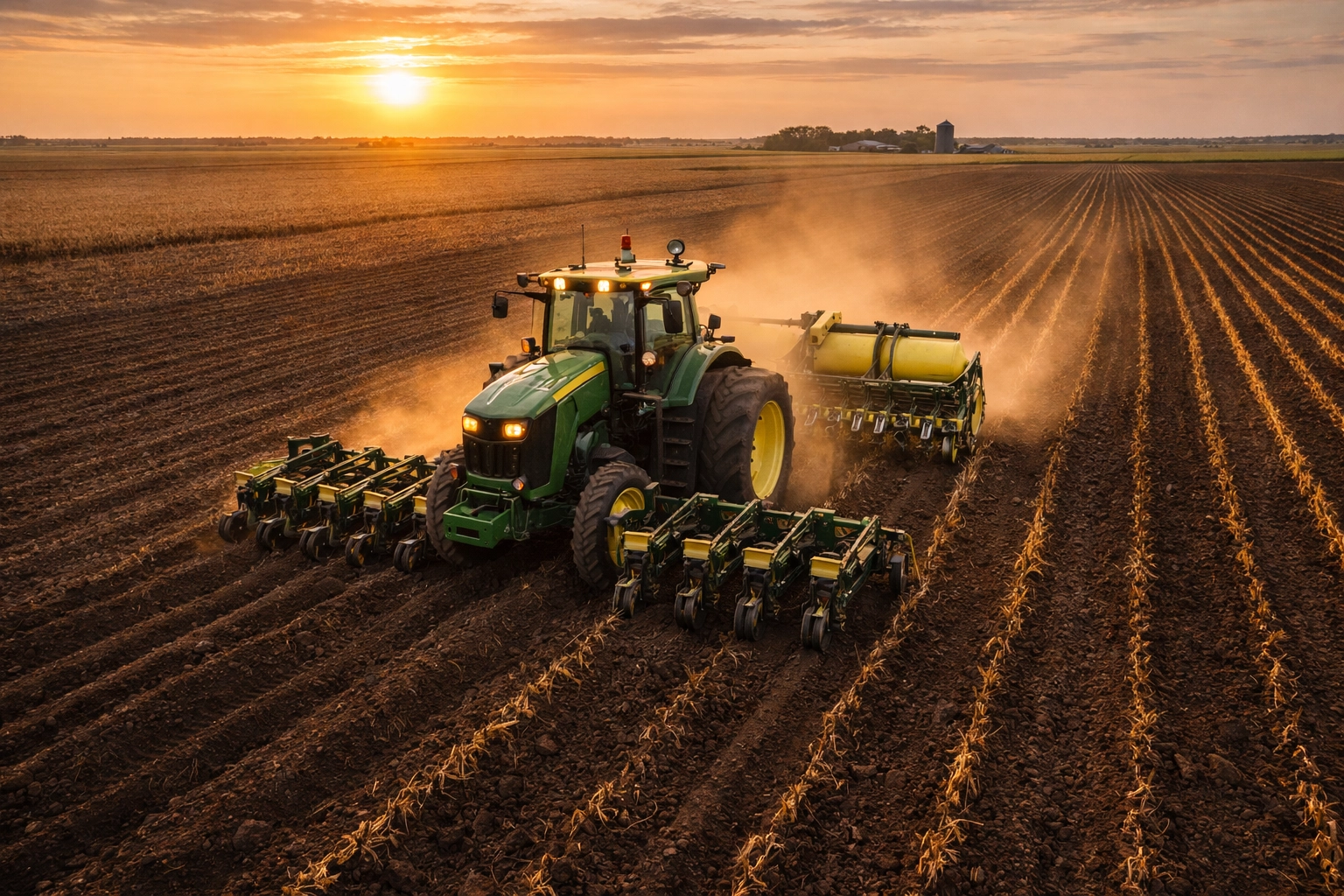
As U.S. farmers plan the 2026 planting season, the choice between corn and soybeans is becoming more complex. Market prices, input costs, and soil conditions are all influencing crop decisions across the Midwest.
Policy and Research Influence
Federal research programs have played an important role in advancing agricultural technology.
Government agencies and universities collaborate with private technology companies to develop AI-driven farming systems. These projects often focus on sustainability goals such as reducing fertilizer runoff, conserving water, and improving crop resilience.
Precision agriculture technologies, for example, can help farmers apply fertilizers more accurately, reducing environmental impacts while maintaining yields.
These innovations align with broader national concerns about food security, climate resilience, and resource management.
But policymakers also face difficult questions.
If automation reduces the demand for farm labor, rural employment patterns may change. Communities that historically depended on agricultural workforces may experience economic shifts as machines replace certain tasks.
The policy debate around agricultural automation is therefore not only about productivity.
It is also about the future of rural economies.
Farm-Level Decisions Still Drive Change
Despite the national economic trends shaping agriculture, decisions about automation ultimately happen at the farm level.
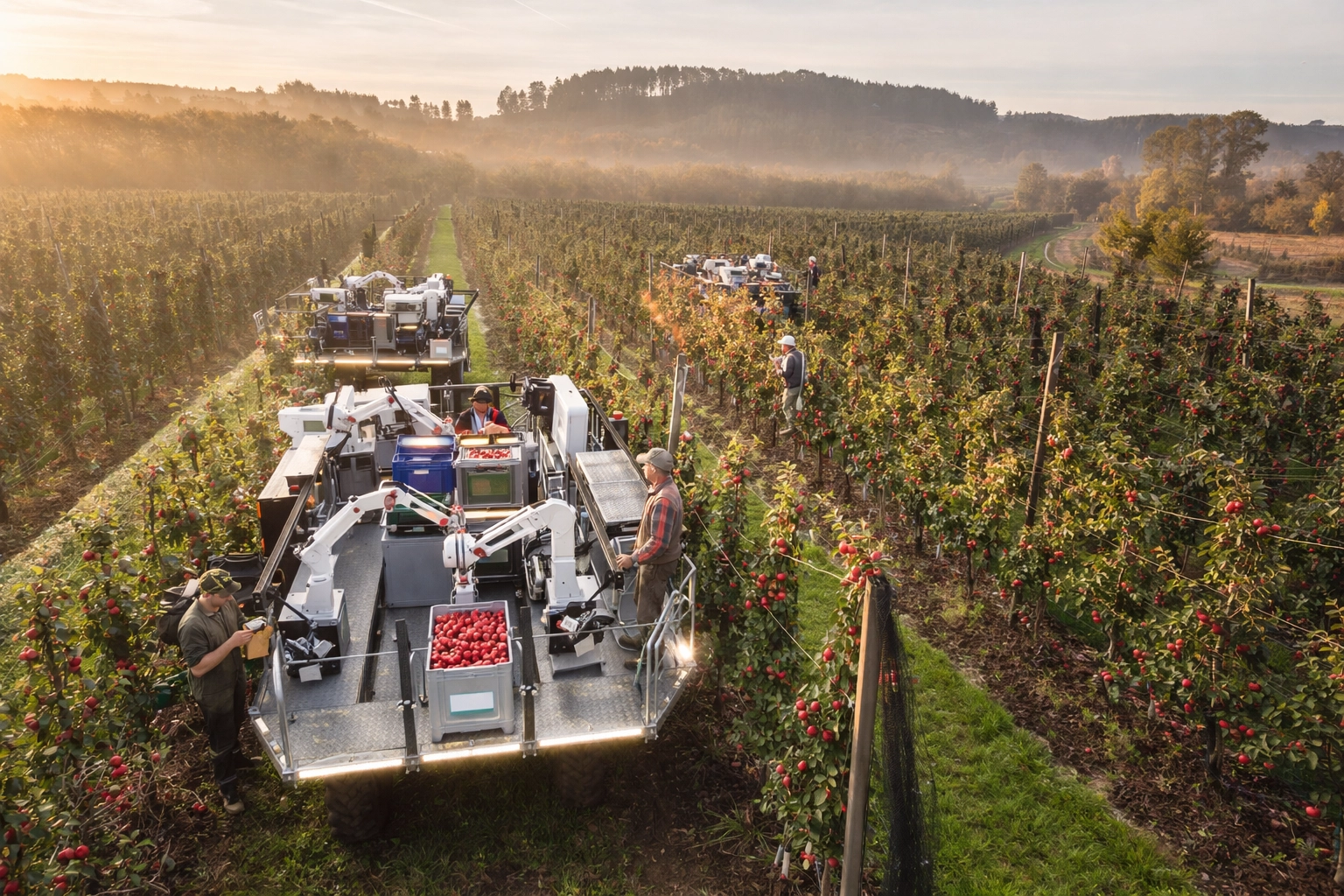
Consider a fruit grower in Washington state managing a large apple orchard.
Harvesting apples requires a significant labor force over a short period of time. If workers cannot be secured during that window, fruit quality declines and revenue falls.
In that situation, robotic harvesting technology becomes more than a technological upgrade.
It becomes insurance against labor shortages.
But the cost of that insurance may involve financing a multi-year equipment loan.
Every farm faces a similar calculation: balancing technology investment against financial risk.
A Long-Term Structural Shift
Over the coming decades, artificial intelligence and automation are likely to reshape American agriculture in several ways.
Precision technologies will improve crop management efficiency. Autonomous equipment may reduce dependence on seasonal labor. Data analytics will guide planting decisions, irrigation schedules, and harvest timing.
But the transformation will not happen uniformly.
Large operations with access to capital may adopt new technology quickly. Smaller farms may rely on shared equipment services or cooperative ownership models.
The distinction between technology companies and agricultural companies may also continue to blur.
Software firms, robotics manufacturers, and satellite imaging companies are increasingly influencing how food is produced.
Agriculture, once defined primarily by land and labor, is gradually becoming a technology-driven sector.
The Field Still Defines the Future
Yet even as artificial intelligence enters tractors, irrigation systems, and harvest machinery, the core realities of farming remain unchanged.
Weather still determines yields.
Soil conditions still shape productivity.
And farmers still make thousands of decisions each season that no algorithm can fully predict.
Back in the Salinas Valley, the robotic lettuce harvester continues moving slowly down the rows.
Elena Morales glances from the machine to the tablet displaying soil moisture data.
The field looks familiar.
But the forces shaping its future—data, automation, artificial intelligence—are steadily changing how that field will be farmed.
For American agriculture, the rise of AI is not just another technological upgrade.
It represents a structural transformation in how farms manage labor, capital, and risk in an increasingly complex global food system.

Written by Janardan Tharkar – an agriculture content researcher and blogging professional with practical experience in farming education, digital publishing, and SEO content optimization. Janardan focuses on modern U.S. agriculture trends, smart farming technologies, irrigation systems, crop development, organic farming practices, and farmer-support programs to create helpful, practical, and trustworthy content for American readers.