
In February 2026, the decision doesn’t feel theoretical.
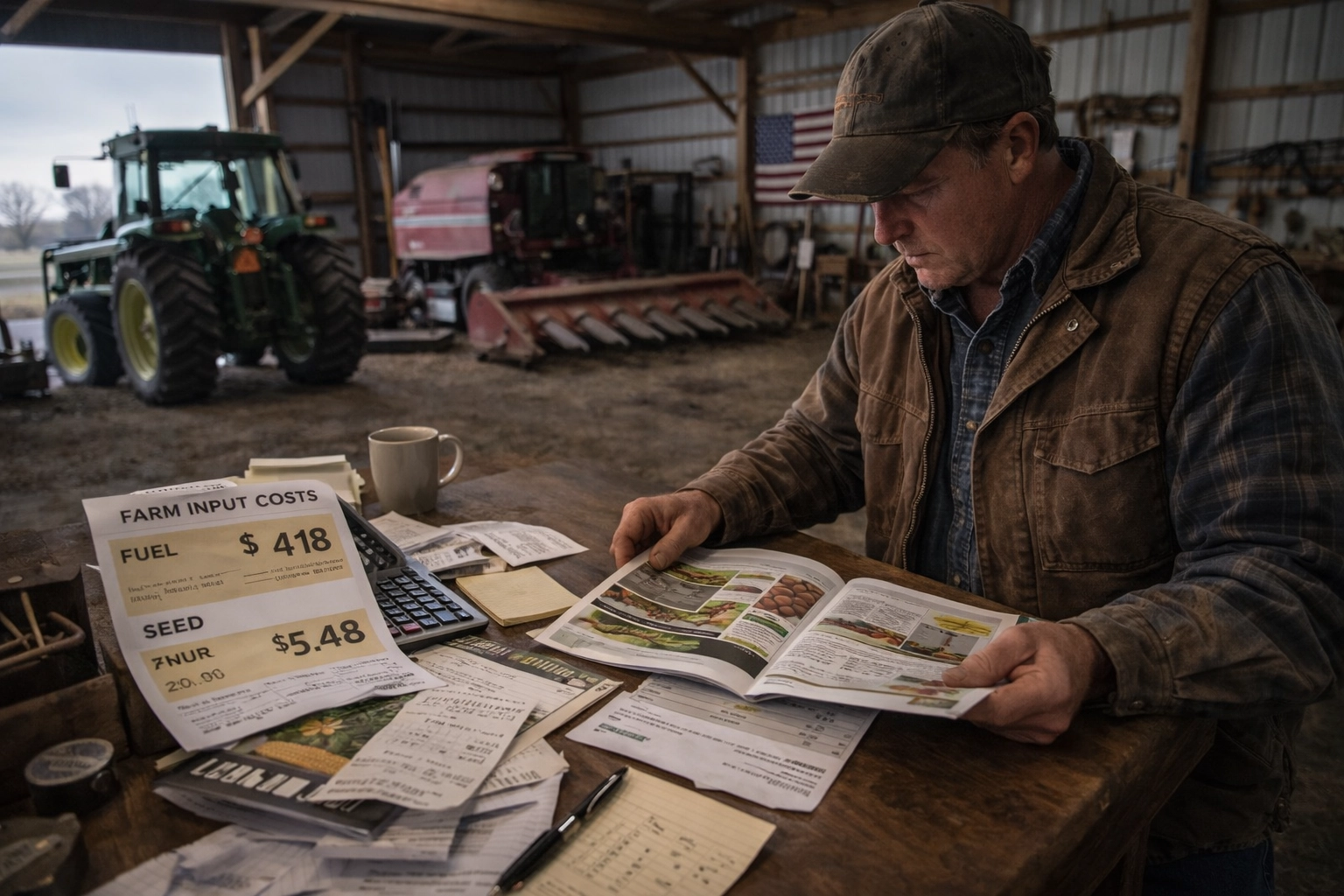
In central Illinois, a grower stands in a machine shed with two seed catalogs open on the workbench. Corn hybrids on one side. Soybean varieties on the other. The planter hasn’t moved yet, but the financial stakes already sit in ink: fertilizer quotes, forward bids, crop insurance guarantees, land rent agreements locked in months earlier.
The futures board has been volatile for weeks. Corn has struggled to regain the highs seen during the supply shocks earlier in the decade. Soybeans show intermittent strength on export headlines but remain vulnerable to South American competition. Input costs have eased slightly from their 2022 peaks but remain structurally higher than pre-pandemic norms.
The 2026 corn-versus-soybean decision is not just agronomic. It is financial strategy under uncertainty.
According to USDA’s early acreage and price outlook discussions in its World Agricultural Outlook Board releases (USDA WASDE reports), markets are entering the planting season with tighter margins and less cushion from extraordinary government payments than in prior years. Farmers are making acreage decisions in a narrower profit environment.
The question is not which crop is “better.” It is which risk profile best fits a given farm.
Mapping the Current Situation
The 2026 planting season begins under four defining conditions:
- Moderating Commodity Prices
Corn prices have softened from pandemic-era peaks. Soybeans remain sensitive to export demand and currency fluctuations. - Elevated but Stabilizing Input Costs
Nitrogen prices have retreated but remain above long-term averages. Seed technology fees continue trending upward. - Higher Borrowing Costs
Interest rates on operating loans remain significantly above the ultra-low levels of the 2010s, according to Federal Reserve agricultural finance reports (Federal Reserve agricultural lending data). - Policy Uncertainty
Farm bill negotiations continue to evolve, with debates around reference prices and safety net adjustments ongoing, as reflected in Congressional Budget Office agricultural baseline projections (CBO agriculture baseline).
This combination narrows margins and increases sensitivity to price swings.
In such conditions, acreage decisions become a balancing act between cost exposure and revenue volatility.
According to the U.S. Department of Agriculture’s Economic Research Service, the farm share of the consumer food dollar has hovered around roughly 14–16% in recent years, depending on the product category
Identifying the Key Risks
1. Input Exposure Risk (Corn)
Corn is input-intensive. Nitrogen fertilizer remains one of the largest line items in a corn budget. When fertilizer prices are elevated, corn’s breakeven price rises accordingly.
A 10% swing in nitrogen pricing materially changes the cost structure.
If global energy prices spike or fertilizer supply tightens, corn margins compress quickly.
2. Export Dependence Risk (Soybeans)
Soybeans are highly sensitive to global trade flows, particularly demand from China and competition from Brazil.
The USDA’s Economic Research Service regularly notes how export demand shapes soybean price outlooks (USDA ERS oil crops outlook). In years of strong Brazilian output, U.S. soybean exports face pressure.
A stronger U.S. dollar compounds that risk.
3. Basis Volatility
Regional basis patterns differ. Corn basis in ethanol-heavy regions may offer localized support. Soybean basis depends more heavily on export channels and crush capacity.
Farmers must evaluate not just futures prices, but local elevator dynamics.
4. Rotation and Soil Health
Continuous corn can increase disease and residue management challenges. Soybeans offer rotational benefits that reduce certain agronomic pressures.
Ignoring rotation for short-term price signals carries long-term productivity consequences.
Net farm income is falling again in 2026 not because of a single shock, but because multiple macro forces are converging at once: normalized commodity prices, structurally higher input costs, rising real interest burdens, and a cooling global demand picture.
Strategic Options Under Price Volatility
Farmers typically approach the corn-soybean decision through several strategic frameworks:
Strategy A: Maintain Historical Rotation
Stick with established rotation patterns (e.g., 50/50 or 60/40). This reduces agronomic risk and maintains soil balance.
Advantage: Stability and predictability.
Risk: Missed opportunity if one crop significantly outperforms.
Strategy B: Shift Toward Lower Input Exposure
If fertilizer prices remain uncertain, shifting acreage toward soybeans reduces nitrogen dependency.
Advantage: Lower upfront cash outlay.
Risk: Increased reliance on export markets.
Strategy C: Price-Driven Acreage Adjustment
React directly to relative futures price ratios (the corn-to-soybean ratio).
Advantage: Market-responsive.
Risk: Overreacting to short-term volatility.
Strategy D: Diversified Risk Hedging
Plant a balanced acreage split and layer in forward contracts or options to manage downside risk.
Advantage: Balanced exposure.
Risk: Requires disciplined marketing strategy.
Scenario Comparison
Midway through planning discussions, it helps to step back and compare structural differences:
| Factor | Corn (2026 Outlook) | Soybeans (2026 Outlook) |
|---|---|---|
| Input Intensity | High (nitrogen-heavy) | Moderate |
| Export Sensitivity | Moderate (ethanol + feed) | High (China-driven) |
| Price Volatility | Linked to energy & feed markets | Linked to global trade flows |
| Upfront Cash Requirement | Higher | Lower |
This comparison clarifies trade-offs.
Corn exposes a farm to input inflation risk and energy-linked volatility. Soybeans expose a farm to export and currency volatility. Neither is inherently safer — the risks are different in nature.
The table underscores why strategy cannot rely solely on futures price comparisons. It must incorporate cost structure, local demand channels, and financial flexibility.
Similar decisions are playing out across US Agribusiness in early 2026. Grain handlers are postponing storage upgrades.
Implications for Different Farm Sizes
Large Operations
Larger farms often have:
- Greater access to forward contracting tools.
- Volume-based seed and fertilizer discounts.
- Stronger bargaining power with elevators.
- Diversified acreage across regions.
For these operations, corn may remain attractive if ethanol demand and feed markets provide stable local support.
They can absorb higher input exposure more comfortably.
Mid-Sized Farms
Mid-sized farms face tighter liquidity. They may lean toward soybeans if fertilizer costs strain operating lines.
However, soybeans’ export sensitivity introduces its own volatility.
For these farms, balanced acreage with disciplined marketing may offer the most defensible position.
Small Farms
Smaller operations often prioritize cash flow simplicity. Lower upfront input costs make soybeans appealing.
Yet smaller farms also face more limited storage and marketing flexibility.
Their strategic focus may center less on maximizing return and more on minimizing downside.
Across U.S. agriculture in 2026, generational transition has moved beyond a demographic talking point. It has become a structural risk factor—one that influences credit decisions, land markets, capital investment, and long-term production capacity.
Capital Pressure and Breakeven Math
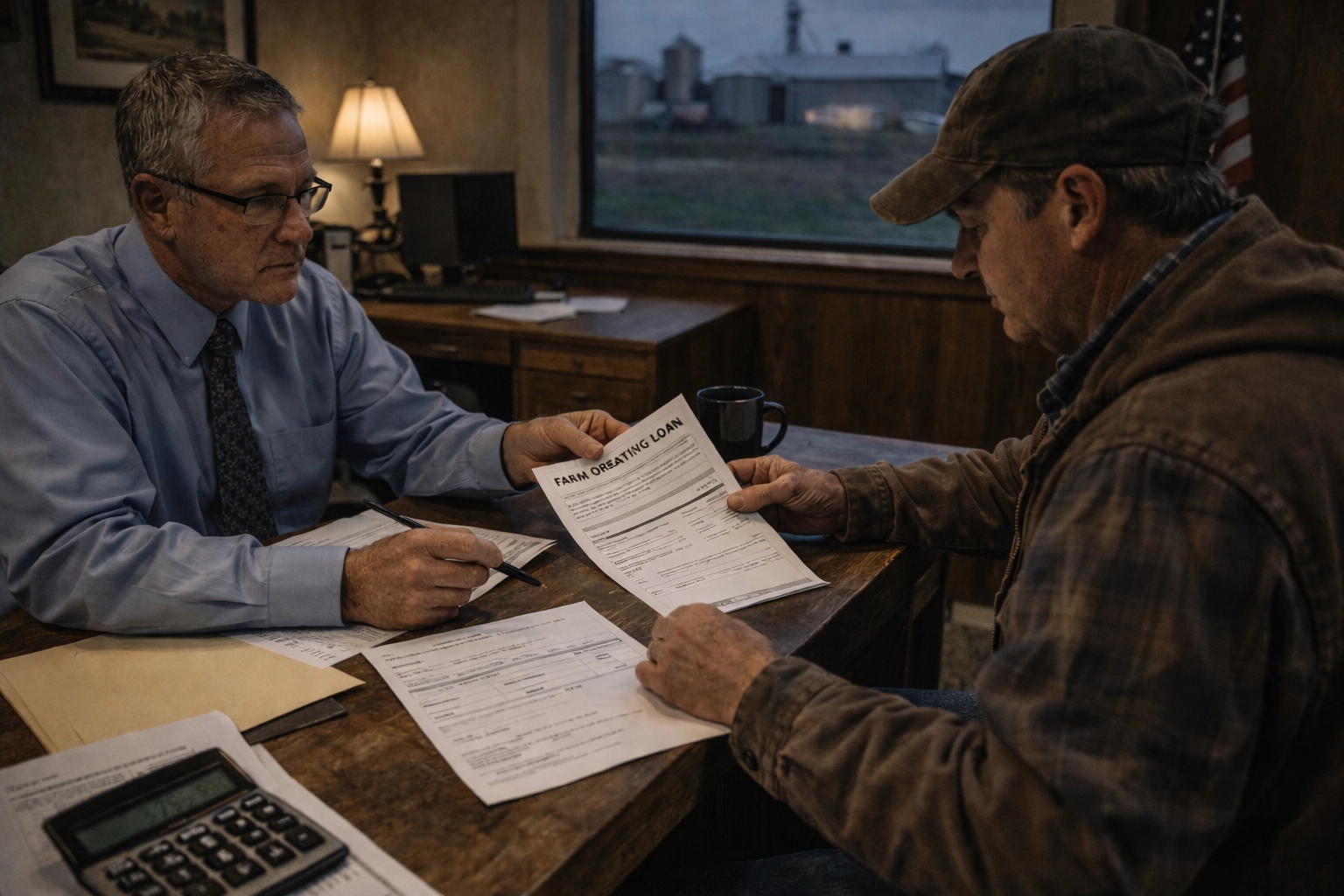
Under higher interest rates, breakeven calculations matter more.
Operating loans for fertilizer, seed, and chemical purchases carry higher interest costs than in prior years. Even if rates stabilize, refinancing cycles reflect the elevated baseline.
Breakeven price for corn rises quickly when fertilizer and financing costs are included.
Soybeans’ lower nitrogen requirement reduces breakeven sensitivity to fertilizer swings.
But if soybean export demand softens sharply, price declines can offset that advantage.
Capital discipline becomes central. Farms must evaluate:
- Cost per acre.
- Revenue variability.
- Liquidity buffer.
- Crop insurance guarantees.
Marketing Discipline: The Overlooked Variable
The crop choice debate often overshadows marketing strategy.
A farm planting corn with 30% pre-sold at profitable levels may outperform a soybean-heavy farm fully exposed to spot prices.
Revenue protection crop insurance remains a stabilizer. However, insurance is not profit; it is risk mitigation.
In volatile markets, partial forward sales combined with conservative yield assumptions often provide the most resilient path.
Regional Nuances
Corn Belt states with strong ethanol capacity may see local basis support for corn. Areas near crushing facilities may favor soybeans.
Transportation infrastructure also matters. River access influences soybean competitiveness. Rail dynamics influence corn shipping.
Local conditions frequently override national narratives.
Policy Signals and Biofuels
Renewable fuel standards and biofuel blending policies continue to influence corn demand. While not immune to political shifts, ethanol remains a structural support for corn markets.
Soybeans benefit from renewable diesel expansion, but crush capacity growth must align with feedstock supply.
Policy uncertainty introduces longer-term strategic considerations beyond a single planting season.
Operational Reality
On the farm, the decision ultimately narrows to three questions:
- What is my breakeven for each crop?
- How much volatility can my balance sheet absorb?
- How does this year’s choice affect next year’s soil and rotation?
The answer rarely favors extremes.
In most cases, the 2026 strategy that appears prudent is not dramatic acreage shifts, but calibrated adjustments within existing rotation frameworks.
Long-Term Structural Implications
The corn-versus-soybean debate in 2026 reflects broader structural shifts:
- Narrower margins demand sharper cost control.
- Higher interest rates amplify input risk.
- Export markets increasingly shape price trajectories.
- Policy volatility adds strategic complexity.
The era of simple acreage maximization has faded. Strategy now revolves around risk distribution.
Corn offers domestic demand anchors but higher cost exposure. Soybeans offer lower upfront cost but greater export vulnerability.
Neither is a guaranteed hedge against volatility.
The seasoned advisory perspective suggests this: in 2026, resilience likely comes not from betting heavily on one crop, but from managing exposure across both.
Planting decisions are rarely binary.
They are weighted judgments — informed by balance sheets, soil health, local basis, and tolerance for uncertainty.
The futures board will move again tomorrow. Fertilizer quotes may shift next week. Export headlines will surface unpredictably.
But the planter rolls only once.
And in 2026, that roll carries less margin for error.

Written by Janardan Tharkar – an agriculture content researcher and blogging professional with practical experience in farming education, digital publishing, and SEO content optimization. Janardan focuses on modern U.S. agriculture trends, smart farming technologies, irrigation systems, crop development, organic farming practices, and farmer-support programs to create helpful, practical, and trustworthy content for American readers.