
On a grain operation outside Decatur, Illinois, the machinery is current, the land productive, and the balance sheet intact. What remains unresolved is management continuity. The owner is in his early seventies. His children live out of state. There is no formal transition plan, only an assumption that “something will work out.”
That assumption now carries economic weight.
Across U.S. agriculture in 2026, generational transition has moved beyond a demographic talking point. It has become a structural risk factor—one that influences credit decisions, land markets, capital investment, and long-term production capacity. Unlike price volatility or weather shocks, it does not arrive suddenly. It accumulates quietly, often unnoticed until options narrow.
Most farms continue to operate. Many remain profitable. The risk lies not in immediate failure, but in delayed decisions that lock in future outcomes.
An aging sector operating in a different economy
The aging of U.S. farm operators is not new. What is new is the economic environment in which that aging is occurring.
Data from the U.S. Department of Agriculture show the average age of the principal producer now exceeds 58, with more than one-third of operators over 65.
Previous generations transitioned farms under materially different conditions. Land values were lower relative to income. Machinery fleets were simpler. Debt loads were modest. Informal handoffs—gradual assumption of responsibility by a family member—were feasible.
Today’s farms are capital-intensive enterprises. They function less like inherited livelihoods and more like asset-heavy businesses. Succession is no longer a gradual cultural process. It is a financial transaction with legal, tax, and credit implications.
The pressure reshaping U.S. farm economics is not dramatic or headline-driven. It is cumulative. Costs that once rose and fell cyclically have reset structurally higher, and that shift is quietly altering how farms invest, expand, and manage risk.

Planning gaps widen as complexity rises
Despite demographic inevitability, succession readiness remains limited. Research from the Economic Research Service indicates that a majority of farms operated by individuals nearing retirement age lack a formal succession plan.
This gap is not simply procrastination. Planning has become technically demanding. It requires coordination across estate law, tax treatment, business structure, lender expectations, and family dynamics. For operators managing thin margins and volatile costs, succession planning competes with daily operational pressures.
Delay feels rational. It preserves flexibility. But it also compresses timelines. As operators age, options narrow. Gradual equity transfer becomes harder. Mentorship windows shrink. The probability of forced outcomes rises.
Capital intensity reshapes who can take over
Modern farm succession increasingly depends on access to capital rather than farming skill alone.
Land values remain elevated across most production regions, supported by limited supply, investor interest, and income resilience. Machinery investments routinely reach seven figures. Operating credit lines are larger and more tightly underwritten than in previous decades.
For a successor, assuming control often requires leverage at a scale unmatched by early-career cash flow. Even when assets are gifted or discounted, debt service during transition years can strain operations.
Programs administered by the Farm Service Agency—including beginning farmer loans and guarantees—provide essential access points.
They improve entry conditions, but they do not offset structurally inflated asset values.
As a result, succession increasingly favors heirs with outside income, external capital, or operations large enough to absorb additional leverage.
What is emerging is not a sudden crisis, but a slow exposure of risk. In that context, “farm aid missing” has become less a slogan and more a description of the moment confronting US agriculture in 2026.
Heirs exist; operators do not always follow
The challenge is not always a lack of heirs. Many farm families do have children. What they often lack are heirs positioned to operate a capital-intensive agricultural business.
Professional careers elsewhere, geographic distance, and risk tolerance shape decisions. Re-entry into farming later in life is economically difficult. Meanwhile, capable non-family beginning farmers face steep barriers in regions where ownership costs have decoupled from production returns.
This mismatch produces predictable outcomes. Land transfers to non-operating owners. Operations expand through rental arrangements. Control consolidates, even as ownership fragments.
The acreage remains in production. The managerial lineage does not.
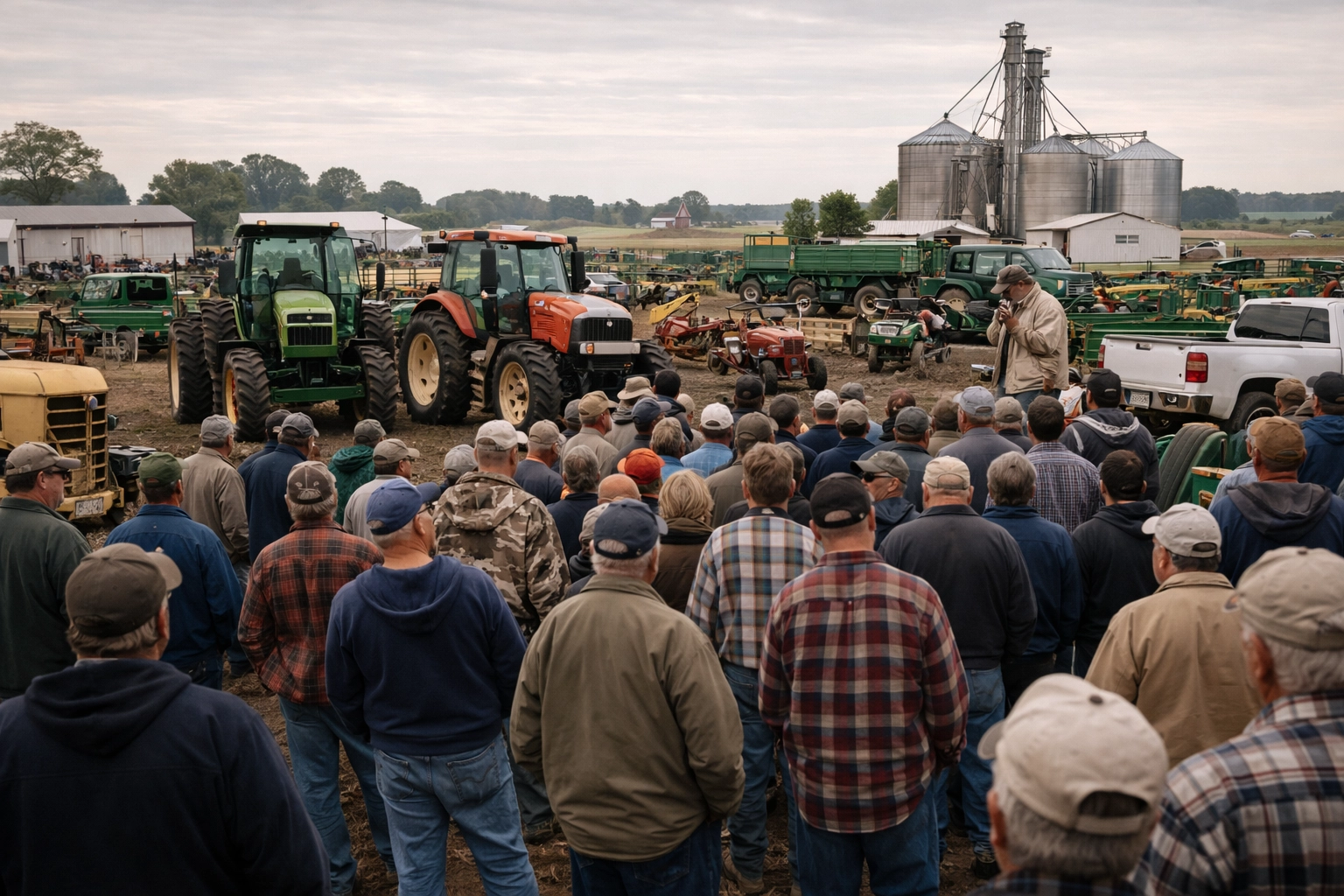
Estate planning under asset inflation
Estate planning sits at the center of this risk. Rising land values complicate inheritance even under favorable tax treatment. When only one heir intends to farm, maintaining operational unity often requires buyouts financed through leverage or asset sales.
In some cases, land is sold to satisfy estate obligations, permanently removing it from family operation. In others, debt taken on during transition constrains investment for years.
Anticipation of these outcomes influences behavior well before ownership changes. Operators defer capital upgrades, conservation investments, and expansion plans when long-term control is uncertain. These decisions are rational individually, but cumulatively they affect productivity and land stewardship.
This is not the first time US agriculture has turned to federal support during a downturn. But the current moment feels different. The post-pandemic surge in farm income has faded. Climate volatility is compounding operational risk. And credit conditions have tightened faster than many producers anticipated.
Credit markets increasingly price continuity
Lenders have become more attentive to generational risk. Farm credit institutions now evaluate not only current cash flow, but management continuity.
Higher interest rates have sharpened this scrutiny. Debt maturities often extend beyond the expected tenure of aging operators. Unclear succession raises refinancing risk, particularly for leveraged operations.
Congressional hearings have begun to frame succession as a structural credit issue rather than a private family matter.
Credit remains available. Terms increasingly reflect long-term uncertainty.
Regional exposure varies widely
The impact of generational transition differs sharply by region and production system.
In grain-dominant regions, strong rental markets allow land to remain productive even when ownership changes. The primary effect is consolidation, not output loss. Control concentrates among larger operators with balance-sheet capacity.
In specialty crop regions, continuity matters more. Production relies on operator expertise, labor coordination, and localized infrastructure. The loss of a single experienced operator can disrupt acreage, employment, and downstream supply chains.
Livestock operations face their own dynamics. High capital requirements, regulatory exposure, and labor dependence make delayed transition particularly costly. Herd contraction and underinvestment often precede ownership change.
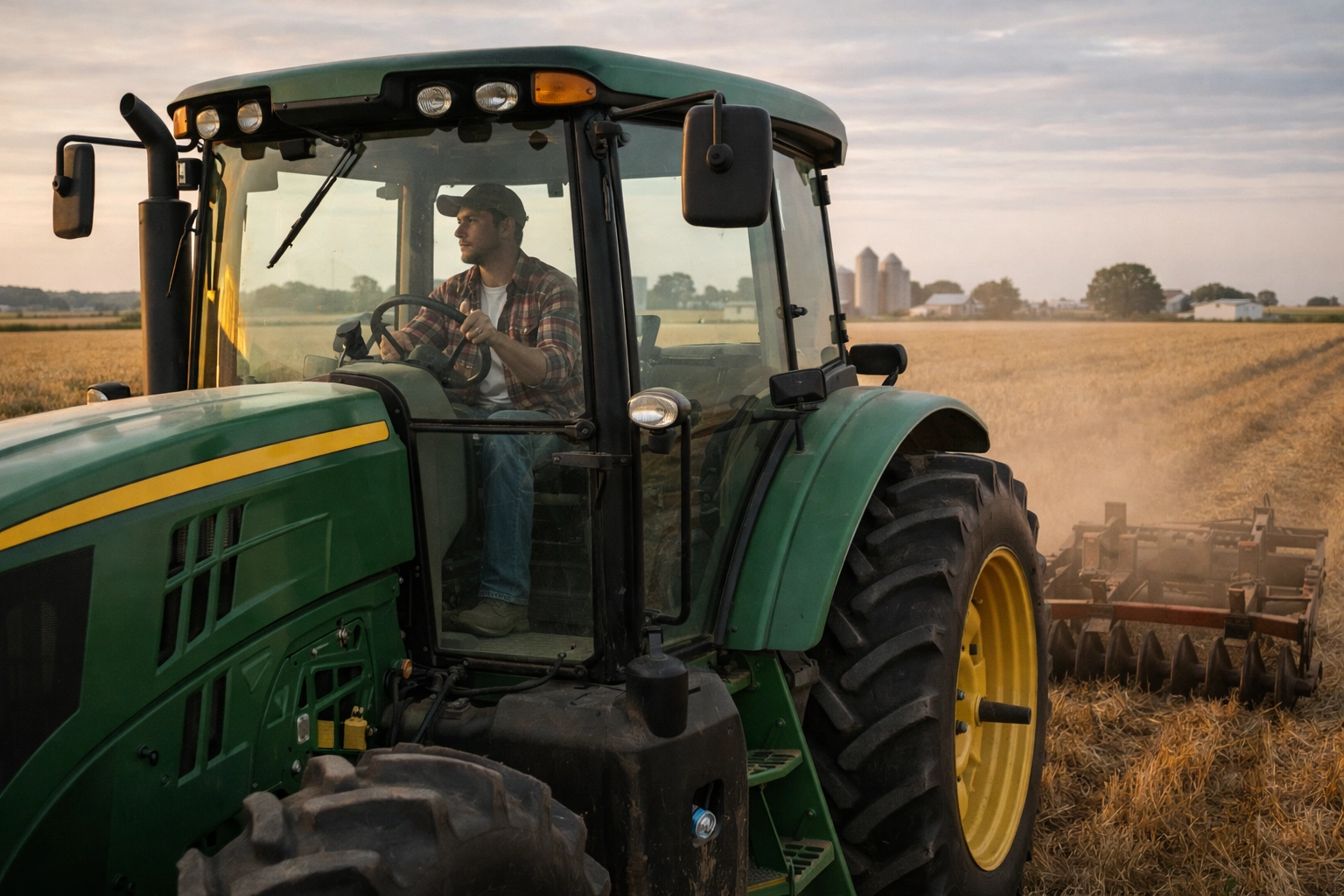
Beginning farmers face a narrowing runway
Public attention often focuses on encouraging new entrants. Interest in farming persists. Viable pathways, however, are narrowing.
USDA data show beginning farmers operate smaller farms, earn lower net income, and rely more heavily on off-farm employment.
This structure supports entry, but not scale. Without integration into succession pathways—shared management, equity accrual, long-term leases—many entrants plateau.
Where structured transitions exist, outcomes improve. Where they do not, entry becomes temporary rather than generational.
Policy response remains fragmented
Federal policy addresses pieces of the transition challenge. Beginning farmer incentives, conservation programs with transition provisions, and tax considerations all contribute.
What is missing is integration. Budget constraints limit scope. As fiscal pressure grows, policymakers prioritize income stabilization and disaster response over structural reform.
The result is incremental support layered onto a fundamentally mismatched system. Responsibility shifts to private planning, lenders, and local institutions, where capacity varies widely.
The latest federal funding package marks a clear departure. Farm aid—anticipated by many producers and closely watched by lenders—was excluded.
Delay becomes the hidden cost
The most consequential risk is not failed succession, but postponed succession.
Aging operators often respond rationally by reducing exposure. They defer innovation, slow expansion, and prioritize stability. These choices protect near-term viability.
Collectively, however, they slow productivity growth, narrow entry pathways, and accelerate ownership concentration. None of this triggers crisis signals. It unfolds quietly, season by season.
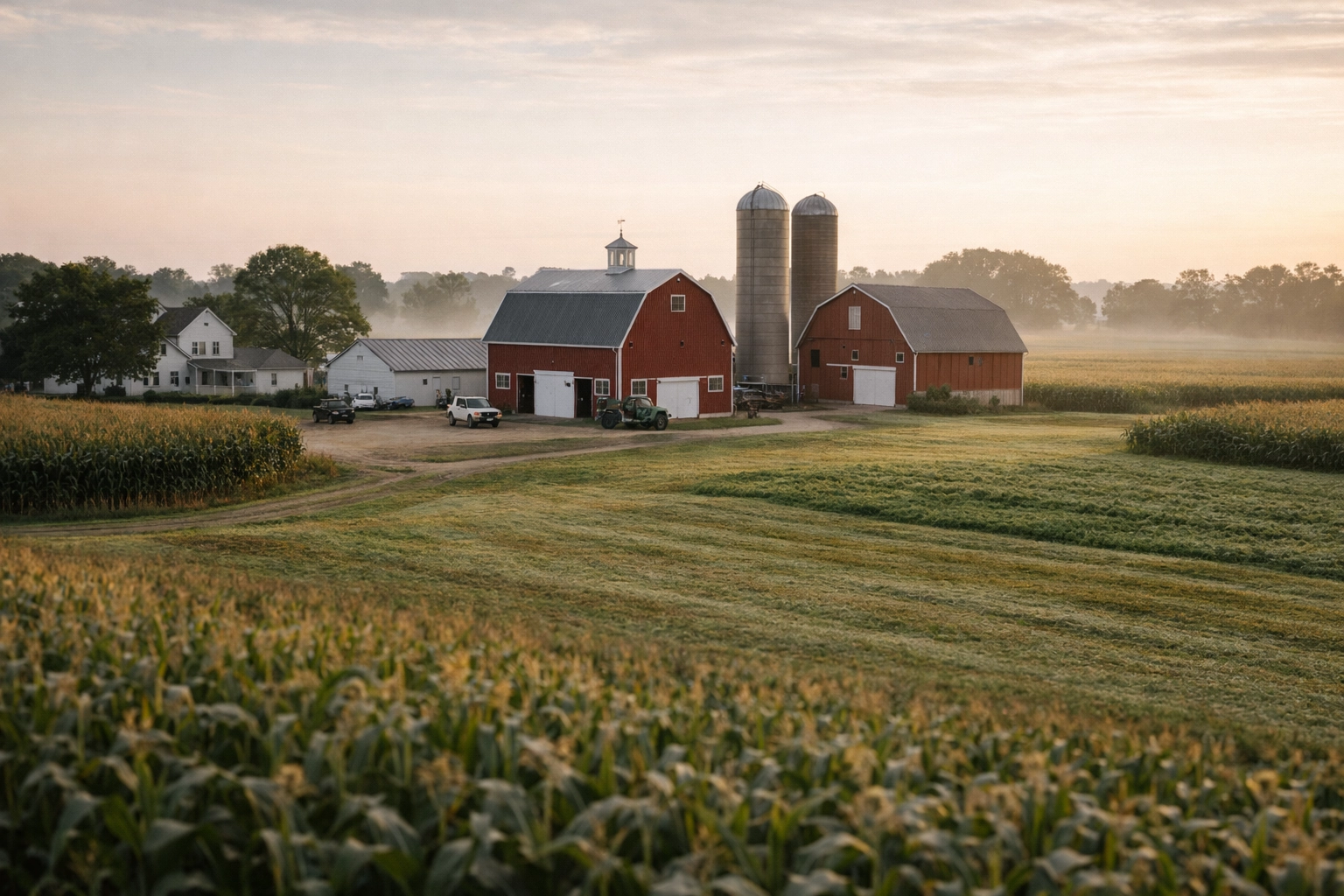
By 2026, generational transition has become a core economic variable in U.S. agriculture. It shapes credit risk, land ownership patterns, investment behavior, and regional resilience.
Unlike weather or price shocks, it does not announce itself. Its effects accumulate until outcomes are effectively irreversible.
The farms most likely to navigate this shift successfully are those that treat succession as an economic process rather than a personal milestone. Whether policy, finance, and industry institutions evolve quickly enough to support that reality will help determine not only who farms America’s land, but how resilient the sector remains in the decades ahead.

Written by Janardan Tharkar – an agriculture content researcher and blogging professional with practical experience in farming education, digital publishing, and SEO content optimization. Janardan focuses on modern U.S. agriculture trends, smart farming technologies, irrigation systems, crop development, organic farming practices, and farmer-support programs to create helpful, practical, and trustworthy content for American readers.