
The fertilizer plant expansion outside Sioux City was ready to move. Engineering studies were complete. Environmental reviews were largely finished. What stopped the project was not cost inflation or lack of demand, but timing. With Congress heading into another high-stakes budget negotiation, the company’s board opted to wait. A six-month delay, executives reasoned, was preferable to committing capital before federal policy signals became clearer.
Similar decisions are playing out across US Agribusiness in early 2026. Grain handlers are postponing storage upgrades. Equipment manufacturers are tempering production plans. Food processors are slowing site selection for new facilities. The common thread is not pessimism about agriculture’s long-term fundamentals, but uncertainty about the near-term policy environment.
Pre-budget ambiguity—around farm programs, conservation funding, tax treatment, trade enforcement, and rural infrastructure—is exerting a measurable chilling effect on agribusiness investment. It is not causing cancellations en masse. Instead, it is freezing decisions in place, compressing timelines, and favoring caution over expansion.
Uncertainty as a cost input
Agriculture is accustomed to risk. Weather, prices, and biological cycles have always shaped decision-making. Policy uncertainty operates differently. It does not fluctuate daily, but it raises the cost of committing capital when outcomes hinge on federal appropriations and legislative compromises.
As Congress approaches negotiations over fiscal year 2027 funding, questions remain unresolved: the scale and structure of farm safety-net programs, the future of conservation incentives, biofuel support, disaster assistance thresholds, and the durability of tax provisions affecting depreciation and estate planning.
According to baseline projections from the U.S. Department of Agriculture, farm income is expected to stabilize but not rebound to earlier-decade highs, making investment returns more sensitive to policy design.
When margins are thin, uncertainty itself becomes a cost—one that discourages irreversible commitments.
Across U.S. agriculture in 2026, generational transition has moved beyond a demographic talking point. It has become a structural risk factor—one that influences credit decisions, land markets, capital investment, and long-term production capacity.
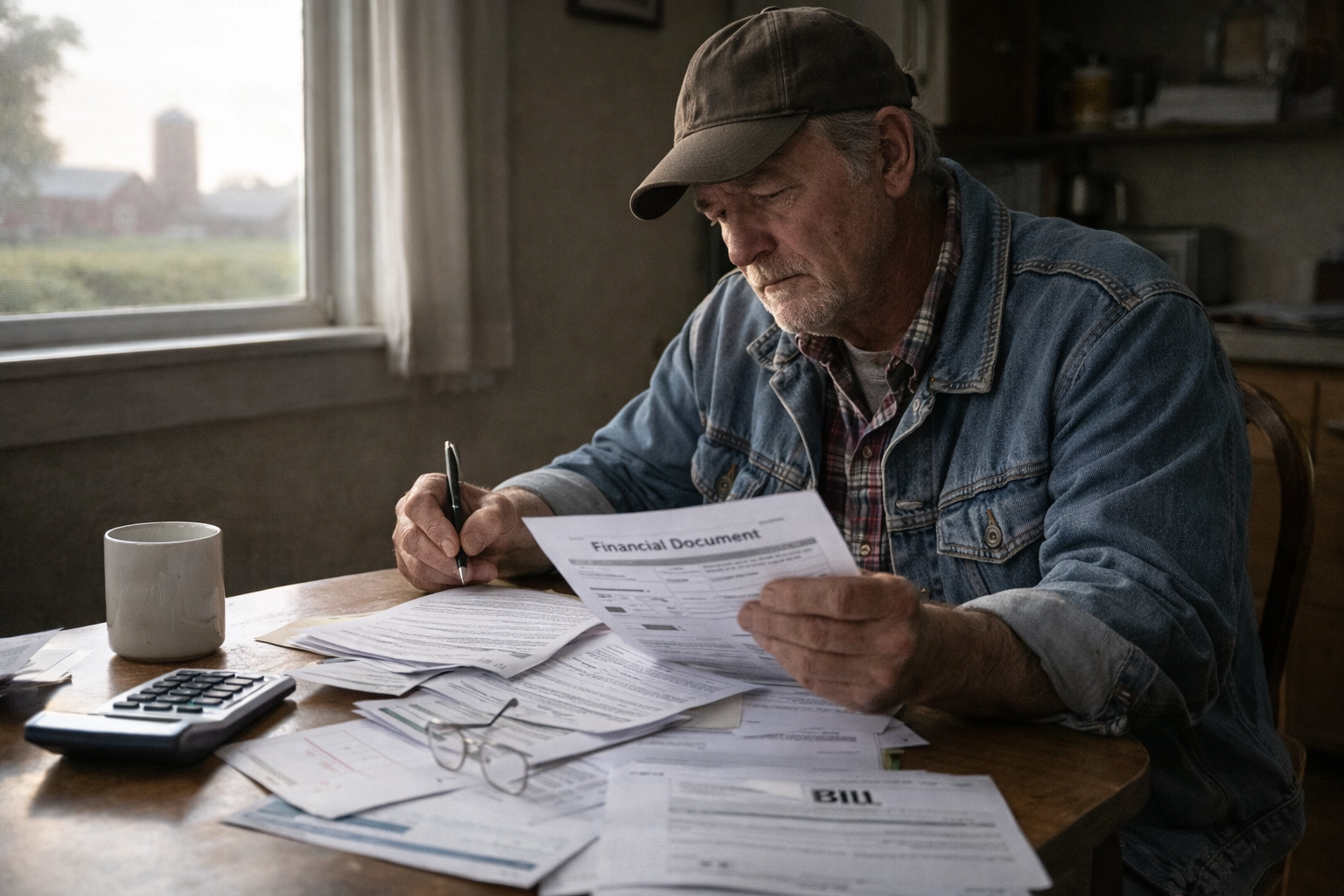
Capital decisions pause, not disappear
Unlike past budget standoffs that triggered abrupt disruptions, the current environment is producing a quieter response. Projects are deferred rather than abandoned. Contracts are structured with contingencies. Expansion plans are broken into phases.
This behavior is evident across the agribusiness supply chain. Grain merchandisers report slower timelines for elevator modernization. Food processors are delaying automation investments that depend on labor policy clarity. Input suppliers are scaling back capital expenditure forecasts despite steady demand signals.
Executives describe the same calculus: investing after policy clarity may be more expensive, but investing before clarity carries asymmetric downside risk.
Farm programs and risk management ambiguity
At the farm level, uncertainty around commodity programs and crop insurance parameters has direct spillover effects on agribusiness. When producers lack clarity on reference prices, payment limits, or premium subsidies, their purchasing behavior becomes more conservative.
Analysis from the Economic Research Service shows that farm spending on inputs and capital equipment is closely linked to expectations about government risk-management support.
When those expectations weaken, downstream suppliers feel the impact quickly. Equipment orders slip. Input pre-purchases decline. Service contracts shorten.
The effect is amplified in regions where farm incomes are already under pressure from higher input costs or labor shortages.
The pressure reshaping U.S. farm economics is not dramatic or headline-driven. It is cumulative. Costs that once rose and fell cyclically have reset structurally higher, and that shift is quietly altering how farms invest, expand, and manage risk.
Credit markets grow selective
Pre-budget uncertainty also affects agricultural credit. Lenders remain well capitalized, but underwriting standards tighten when policy signals are unclear.
Operating loans are renewed. Long-term financing faces greater scrutiny. Projects reliant on program payments or conservation incentives encounter higher hurdle rates.
Programs administered by the Farm Service Agency continue to provide guarantees and liquidity support.
but private lenders increasingly factor policy risk into loan terms. Variable-rate debt, in particular, magnifies sensitivity to budget outcomes.
This dynamic reinforces caution among borrowers. Even creditworthy operations delay investments that could complicate future refinancing.
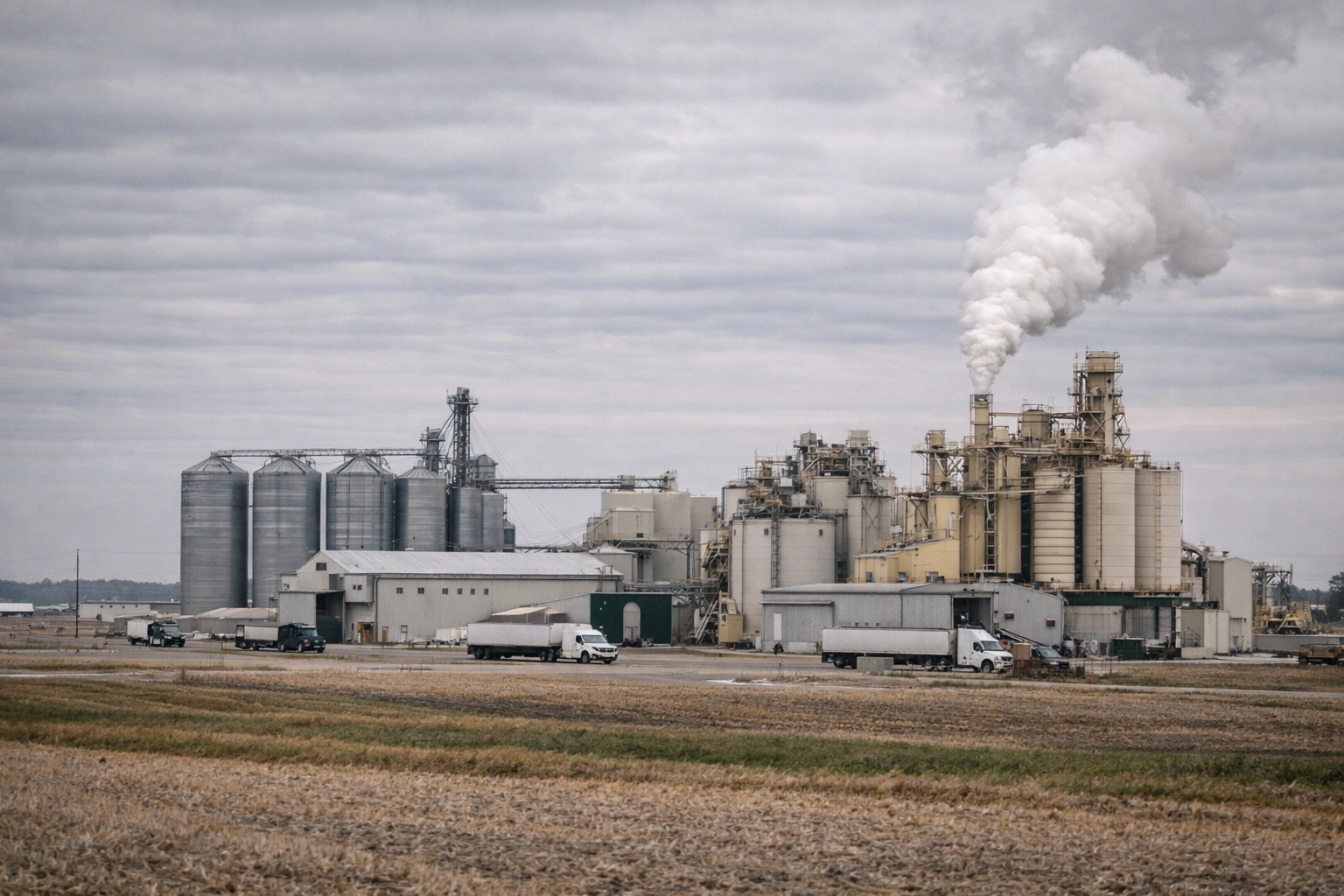
US Agribusiness scale does not insulate against policy risk
Large agribusiness firms are often assumed to be insulated from federal budget cycles. In practice, scale can increase exposure.
Major processors, exporters, and input manufacturers operate on long planning horizons. Facility investments, logistics infrastructure, and technology platforms are designed for decades, not seasons. Policy volatility complicates these calculations.
Trade policy uncertainty intersects with budget debates as well. Funding for export promotion, enforcement, and infrastructure influences market access decisions. Firms hesitate to commit capital to regions or commodities where policy support may weaken.
Executives increasingly describe the U.S. policy environment as unpredictable rather than unfavorable—a distinction that matters for investment behavior.
Conservation, climate, and the pause effect
Conservation and climate-related programs illustrate how uncertainty freezes action. Many agribusinesses have aligned capital plans with conservation incentives, carbon markets, and sustainability commitments.
Yet funding continuity remains uncertain. Conservation programs administered through USDA face competing fiscal priorities. Companies hesitate to scale projects that depend on multi-year public-private alignment.
ERS research indicates that conservation adoption accelerates when funding is predictable and contracts are long-term.
When budgets are in flux, adoption slows—not because interest fades, but because planning becomes riskier.
Regional investment patterns diverge
The investment freeze is not uniform. Regions with diversified revenue streams and strong logistics networks show more resilience. Grain-heavy Midwest states, while cautious, continue incremental upgrades.
Specialty crop regions face sharper pauses. Labor policy uncertainty intersects with budget ambiguity, compounding risk. Food processors in California and the Southeast report longer decision cycles for facility expansion and automation.
Livestock sectors experience similar hesitation. Feed costs, environmental compliance, and disaster assistance frameworks remain policy-dependent. Investment in new housing and processing capacity slows accordingly.
Political signaling matters more than outcomes
One striking feature of the current cycle is how strongly signaling influences behavior. Even without final budget numbers, rhetoric around spending priorities affects expectations.
Hearings and statements from the U.S. Congress agriculture committees are parsed closely by industry analysts.
Shifts in tone around conservation, nutrition spending, or deficit reduction ripple through investment models.
This sensitivity reflects how closely integrated federal policy has become with agricultural economics. The sector’s exposure is not merely financial, but structural.
What is emerging is not a sudden crisis, but a slow exposure of risk. In that context, “farm aid missing” has become less a slogan and more a description of the moment confronting US agriculture in 2026.
Delay as a rational strategy
From an economic standpoint, delaying investment under uncertainty is rational. It preserves option value. It avoids locking in assumptions that may soon change.
The cost of delay, however, accumulates. Deferred investments mean slower productivity gains, aging infrastructure, and postponed innovation. Over time, these micro-decisions influence competitiveness at the national level.
Unlike sudden policy shocks, pre-budget uncertainty erodes momentum quietly. Its effects are difficult to quantify, yet widely felt.
Looking ahead
As budget negotiations progress, clarity will return—at least temporarily. Some projects will move forward. Others may be reshaped or downsized.
What remains uncertain is whether repeated cycles of ambiguity will permanently alter investment behavior in U.S. agriculture. If firms increasingly treat federal policy as an unpredictable variable, they may favor shorter horizons, modular investments, and geographic diversification.
In that sense, pre-budget uncertainty is doing more than freezing decisions. It is reshaping how agribusiness evaluates risk, allocates capital, and defines resilience in an era where policy outcomes matter as much as markets.

Written by Janardan Tharkar – an agriculture content researcher and blogging professional with practical experience in farming education, digital publishing, and SEO content optimization. Janardan focuses on modern U.S. agriculture trends, smart farming technologies, irrigation systems, crop development, organic farming practices, and farmer-support programs to create helpful, practical, and trustworthy content for American readers.