
Early July mornings in central Iowa rarely feel dramatic. The fields are quiet, the gravel roads still damp with dew, and the combines sitting beside machine sheds look almost dormant.
But for farmers like Daniel Whitaker, harvest season is already underway—just not in the field.
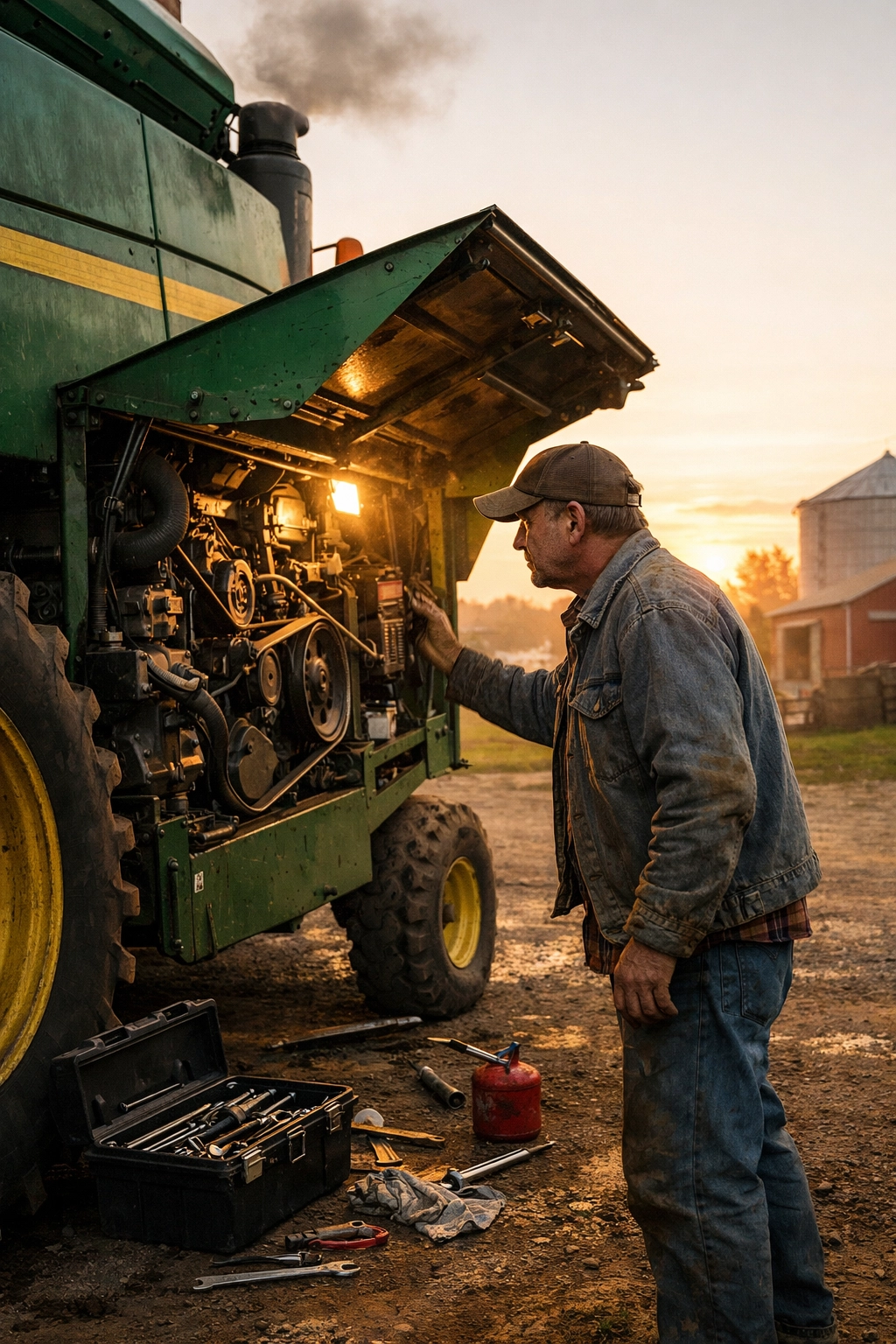
Whitaker crouches beside his combine with a socket wrench and a flashlight. The machine has worked fourteen harvest seasons. Dust from last fall still clings to the engine housing. He slowly rotates a pulley, listening carefully.
“You learn to hear the problems before they happen,” he says.
That quiet moment—one farmer inspecting one machine—captures a routine repeated across thousands of American farms every summer. Weeks before harvest begins, combines are opened, cleaned, tightened, and tested.
Because once harvest begins, there is almost no time left for repair.
In 2026, that pressure feels heavier than usual.
Commodity prices remain uncertain. Farm debt is rising. Equipment costs are climbing. And harvest windows, shaped by unpredictable weather, are becoming increasingly narrow.
For farmers across the United States, preseason combine Harvester maintenance is no longer just mechanical housekeeping.
It is a strategy for surviving the harvest.
The Machine at the End of the Crop Cycle
Every crop season eventually leads to a single machine.
Farmers spend months planting, fertilizing, irrigating, and protecting crops. But the combine harvester is the machine that ultimately determines whether those efforts translate into grain in the bin.
When that machine stops during harvest, the entire farm slows with it.
Grain carts sit idle in the field. Trucks wait along dirt roads. Elevators delay deliveries.
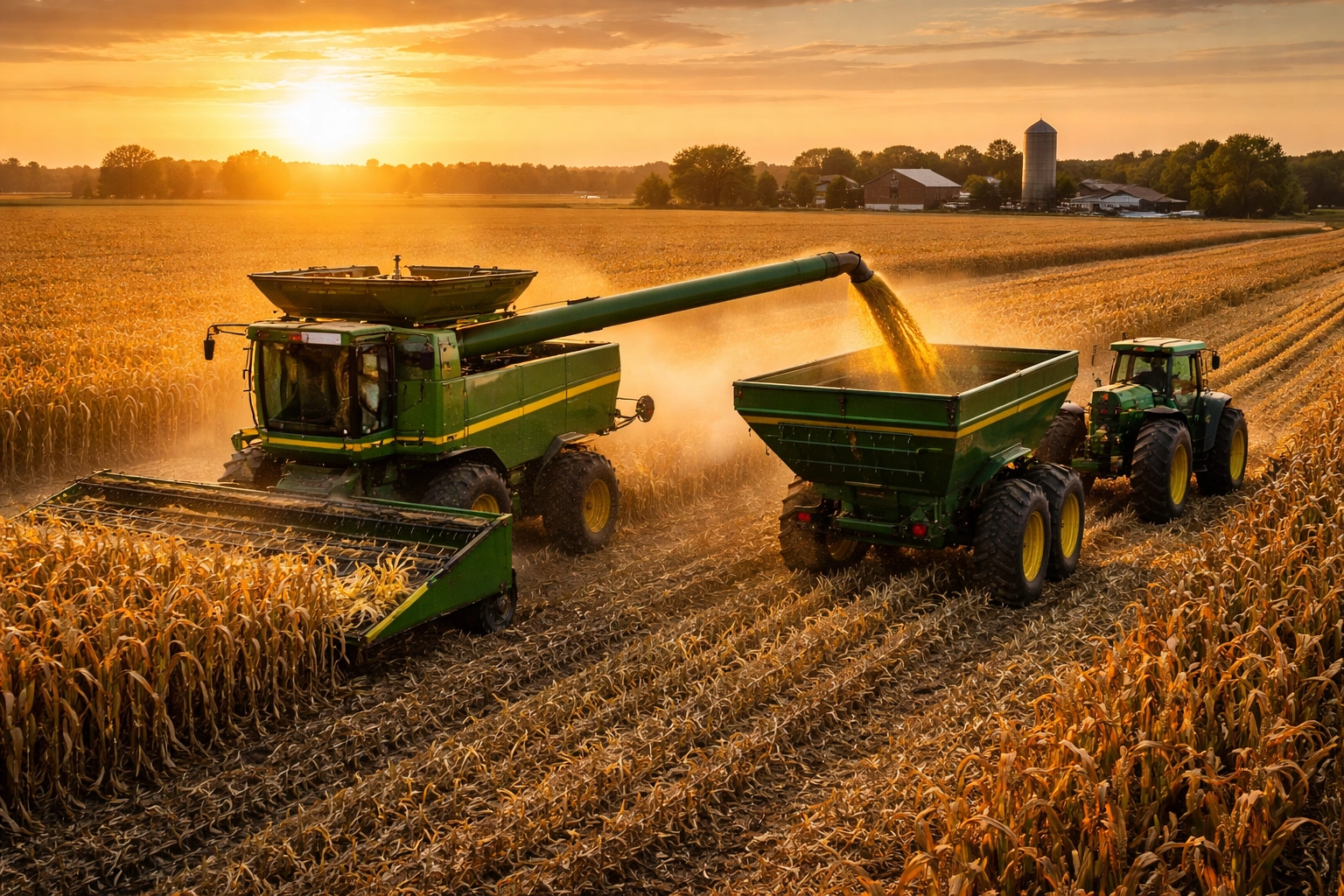
Harvest logistics on modern farms are tightly choreographed. One combine may harvest hundreds of acres in a week, supported by tractors, labor crews, grain storage systems, and transportation networks.
If the combine fails, everything behind it pauses.
Agricultural engineers have long emphasized that reliability—not just horsepower—is the most important feature of harvest machinery. And most breakdowns are rarely sudden surprises.
Maintenance specialists working through extension programs supported by the USDA National Institute of Food and Agriculture extension programs regularly point out that many harvest failures originate from components that showed early warning signs weeks or months earlier.
A belt begins to crack.
A bearing runs slightly hotter than normal.
A hydraulic line begins to sweat oil.
Left unattended, those small warnings can become major failures under harvest pressure.
Also Read

Right to Repair: Farmers vs Equipment Software
Modern farm machinery increasingly relies on locked software systems that prevent farmers from repairing their own equipment. The growing Right to Repair debate is now shaping agricultural policy and the future of machinery ownership in the United States.
The Cost of Machinery in Modern Farming
Across the United States, farm machinery represents one of the largest financial commitments producers make.
Combines are often the most expensive machine on the farm. Modern models equipped with yield monitors, GPS guidance, and large grain tanks can exceed $600,000 once headers and technology packages are included.
Even older machines represent significant value.
This financial reality shapes maintenance decisions every summer.
Economic data compiled by the USDA Economic Research Service farm income and production expense data show that machinery ownership, repair, and fuel remain among the largest categories of operating costs on U.S. farms.
Those costs influence how farmers approach maintenance.
Replacing a worn bearing during the offseason may cost a few hundred dollars. But if that same bearing fails during harvest, the consequences multiply quickly—emergency repairs, lost harvesting time, delayed grain deliveries, and potential yield losses.
For farmers operating with tight margins, the decision becomes clear.
Preventive maintenance may be expensive.
But downtime is far more costly.
A Farm Economy Under Pressure
The economic environment surrounding agriculture in 2026 adds another layer of urgency to equipment maintenance.
According to forecasts from the USDA ERS farm sector income outlook, U.S. farm finances continue to shift as production costs remain elevated and government program payments fluctuate year to year.
At the same time, farm sector debt has been climbing.
Balance-sheet estimates indicate that U.S. farm sector debt could exceed $620 billion in 2026 as producers continue financing land, equipment, and operating costs.
These financial pressures ripple into machinery decisions.
When margins tighten, farmers delay major equipment purchases. Combines stay in service longer. And as machines age, maintenance becomes the primary tool for keeping harvest moving.
Older equipment can remain highly reliable—but only when farmers stay ahead of wear.
Across the Midwest and Great Plains, many combines working in fields today are well over a decade old.
Their reliability depends almost entirely on the work done in farm shops months before harvest.
Supply Chains and Service Bottlenecks
Maintenance itself has become more complicated in recent years.
Rural equipment dealerships across the country report continuing shortages of trained technicians. Service departments often face a surge of combine inspections and repairs during late summer when harvest approaches.
Parts availability can also slow the process.
Hydraulic components, sensors, control modules, and drive systems often travel through international manufacturing networks before reaching local dealerships.
When farmers wait too long to schedule repairs, they sometimes find themselves waiting for parts or technician availability.
That reality has changed how many farms approach maintenance.
Instead of waiting until just before harvest, farmers increasingly schedule combine inspections during winter or early spring. Dealership technicians can then diagnose potential problems months before harvest pressure builds.
The shift reflects a broader transformation in agriculture: maintenance is becoming proactive rather than reactive.
Also Read
Corn vs Soybean 2026: Planting Strategy Guide
As U.S. farmers plan the 2026 planting season, the choice between corn and soybeans is becoming more complex. Market prices, input costs, and soil conditions are all influencing crop decisions across the Midwest.
What Farmers Inspect Before Harvest
Despite the increasing complexity of modern machinery, preseason combine maintenance still focuses on a core group of mechanical systems.
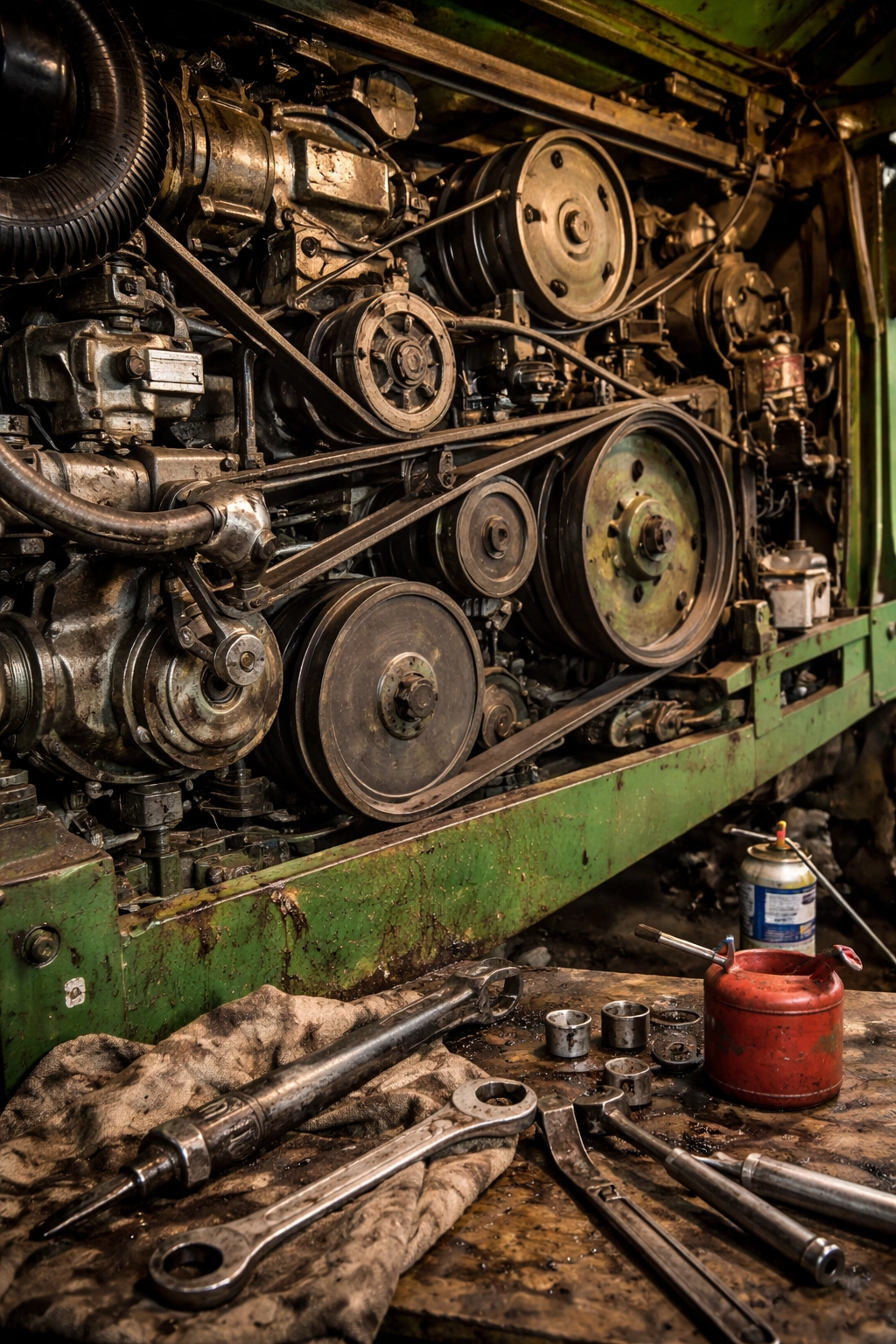
These components form the backbone of the harvesting process.
| Combine System | Maintenance Focus | Risk if Ignored |
|---|---|---|
| Belts & Drive Systems | Inspect tension, cracks, and alignment | Drive failure that halts harvesting |
| Bearings & Rotors | Lubrication checks and vibration detection | Heat buildup leading to rotor damage |
| Hydraulic Systems | Hose inspection and pressure tests | Loss of steering or header control |
| Cleaning System | Fan speed and sieve adjustments | Grain loss and reduced crop quality |
The table illustrates something experienced farmers know well: catastrophic failures often begin with the smallest components.
A $30 belt can disable a half-million-dollar machine.
A worn bearing can destroy a rotor assembly that costs thousands to replace.
Preventive maintenance therefore acts as a form of mechanical insurance.
Replacing small components early reduces the chance that larger, more expensive systems will fail during harvest.
The Reality of Narrow Harvest Windows
Across much of the United States, the harvest calendar has always been shaped by weather.
But in recent years, many farmers say those windows feel tighter.
Heavy rains can delay field access for days. Drought conditions can accelerate crop maturity. Early frost in northern states may compress harvest schedules dramatically.
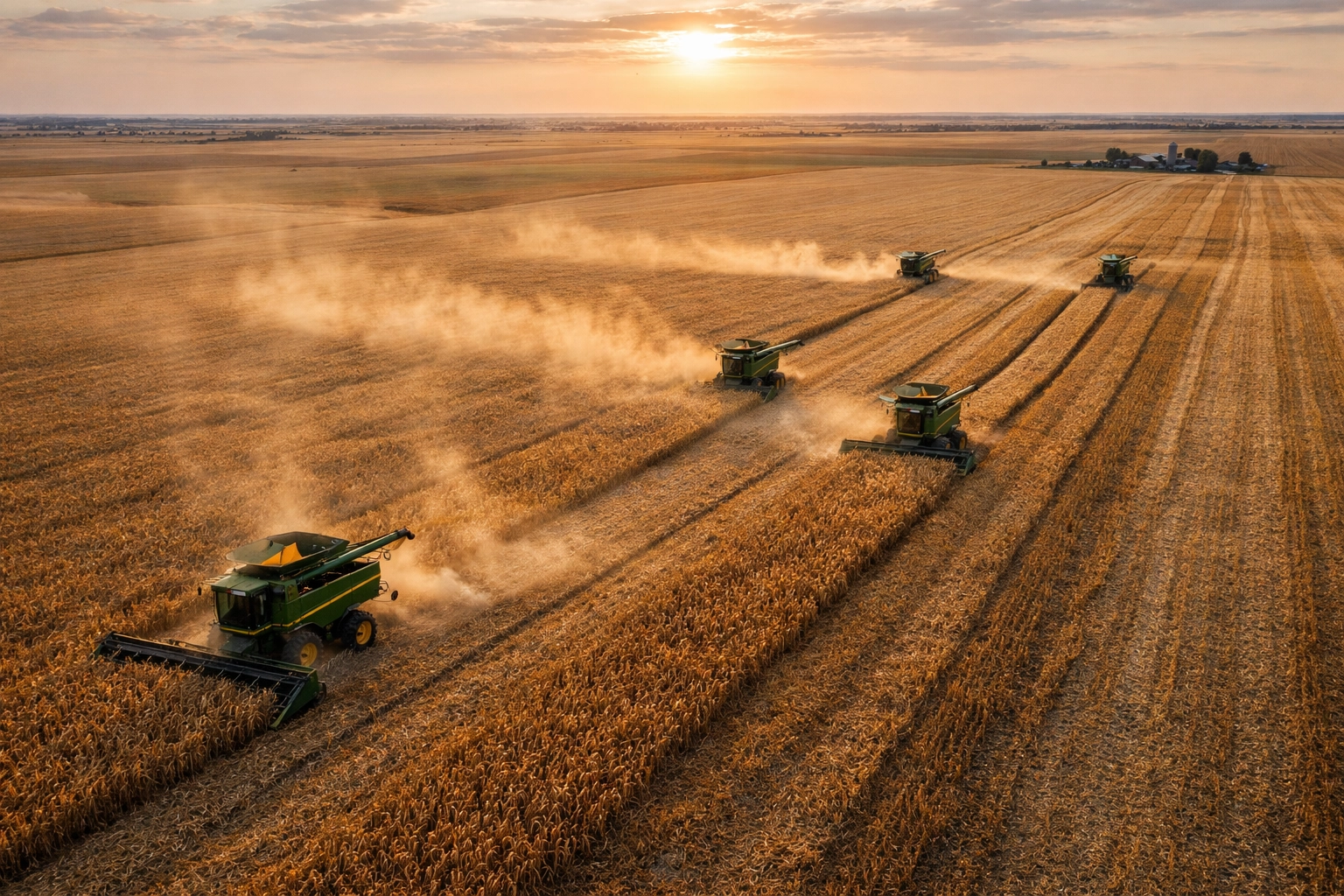
National crop reporting from the USDA National Agricultural Statistics Service crop data and surveys shows the vast scale of U.S. harvest operations, covering millions of acres of corn, soybeans, and wheat each year.
Within those enormous numbers lies a logistical challenge.
Each acre must be harvested within a relatively short time frame to maintain grain quality and minimize losses.
A combine failure during that window can quickly disrupt the schedule.
Grain moisture may rise. Lodging may increase. Soybean pods may begin to shatter.
Farmers often describe harvest as a race against both weather and time.
Reliable machinery is the only way to stay ahead.
Technology Is Reshaping Combine Maintenance
The combine harvester of 2026 looks very different from the machines farmers operated twenty years ago.
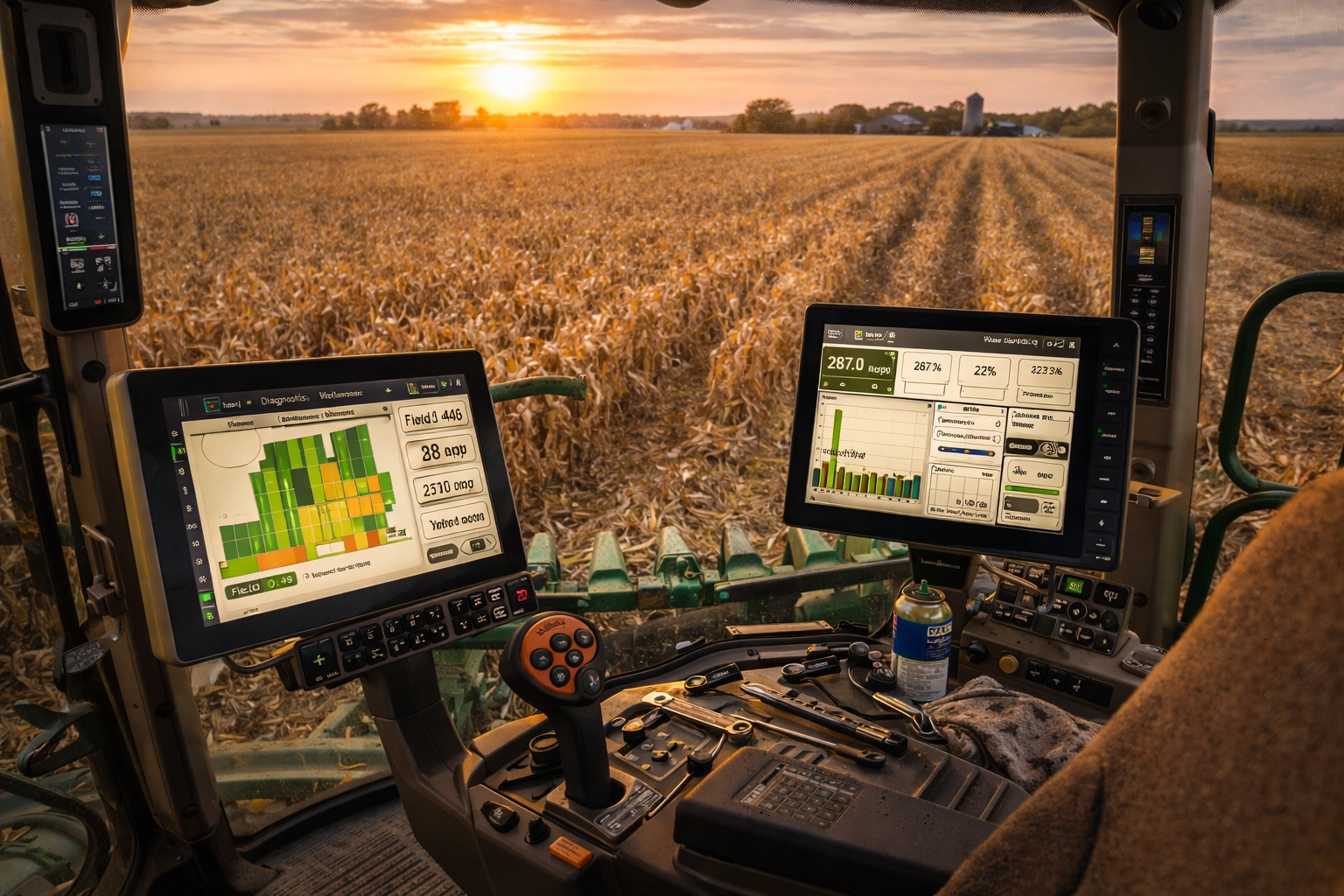
Today’s machines are equipped with digital systems that measure grain flow, monitor engine performance, and map crop yields across entire fields.
Sensors monitor rotor speed, grain loss, and moisture levels. Telematics systems allow equipment dealerships to analyze machine performance remotely.
These tools are slowly transforming maintenance strategies.
Instead of waiting for mechanical symptoms, farmers can sometimes detect problems through diagnostic alerts. Abnormal temperature readings, unusual vibration patterns, or declining efficiency may signal a component nearing failure.
Dealership technicians increasingly use diagnostic software to scan machines before harvest begins.
But despite these technological advances, the physical reality of harvest machinery remains unchanged.
Dust enters every opening.
Metal components fatigue under vibration.
Hydraulic seals weaken after years of heat and pressure.
Technology can warn farmers about problems.
It cannot eliminate the mechanical stress of harvesting thousands of acres.
Also Read

Why Small U.S. Farmers Are Losing Margin in 2026
Rising input costs, volatile crop prices, and higher borrowing rates are putting pressure on smaller farms across the United States. Many family-run operations are seeing their profit margins shrink as the 2026 season approaches.
The Quiet Backbone of U.S. Grain Production
From a distance, combine maintenance might appear to be a small technical detail in the vast system of American agriculture.
But its influence reaches far beyond individual farms.
The United States produces hundreds of millions of tons of grain each year. Harvest machinery forms the final link in that production chain.
When combines run reliably, crops move smoothly from field to storage.
Elevators receive steady deliveries. Rail networks transport grain to ports. Export markets receive shipments on schedule.
But when harvest is disrupted by widespread equipment failures, the consequences ripple through the supply chain.
Grain moisture levels fluctuate. Storage facilities fill unevenly. Transportation schedules shift.
Agriculture often appears resilient from the outside.
In reality, much of that resilience depends on quiet work done in farmyards long before harvest begins.
Back in the Farmyard
Late afternoon sunlight stretches across Whitaker’s gravel driveway.
The combine engine roars briefly as he starts the machine after replacing a bearing assembly. For a moment he listens.
The vibration sounds smoother now.
Harvest is still weeks away. But that small repair—one bearing, one hour of work—may prevent a breakdown during the busiest days of the year.
Across the country, thousands of farmers are performing similar tasks this summer.
They are tightening bolts, replacing belts, cleaning radiators, and calibrating sensors.
Most of that work will never appear in agricultural statistics.
But when harvest begins and combines roll across fields from Kansas to Minnesota, those quiet hours of preparation will determine something fundamental.
Whether the harvest keeps moving.

Written by Janardan Tharkar – an agriculture content researcher and blogging professional with practical experience in farming education, digital publishing, and SEO content optimization. Janardan focuses on modern U.S. agriculture trends, smart farming technologies, irrigation systems, crop development, organic farming practices, and farmer-support programs to create helpful, practical, and trustworthy content for American readers.