
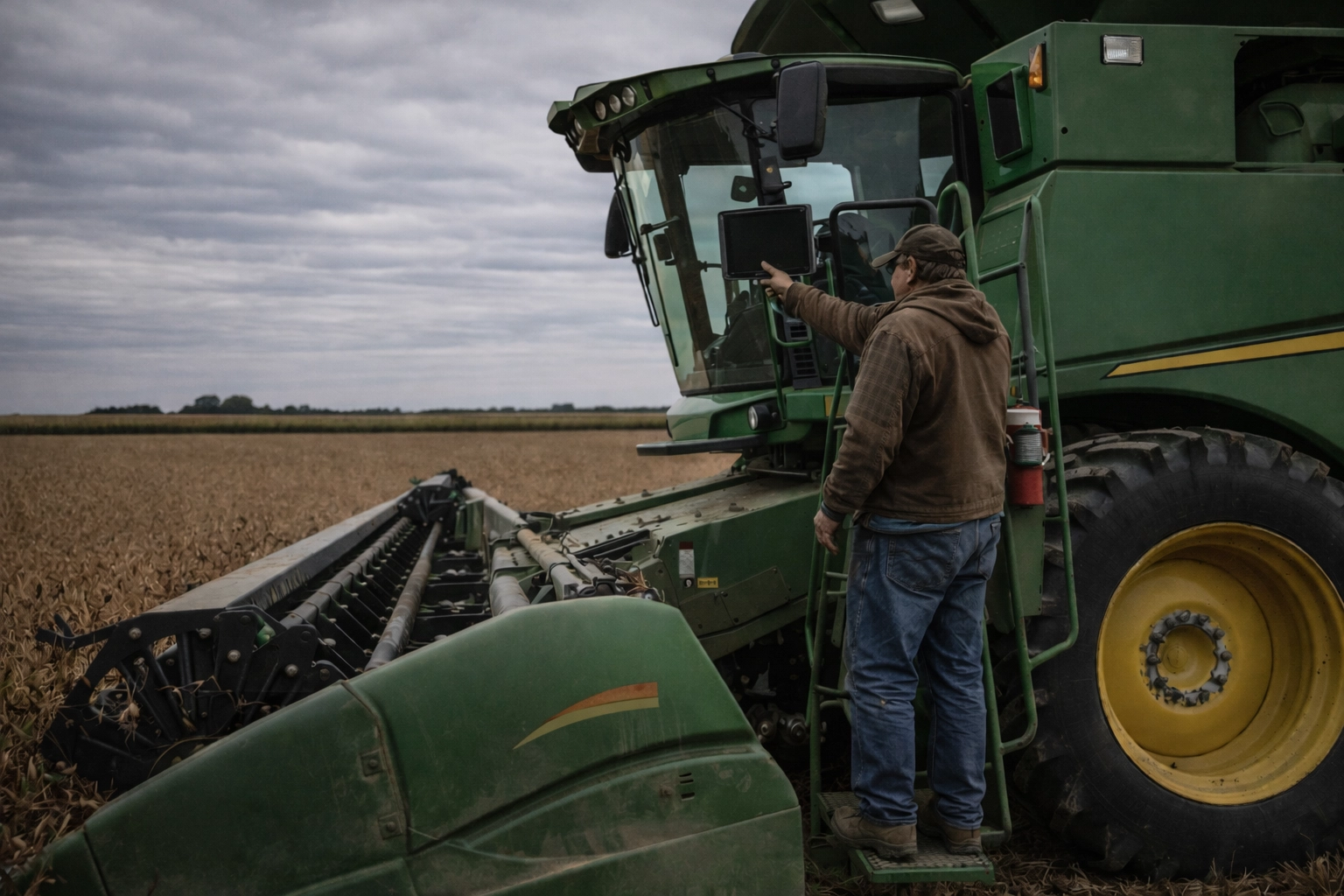
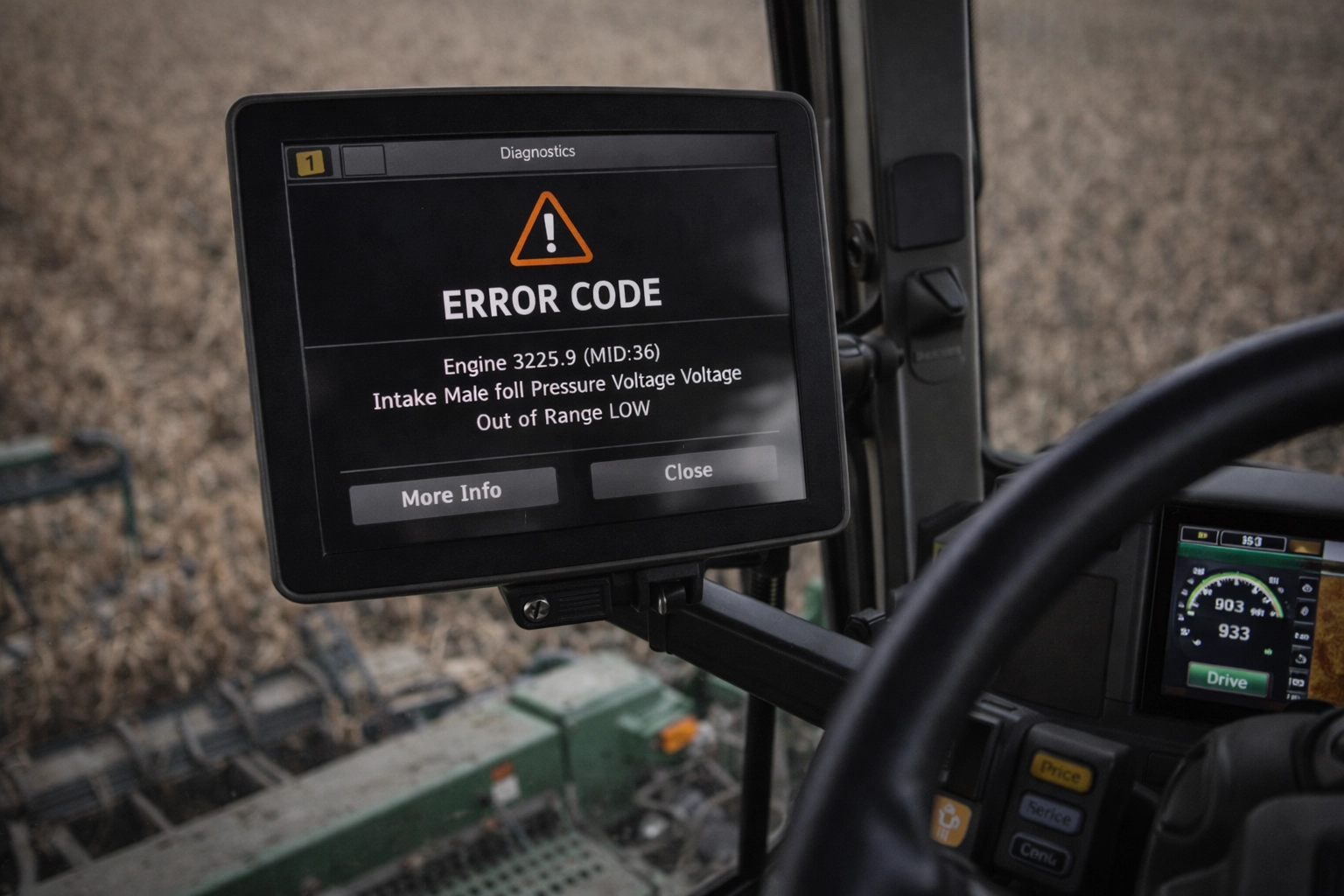
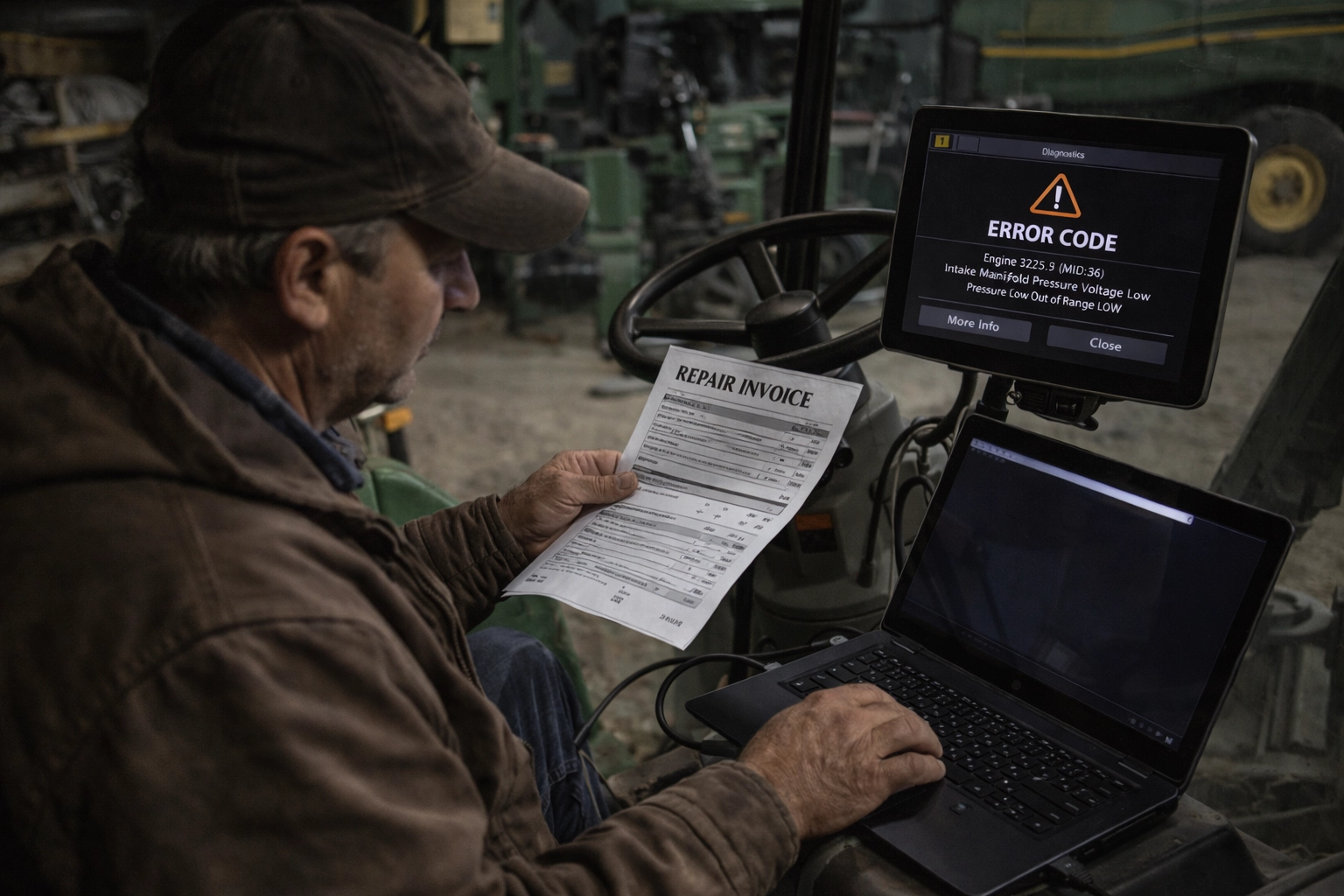
On a damp October morning in eastern Nebraska, a combine sits idle at the edge of a soybean field. The yield monitor inside the cab is dark. A sensor fault—minor in mechanical terms—has triggered a software lock that prevents the machine from operating at full capacity. Harvest windows are narrow in the Midwest. A few days of delay can mean lost moisture quality, downgraded grain, or weather damage.
The farmer does not lack tools. He lacks access.
In 2026, the “Right to Repair” debate in U.S. agriculture is no longer abstract. It is embedded in planting schedules, harvest logistics, and capital planning. As modern farm equipment becomes more software-driven, the ability to repair machinery has shifted from wrench and socket sets to encrypted diagnostic codes and proprietary firmware.
The conflict is not about nostalgia for older machines. It is about control, cost, and operational risk.
Introducing the Conflict
Modern tractors and combines are computers on wheels. Precision planting systems rely on GPS-guided software. Engine performance is calibrated through embedded code. Yield mapping, autosteer, telematics, emissions systems—all are digitally integrated.
Manufacturers argue that these software layers protect safety, emissions compliance, and intellectual property. Farmers argue that software locks prevent timely repairs and increase dependency on authorized dealerships.
When a machine fails during peak season, time becomes currency.
According to USDA farm production expenditure data, machinery and equipment costs remain one of the largest expense categories for crop producers (USDA ERS Farm Production Expenditures). Equipment investments often exceed hundreds of thousands of dollars. Farmers financing these machines expect operational control—not restricted access.
The tension is not theatrical. It is practical.
Farmers Also Read
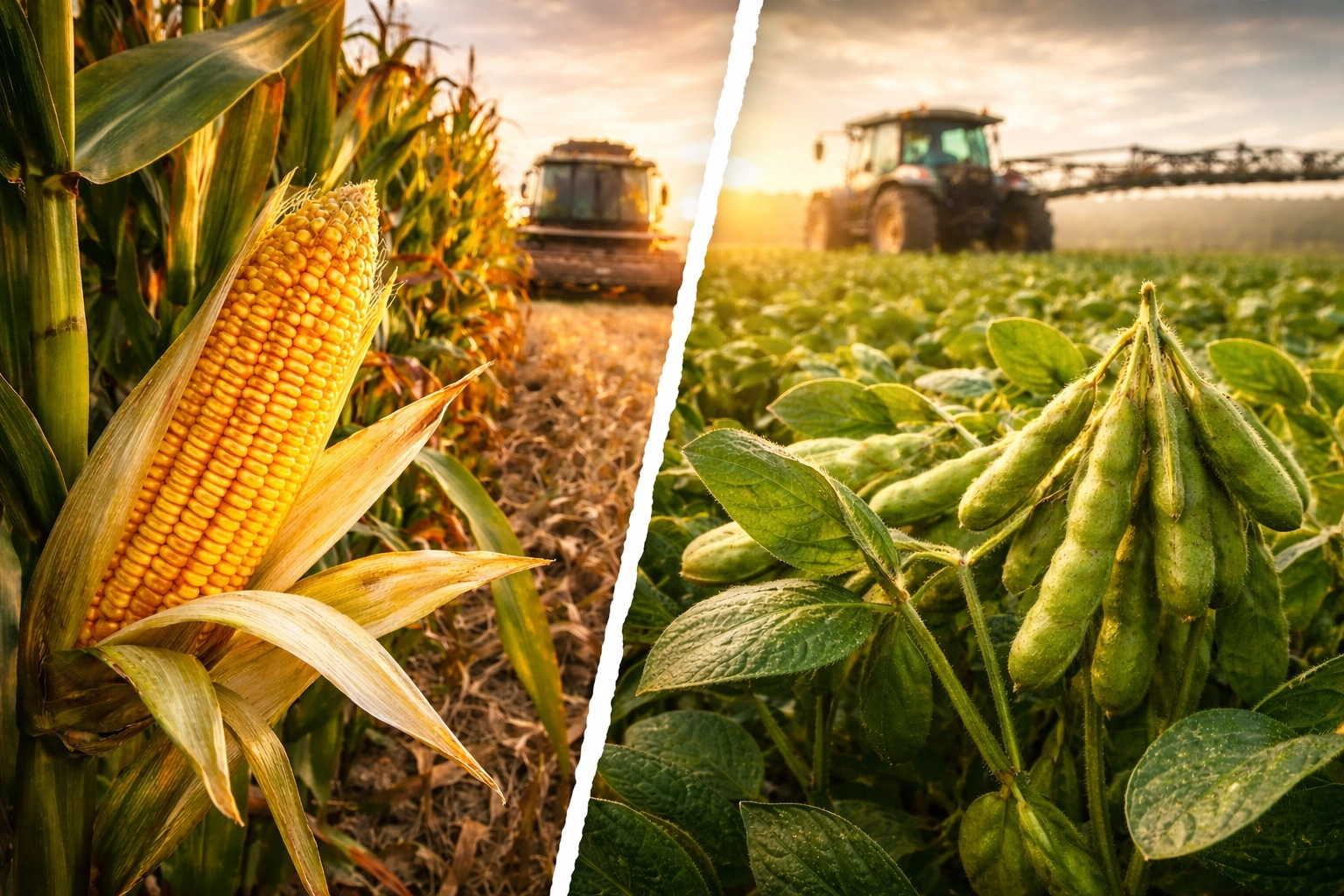
Corn vs Soybean 2026: Planting Strategy Guide
Price outlook, policy impact and planting strategy explained.
Stakeholder Positions
Farmers
Farmers want the ability to diagnose and repair equipment independently or through trusted local mechanics. Many argue that ownership should confer repair rights.
They cite:
- Reduced downtime.
- Lower repair costs.
- Greater autonomy during critical windows.
- Improved resale value when diagnostics are accessible.
Some have resorted to third-party software tools or informal firmware modifications. Others wait for authorized technicians while crops stand ready.
For farmers, the issue intersects with rising equipment prices and tighter margins. According to Federal Reserve agricultural finance reports, farm loan volumes remain significant, and interest rates are higher than the pre-pandemic decade (Federal Reserve agricultural finance data). That makes downtime more expensive.
Equipment Manufacturers
Manufacturers argue that unrestricted access to software could:
- Compromise emissions compliance.
- Undermine safety protocols.
- Expose proprietary technology.
- Increase liability risks.
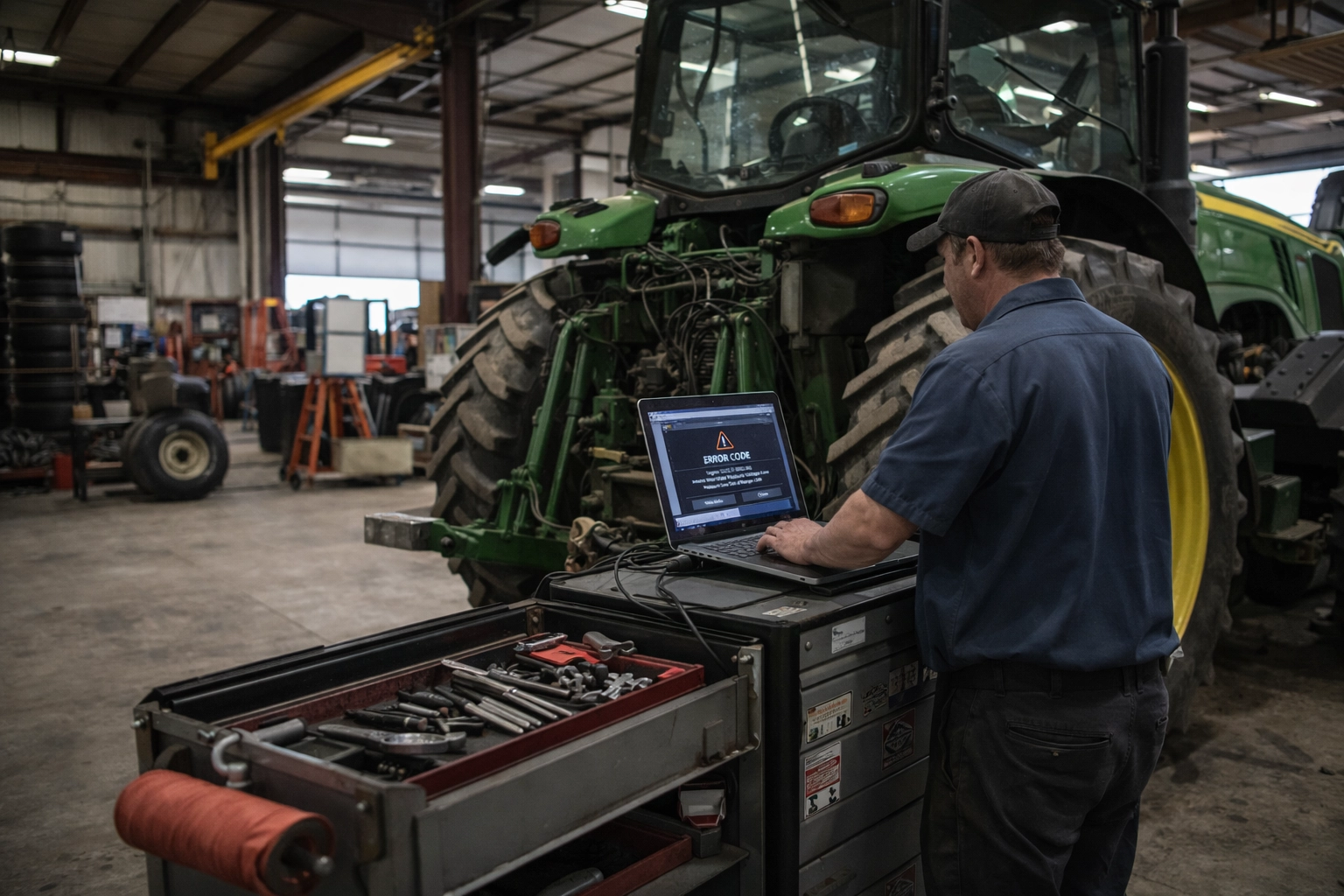
They emphasize that modern machines require specialized diagnostic tools and training. Software ecosystems support predictive maintenance and remote troubleshooting, which manufacturers claim reduce downtime overall.
In recent years, some companies have signed voluntary agreements with farm groups to expand access to diagnostic information. However, farmers remain skeptical of how comprehensive those agreements truly are.
Dealership Networks
Authorized dealers occupy the middle ground. They benefit from service revenue but also face pressure during peak seasons. Technicians cannot be everywhere at once.
For dealers, expanded repair rights may dilute service income but could also relieve seasonal overload.
Institutional Friction
The Right to Repair debate has moved beyond farm shops into state legislatures and federal agencies.
Several states have considered or passed Right to Repair laws targeting electronics and digital equipment. Agriculture-specific measures are emerging.
The Federal Trade Commission has signaled concern about repair restrictions in various industries. In its broader competition policy discussions, the agency has referenced barriers to independent repair as a potential consumer issue (Federal Trade Commission policy statements).
Meanwhile, emissions compliance is governed federally. Manufacturers contend that allowing software modification could violate Environmental Protection Agency standards.
This institutional overlap—between intellectual property law, environmental regulation, and competition policy—creates friction.
Congressional debates occasionally reference agriculture in broader Right to Repair proposals. The Congressional Budget Office has examined implications of regulatory shifts in related industries (CBO regulatory analysis reports). Although not agriculture-specific in every case, these analyses underscore how regulatory change reshapes market structure.
Farmers, in the meantime, continue to plant and harvest.
Read More
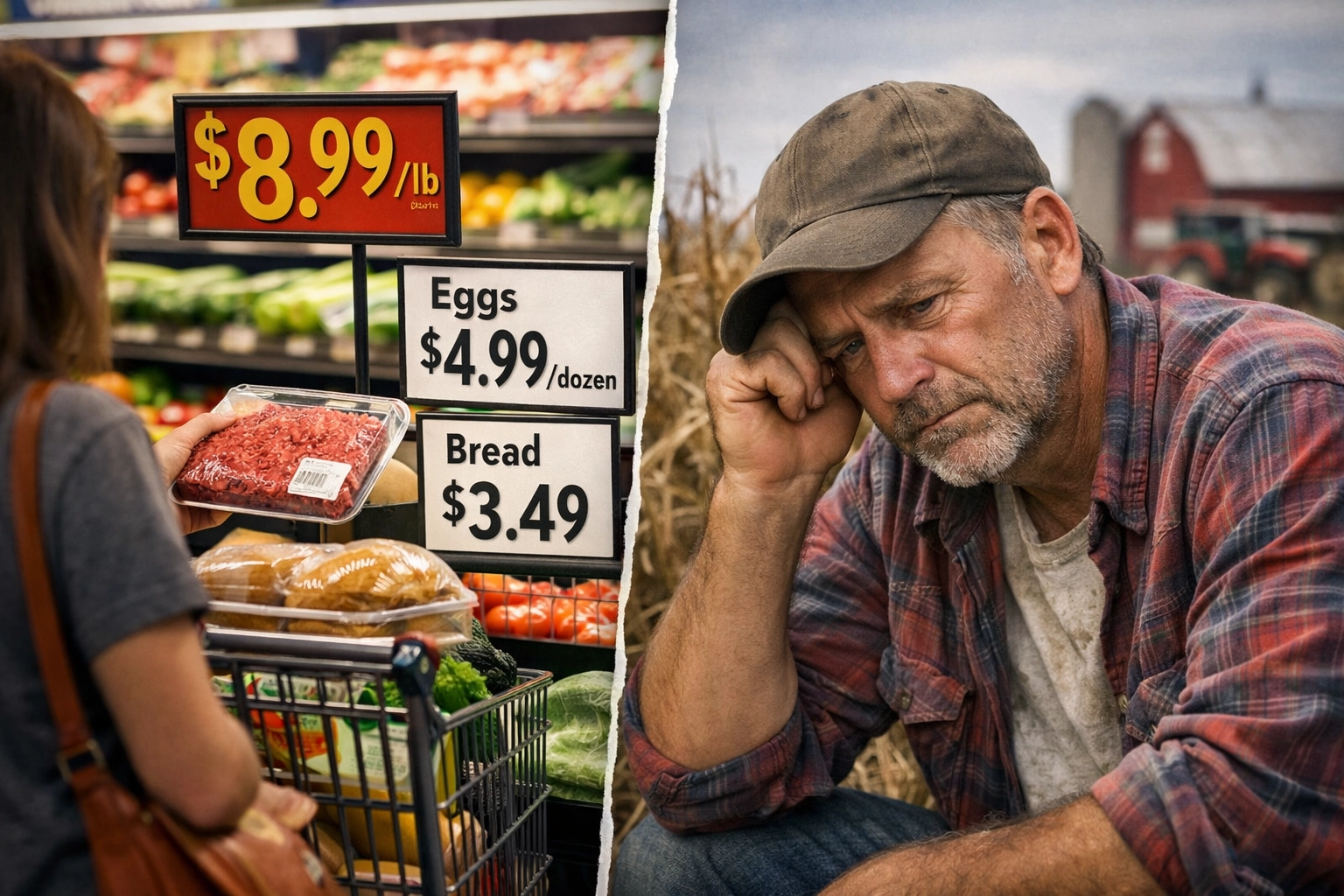
Right to Repair: Farmers vs Equipment Software
Rising input costs, policy pressure, and market volatility — a ground-level analysis of the 2026 farm margin crisis.
The Economic Impact
The economic impact of software locks is not always dramatic—but it is cumulative.
A combine down for 48 hours during peak harvest can:
- Increase moisture penalties.
- Require additional drying costs.
- Reduce quality grades.
- Delay cash flow from grain delivery.
Repair bills may include both parts and software reactivation fees. Travel charges for certified technicians add cost.
Over time, farmers factor this risk into capital decisions.
Capital Cost Considerations
Modern high-horsepower tractors can exceed $500,000. Financing terms often stretch across several years.
When software restrictions limit independent repair, the effective cost of ownership increases.
Downtime risk also influences machinery replacement cycles. Some farmers trade equipment earlier to maintain warranty coverage and dealer support. Others extend use, accepting higher mechanical risk to avoid new software ecosystems.
These choices ripple outward. Rural mechanics face reduced opportunity. Equipment values depend partly on serviceability.
Comparison: Traditional Repair vs. Software-Restricted Repair
| Factor | Traditional Mechanical Repair | Software-Restricted Repair |
|---|---|---|
| Diagnostic Access | Physical tools, open manuals | Proprietary software access required |
| Repair Timing | Immediate if parts available | Dependent on dealer scheduling |
| Cost Structure | Parts + local labor | Parts + dealer labor + software fees |
| Ownership Control | High autonomy | Conditional access |
This comparison highlights that the issue is less about technology itself and more about access.
Traditional repair systems allowed farmers to act immediately if they possessed skill and parts. Software-restricted systems introduce gatekeeping—often justified by compliance and intellectual property concerns.
The result is a shift in control from owner to manufacturer ecosystem.
Farmers Also Read

Why U.S. Net Farm Income Is Falling in 2026
Lower commodity prices, rising input costs, and policy shifts driving the 2026 net farm income decline.
Broader Economic Context
The Right to Repair conflict does not exist in isolation.
According to USDA farm income forecasts, net farm income has moderated from pandemic-era highs (USDA Farm Income Forecast). Tighter margins increase sensitivity to any additional cost or delay.
When profitability narrows, operational flexibility becomes more valuable.
Farmers increasingly weigh equipment purchases not only on horsepower and fuel efficiency, but also on repair access and digital control.
This recalibration influences brand loyalty and purchasing strategy.
Institutional Escalation or Resolution?
Several potential paths exist:
1. Voluntary Agreements Expand
Manufacturers could broaden diagnostic tool access under structured agreements. This approach preserves proprietary protections while granting limited repair rights.
2. Legislative Mandates
States or federal authorities could impose Right to Repair requirements on agricultural equipment manufacturers.
This could standardize diagnostic access but may provoke legal challenges around intellectual property.
3. Technological Adaptation
Manufacturers may design future equipment with tiered software permissions, separating emissions compliance code from repair diagnostics.
4. Market Pressure
Farmers may shift purchasing decisions toward companies perceived as more repair-friendly.
Market forces could incentivize change without legislation.
Each path carries trade-offs.
How Conflict Reshapes Expectations
Farmers historically viewed equipment as durable assets—mechanical systems maintained through skill and experience.
The shift to software-centric machinery alters that relationship.
Ownership becomes conditional. Repair becomes negotiated.
This changes planning behavior.
Farmers may:
- Increase spare machinery redundancy.
- Budget for higher service costs.
- Adjust harvest timelines with built-in contingency.
- Diversify brand portfolios to hedge access risk.
The emotional dimension remains understated but present. Autonomy has long been embedded in farming culture. Software locks introduce dependency.
The tension is quiet but persistent.
Forward Outlook
The Right to Repair debate in agriculture will likely continue evolving alongside equipment innovation.
Precision agriculture promises efficiency gains. Data-driven tools improve yield mapping and input application accuracy. These technologies are not inherently opposed to repair access.
The question is governance.
If manufacturers and farmers find workable compromises, the system may stabilize. If not, legislative intervention becomes more probable.
In 2026, the debate is not about dismantling technology. It is about redefining ownership in a digital era.
The combine in Nebraska will run again once the technician arrives. The soybeans will come off the field.
But each delay leaves a mark—not only on grain moisture, but on how farmers assess risk.
Control, in agriculture, has always been partial. Weather dictates much. Markets shift unpredictably.
Software locks introduce a new variable—human-made, contractual, and negotiable.
How that variable resolves will shape machinery markets, rural repair economies, and the balance of power between producers and manufacturers.
Quietly, steadily, it is already reshaping expectations

Written by Janardan Tharkar – an agriculture content researcher and blogging professional with practical experience in farming education, digital publishing, and SEO content optimization. Janardan focuses on modern U.S. agriculture trends, smart farming technologies, irrigation systems, crop development, organic farming practices, and farmer-support programs to create helpful, practical, and trustworthy content for American readers.