A New Economic Squeeze Is Emerging in Agriculture
Across large parts of the United States, the financial structure of farming is quietly shifting. Commodity markets remain relatively stable compared with the volatility seen earlier in the decade, yet the cost of operating a modern farm continues to rise. Fertilizer, land rents, labor, and energy have all experienced upward pressure in recent years.
But one category of cost stands apart in both scale and long-term impact: farm machinery.
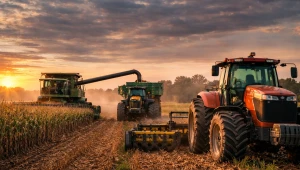
Modern agriculture is increasingly dependent on highly sophisticated equipment. Combines now contain dozens of sensors and automated yield monitoring systems. Tractors are guided by satellite-based GPS steering systems. Planters adjust seeding rates in real time based on soil conditions.
These technologies have transformed productivity across American agriculture. However, they have also pushed machinery costs to levels that many mid-size farms are struggling to absorb.
According to price indicators compiled by the USDA Economic Research Service, agricultural machinery prices have risen steadily over the past decade as manufacturers incorporate advanced electronics, emissions compliance systems, and digital agriculture tools into equipment.
https://www.ers.usda.gov/
For large farms operating tens of thousands of acres, these investments can often be spread efficiently across production. For mid-size farms—typically managing between 500 and 2,000 acres—the calculation is more difficult.
In 2026, the average machinery fleet required to operate a mid-size grain farm often represents several million dollars in capital investment.
The implications reach far beyond simple accounting.
They shape how farms finance operations, how quickly they expand, and in some cases whether they remain economically viable.

What Machinery a Mid-Size Farm Actually Needs
To understand the financial pressure machinery creates, it helps to picture what equipment is required to run a typical mid-size grain operation.
Consider a 1,200-acre corn and soybean farm in the Midwest. The farm must plant thousands of acres within a narrow seasonal window, apply crop protection products efficiently, and harvest crops quickly before weather risks escalate.
The machinery required to accomplish this includes:
- Two or three tractors across different horsepower categories
- One combine harvester
- A large multi-row planter
- A self-propelled sprayer
- Grain carts and augers
- Tillage or strip-till equipment
- Trucks and support vehicles
Each piece of machinery plays a time-sensitive role in the farm’s production cycle.
Planting delays can reduce yield potential. Harvest delays can expose crops to storms or quality losses. As a result, farms cannot operate with minimal machinery capacity.
Reliability and speed are essential.
In 2026, typical price ranges for new machinery often look like this:
| Equipment | Average Price Range (2026) |
|---|---|
| High horsepower tractor | $330,000 – $480,000 |
| Combine harvester | $600,000 – $850,000 |
| 24–36 row planter | $200,000 – $320,000 |
| Self-propelled sprayer | $280,000 – $420,000 |
| Grain cart and attachments | $120,000 – $180,000 |
When assembled into a full operational fleet, machinery investments frequently reach $2–3 million.
For many mid-size farms, machinery is the second-largest asset category after farmland itself.
Must Read

AI and Automation Are Reshaping U.S. Agriculture in 2026
Artificial intelligence and automation are rapidly transforming American agriculture. From precision spraying to autonomous machinery and data-driven crop management, new technologies are helping farmers improve efficiency while facing rising labor shortages and production costs.

Supply and Demand Forces Behind Rising Equipment Costs
Farm machinery prices do not fluctuate the same way commodity inputs do. Fertilizer and diesel prices move with global markets. Machinery prices, by contrast, reflect industrial production economics.
Demand for equipment is heavily influenced by farm profitability cycles. When commodity prices rise and farm income improves, farmers are more likely to upgrade equipment fleets. During weaker commodity markets, purchases slow but rarely stop entirely.
Supply dynamics are more rigid.
Agricultural machinery manufacturing is concentrated among a relatively small number of global companies producing highly specialized equipment. Factories producing combines, planters, and high-horsepower tractors require large investments and complex supply chains.
Production capacity cannot easily expand overnight.
During the early 2020s, supply chain disruptions involving microchips, steel, and hydraulic components slowed machinery production. Even after supply chains began to recover, equipment availability remained tight for several seasons.
This dynamic allowed machinery prices to remain elevated even as commodity markets stabilized.
Unlike many agricultural inputs, machinery prices rarely decline significantly once higher technology costs become embedded in the product.

Structural Imbalances: Machinery Scale vs Farm Scale
The economic challenge for mid-size farms becomes clearer when machinery investment is compared with acreage.
Modern agricultural machinery is designed for extremely high productivity. A combine capable of harvesting several thousand acres per season may operate only a few weeks per year.
For large farms, this capacity is fully utilized.
For mid-size farms, the same machine may operate far below its maximum potential.
The result is a structural imbalance between machinery investment and operational scale.
Machinery Cost Relative to Farm Size
| Farm Size | Machinery Investment | Estimated Cost per Acre |
|---|---|---|
| 800 acres | $2.2 million | ~$2,750 |
| 2,000 acres | $2.7 million | ~$1,350 |
| 10,000 acres | $4.3 million | ~$430 |

At first glance, the difference in total machinery investment between farms may not appear dramatic. But when that investment is distributed across acreage, the cost per acre changes dramatically.
What the Comparison Reveals
The table illustrates a fundamental economic pressure shaping modern agriculture.
Machinery investments do not scale proportionally with farm size. Most essential machines—combines, planters, sprayers—already operate near maximum capacity on mid-size farms.
A farm with 1,200 acres may operate nearly the same machinery fleet as a farm cultivating 5,000 acres.
The difference is utilization.
Larger farms spread equipment costs across more acres, dramatically lowering the capital burden per acre.
Over time, this structural advantage has contributed to the gradual consolidation of farmland across the United States.
Read Also
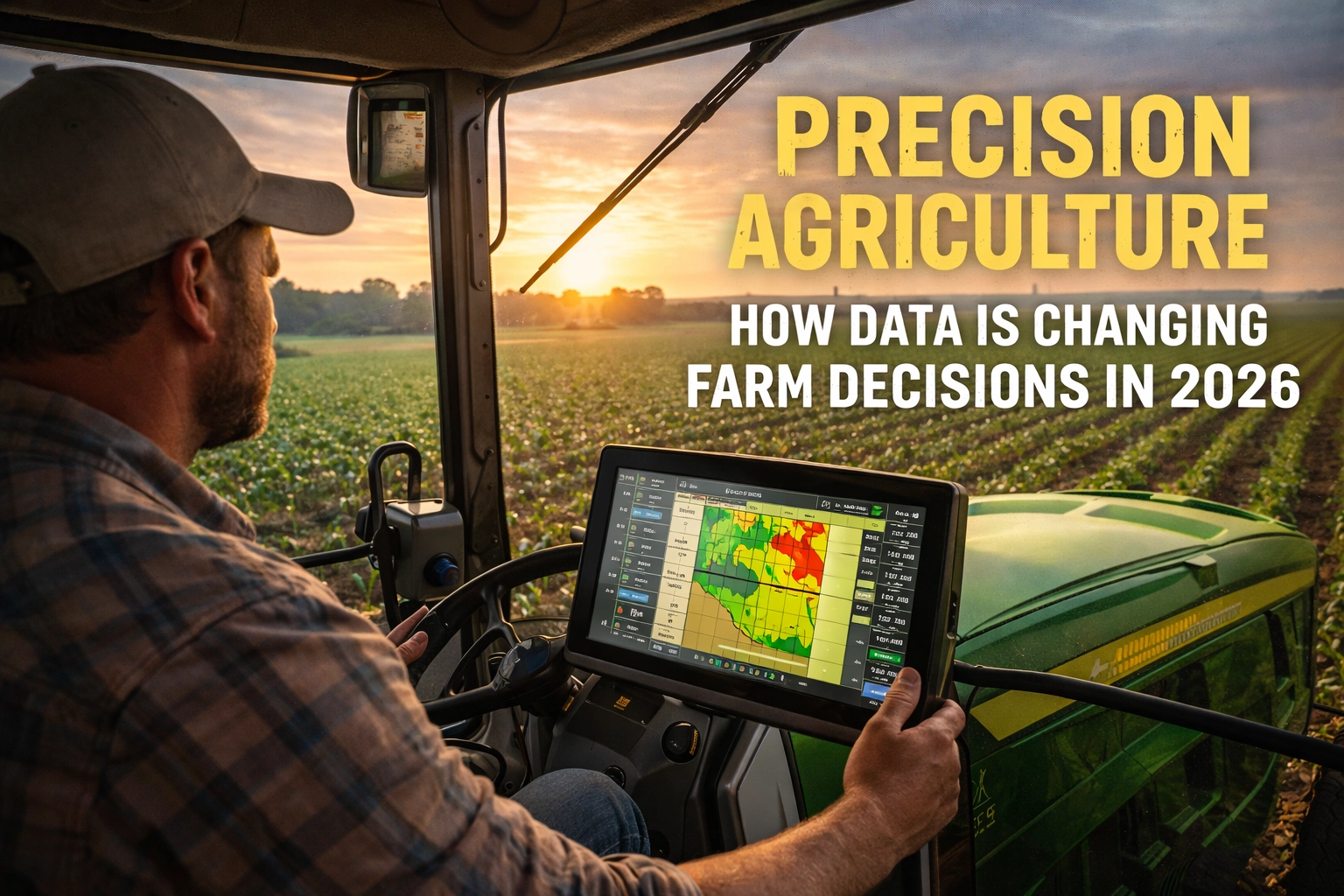
How Precision Agriculture Data Is Changing Farm Decisions in 2026
Precision agriculture tools are giving farmers deeper insights into soil conditions, crop health, and input efficiency. In 2026, data-driven farming is helping producers make smarter planting, fertilization, and irrigation decisions across U.S. agriculture.

Debt and Capital Pressure on Mid-Size Farms
Because machinery costs are so high, most equipment purchases rely on financing.
Equipment loans are a core component of agricultural credit systems. Many machinery purchases are financed over five to seven years.
During the 2010s, low interest rates made this borrowing relatively manageable.
However, rising interest rates since the early 2020s have changed the equation.
Data compiled by the Federal Reserve Bank of Kansas City shows that agricultural lending rates have increased significantly in recent years, raising borrowing costs for farm equipment purchases.
https://www.kansascityfed.org/agriculture/agfinance/
Even small changes in interest rates can significantly affect annual machinery payments.
Example:
Combine purchase price: $700,000
Loan term: 7 years
| Interest Rate | Annual Payment |
|---|---|
| 4% | ~$114,000 |
| 7% | ~$128,000 |
For farms carrying several equipment loans simultaneously, the total annual machinery payment can easily exceed $350,000.
In years when commodity prices weaken or yields fall, these payments can become a major financial strain.
How Machinery Costs Translate Into Farm-Level Stress
The financial pressure created by machinery investments often becomes visible during peak production seasons.
Harvest is a narrow window. A combine failure during corn harvest can delay dozens of acres per day.
If rain arrives before those acres are harvested, yield losses may occur.
Repairing modern combines is also increasingly expensive. Sophisticated electronics and precision systems require specialized diagnostics and costly replacement components.
Farmers therefore face a difficult choice.
Continue operating older machinery with higher breakdown risk, or invest in new equipment with large loan payments.
Neither option is easy.
For many mid-size farms, machinery decisions become a balancing act between operational reliability and financial risk.
Technology: Productivity Gains and Rising Costs
One reason machinery prices continue to rise is the growing role of digital agriculture.
Modern equipment now integrates technologies such as:
- GPS guidance systems
- automated steering
- variable-rate input application
- real-time yield monitoring
- remote machine diagnostics
These tools significantly improve efficiency.
According to technology adoption surveys conducted by the United States Department of Agriculture, precision agriculture tools are now widely used across major U.S. crop production systems.
https://www.usda.gov/
Farmers can reduce input waste, improve planting accuracy, and generate detailed yield data for future planning.
However, these technological capabilities also increase machinery complexity and cost.
Modern combines are no longer purely mechanical machines. They are sophisticated digital platforms capable of collecting and transmitting agronomic data.
Policy Context and Financial Stability
Agricultural policy plays an indirect but important role in machinery investment decisions.
Programs such as crop insurance, disaster assistance, and farm income stabilization reduce financial volatility for producers.
Analyses from the Congressional Budget Office note that federal risk-management programs help stabilize farm income during periods of commodity price fluctuation.
https://www.cbo.gov/
Stable income improves farmers’ access to credit and makes lenders more willing to finance machinery purchases.
However, these programs do not directly address the underlying structural trend: farming is becoming increasingly capital intensive.
Read Also
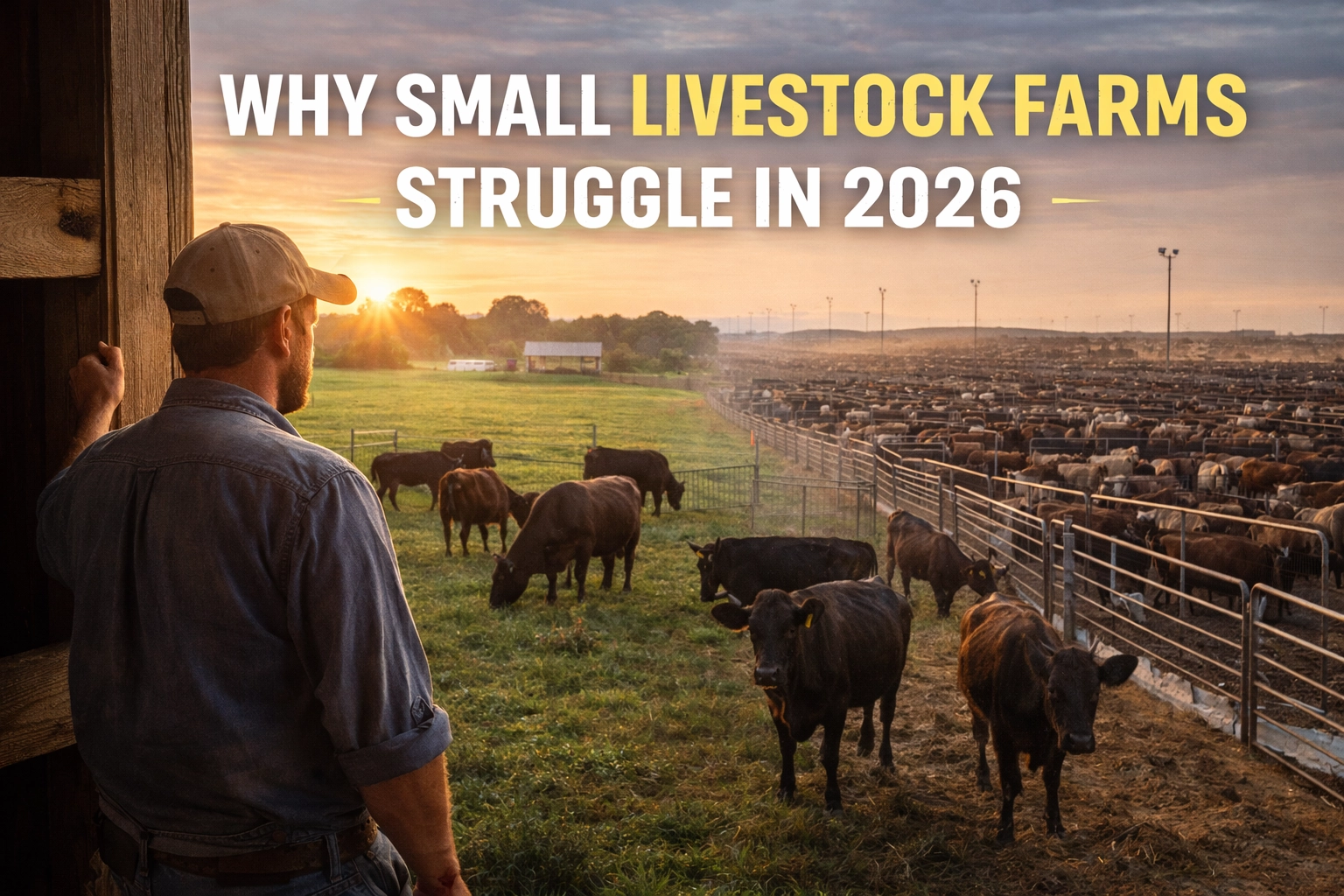
Why Small Livestock Farms Are Struggling to Compete in U.S. Agriculture (2026)
Small livestock farms across the United States are facing rising feed costs, tighter margins, and increasing competition from large-scale operations. These economic pressures are making it harder for independent producers to remain competitive in 2026.
Long-Term Structural Changes in Farm Machinery Economics
Looking ahead, several structural developments may reshape machinery costs for mid-size farms.
Continued Farm Consolidation
Large operations will likely continue benefiting from economies of scale in machinery utilization.
Cooperative Equipment Ownership
Some regions are experimenting with shared machinery ownership between neighboring farms to reduce capital costs.
Autonomous Agricultural Machinery
Autonomous tractors and robotic equipment may eventually allow farms to operate smaller machines continuously rather than relying on a few extremely large machines.
Data-Driven Machinery Efficiency
Predictive maintenance and data-driven analytics may extend equipment lifecycles and reduce downtime.

Conclusion: Machinery Economics Will Shape the Future of Mid-Size Farming
The rising cost of farm machinery in 2026 reflects deeper structural forces transforming agriculture.
Technological innovation has dramatically improved productivity, but it has also increased the capital required to remain competitive.
For mid-size farms, machinery investments sit at the intersection of operational necessity and financial risk.
These farms must maintain advanced equipment fleets to operate efficiently, yet their scale often limits how effectively those investments can be distributed across acreage.
As agriculture continues to evolve, the economics of machinery may play a decisive role in shaping the structure of the farming sector itself.
The farms that successfully navigate this capital challenge will define the next generation of American agriculture.

Written by Janardan Tharkar – an agriculture content researcher and blogging professional with practical experience in farming education, digital publishing, and SEO content optimization. Janardan focuses on modern U.S. agriculture trends, smart farming technologies, irrigation systems, crop development, organic farming practices, and farmer-support programs to create helpful, practical, and trustworthy content for American readers.