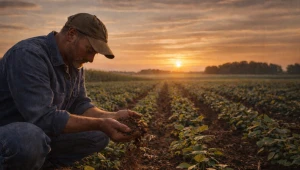
In Washington policy circles, regenerative agriculture has become one of the most frequently discussed ideas in modern farm policy debates. Environmental organizations highlight it as a potential solution to soil degradation. Food companies promote it in sustainability reports. Agricultural researchers frame it as a pathway toward more resilient farming systems.
At first glance, the concept appears straightforward.
Restore soil health, strengthen ecosystems, and maintain agricultural productivity.
But outside policy discussions and conference panels, the meaning of regenerative agriculture becomes more complicated.
For many American farmers, regenerative agriculture is not a slogan or a sustainability campaign. It represents a set of management decisions that influence how crops are grown, how soil is treated, and how farms remain economically viable over the long term.
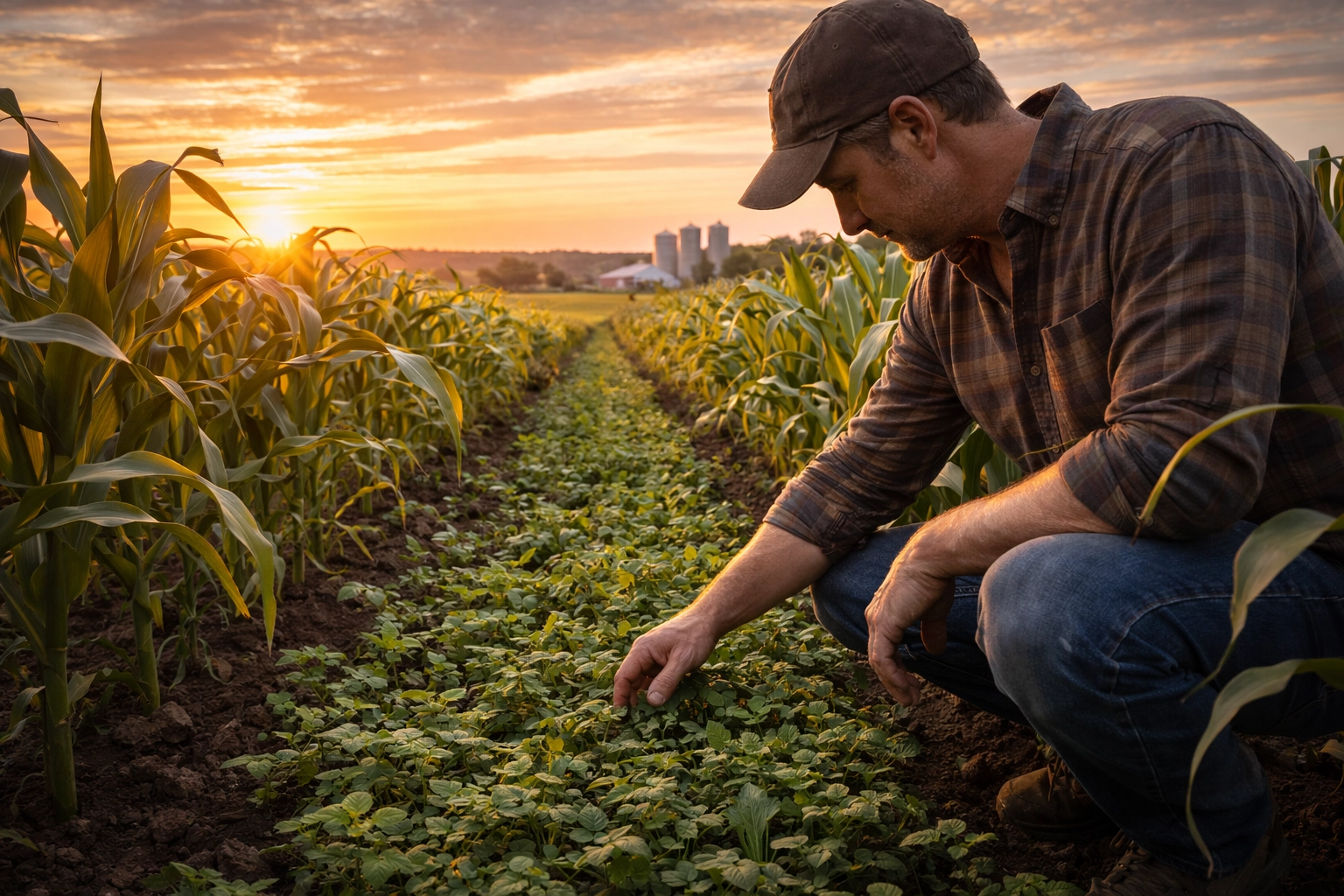
Across the United States in 2026, farmers are experimenting with regenerative practices such as cover cropping, reduced tillage, diversified crop rotations, and integrated livestock grazing.
Yet despite growing enthusiasm, uncertainty remains.
The real question is not whether regenerative agriculture works biologically. The question is how these practices fit within the broader economic and institutional systems that shape farming decisions across millions of acres of farmland.
Understanding Regenerative Agriculture
Regenerative agriculture refers to a farming philosophy centered on rebuilding soil health while maintaining productive farmland.
The approach focuses on restoring biological processes within the soil ecosystem rather than relying primarily on synthetic inputs.
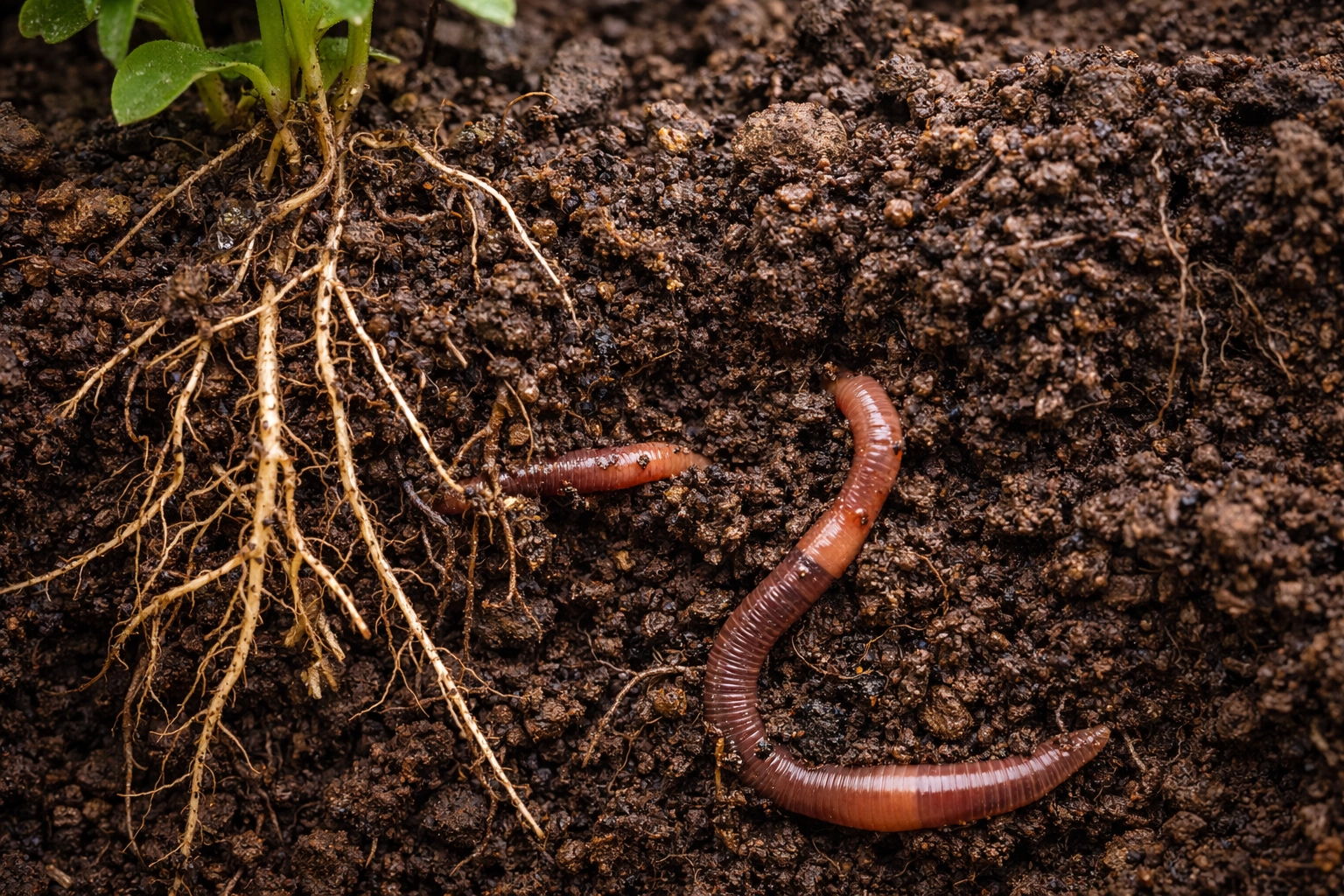
Healthy soils contain complex biological communities—microorganisms, fungi, insects, and plant roots—that support nutrient cycling and plant growth.
Regenerative agriculture attempts to strengthen these natural systems.
Common goals include:
- rebuilding soil organic matter
- improving soil biodiversity
- increasing water retention in farmland soils
- reducing erosion and nutrient runoff
- strengthening long-term farm resilience
Unlike conventional production systems that rely heavily on fertilizers and pesticides, regenerative systems aim to harness biological processes that sustain plant growth naturally.
Over time, healthier soil can improve drought resilience and stabilize crop productivity.
However, regenerative agriculture is not a single standardized technique. It is a management philosophy that integrates multiple practices over time.
Must Read

AI and Automation Are Reshaping U.S. Agriculture in 2026
Artificial intelligence and automation are rapidly transforming American agriculture. From precision spraying to autonomous machinery and data-driven crop management, new technologies are helping farmers improve efficiency while facing rising labor shortages and production costs.
Why Regenerative Agriculture Is Rising in Policy Discussions
Interest in regenerative agriculture has grown rapidly during the past decade.
Federal agencies, research institutions, and policymakers increasingly recognize the importance of soil health in sustaining long-term agricultural productivity.
Concerns about soil erosion and nutrient runoff have pushed policymakers to explore farming practices that protect farmland ecosystems.
The United States Department of Agriculture has expanded research and conservation initiatives focused on soil health and sustainable farm management.
Many of these efforts are administered through the Natural Resources Conservation Service (NRCS).
According to the , millions of acres of farmland participate in conservation initiatives aimed at improving soil health and water quality.
These programs support practices such as cover cropping, nutrient management, and reduced tillage.
However, regenerative agriculture often involves combining multiple practices simultaneously rather than adopting individual conservation measures.
That distinction creates an important institutional challenge.

The Federal Framework Behind Regenerative Agriculture
Most policy incentives influencing regenerative farming fall within existing conservation programs.
Two of the most prominent include:
Environmental Quality Incentives Program (EQIP)
EQIP provides financial assistance to farmers implementing conservation practices designed to improve soil health, water quality, and wildlife habitat.
Conservation Stewardship Program (CSP)
CSP rewards farmers who maintain and expand conservation practices across their operations.
Both programs are administered by the USDA’s Natural Resources Conservation Service.
Economic research conducted by the USDA Economic Research Service indicates that conservation practices such as reduced tillage and cover crops have expanded steadily across American farmland over the past two decades.
ERS soil management research:
https://www.ers.usda.gov/topics/farm-practices-management/
But these programs were not originally designed to support whole-farm regenerative systems.
Instead, they typically evaluate individual conservation practices separately.
For farmers attempting broader regenerative transitions, that policy structure can create implementation gaps.
Read Also

How Precision Agriculture Data Is Changing Farm Decisions in 2026
Precision agriculture tools are giving farmers deeper insights into soil conditions, crop health, and input efficiency. In 2026, data-driven farming is helping producers make smarter planting, fertilization, and irrigation decisions across U.S. agriculture.
Core Regenerative Practices Used by Farmers
Although regenerative agriculture varies across regions, several core practices are widely associated with the approach.
Cover Cropping
Cover crops are planted between main crop seasons to protect soil and maintain living roots in the soil year-round.
Common cover crops include rye, clover, and radishes.
These plants reduce erosion, improve soil structure, and stimulate microbial activity.
Reduced or No-Till Farming
Traditional tillage can disrupt soil structure and damage beneficial soil organisms.
Reduced-till and no-till systems minimize soil disturbance, helping maintain biological activity.
Crop Diversification
Growing the same crop repeatedly can increase pest pressure and reduce soil fertility.
Diversified crop rotations improve soil nutrient balance and interrupt pest cycles.
Livestock Integration
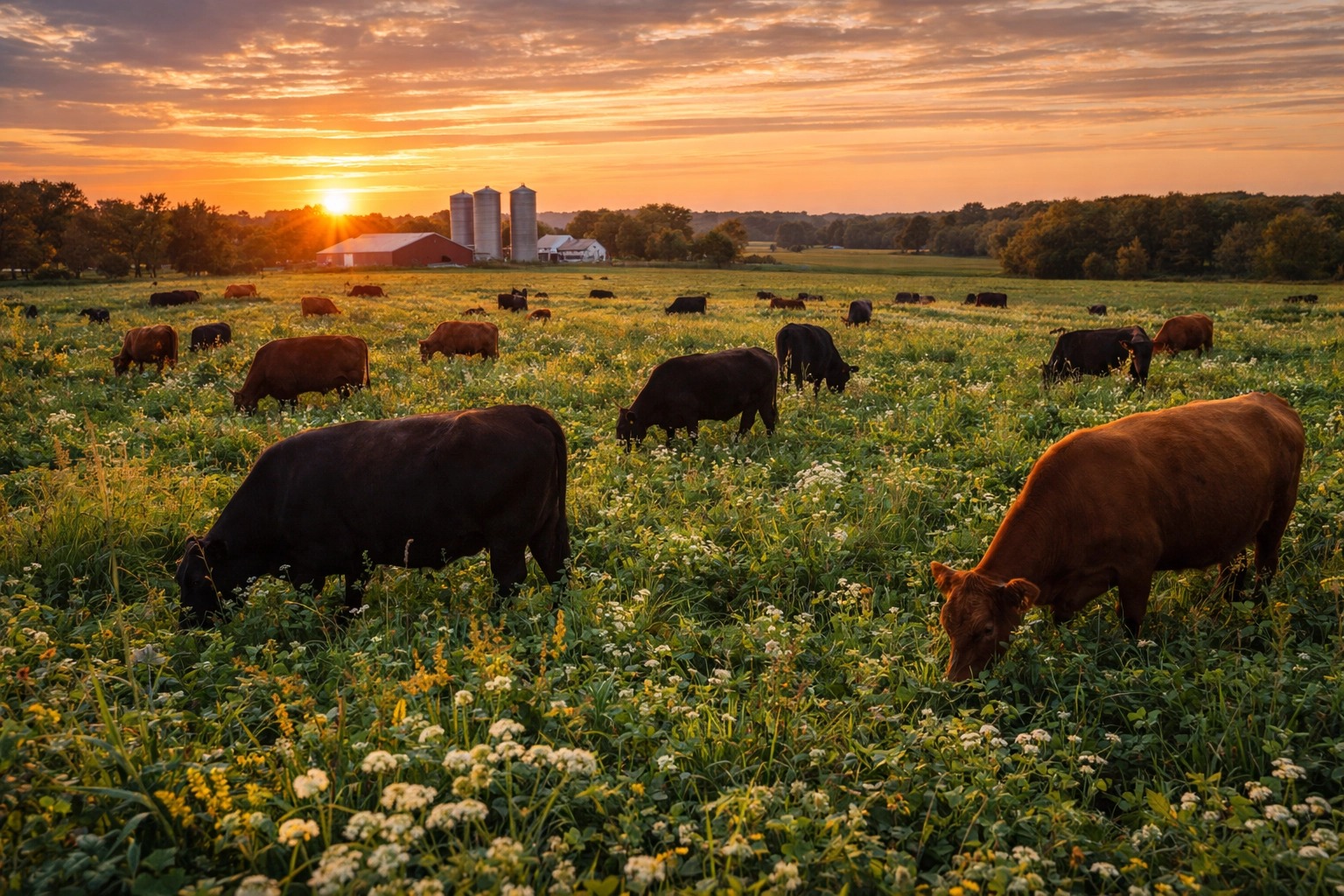
Some regenerative systems integrate livestock grazing into crop rotations.
Managed grazing stimulates plant growth while returning organic matter to the soil.
Building Soil Organic Matter
Increasing soil organic matter improves nutrient retention and water storage capacity.
Healthy soils are better able to withstand drought conditions and extreme weather events.
Together, these practices aim to rebuild soil ecosystems that support long-term agricultural productivity.
Regional Differences in Regenerative Agriculture
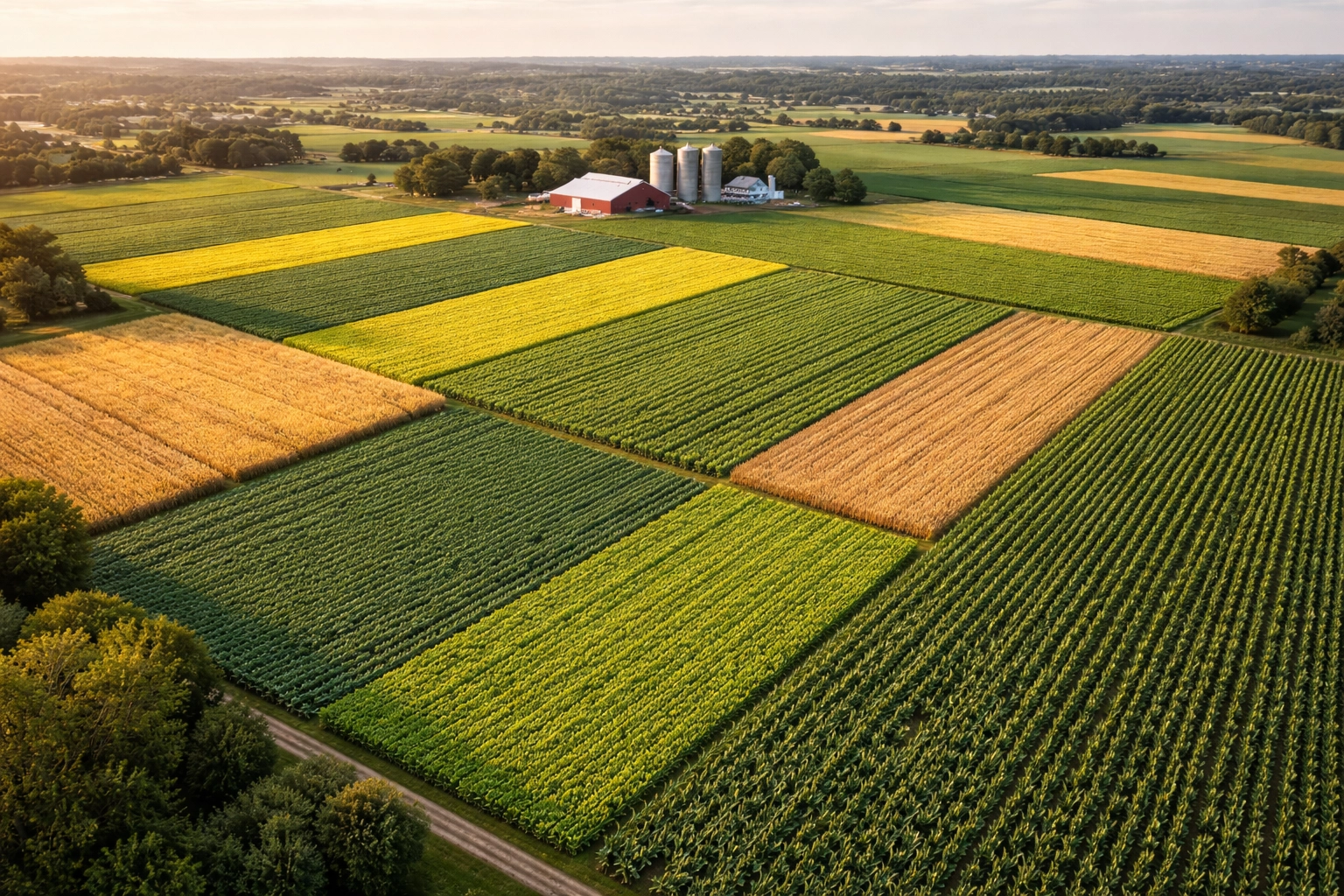
Regenerative agriculture spreads unevenly because farming systems differ dramatically across the United States.
Agricultural surveys conducted by the USDA National Agricultural Statistics Service show wide variation in conservation practice adoption across states and regions.
Corn Belt
In the Midwest, regenerative farmers often plant winter cover crops such as rye after corn or soybean harvest.
These cover crops protect soil during winter months and add organic matter.
Great Plains
Farmers in the Great Plains have widely adopted reduced-tillage systems in response to drought and erosion risks.
Western Rangelands
In grazing regions, regenerative agriculture often focuses on rotational livestock systems designed to improve pasture health and soil carbon storage.
Because local conditions vary widely, regenerative systems often evolve through farmer experimentation rather than standardized national models.
Comparing Conventional and Regenerative Systems
| Farming System | Soil Management | Input Dependency | Transition Risk |
|---|---|---|---|
| Conventional farming | Frequent tillage | High synthetic inputs | Low short-term disruption |
| Conservation agriculture | Reduced tillage | Moderate inputs | Moderate adjustment |
| Regenerative agriculture | Soil biology focused | Lower inputs over time | Higher transition uncertainty |
The table illustrates why regenerative agriculture spreads gradually.
While the long-term soil benefits are attractive, the transition period may involve operational uncertainty.
Farmers must balance environmental improvements against financial stability.
What the Comparison Reveals
The comparison shows that regenerative agriculture is less a single technology than a shift in management philosophy.
Instead of focusing primarily on chemical inputs and mechanical cultivation, regenerative systems emphasize biological processes.
But biological systems take time to rebuild.
During the transition phase, yields may fluctuate as soil ecosystems adjust.
For farmers operating with narrow profit margins, these transitional risks can slow adoption.
Financial Pressures and Farm Lending
Economic considerations remain one of the largest barriers to regenerative adoption.
Transitioning to regenerative systems may require:
- specialized planting equipment
- new crop management strategies
- additional labor planning
- revised fertilizer programs
Agricultural finance research published by the Federal Reserve Bank of Kansas City shows that farm credit conditions strongly influence farmers’ willingness to adopt new production systems.
https://www.kansascityfed.org/agriculture
When commodity prices are strong, farmers may feel more comfortable experimenting with regenerative practices.
When farm income declines, the financial risks of transition become harder to justify.
Read Also

Why Small Livestock Farms Are Struggling to Compete in U.S. Agriculture (2026)
Small livestock farms across the United States are facing rising feed costs, tighter margins, and increasing competition from large-scale operations. These economic pressures are making it harder for independent producers to remain competitive in 2026.
Climate Policy and Institutional Debate
Regenerative agriculture has also become part of climate policy discussions.
Some policymakers argue that regenerative practices could reduce agricultural greenhouse gas emissions by increasing soil carbon storage.
However, measuring soil carbon accurately across large landscapes remains scientifically complex.
Policy analysis published by the Congressional Budget Office highlights the difficulty of designing agricultural climate programs that balance environmental goals with farm income stability.
https://www.cbo.gov/topics/agriculture
These debates reflect a broader institutional tension: how to promote sustainable farming without creating regulatory burdens that farmers cannot realistically manage.

The Long-Term Outlook
Regenerative agriculture is unlikely to expand through a single national policy initiative.
Instead, its growth will likely occur through multiple pathways:
- farmer experimentation
- corporate sustainability programs
- evolving conservation policies
- advances in soil science research
Institutional change in agriculture tends to happen slowly.
Regenerative agriculture will likely continue spreading through local networks, university research programs, and farmer-to-farmer knowledge exchange.
Back on the Farm
In central Kansas, a farmer watches as winter cover crops begin emerging across a field that once lay bare during the off-season.
The green shoots are small, but they represent a shift in how the land is managed.
No federal regulation required the change.
No corporate sustainability program demanded it.
The farmer simply decided that the soil might benefit from a different approach.
Across the United States, regenerative agriculture is advancing in much the same way—one field, one season, one decision at a time.
Policy frameworks may influence incentives.
But the future of regenerative agriculture ultimately depends on the decisions farmers make on the land they manage every day.

Written by Janardan Tharkar – an agriculture content researcher and blogging professional with practical experience in farming education, digital publishing, and SEO content optimization. Janardan focuses on modern U.S. agriculture trends, smart farming technologies, irrigation systems, crop development, organic farming practices, and farmer-support programs to create helpful, practical, and trustworthy content for American readers.