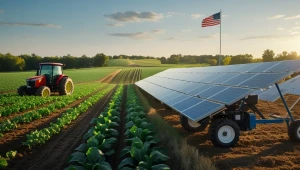
Why Agriculture Support Programs Matter More in 2026
Agriculture support programs 2026 are becoming essential for farmers across the United States as rising costs, climate risks, and market uncertainty continue to reshape modern farming.
Input costs are higher, climate risks are more unpredictable, land prices keep rising, and many small and family farmers are under pressure to stay profitable while farming sustainably.
Whether you’re:
- A small farmer in Iowa,
- A beginning farmer in Texas,
- An organic grower in California, or
- A rancher in the Midwest,
one thing is clear: agriculture support programs are no longer optional — they are essential.
The U.S. government, mainly through the U.S. Department of Agriculture (USDA), offers dozens of programs designed to help farmers survive bad years, invest in growth, manage risk, and adopt climate-smart practices.
This guide breaks down Agriculture Support Programs 2026 in simple, practical terms — without government jargon — so you can understand what help is available, who qualifies, and how these programs actually work in real life.
Understanding Agriculture Support Programs in the USA
Agriculture support programs are federal initiatives that protect farmers from financial risk and help them invest in long-term success. These programs are not handouts — they are structured safety nets and growth tools.
Most programs are managed by the USDA through agencies like:
- Farm Service Agency (FSA)
- Natural Resources Conservation Service (NRCS)
- Risk Management Agency (RMA)
You can explore the official USDA structure on the USDA website (.gov) or learn more about its role through Wikipedia’s overview of the United States Department of Agriculture.
Most agriculture support programs in the United States are managed by the U.S. Department of Agriculture (USDA), which oversees farm loans, conservation incentives, and disaster relief initiatives.
What These Programs Actually Do
Agriculture support programs help farmers:
- Access low-interest loans
- Get crop insurance protection
- Receive disaster relief
- Earn incentives for conservation and climate-friendly practices
- Secure grants for research, organic farming, and rural development

Major Types of Agriculture Support Programs in 2026
Instead of listing every program name, it’s easier to understand them by category.
1. Financial Assistance and Farm Loans
These programs help farmers start, operate, or expand their operations.
2. Risk Management and Crop Insurance
Designed to protect income during crop failure, price drops, or disasters.
3. Conservation and Sustainability Programs
Incentives for protecting soil, water, and ecosystems.
4. Grants and Research Support
Funding for innovation, education, and sustainable agriculture.
5. Disaster and Emergency Relief
Support during droughts, floods, hurricanes, and wildfires.
USDA Farm Loans and Financial Support Programs
For many farmers, access to affordable credit is the biggest challenge. USDA farm loan programs are especially important for small, beginning, and underserved farmers.
Common USDA Loan Programs in 2026
Farm Ownership Loans
- Buy farmland
- Improve or expand existing farms
- Build farm-related infrastructure
Operating Loans
- Seeds, fertilizer, livestock
- Equipment repairs
- Day-to-day farm expenses
Guaranteed Loans
- Issued by banks but backed by USDA
- Easier approval for farmers with limited credit history
These programs are detailed on the official USDA Farm Service Agency (.gov) website and remain one of the most practical tools for farmers entering agriculture in 2026.
Rising land costs, unpredictable weather, labor shortages, and tight margins make it hard for beginners to know where to start and what actually works. Small Farm Ideas in the USA
risky — but in 2026, weather extremes make risk management critical.
The Federal Crop Insurance Program, overseen by the Risk Management Agency (RMA), helps farmers protect revenue and yields.
Types of Crop Insurance Coverage
- Yield Protection (YP) – protects against low production
- Revenue Protection (RP) – protects income when prices fall
- Whole-Farm Revenue Protection – popular with diversified farms
These programs allow farmers to recover financially after:
- Drought
- Floods
- Hurricanes
- Market price crashes
Without crop insurance, a single bad season can end a farming operation.

Commodity and Income Support Programs
Some crops are more vulnerable to price swings than others. To stabilize income, the USDA offers commodity programs.
Key Programs Used in 2026
- Price Loss Coverage (PLC)
- Agriculture Risk Coverage (ARC)
These programs trigger payments when market prices or revenues fall below historical benchmarks. They are especially relevant for producers of:
- Corn
- Wheat
- Soybeans
- Rice
- Peanuts
Farming in the USA looks powerful from the outside—endless cornfields, massive tractors, and high-tech equipment. Farming in the USA
Conservation and Climate-Smart Agriculture Programs
Sustainability is no longer a trend — it’s a requirement.
In 2026, conservation programs are among the most funded and expanded agriculture support programs.
Major Conservation Programs
Environmental Quality Incentives Program (EQIP)
- Helps pay for conservation practices
- Soil health improvements
- Water efficiency systems
Conservation Stewardship Program (CSP)
- Rewards ongoing conservation efforts
- Ideal for experienced farmers
Conservation Reserve Program (CRP)
- Pays farmers to remove sensitive land from production
These programs align with climate goals while improving long-term farm productivity. NRCS conservation practices are documented on the official NRCS (.gov) website.
How to Apply for Agriculture Support Programs in 2026
Applying can feel overwhelming, but the process is manageable.
General Steps
- Register your farm with the Farm Service Agency
- Meet with a local USDA office
- Prepare documents (land records, income, production data)
- Apply online or in-person
- Follow up and respond to requests
Local USDA offices are often more helpful than expected, especially for first-time applicants.
Frequently Asked Questions (FAQs)
What are the most important agriculture support programs in 2026?
The most widely used programs include USDA farm loans, crop insurance, conservation incentives, and disaster relief programs.
Can small farmers really benefit from USDA programs?
Yes. Many programs are specifically designed for small and beginning farmers, offering better terms and technical assistance.
Are agriculture support programs only for crop farmers?
No. Livestock producers, ranchers, organic farmers, and diversified operations also qualify.
Do these programs change every year?
Core programs remain stable, but funding levels and eligibility rules may adjust with new farm bills.
Is professional help needed to apply?
Not usually. Local USDA offices and extension services provide free guidance.
Conclusion: Making Agriculture Support Programs Work for You
Agriculture support programs in 2026 are not about dependency — they are about resilience, sustainability, and smart planning.
Farmers who understand these programs:
- Recover faster from setbacks
- Invest more confidently
- Build long-term stability
If you’re farming in the United States today, learning how to use agriculture support programs isn’t extra work — it’s part of being a modern farmer.
As the United States moves closer to 2026, one question is becoming common among small farmers, landowners, and agri-entrepreneurs:
“Is Greenhouse Farming Profit in USA, or is it just another expensive farming trend?”
Author Bio
Written by Janardan Tharkar – SEO content researcher with practical experience in blogging, digital publishing, and content optimization.

Written by Janardan Tharkar – an agriculture content researcher and blogging professional with practical experience in farming education, digital publishing, and SEO content optimization. Janardan focuses on modern U.S. agriculture trends, smart farming technologies, irrigation systems, crop development, organic farming practices, and farmer-support programs to create helpful, practical, and trustworthy content for American readers.