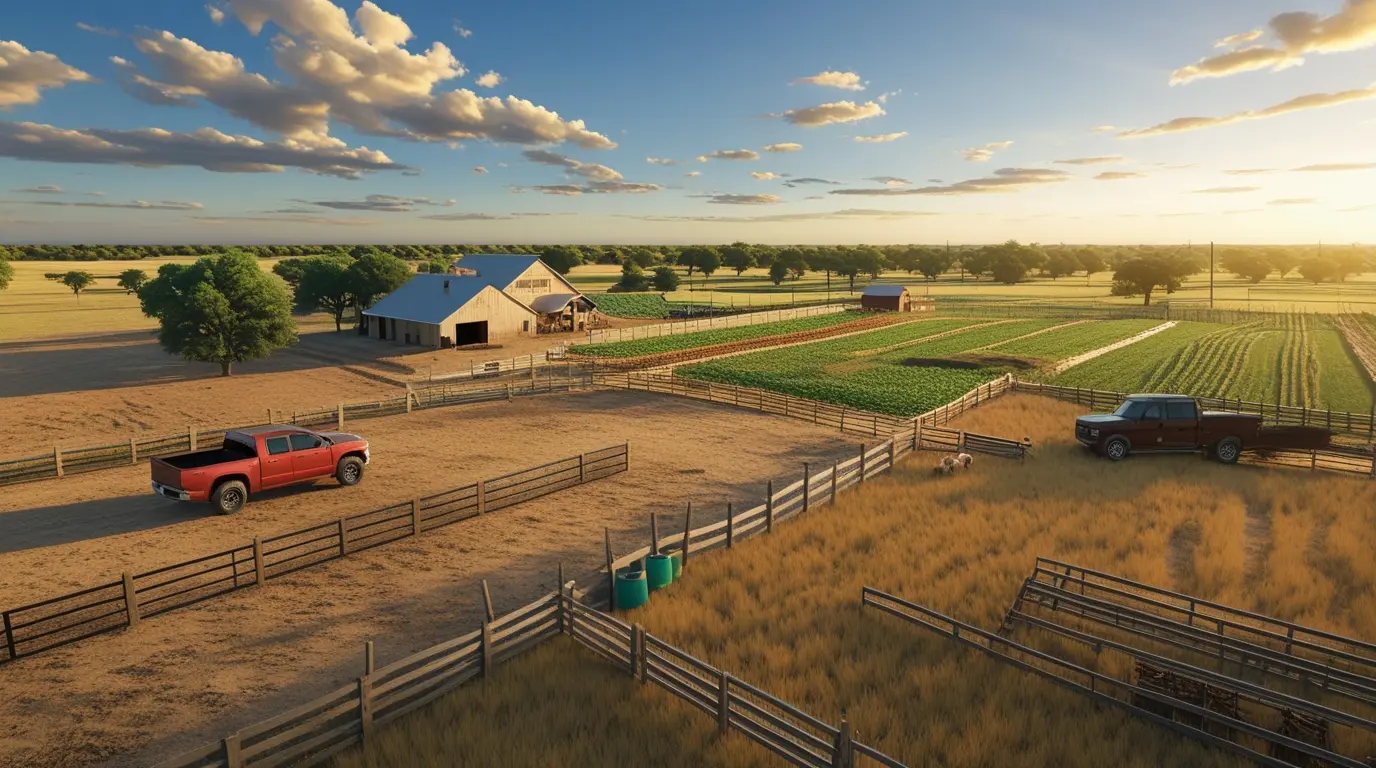
Texas attracts more new farmers than almost any other U.S. state. Cheap land in some regions, long growing seasons, strong local food demand, and a deep agricultural culture make it appealing. But here’s the honest truth many beginners discover late:
Farming in Texas is not easy just because it’s Texas.
The weather is extreme, water access matters more than soil in many areas, and what works in East Texas may fail completely in West Texas.
This guide is written for real beginners and intermediate learners who want to understand farming in Texas before spending money. It’s practical, experience-based, and focused on what actually works today—not theory.
Starting a farm in the United States is a dream for many people—but the first big question almost everyone asks is the same: Farming Startup Cost in the USA: A Realistic, Beginner-Friendly Breakdown
Why Farming in Texas Is Different From Other States
Texas is not one farming environment—it’s many.
The state spans multiple climate zones, soil types, and rainfall patterns. According to Wikipedia’s Agriculture in Texas overview, Texas leads the U.S. in total farmland acreage and livestock production, but crop success varies dramatically by region.
Key challenges beginners face:
- Unpredictable weather (droughts, floods, heat waves)
- Water rights and irrigation limits
- Large distances between markets
- Soil that often needs improvement
The upside? If you match the right farm type to the right Texas region, opportunities are real.
Texas agriculture is deeply rooted in livestock and large-scale land use, and according to Wikipedia’s overview of Agriculture in Texas, the state leads the U.S. in total farmland acreage and cattle production, making regional farming decisions especially important for beginners.
👉 https://en.wikipedia.org/wiki/Agriculture_in_Texas
Understanding Texas Farming Regions (This Matters More Than You Think)
Before choosing crops or animals, you must understand where you’re farming.
Major Texas Agricultural Regions
| Region | Best For | Main Challenges |
|---|---|---|
| East Texas | Vegetables, poultry, timber | High humidity, pests |
| Central Texas | Goats, sheep, vegetables | Thin soil, drought |
| South Texas | Citrus, vegetables | Heat, water access |
| West Texas | Cattle, cotton | Low rainfall |
| Panhandle | Grains, livestock | Cold winters, wind |
Many beginner failures happen because people copy farm ideas from another part of Texas that doesn’t match their land.

Is Farming in Texas Profitable for Beginners?
Yes—but only with realistic expectations.
Texas favors:
- Low-input farming
- Livestock over water-heavy crops
- Direct-to-consumer sales
- Diversified income
Small Texas farms rarely succeed by growing commodity crops like corn or cotton. Those markets are dominated by large operations.
Profitable beginner-friendly options include:
- Beef cattle (small herds)
- Goats and sheep
- Poultry and eggs
- Market vegetables (near cities)
- Hay production
- Specialty crops (herbs, honey)
This guide is written for USA readers who want a clear, honest understanding of American farming
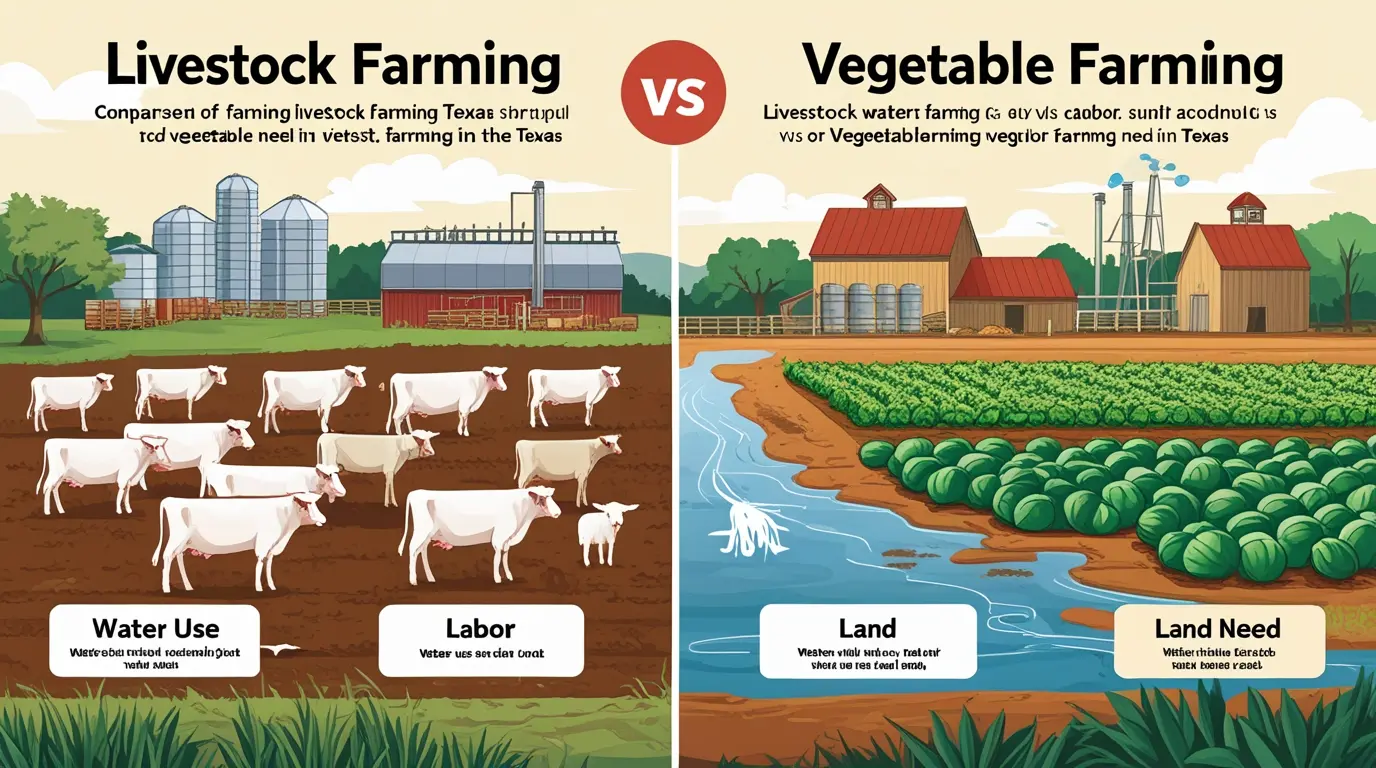
Choosing the Right Type of Farming in Texas
1. Livestock Farming (Most Beginner-Friendly)
Texas is livestock country for a reason.
Cattle Farming
- High land requirement
- Lower daily labor
- Strong Texas beef market
- Higher upfront cost
Better for beginners:
- Leasing land
- Starting with small herds
- Grass-fed or local beef sales
Goat and Sheep Farming
Excellent for Central and West Texas.
Advantages:
- Lower startup cost than cattle
- Thrive in dry conditions
- Strong ethnic and specialty markets
- Less water demand
2. Poultry Farming in Texas
Poultry works well statewide if heat is managed.
Common options:
- Pasture-raised eggs
- Broilers for local sales
- Ducks (heat-tolerant breeds)
Key considerations:
- Shade and airflow
- Predator control
- Local egg laws (county-based)
Texas has strong demand for farm-fresh eggs, especially near Austin, Dallas, Houston, and San Antonio.
3. Vegetable Farming (Location Is Everything)
Vegetable farming in Texas is market-driven, not land-driven.
Best locations:
- Near metro areas
- Access to irrigation
- Farmers markets or CSA demand
Popular Texas crops:
- Tomatoes
- Peppers
- Okra
- Squash
- Leafy greens (fall/winter)
Summer heat is brutal. Many Texas vegetable farmers earn more in fall and winter seasons than summer.
As the United States moves closer to 2026, one question is becoming common among small farmers, landowners, and agri-entrepreneurs:
“Is Greenhouse Farming Profit in USA, or is it just another expensive farming trend?”
Land Considerations for Beginner Farmers in Texas
Buying vs Leasing Land
Texas land prices vary wildly:
- $2,000–$4,000/acre (remote West Texas)
- $10,000+/acre (near cities)
Most beginners should lease first.
Benefits of leasing:
- Lower risk
- Flexibility
- Easier exit if plans change
Soil Reality in Texas
Texas soil often needs:
- Organic matter
- pH adjustment
- Erosion control
Texas A&M AgriLife Extension (a trusted .edu resource) provides free soil testing guidance and region-specific advice.
New farmers can get region-specific soil, crop, and livestock guidance from Texas A&M AgriLife Extension, a trusted educational resource that provides free support tailored to different Texas farming regions.
👉 https://agrilifeextension.tamu.edu
Water, Irrigation, and Texas Farming Laws
Water is the number one limiting factor in Texas farming.
Important points:
- Water rights are regulated
- Wells can be expensive
- Rainfall is unreliable
Many successful Texas farms:
- Use drip irrigation
- Harvest rainwater
- Choose drought-tolerant enterprises
Before buying land, confirm:
- Well depth
- Irrigation access
- Local water rules
Texas Farm Startup Costs (Beginner Reality Check)
Approximate beginner startup costs:
| Farm Type | Estimated Startup Cost |
|---|---|
| Poultry (small scale) | $5,000–$20,000 |
| Goat/sheep farm | $15,000–$40,000 |
| Market vegetables | $10,000–$35,000 |
| Beekeeping | $3,000–$10,000 |
| Mixed small farm | $20,000–$60,000 |
These assume:
- Small scale
- Used equipment
- Owner-operated labor
Texas Farming Regulations Beginners Must Know
Business & Legal Basics
- Register farm business (LLC or sole proprietorship)
- Get agricultural exemption (Ag exemption)
- Carry farm liability insurance
Licensing, labeling, and food-sale rules in Texas vary by product, and beginners should always verify requirements using official resources from the Texas Department of Agriculture before selling farm products.
👉 https://www.texasagriculture.gov
Selling Food in Texas
Rules vary by product:
- Fresh produce → minimal permits
- Eggs → labeling rules apply
- Meat → USDA or state-inspected facilities required
Texas Department of Agriculture (.gov) resources are reliable for updated rules.
Marketing Farm Products in Texas
Texas rewards direct marketing.
Best channels:
- Farmers markets
- Farm stands
- CSA programs
- Restaurants
- Online local groups
Texas consumers value:
- Local
- Transparency
- Texas-grown branding
Common Beginner Mistakes in Texas Farming
Avoid these:
- Ignoring water access
- Starting too big
- Choosing crops unsuited to heat
- Buying land before testing ideas
- Skipping local market research
Most failures are planning failures, not effort failures

Frequently Asked Questions (FAQ)
Is Texas a good state for beginner farmers?
Yes, if beginners choose the right farm type and location. Livestock, poultry, and direct-market farms perform best.
What is the easiest farming business to start in Texas?
Poultry, goats, sheep, and beekeeping are among the easiest due to lower startup costs and climate compatibility.
How much land do I need to start farming in Texas?
You can start with:
- Less than 1 acre (poultry, vegetables)
- 5–20 acres (goats, sheep)
- 20+ acres (cattle)
Can I farm part-time in Texas?
Yes. Many successful Texas farmers start part-time while keeping another job.
Does Texas offer help for new farmers?
Yes. USDA and Texas A&M AgriLife Extension provide grants, loans, and free education.
At the federal level, the USDA Farm Service Agency offers loans, grants, and technical assistance specifically designed to help beginning farmers and ranchers reduce startup risk.
👉 https://www.fsa.usda.gov
Final Takeaway: Texas Rewards Smart, Patient Farmers
Farming in Texas is not about fighting nature—it’s about working with it.
If you:
- Respect water limits
- Match farming type to region
- Start small
- Focus on local markets
Texas can offer real opportunity for beginners.
The farmers who succeed here aren’t the ones with the biggest land—they’re the ones with the best planning.
Author Bio
Written by Janardan Tharkar – SEO content researcher with practical experience in blogging, digital publishing, and content optimization.

Written by Janardan Tharkar – an agriculture content researcher and blogging professional with practical experience in farming education, digital publishing, and SEO content optimization. Janardan focuses on modern U.S. agriculture trends, smart farming technologies, irrigation systems, crop development, organic farming practices, and farmer-support programs to create helpful, practical, and trustworthy content for American readers.