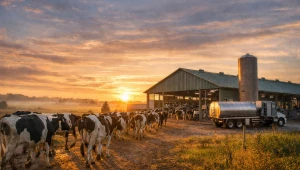
The Economics Behind Every Gallon of Milk
Milk appears to be one of the most stable foods in the modern grocery economy. Unlike many commodities that experience visible price spikes or shortages, dairy products maintain a relatively consistent presence on supermarket shelves. Consumers often assume that milk production is a simple agricultural process—cows produce milk, farms ship it to processors, and the final product arrives in stores.
In reality, dairy production operates within one of the most complex economic systems in agriculture.
A modern dairy farm functions as both a biological system and an industrial enterprise. Cows must be milked multiple times each day, feed must be delivered consistently, and milk must enter processing channels almost immediately because it is highly perishable. This biological rhythm means dairy farmers cannot easily adjust production when market prices decline.
Instead, they operate within a narrow financial margin where Cost to Produce Milk must be carefully controlled in order to maintain profitability.
Several macroeconomic forces now shape the cost of producing milk:
- global grain markets influencing feed prices
- labor shortages affecting agricultural wages
- rising capital investment in modern dairy infrastructure
- interest rates influencing farm credit
- environmental regulations affecting manure management
Economic research from the USDA Economic Research Service consistently shows that feed, labor, and capital investments represent the largest cost categories in dairy farming.
When these expenses increase faster than milk prices, dairy farmers experience immediate financial pressure.
Understanding dairy farm production cost breakdown therefore requires analyzing both farm-level management decisions and the global economic forces shaping agricultural markets.
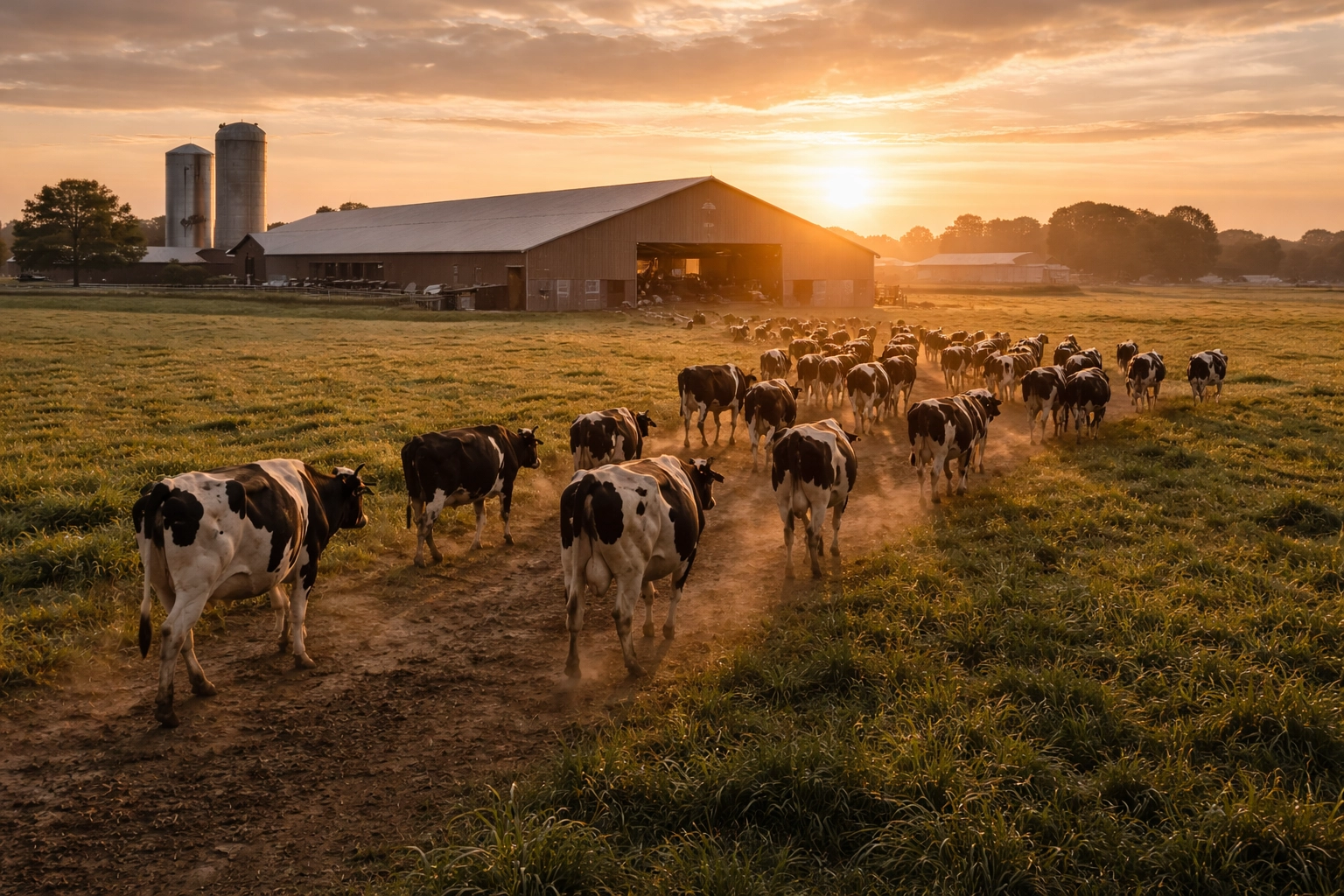
What Is Dairy Farm Production Cost?
Dairy farm production cost refers to the total expenses required to produce milk on a dairy farm. These costs include feed, labor, veterinary care, energy, equipment depreciation, infrastructure investment, and land expenses.
The difference between milk revenue and these operational costs determines whether a dairy farm operates profitably.
Because milk production occurs continuously throughout the year, cost management plays a critical role in the long-term sustainability of dairy farms.
Also Read:
Why U.S. Milk Production Is Changing in 2026 — Inside the Dairy Market Outlook
From feed costs to herd productivity, several factors are reshaping milk production in the United States. See what the latest dairy market outlook reveals for 2026.
Major Cost Components in Dairy Farming
Dairy farming involves numerous operational inputs, but several cost categories dominate the economic structure of milk production.
Dairy Production Cost Breakdown
| Cost Category | Share of Total Cost |
|---|---|
| Feed | 40–60% |
| Labor | 15–20% |
| Capital & Equipment | 15–25% |
| Herd Health & Veterinary | 5–8% |
| Energy & Utilities | 3–6% |
This cost structure highlights why dairy farmers closely monitor feed markets.
According to production statistics from the USDA National Agricultural Statistics Service, fluctuations in corn and soybean prices are among the most significant drivers of dairy farm profitability.
Feed Costs: The Dominant Expense in Milk Production
Feed represents the largest operational cost in dairy farming.
A high-producing dairy cow typically consumes 45–60 pounds of feed per day, depending on milk yield and nutritional requirements.
Common dairy feed ingredients include:
- corn silage
- alfalfa hay
- soybean meal
- grain supplements
- minerals and vitamins
Because these inputs originate from global commodity markets, feed prices fluctuate significantly.
Drought conditions, fertilizer costs, and export demand can all affect crop production and grain prices.
Analysis from the Congressional Budget Office indicates that livestock producers are particularly sensitive to grain market volatility because feed costs represent the majority of operating expenses.
Many dairy farms attempt to reduce feed risk by producing forage crops or purchasing feed contracts during favorable market conditions.
Labor Costs in Dairy Production
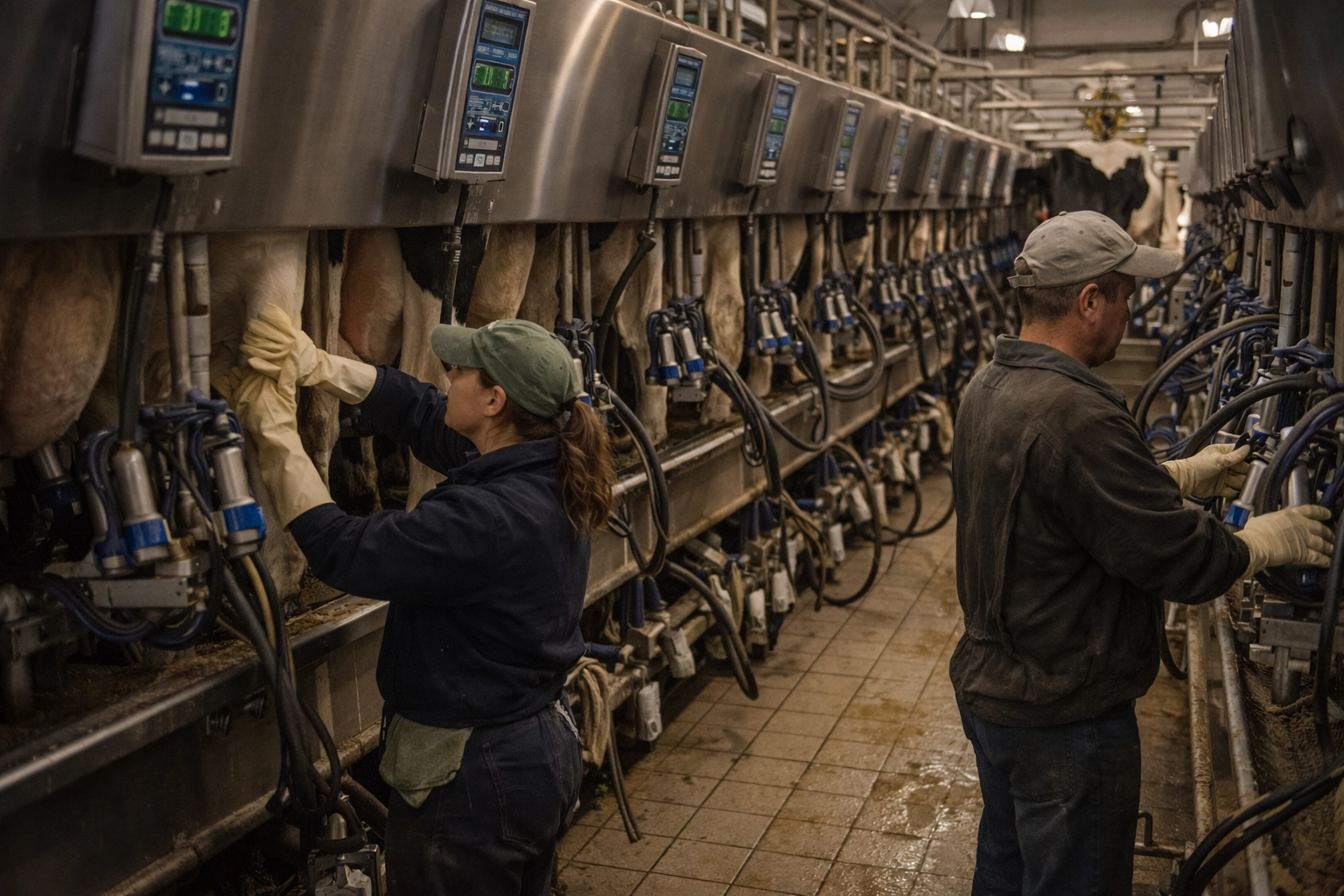
Dairy farming requires a consistent workforce year-round.
Unlike crop agriculture, where labor demand often peaks during planting and harvest seasons, dairy farms must maintain workers every day for milking operations, feeding systems, and herd management.
Labor costs typically account for 15–20 percent of dairy production expenses.
Workers perform tasks such as:
- operating milking equipment
- preparing feed rations
- monitoring cow health and reproduction
- maintaining farm machinery
- caring for calves
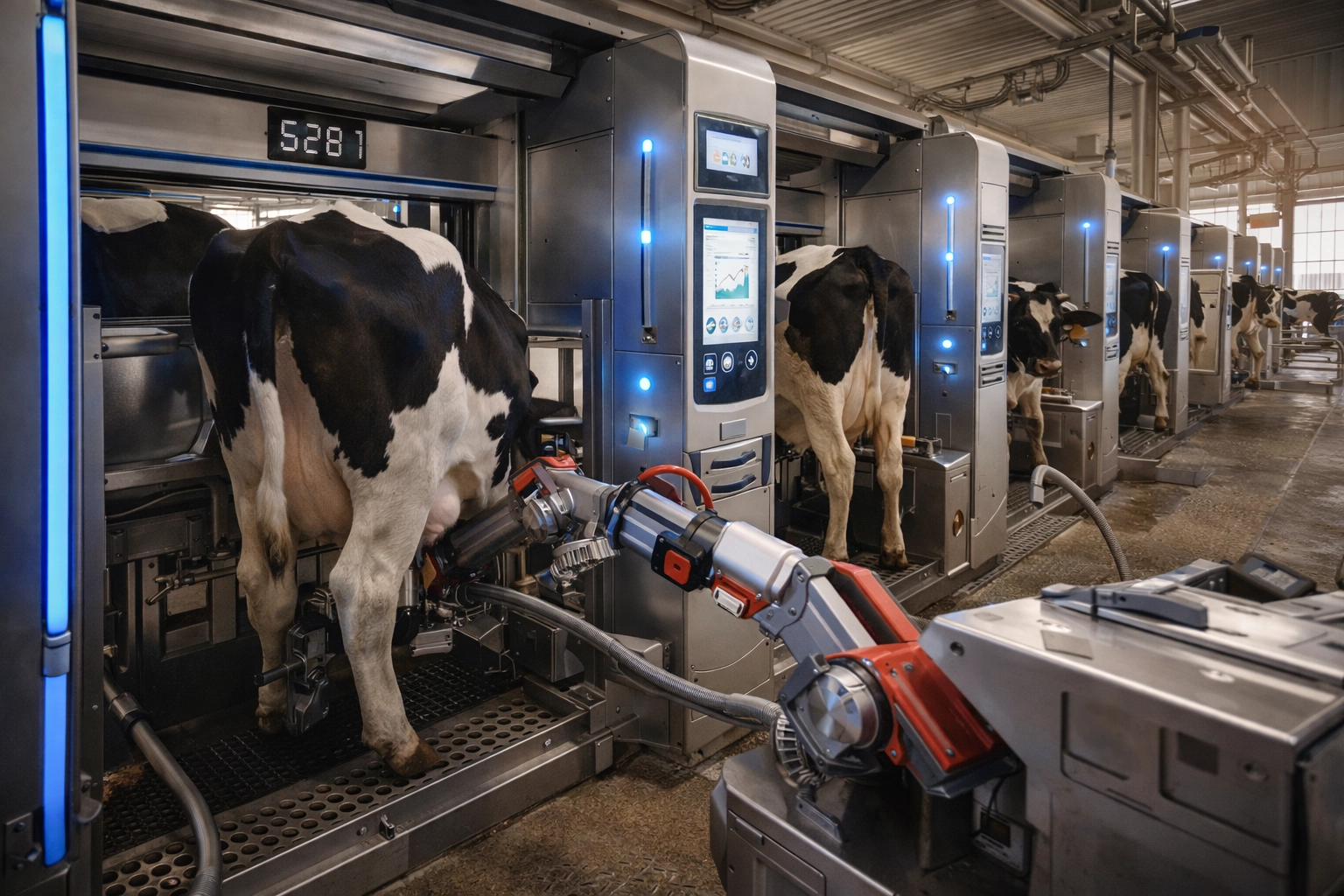
Labor shortages in rural areas have increased the importance of automation technologies such as robotic milking systems.
Capital Investment and Infrastructure
Modern dairy farms require substantial capital investment.
Key infrastructure components include:
- milking parlors or robotic milking systems
- barns and housing structures
- manure management systems
- feed storage facilities
- milk cooling tanks
Large dairy farms often invest millions of dollars in infrastructure.
Most of these investments are financed through agricultural loans.
Agricultural credit reports from the Federal Reserve System indicate that rising interest rates can significantly increase financial pressure on farms carrying large debt loads.
Also Read:
A Feedlot Reality: What It Costs to Feed a Beef Cow in 2026
From corn prices to feed rations, explore the real economics behind feeding beef cattle and how rising feed costs impact feedlot profitability.
Cost per Cow: Modeling Dairy Farm Economics
Examining dairy production costs at the individual cow level illustrates how narrow dairy farm profit margins can be.
A typical dairy cow in the United States produces 22,000–26,000 pounds of milk annually.
Example Annual Cost per Cow
| Cost Category | Estimated Annual Cost |
|---|---|
| Feed | $2,100 – $2,700 |
| Labor | $700 – $1,000 |
| Capital & Equipment | $900 – $1,300 |
| Veterinary & Breeding | $250 – $400 |
| Energy & Utilities | $150 – $300 |
Total production costs generally range from $4,200 to $5,700 per cow annually.
If milk prices average $20 per hundredweight and a cow produces 24,000 pounds of milk per year, revenue equals approximately $4,800 per cow.
This narrow margin explains why dairy farms are highly sensitive to feed price increases and milk price fluctuations.
Dairy Profitability Model: Milk Price vs Feed Margin
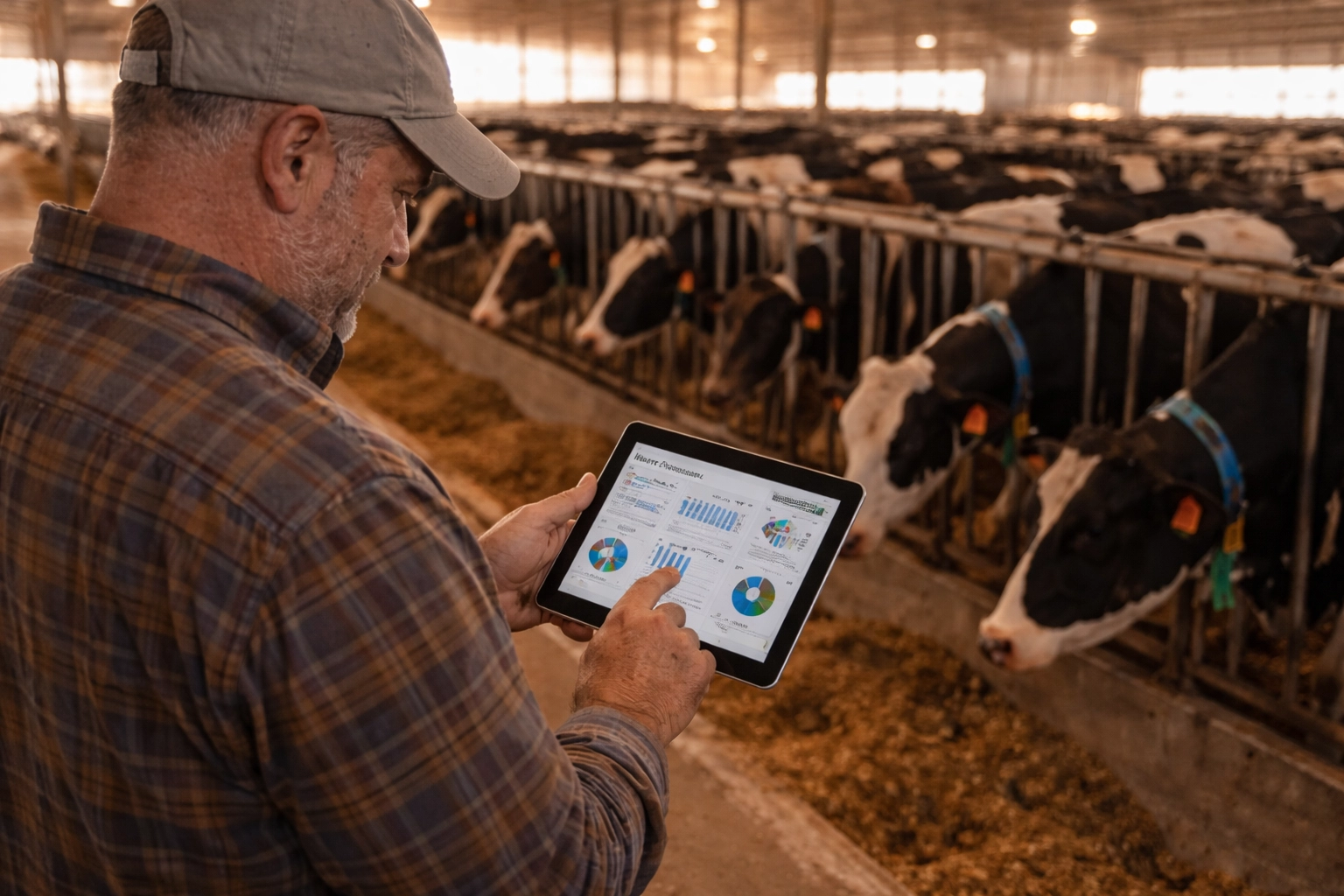
One of the most widely used metrics in dairy economics is the milk-feed margin, which compares milk revenue with feed costs required for production.
| Milk Price ($/cwt) | Feed Cost Level | Profit Outcome |
|---|---|---|
| $24 | Low | Strong profit |
| $21 | Moderate | Sustainable |
| $19 | High | Break-even |
| $17 | High | Loss |
The Dairy Margin Coverage program administered by the US Department of Agriculture provides financial support when the margin between milk prices and feed costs falls below certain thresholds.
Historical Dairy Crisis Case Studies
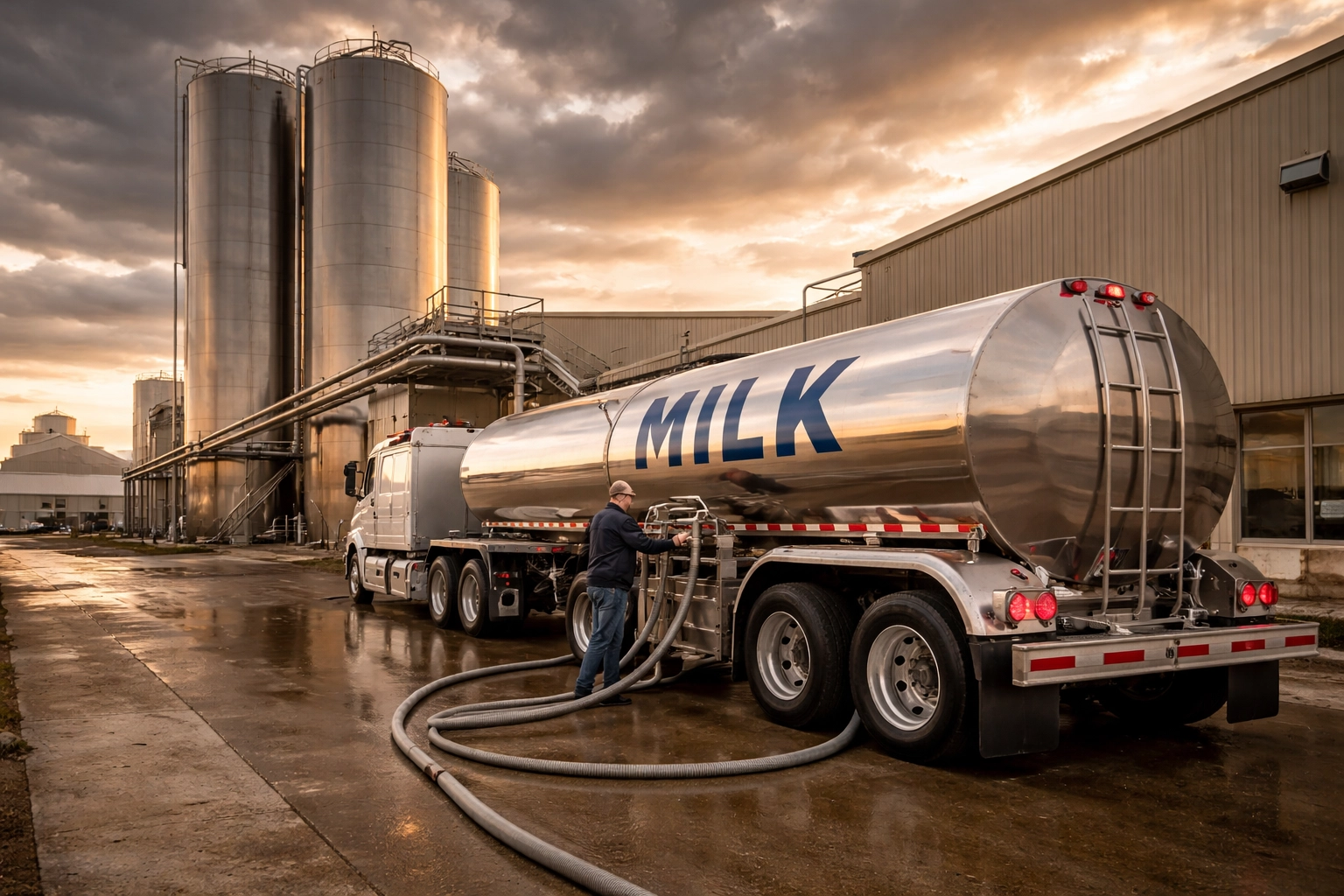
Dairy markets periodically experience severe economic disruptions.
Understanding these events helps explain the financial vulnerability of dairy farms.
The 2009 Global Dairy Crisis
The financial crisis of 2008–2009 triggered one of the most severe downturns in dairy markets.
Global demand for dairy products fell sharply while milk production remained high.
Milk prices dropped dramatically, forcing many farms into financial distress.
Thousands of dairy farms closed during this period, particularly in regions with high production costs.
The 2015 Dairy Oversupply Crisis
In the early 2010s, strong global demand encouraged dairy farmers to expand herd sizes.
However, when demand slowed in 2015, global markets became oversupplied.
Milk prices declined while feed costs remained relatively high, compressing farm profit margins.
The 2020 Pandemic Supply Chain Shock
The COVID-19 pandemic disrupted dairy markets in unexpected ways.
Restaurant closures dramatically reduced cheese demand, while processing facilities struggled to adapt to shifting consumption patterns.
In some regions, dairy farmers were forced to dispose of milk that could not enter the supply chain.
These crises demonstrate how sensitive dairy markets are to economic shocks.
US Dairy Cost Map Analysis
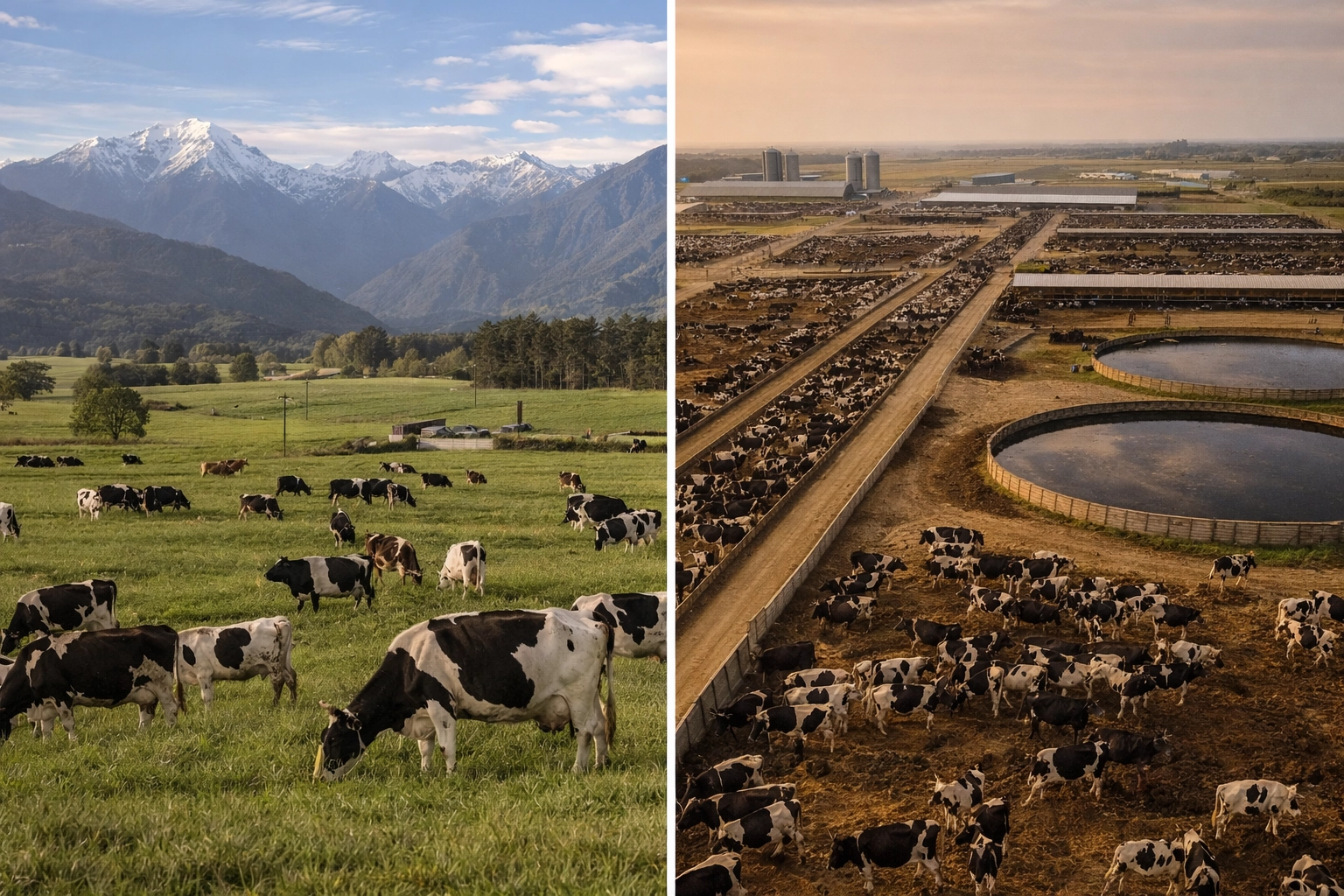
Dairy production costs vary widely across different regions of the United States.
Major Dairy Regions
| Region | Key States | Cost Characteristics |
|---|---|---|
| Upper Midwest | Wisconsin, Minnesota | Moderate costs, strong dairy infrastructure |
| West | California, Idaho | Large farms, higher capital investment |
| Northeast | New York, Pennsylvania | Smaller farms, higher operating costs |
| Southwest | Texas, New Mexico | Large herd operations |
States in the Upper Midwest maintain strong dairy industries due to their proximity to feed production and established dairy infrastructure.
Meanwhile, western states often operate very large dairy farms capable of producing milk at significant scale.
A Day on a Dairy Farm
At four o’clock in the morning, the lights in a dairy barn flicker on.
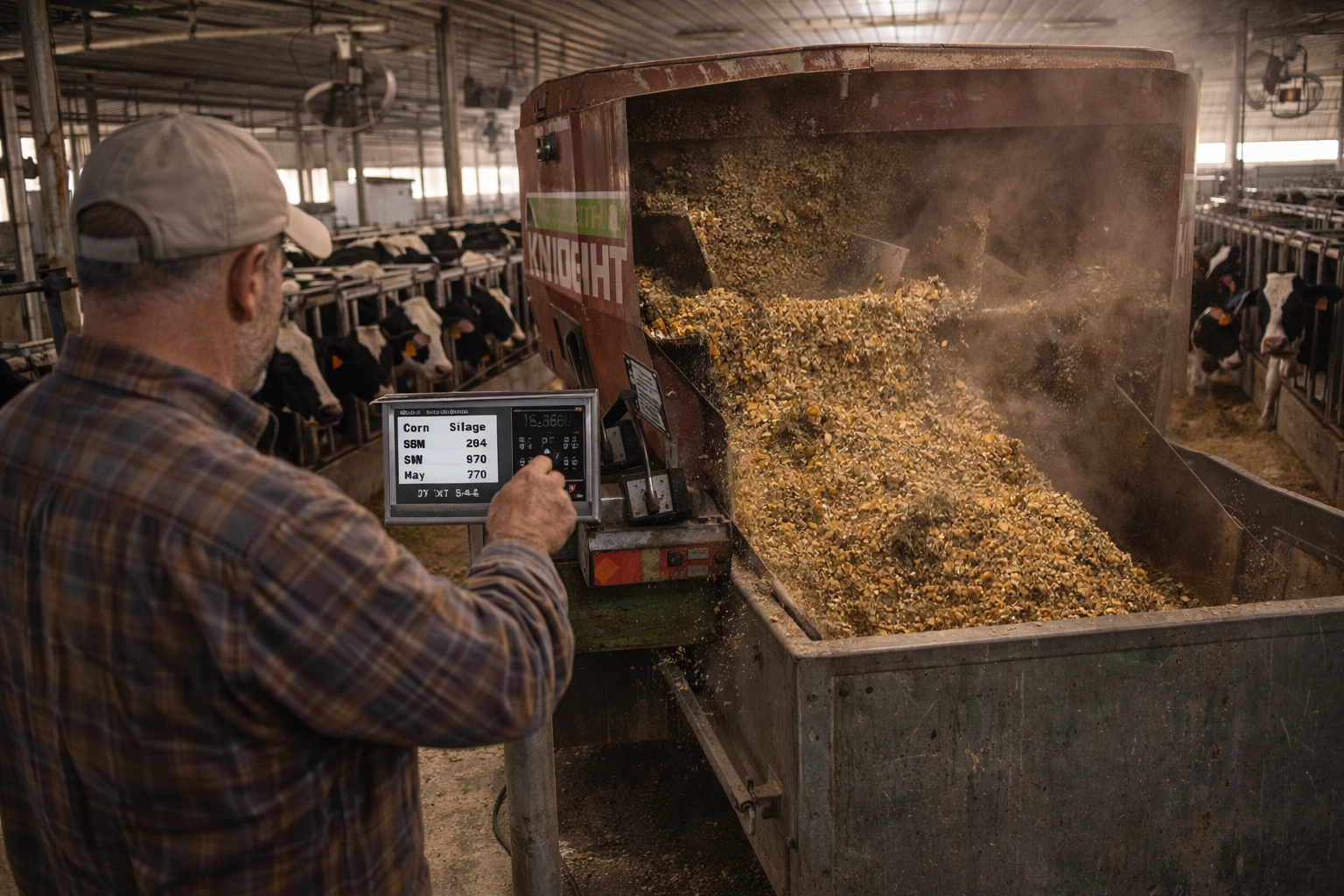
Milking crews begin their first shift while cows move slowly toward the milking parlor. Feed mixers prepare carefully balanced rations of corn silage and soybean meal.
By sunrise, thousands of gallons of milk have already entered cooling tanks.
For the farmer managing this operation, every decision carries economic consequences.
If feed prices rise, ration formulas must change. If labor becomes scarce, milking schedules must adjust. If milk prices decline, expansion plans may be delayed.
These daily operational choices illustrate how macroeconomic forces translate into real farm-level decisions.
Technological Innovation in Dairy Farming
Technological innovation continues to reshape dairy production economics.
Modern dairy farms increasingly rely on:
- robotic milking systems
- automated feeding equipment
- precision livestock monitoring sensors
- genetic improvement programs
These technologies improve productivity but also require substantial capital investment.
As a result, dairy farms must balance technological adoption with financial risk management.
Also Read:

March 2026 WASDE Report Analysis: Key Changes in Global Corn, Soybeans, and Wheat Supply
The March 2026 WASDE report reveals important changes in global corn, soybean, and wheat supply. Explore how these updates could influence crop prices, farm planning, and global agricultural markets.
FAQ: Dairy Farm Production Costs
What is the largest cost in dairy farming?
Feed typically accounts for 40–60 percent of total dairy production expenses, making it the largest cost category.
How much does it cost to produce milk in the United States?
Production costs typically range between $18 and $22 per hundredweight, depending on feed prices and farm efficiency.
Why do dairy farmers struggle financially?
Profitability depends on the margin between milk prices and production costs. Rising feed prices or declining milk prices can reduce farm income quickly.
Are larger dairy farms more efficient?
Large farms benefit from economies of scale but require higher capital investment and financial management.
The Future Economics of Dairy Farming
Dairy farming represents one of the most economically complex sectors in modern agriculture.
While milk may appear to be a simple everyday product, its production depends on a sophisticated network of feed markets, labor systems, financial investment, and technological innovation.
Feed costs dominate the economic structure of dairy farms, while labor, infrastructure, and energy expenses add additional layers of complexity.
Because dairy production occurs continuously, farmers must navigate these economic pressures in real time.
Small changes in grain prices, milk demand, or interest rates can dramatically affect profitability.
Understanding dairy farm production cost breakdown therefore provides valuable insight into the broader dynamics of agricultural markets and food system stability.
As global dairy demand continues to evolve, the ability of dairy farms to manage costs, adopt new technology, and adapt to changing market conditions will determine the future of milk production worldwide.

Written by Janardan Tharkar – an agriculture content researcher and blogging professional with practical experience in farming education, digital publishing, and SEO content optimization. Janardan focuses on modern U.S. agriculture trends, smart farming technologies, irrigation systems, crop development, organic farming practices, and farmer-support programs to create helpful, practical, and trustworthy content for American readers.