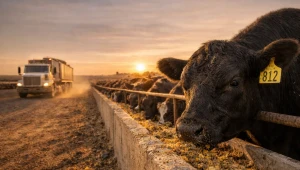
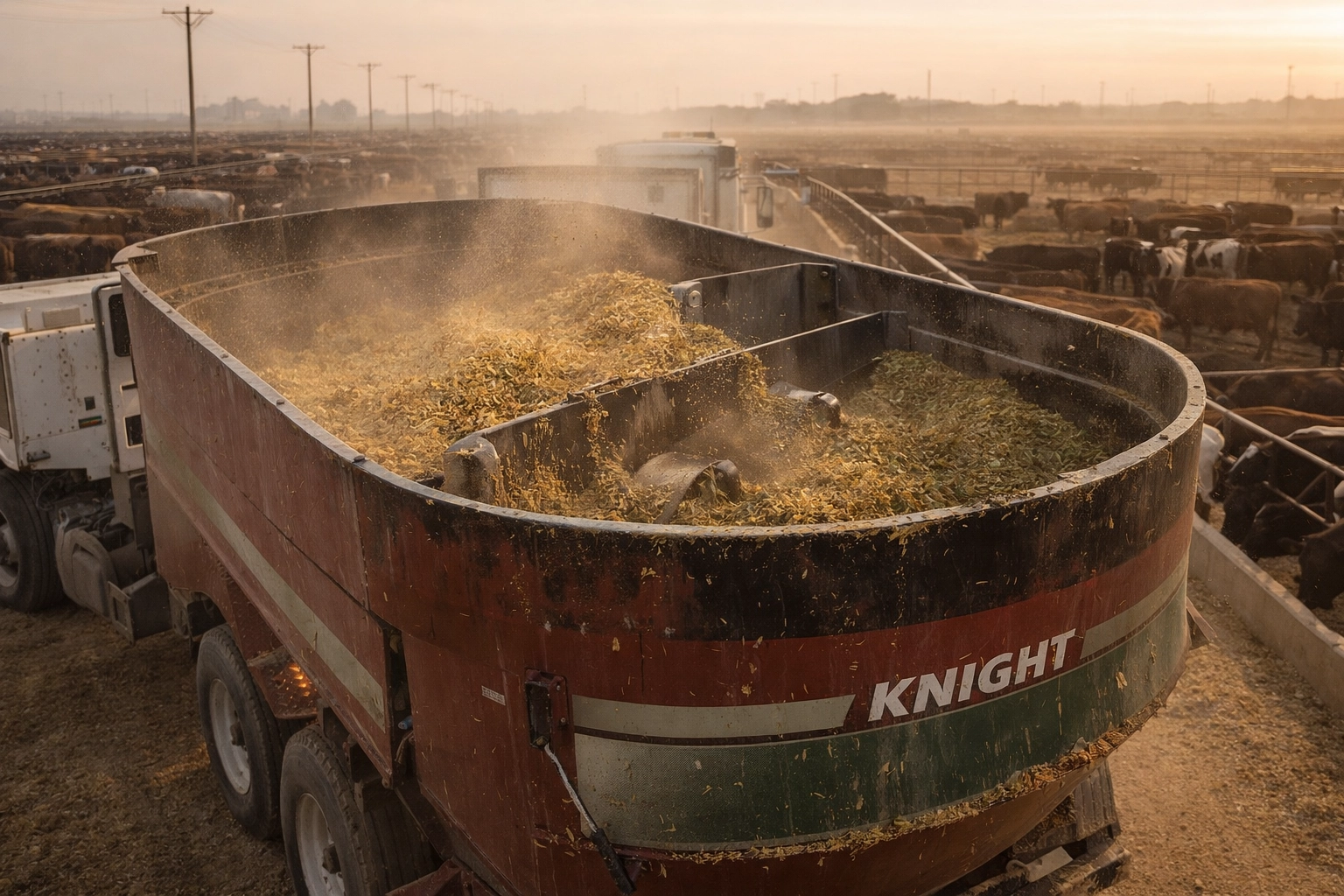
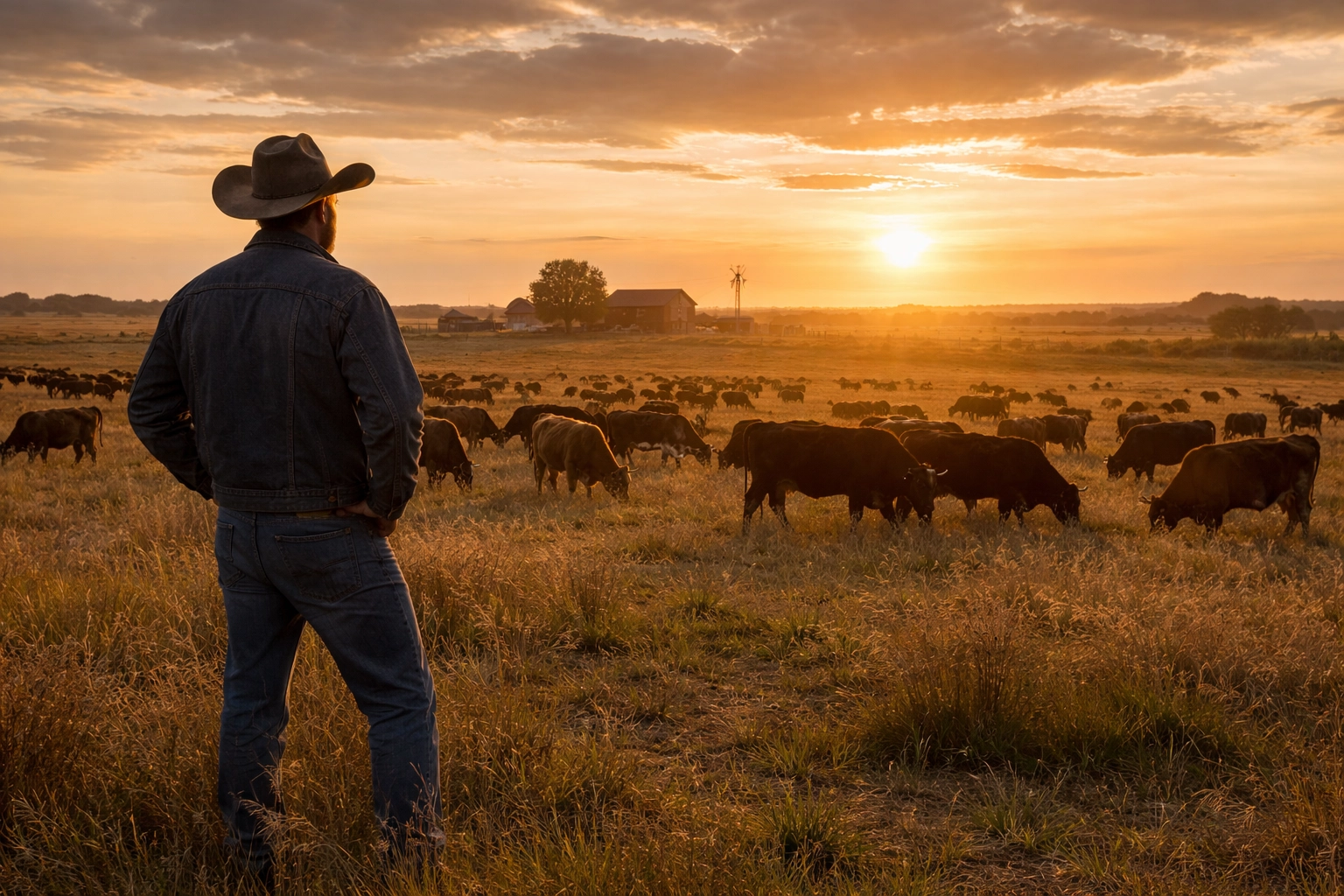
Early morning light spreads across a feedlot outside Garden City, Kansas. Dust rises behind a feed truck as it rolls slowly past long rows of bunks. The cattle already know the sound. Heads lift. Hooves shuffle forward. Feed time is one of the few predictable moments in a business that has grown increasingly uncertain.
For the operator leaning on the fence, the math begins before sunrise.
How much feed went out yesterday?
How much did it costs to feed?
And more importantly—what will it cost tomorrow?
In 2026, that quiet calculation—feed cost per head per day—has become one of the most closely watched numbers in the U.S. cattle industry. It sits at the intersection of grain markets, drought patterns, energy prices, transportation costs, and agricultural policy decisions made far from the feedlot itself.
For beef producers across the Plains and Midwest, costs to feed are no longer just another operational expense. They are the variable that determines whether a feeding cycle produces a profit—or simply keeps the operation moving.
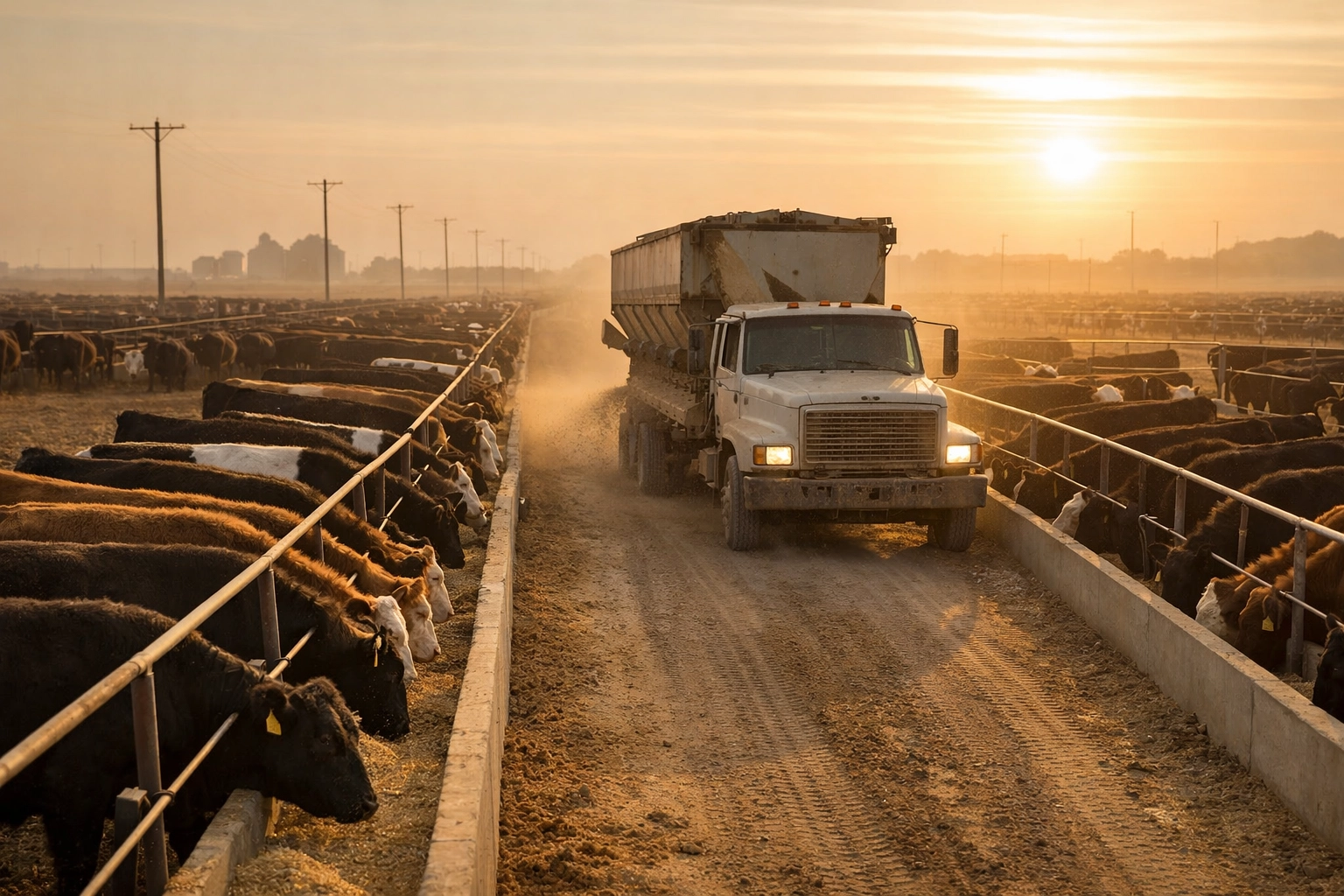
The Metric That Quietly Drives the Beef Industry
In most commercial feedlots, feed represents 60–75% of total finishing costs for beef cattle. That ratio has been relatively stable for decades, but the volatility behind it has intensified.
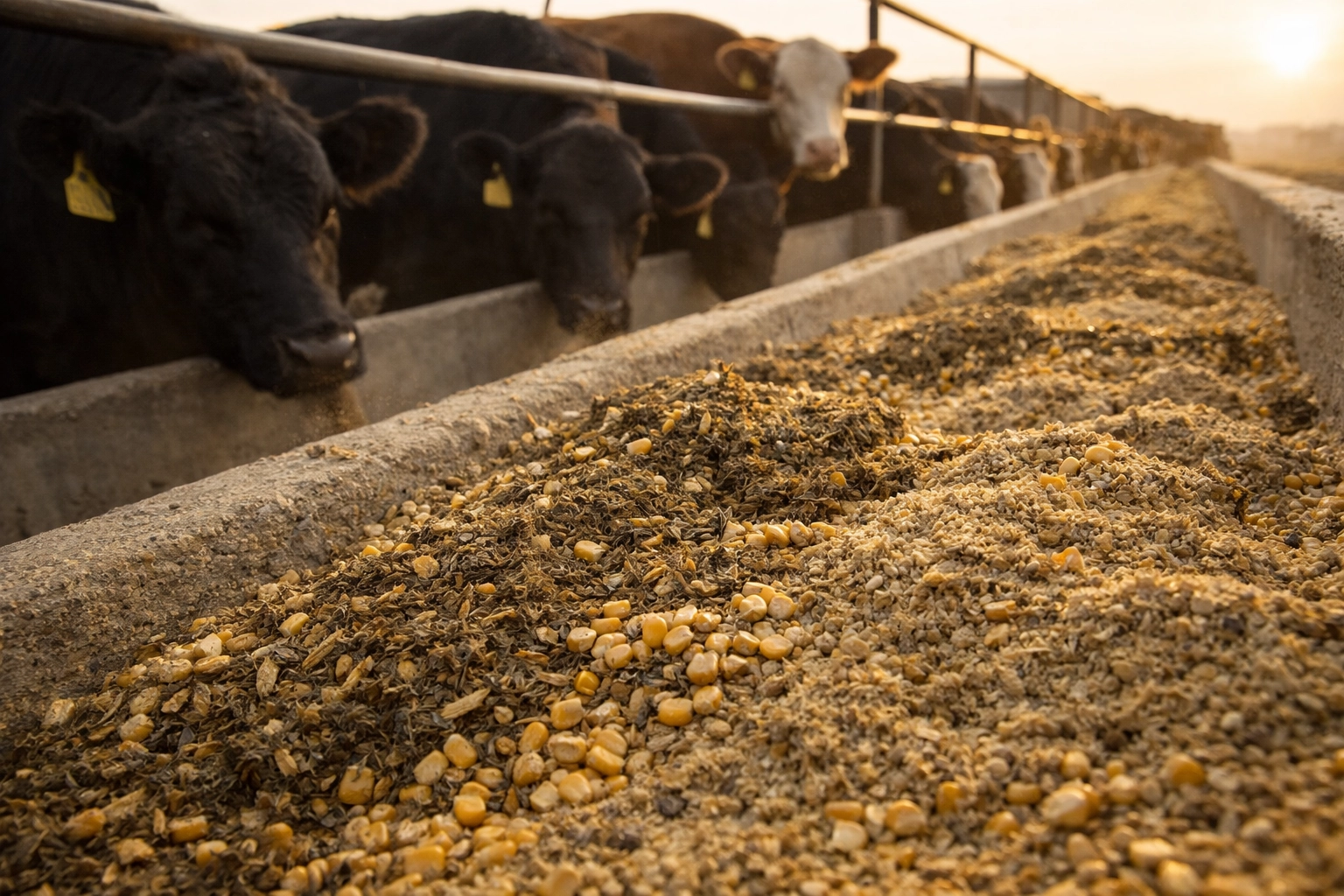
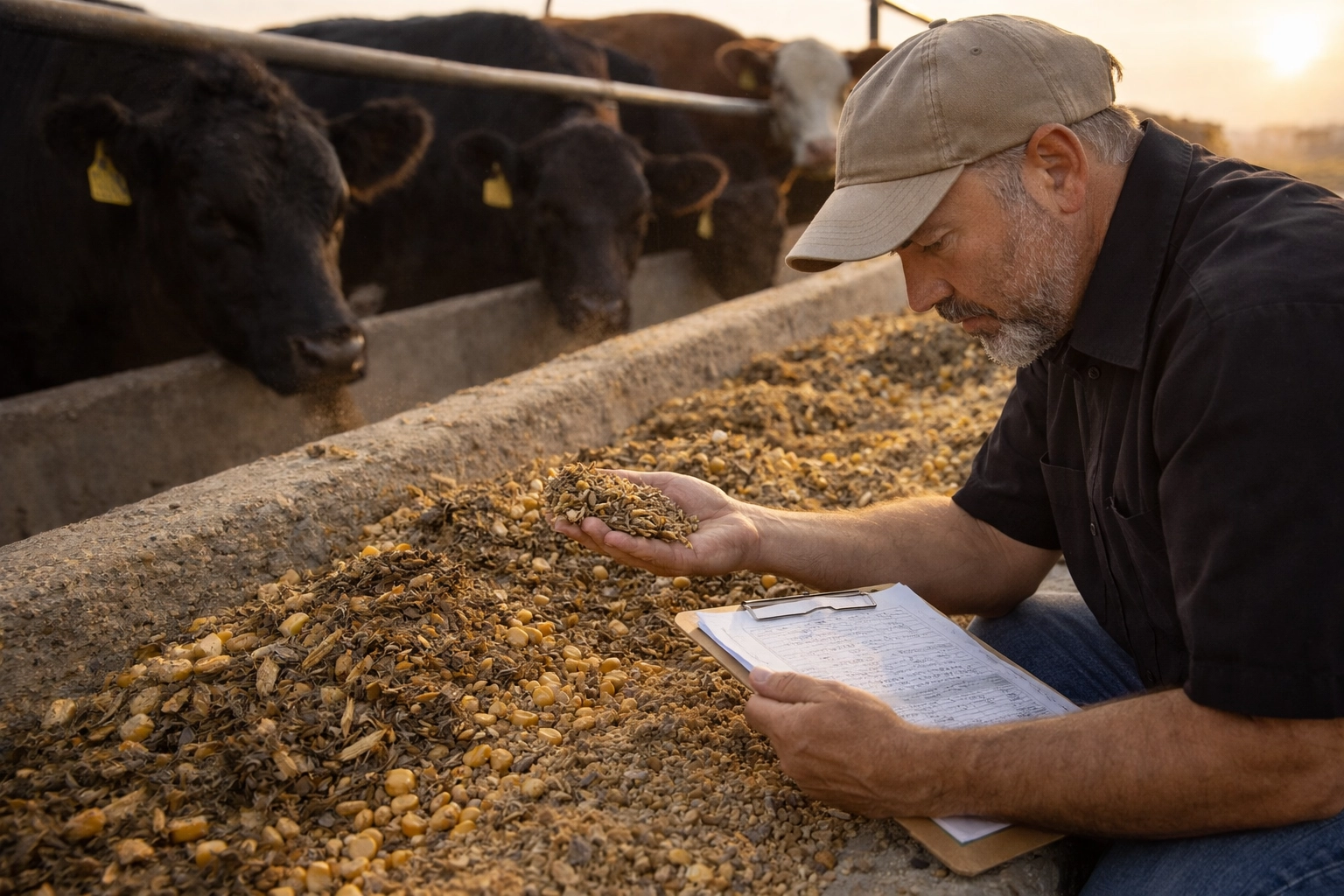
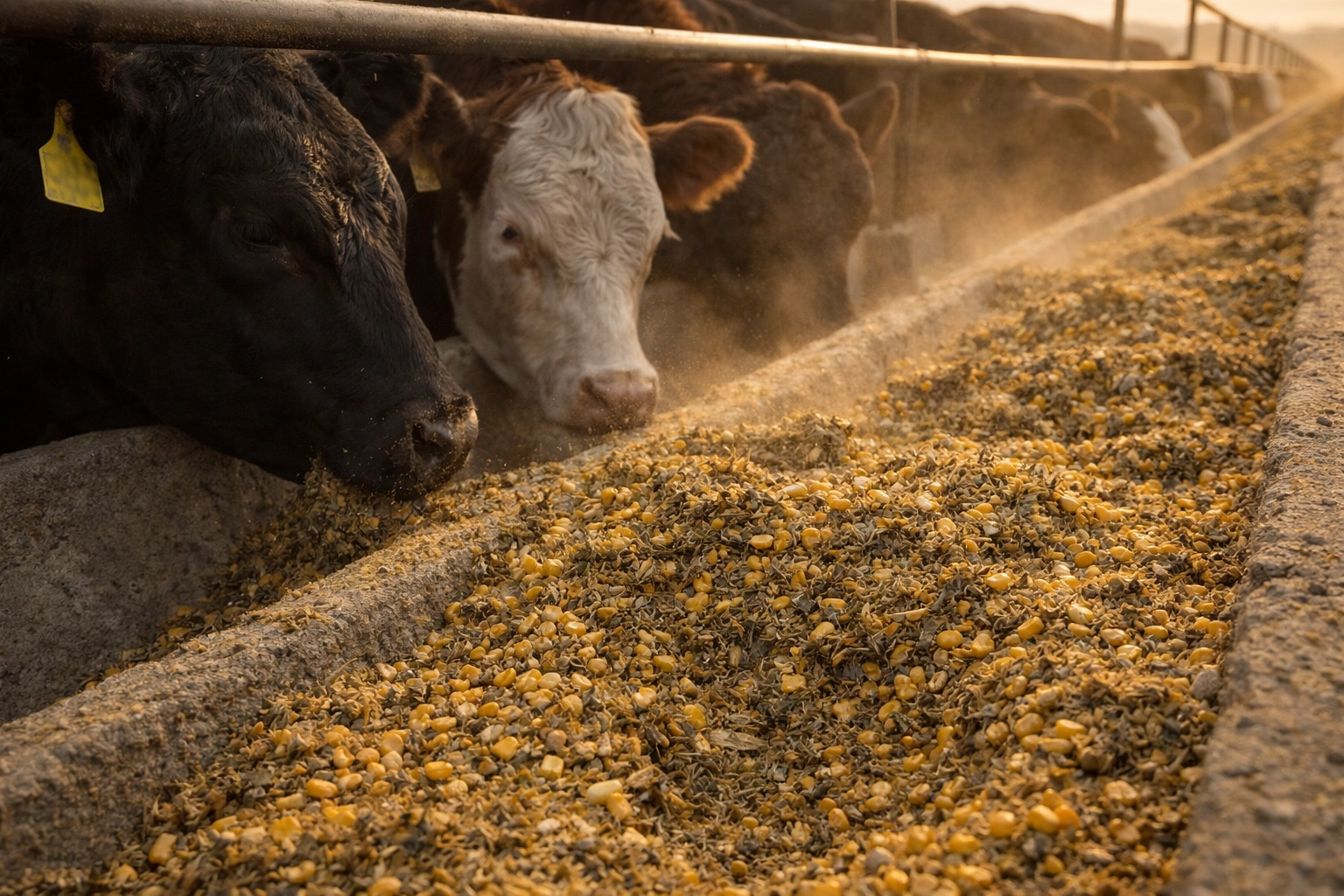
A finishing ration for beef cattle typically includes three core ingredients:
- Corn
- Protein supplements such as distillers grains
- Roughage like hay or silage
The exact mixture varies depending on availability and regional economics, but corn remains the backbone of the ration in most U.S. feedlots.
When corn prices rise, feeding costs move almost immediately.
A useful rule of thumb used across the industry: every $1 increase in corn prices per bushel can raise feeding costs by $25–$30 per head over a full finishing period.
According to market data from the U.S. Department of Agriculture, finishing cattle typically consume 25–30 pounds of feed per day during the final stage before slaughter. Detailed livestock feeding data and cost structures can be found in USDA livestock reports:
https://www.usda.gov/
Multiply that consumption across 120 to 180 feeding days, and small shifts in grain markets quickly translate into major cost changes.
That sensitivity explains why feedlots track grain markets almost as closely as crop farmers do.
Read Also :
Inside the Precision agriculture Boom Improving Crop Yields
Precision agriculture technologies like GPS, sensors, and data analytics are helping farmers improve crop yields, reduce input costs, and make smarter field management decisions.
Feed Costs in 2026: The Current Reality
Across the United States in early 2026, the average daily feed cost for finishing cattle generally ranges between $6.50 and $9.50 per head, depending on regional grain prices and ration composition.
Feedlots in the Corn Belt—especially Nebraska and Iowa—often have a slight cost advantage because they sit close to major grain supplies. Transportation costs are lower, and feed ingredients are easier to source locally.
Operations farther south or west sometimes face higher costs due to transportation and roughage availability.
But location is only part of the story.
Many feedlots actively manage feed costs through grain contracting strategies. Some secure feed supplies months in advance to protect against price spikes. Others purchase on the spot market, hoping to capture lower prices when grain markets soften.
Those choices can create significant cost differences between operations even within the same region.
Geography Still Matters in the Feedlot Business
The U.S. cattle feeding industry remains heavily concentrated in the Great Plains.
States such as:
- Texas
- Kansas
- Nebraska
- Colorado
have built large-scale feedlot systems over several decades. These regions combine access to grain production with large open spaces and established livestock infrastructure.
However, regional grain availability still shapes feed costs in ways that are not always obvious.
For example, feedlots located near ethanol plants often rely heavily on distillers dried grains (DDGs), a byproduct of ethanol production that provides protein and energy for cattle rations.
When ethanol production is strong, DDGs can help lower feed costs.
But when ethanol output declines—or when transportation costs increase—that advantage can disappear quickly.
The connection between livestock feeding and biofuel production is one reason cattle feeders pay close attention to national energy policy and ethanol demand.
Research from the USDA Economic Research Service explains how ethanol production reshaped U.S. corn markets and influenced livestock feed supply:
https://www.ers.usda.gov/
How Feedlots Calculate Cost Per Head Per Day
Despite the complexity behind feed markets, calculating daily feeding cost itself is relatively straightforward.
Feedlots generally use a basic formula:
Total ration cost ÷ number of feeding days
But behind that simple equation sits a long list of operational variables.
The most important include:
- Corn price per bushel
- Protein supplement prices
- Roughage costs
- Transportation expenses
- Feed conversion efficiency
- Feed waste management
Feed conversion is particularly important.
On average, finishing cattle require 6 to 7 pounds of feed to gain one pound of weight. Improving feed efficiency—even slightly—can significantly reduce total feeding costs.
Research published by the USDA Economic Research Service shows that improvements in feed efficiency have historically helped the cattle industry offset rising grain prices and maintain production efficiency:
https://www.ers.usda.gov/topics/animal-products/cattle-beef/
However, those efficiency gains have slowed in recent years, meaning feedlots must rely more heavily on careful cost management.
Also Read :
March 2026 WASDE Report Analysis: Key Changes in Global Corn, Soybeans, and Wheat Supply
The March 2026 WASDE report reveals important changes in global corn, soybean, and wheat supply. Explore how these updates could influence crop prices, farm planning, and global agricultural markets.
A Simple Comparison of Feedlot Cost Scenarios
To understand how grain prices affect feeding economics, consider the simplified comparison below.
| Scenario | Corn Price | Daily Feed Cost | Total Feed Cost (150 Days) |
|---|---|---|---|
| Low Grain Market | $4.50/bu | $6.50 | $975 |
| Moderate Market | $5.50/bu | $7.80 | $1,170 |
| High Grain Market | $6.75/bu | $9.20 | $1,380 |
At first glance, the difference between $6.50 and $9.20 per day may seem relatively small.
But across a 150-day finishing period, the gap grows to more than $400 per animal.
For a large commercial feedlot finishing 50,000 cattle per year, that difference translates into over $20 million in additional feed costs.
This is why feed cost per head per day has become one of the most closely watched metrics in cattle markets. It directly influences how aggressively feedlots bid for feeder cattle and how long they keep animals on feed.
Feed Costs and the U.S. Cattle Cycle
Feed costs interact closely with the broader U.S. cattle cycle, which historically moves through periods of herd expansion and contraction.
The United States entered 2026 with one of the smallest cattle inventories in decades, following years of drought-driven herd liquidation across the Plains.
The latest Cattle Inventory Report from the National Agricultural Statistics Service (NASS) provides detailed national herd numbers and production trends:
https://www.nass.usda.gov/
A smaller herd typically pushes cattle prices higher because fewer animals are available for slaughter.
But strong cattle prices do not automatically guarantee profitability for feedlots if feeding costs remain elevated.
If feed costs rise faster than fed cattle prices, feedlots often slow purchases of feeder cattle, which can ripple back through the entire livestock supply chain.
The Energy Connection Behind Feed Costs
Feed costs are closely tied to energy markets in ways that many consumers never see.
Fertilizer production depends heavily on natural gas. Diesel fuels farm equipment and transportation. Ethanol demand influences corn prices.
When energy markets shift, those changes eventually filter into feedlot economics.
Economic analysis from the Federal Reserve Bank of Kansas City has shown that energy price shocks often move through agricultural supply chains before appearing in livestock feeding costs:
https://www.kansascityfed.org/agriculture/
For cattle feeders, the result is often straightforward.
Higher fertilizer prices increase crop production costs. That pushes grain prices higher. Grain prices then raise the cost of feeding cattle.
The entire chain eventually arrives at the feed bunk.
Policy Signals That Shape Feed Markets
Agricultural policy also influences feed costs in subtle but important ways.
Programs that affect crop production, conservation acreage, and biofuel demand can shift how many acres are planted in feed grains each year.
For example:
- Ethanol mandates influence corn demand
- Conservation programs may reduce planted acreage
- Crop insurance programs shape planting decisions
The Congressional Budget Office frequently analyzes how U.S. agricultural policy affects commodity supply and price dynamics across farm sectors:
https://www.cbo.gov/topics/agriculture
While these policy mechanisms operate at the national level, their impact is felt directly at the feedlot.
Changes in grain supply eventually show up in the price of the ration delivered to cattle every day.
Operational Adjustments on the Ground
Inside the feedlot office, those global forces translate into daily management decisions.
Operators constantly look for ways to manage feed exposure.
Some extend feeding periods to capture heavier carcass weights when cattle prices are strong. Others shorten feeding cycles when grain prices rise sharply.
Feed formulation can also change depending on ingredient availability.
Nutritionists may incorporate alternative feeds such as:
- Sorghum
- Wheat middlings
- Cottonseed byproducts
But substitution only works when alternative feeds are locally available and economically viable.
In many regions, high transportation costs eliminate the advantage of switching feed ingredients.
As a result, many feedlots focus instead on improving feed efficiency through better cattle health management, bunk monitoring, and ration balancing.
Even small improvements in feed utilization can significantly reduce total costs over thousands of animals.
Why Feed Costs Matter to Beef Consumers
Although consumers rarely think about feedlots when buying beef, feed costs play a major role in determining retail beef prices.
When feeding costs increase, those expenses eventually move through the supply chain.
Feedlots must recover higher input costs through higher fed cattle prices. Packers then pass those costs to retailers, who ultimately adjust prices for consumers.
Because feeding cycles last several months, the effect often appears with a delay.
This lag helps explain why retail beef prices can remain elevated even when cattle supplies begin to increase.
The cost of feeding those animals has already been built into the system.
Also Read :
How Rising Fertilizer Prices Affect Farm Profitability in 2026
As fertilizer costs continue to rise, farmers face difficult budgeting decisions. Explore how input price inflation is shaping farm profitability and crop planning in 2026.
Looking Ahead: Will Feed Costs Stay High?
The long-term outlook for cattle feeding costs remains uncertain.
Several structural forces suggest that volatility may continue:
- Climate variability affecting crop yields
- Strong global demand for feed grains
- Ongoing energy price uncertainty
- Expanding biofuel demand
At the same time, the U.S. cattle herd is expected to begin rebuilding gradually as pasture conditions improve and ranchers retain more replacement heifers.
A larger herd will eventually increase demand for feed grains.
Whether crop production keeps pace with that demand will help determine the future trajectory of feeding costs.
The Number That Still Determines Profit
Despite all the complexity surrounding grain markets, policy decisions, and energy prices, one number continues to shape the economics of cattle feeding.
Feed cost per head per day.
It is written on whiteboards in feedlot offices across the Plains. It appears in spreadsheets, grain contracts, and feeding projections.
It influences when feedlots buy cattle, how long they feed them, and when they sell.
In many ways, it is the quiet metric that determines the financial outcome of an entire feeding cycle.
And every morning, when the feed truck starts its slow route down the bunks, that number begins accumulating again—one day, one ration, and one animal at a time.

Written by Janardan Tharkar – an agriculture content researcher and blogging professional with practical experience in farming education, digital publishing, and SEO content optimization. Janardan focuses on modern U.S. agriculture trends, smart farming technologies, irrigation systems, crop development, organic farming practices, and farmer-support programs to create helpful, practical, and trustworthy content for American readers.