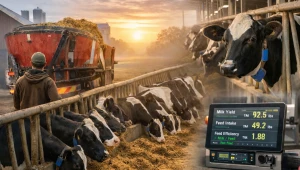
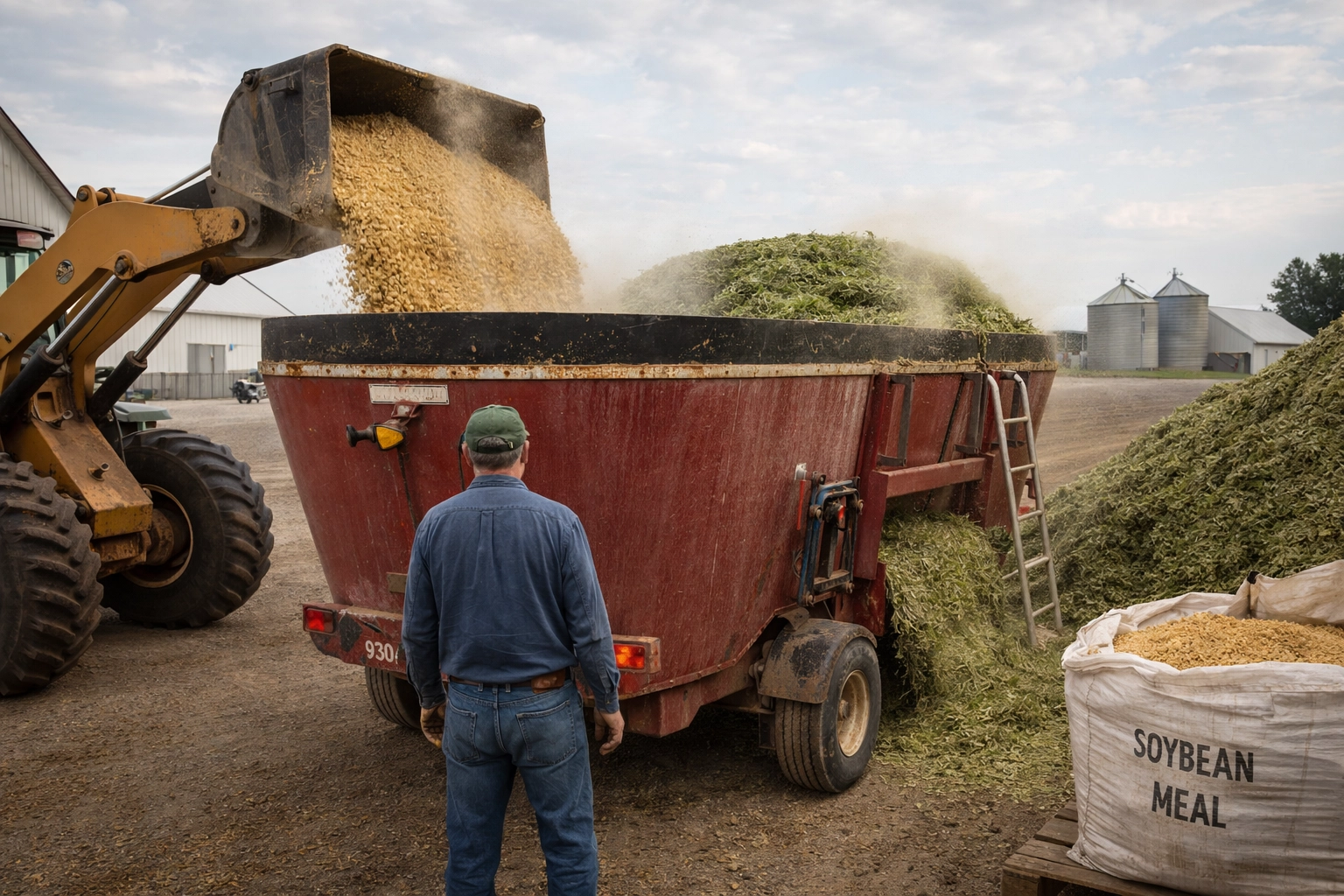
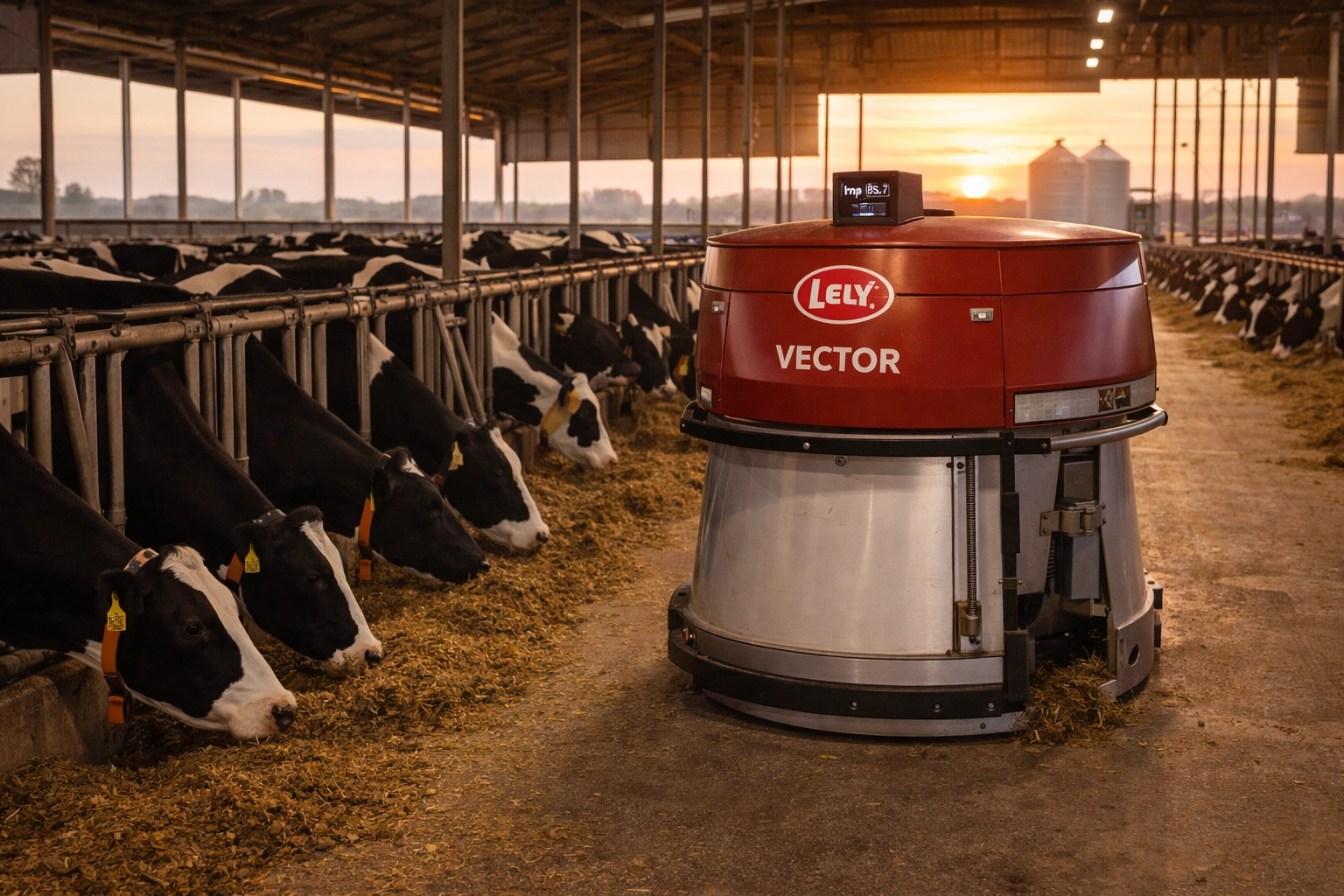
Dawn breaks slowly over a freestall barn outside Fond du Lac, Wisconsin. The air is damp with the kind of early-morning fog that hangs low over dairy country, muting the rumble of the feed truck and the soft clatter of metal headlocks along the bunk line. Inside the barn, cows settle into their first ration of the day — a carefully mixed blend of corn silage, soybean meal, minerals, and distillers grains delivered hours earlier by a feed mixer wagon.
To an outsider, the scene looks routine.
But for the farmer leaning against the rail and watching the herd move toward the feed bunk, the quiet morning carries a calculation running constantly in the back of his mind. Every mouthful of feed represents cost. Every pound of milk represents revenue. The thin line between the two is what keeps a dairy farm alive.
And in 2026, that line increasingly depends on one metric: feed conversion efficiency.
Across the U.S. dairy industry, farmers, nutritionists, and economists are paying closer attention than ever to how effectively cows turn feed into milk. What once functioned as a background performance indicator has become one of the central measurements shaping management decisions across modern dairy farms.
The reason is simple. Feed remains the single largest operating expense on most dairy farms — often accounting for more than half of total production costs. According to cost-of-production data compiled by the USDA Economic Research Service, feed expenses consistently represent the largest share of dairy operating budgets in the United States. When feed costs rise or efficiency slips, profitability erodes quickly.
In a business where margins can tighten overnight, efficiency is no longer a technical curiosity. It is a survival strategy.
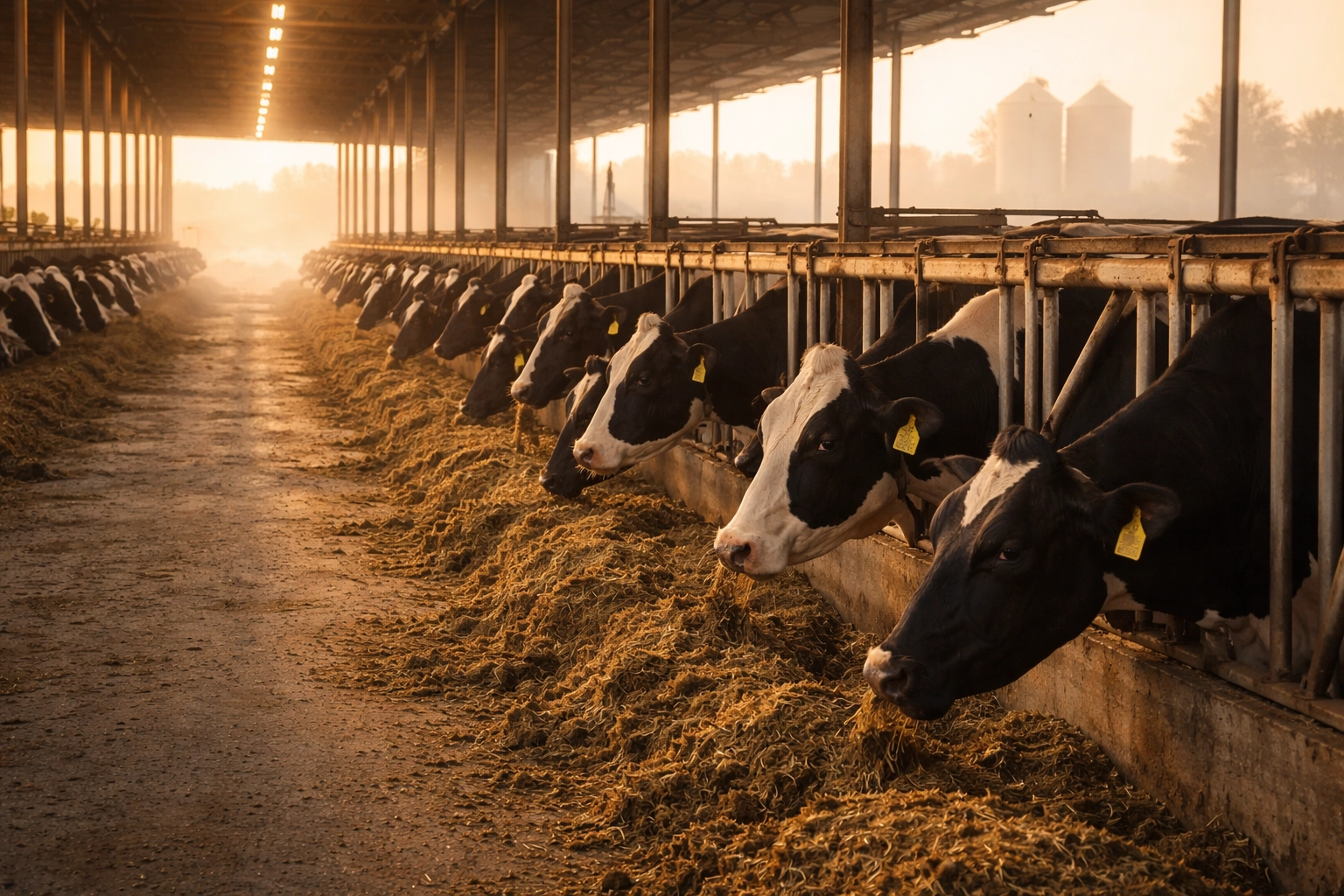
The Feed Bunk Calculation
Feed conversion efficiency (FCE) measures how effectively a dairy cow transforms feed nutrients into milk. The concept is straightforward: the more milk produced per pound of feed consumed, the more efficient the system becomes.
Yet behind that simple ratio lies a complicated biological and economic equation.
Feed efficiency depends on forage quality, cow genetics, ration formulation, barn design, herd health, and environmental conditions. Change any one variable and the entire system can shift.
Historically, most dairy herds in the United States operated within a feed conversion range of roughly 1.4 to 1.6 pounds of milk per pound of dry matter intake. In practical terms, that meant cows produced about a pound and a half of milk for every pound of feed consumed.
But modern dairy operations are pushing those boundaries.
Genetic improvements, improved forage management, and precision nutrition programs have steadily lifted productivity levels. National milk output per cow has climbed dramatically over the past several decades — a trend documented in long-term production data from the USDA National Agricultural Statistics Service, which tracks dairy herd productivity across every major milk-producing state.
Today, high-performing herds commonly achieve feed conversion ratios above 1.7, with some elite operations approaching 1.8 or higher under optimal conditions.
That incremental improvement may sound modest.
But when multiplied across hundreds or thousands of cows, the financial impact becomes substantial.
A herd improving feed efficiency by just 0.1 pounds of milk per pound of feed can generate thousands of additional pounds of milk annually without increasing feed intake. In other words, efficiency gains can expand production without proportionally increasing costs.
And that reality is driving a quiet transformation inside dairy barns across the country.
Also Read :
A Feedlot Reality: What It Costs to Feed a Beef Cow in 2026
Feed costs play a major role in beef production economics. See how feedlot operators manage feeding expenses and maintain profitability in 2026.
Regional Pressure on Feed Economics
The urgency surrounding feed efficiency varies significantly by region.
In the Upper Midwest — states like Wisconsin and Minnesota — strong forage production traditionally gives dairy farmers an advantage. High-quality corn silage and alfalfa form the backbone of many feeding programs.
But weather volatility has introduced new uncertainty. Heavy rains during planting seasons, drought during summer months, and shifting harvest windows can alter forage nutrient content from year to year.
Meanwhile, in Western dairy regions such as California and Idaho, water limitations and land pressures have tightened forage supplies, forcing farms to rely more heavily on purchased feed ingredients.
Those regional differences have intensified the importance of feed efficiency.
When feed must be transported long distances or purchased at volatile market prices, every percentage point of efficiency becomes economically meaningful.
Economic data from the Federal Reserve Bank of Kansas City, which regularly monitors agricultural credit conditions across major farm states, shows that feed price volatility remains a central risk factor in livestock profitability. Dairy farms operating with stronger feed efficiency ratios tend to maintain more stable margins during periods of high feed prices.
In practical terms, efficient cows offer a buffer against market turbulence.
Precision Nutrition Enters the Barn
The traditional image of dairy feeding often revolves around tractors, silage piles, and feed bunks stretching across long barns. Those elements still exist, but modern dairy nutrition has evolved far beyond simple feed mixing.
Today, many large dairy farms rely on precision nutrition systems capable of monitoring feed composition and cow performance in near real time.
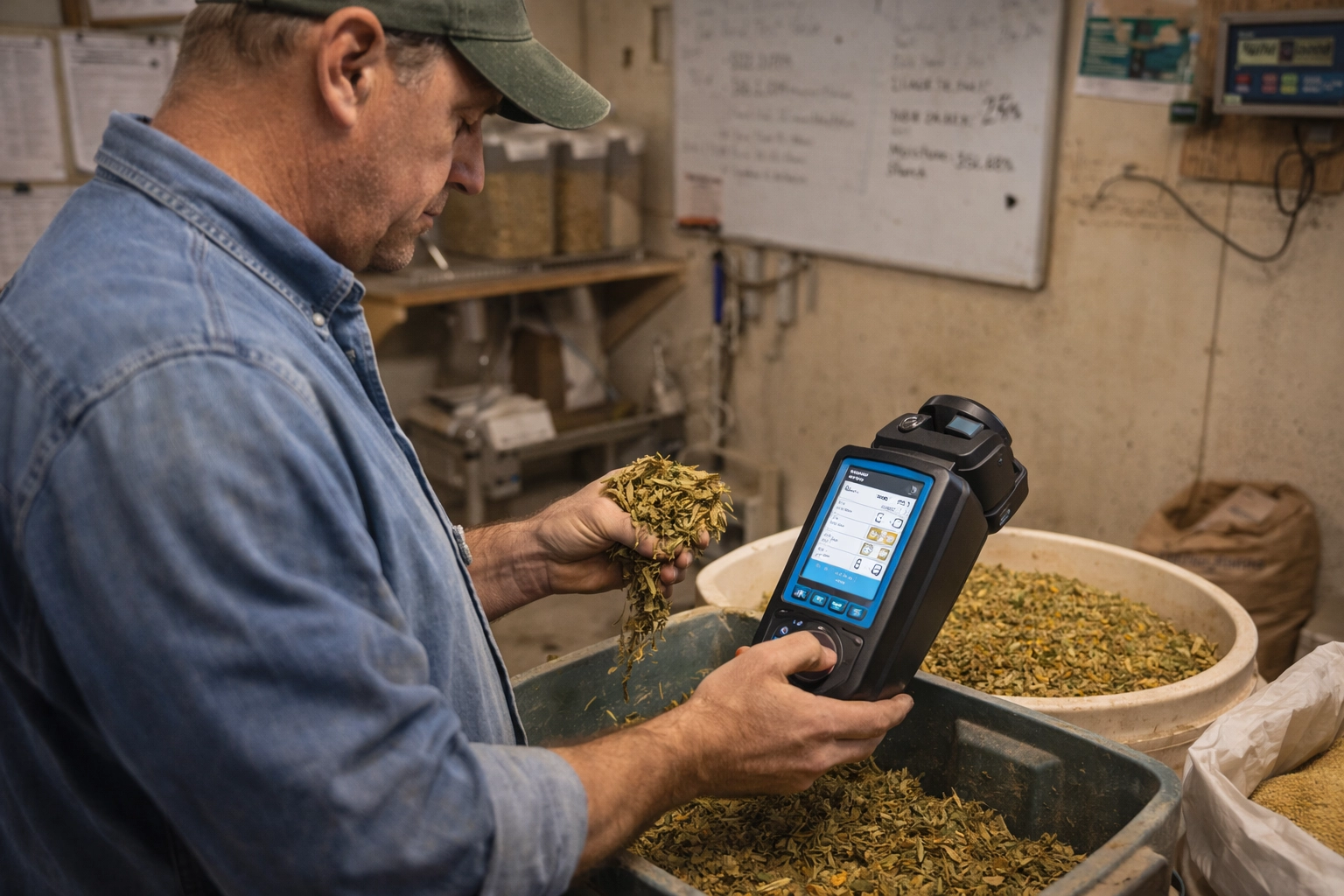
Portable forage analyzers using near-infrared spectroscopy can evaluate silage samples within minutes. Instead of waiting days for laboratory results, nutritionists can immediately adjust rations when nutrient profiles shift.
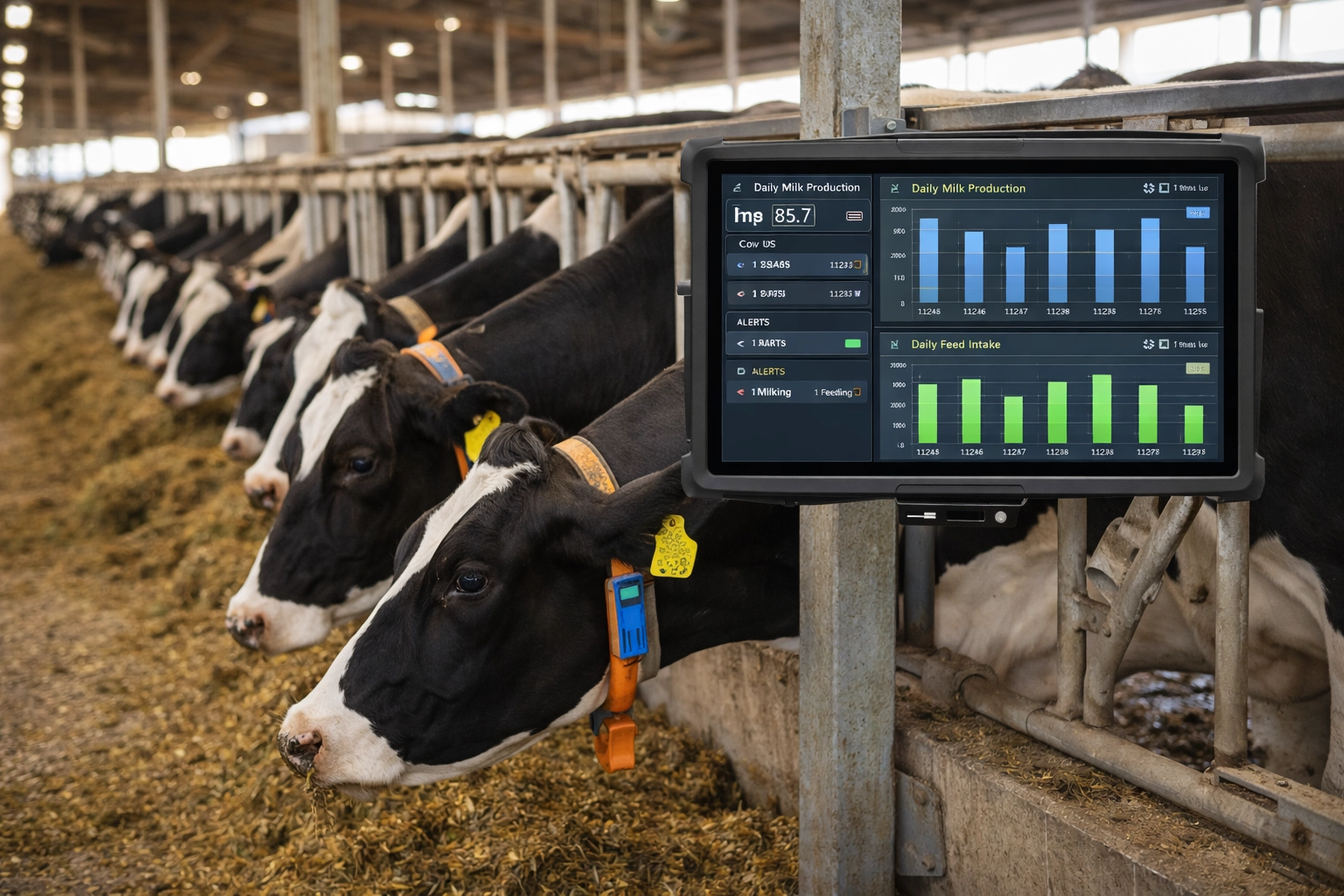
Meanwhile, wearable cow sensors track rumination time, activity levels, and feeding patterns. Subtle changes in chewing behavior can signal digestive issues or declining feed efficiency before milk production drops.
The goal is to maintain consistent nutrient utilization — ensuring cows extract as much energy and protein as possible from each ration.
These technologies represent one of the most important developments in modern dairy management.
Yet they also introduce a new divide between farms able to invest in advanced monitoring systems and those operating with more traditional management approaches.
The result is an increasingly data-driven dairy industry.
Read Also :
How Much Does It Cost to Produce Milk? Inside Dairy Farm Economics
Dairy farm profitability depends on production costs. See how feed prices, labor, and farm management affect the cost of milk production.
Comparing Feed Efficiency Across Dairy Systems
Not all dairy farms operate under the same structural conditions. Herd size, management style, and technology adoption can influence how efficiently feed is converted into milk.
The differences are visible when comparing typical efficiency levels across dairy systems.
| Dairy System Type | Typical Herd Size | Average Feed Conversion (Milk : Feed DM) | Key Efficiency Driver |
|---|---|---|---|
| Small family dairy | 80–150 cows | 1.45–1.55 | Forage management and close herd observation |
| Mid-size regional dairy | 300–800 cows | 1.55–1.70 | Professional nutrition consulting |
| Large commercial dairy | 1,500+ cows | 1.70–1.85 | Automation, data analytics, and precision feeding |
At first glance, the differences appear incremental.
But across thousands of cows and an entire year of production, these efficiency gaps create substantial economic divergence.
Large commercial dairies often gain an advantage because scale enables specialized management systems. Dedicated nutritionists, advanced feed monitoring technology, and automated feeding equipment allow larger farms to maintain extremely consistent rations.
Smaller farms, on the other hand, frequently rely on the farmer’s own expertise and close observation of individual cows. In many cases, that hands-on knowledge produces excellent results — but the system may lack the continuous data feedback available in large operations.
What the comparison ultimately reveals is not simply a difference in cow productivity, but a broader shift in management infrastructure across the dairy industry.
Efficiency increasingly depends on information.
The Ripple Effect in Feed Markets
Feed efficiency improvements may seem like an internal farm management issue, but their implications extend well beyond dairy barns.
When cows convert feed more efficiently into milk, the dairy industry can expand production without proportionally increasing demand for feed crops such as corn and soybeans.
That dynamic carries important implications for agricultural markets.
Economic projections analyzed by the Congressional Budget Office suggest that long-term productivity improvements across livestock sectors can moderate growth in feed demand even as meat and dairy production rises.
For grain farmers, that trend creates a subtle tension.
Higher livestock productivity supports strong dairy output, but improved feed efficiency may slow the rate at which feed grain demand expands.
The relationship between livestock productivity and crop markets has always been interconnected. But efficiency improvements increasingly complicate that relationship.
A dairy industry capable of producing more milk with fewer feed resources changes the economic balance across the broader agricultural system.
Environmental Pressure and Policy Alignment
Feed efficiency has also become central to discussions about agricultural sustainability.
Dairy cattle produce methane during digestion — a natural byproduct of rumen fermentation. While total emissions depend on herd size and feed composition, improved feed efficiency generally reduces emissions per gallon of milk produced.
That relationship has attracted growing interest from policymakers and researchers.
Scientific programs supported by the USDA Agricultural Research Service are exploring feed additives, microbial interventions, and genetic strategies designed to improve nutrient utilization while lowering methane intensity.
The policy implications are significant.
If dairy farms can produce more milk with fewer feed inputs and lower emissions intensity, feed efficiency could align economic incentives with climate objectives — a rare overlap in agricultural policy debates.
Still, many dairy farmers remain cautious.
Carbon markets, methane reduction incentives, and climate reporting programs are evolving quickly. While efficiency improvements benefit farm economics regardless of policy outcomes, regulatory frameworks surrounding emissions remain uncertain.
Farmers tend to adopt new systems cautiously when long-term policy signals remain unclear.
The Farmer’s Perspective
Back in Wisconsin, the cows have nearly finished their morning ration.
The farmer walks slowly down the feed alley, watching how the herd interacts with the bunk line. A few animals linger longer than others. One cow noses the ration aside, searching for the most energy-dense portion of the mix.
These small behaviors matter.
Feed conversion efficiency might appear as a clean number in a spreadsheet, but its roots lie in thousands of biological interactions occurring inside the barn every day.
Heat stress during summer months can reduce feed intake. Poor ventilation can suppress milk production. Slight changes in silage fermentation can alter nutrient digestibility.
Each factor nudges the efficiency ratio up or down.
And while technology can track those shifts, the farmer’s daily observations still provide the first clues when something is off.
For all the data flowing through modern dairy management systems, cows remain living organisms — not machines.
Efficiency, in practice, is fragile.
Also Read :
Why U.S. Milk Production Is Changing in 2026 — Inside the Dairy Market Outlook
U.S. milk production trends are shifting in 2026 as feed costs, herd productivity, and dairy market demand change. Explore what the latest dairy market outlook means for farmers and milk supply.
The Next Efficiency Frontier
The U.S. dairy industry has experienced multiple waves of productivity growth over the past century.
Genetic selection increased milk production per cow. Mechanization reduced labor requirements. Nutritional science improved feed formulation and herd health.
Feed conversion efficiency represents the next phase of that evolution.
Future gains will likely come not from a single breakthrough, but from incremental improvements across multiple systems — genetics, feed digestibility, barn environment, and artificial intelligence–driven feeding algorithms.
Some researchers believe average dairy feed efficiency could approach 1.9 pounds of milk per pound of dry matter intake within the next decade.
Whether that ceiling is biologically sustainable remains uncertain.
But the direction of progress is clear.
Efficiency is becoming the defining metric of competitiveness in American dairy farming.
A Quiet Transformation in U.S. Agriculture
Feed conversion efficiency rarely attracts attention outside specialized agricultural circles.
Yet its influence stretches across the entire food production system.
More efficient cows require fewer feed resources to produce the same amount of milk. That shift affects grain demand, farm profitability, environmental performance, and the structural evolution of the dairy sector.
For consumers, the change will remain largely invisible. Milk will still arrive in grocery stores packaged the same way it always has.
But behind that carton lies an increasingly sophisticated system of biology, economics, and technology working together to optimize every mouthful of feed.
And each morning, as feed trucks rumble across dairy country and cows gather along the bunk line, the industry continues its quiet pursuit of a deceptively simple objective:
Turning feed into milk — just a little more efficiently than yesterday.

Written by Janardan Tharkar – an agriculture content researcher and blogging professional with practical experience in farming education, digital publishing, and SEO content optimization. Janardan focuses on modern U.S. agriculture trends, smart farming technologies, irrigation systems, crop development, organic farming practices, and farmer-support programs to create helpful, practical, and trustworthy content for American readers.